The Maitland Mercury and Hunter River General Advertiser, Sat 19 Dec 1896 1
THE NEW COURTHOUSE AT WEST
MAITLAND.
————
OPENING BY THE MINISTER OF JUSTICE
Yesterday afternoon, the new courthouse just completed at West Maitland was formally opened by the Minister of Justice (the Hon AJ Gould), who was accompanied from Sydney by Mr WL Vernon, Government Architect. They were met at the High-street station by the mem for West Maitland, Mr John Gillies, and the following members of the Reception Committee—The Mayor (Mr H[enry] Crothers), Messrs Alex Wilkinson, WH Mullen, JW Birkenhead, CE Nicholson, John Rourke; AJ Prentice, and CB Thistlethwayte, joint honorary secretaries; Mr Superintendent Larkins, and Mr WAE Lewis, Clerk of Works. A four-horse drag was in waiting, and the visitors were driven to the Royal Hotel, where a light luncheon was partaken of. Mrs Winter, with her usual foresight and kindness, sent to the Royal Hotel handsome buttonhole bouquets for the Colonial Secretary, Minister of Justice, Member for West Maitland, and the Minister for Works. The latter was handed to Mr Vernon by Mr JW Birkenhead. She had also one sent on to the Mayor at his residence. They were much admired. About a quarter to three a start was made for the courthouse. The procession was composed of the Federal Band under Bandmaster Fitness; some members of the police force; the Maitland Half-Squadron of Cavalry, under command of Captain Markwell, with whom was Lieutenant Clarke; the drag with the visitors and members of the Reception Committee; a cab with a couple of other members of the Committee; Superintendent Larkins; the Fire Brigade, under Mr Superintendent Phillips, with their manual engine, drawn by a pair of horses; and a few vehicles. There were a good many people in the street to watch the procession. The public schools, at the request of Mr Gillies, had been granted the privilege of breaking up at noon instead of at four pm, and numbers of children took advantage of it to view the procession. A great many ladies were present at the Courthouse, and when the numbers were swelled by those accompanying the procession there was a large gathering in front of the building. The visitors having been conducted through the building y the Police Magistrate (Mr GF Scott) and Mr Lewis, they returned again to the front entrance, and addresses were made from the steps of the building.
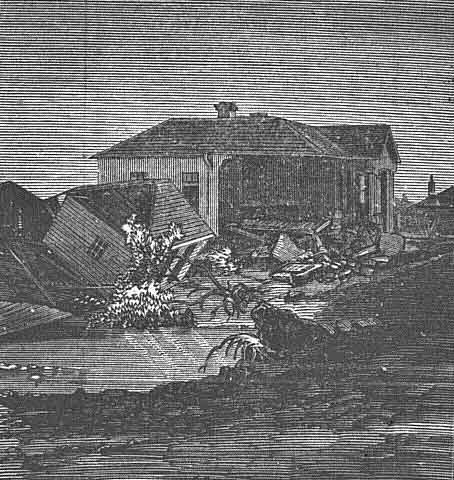
cottage, after 1870 floods. Image: Australian Town and Country
Journal, Sat 14 May 1870, p.16. Reproduction: Peter de Waal
The MAYOR, addressing the people, said he was pleased that the honour devolved upon him of asking the Minister of Justice to open that new and fine courthouse. That privilege devolved upon him as Mayor of that municipality, but there was another appropriateness in it, seeing that with one bare exception he was the senior magistrate of the district. He knew Mr Gillies would laugh at that, but he was proud of the position. For a long period of years—he would not say how long—they had agitated for a Courthouse, and why, Mr Gould, they had not had one long before it was not for him to say. He knew that many years ago a sum of money was placed on the Estimates for the purpose; but some difference as to the site arose. Some liberal Government and architect had erected a building which was called a courthouse near the pound site. The good providence of God had sent a moderate flood and carried that away. They had to thank God for that. Then something had moved the authorities to purchase the old Northumberland Hotel. They suffered great inconvenience there, and he was pleased to say Providence again intervened and sent another flood, and left the place so that they were unable to use it. The Ministry in power saw they were entitled to a proper building. In a community of 8000 or 9000 people there must arise differences and disturbances, and that being so, he failed to see why they should not have a proper building for settling them in. They had an upright and excellent Police Magistrate in Mr Scott, and their thanks were due Mr Gould for sending them such a worthy successor to Mr Brooks. Mr Brooks was a gentleman whom they all highly respected, and he had a worthy successor in Mr Scott. He would not detain them longer but simply call on the Minister to declare the Courthouse open.
The Hon AJ GOULD said it afforded him great pleasure to have the opportunity of attending there that day for the purpose of declaring that Courthouse open. He was sure the people of West Maitland valued the building which was so necessary in a large population. He was glad to see that the Mayor recognised the hand of Providence in every step during the last 40 years. It seemed that the floods have come in opportunely for the people of West Maitland in this respect. Now as to the erection of the Courthouse they were opening that day, he thought it would not be uninteresting to look back for some years. Like the Mayor, he could well recollect the time when the business was done in the small courthouse in Sempill-street, though he was not in West Maitland at the time. When it was destroyed the next place purchased was the old Northumberland Hotel. Whether it was the old associations connected with a hotel or not that was considered made it a desirable place he could not say. But the building was not taken possession of a very long time before it was found to be inconvenient and unsuitable. The flood of 1893 rendered it unfit for occupation, and after being used for twenty years it was abandoned, and temporary premises taken. Long before this the wants of the people were brought before Governments from time to time, and they were asked to make better provision in this direction. He recollected some years ago, when Mr Clarke was Minister of Justice, waiting on him with others to request him to build a courthouse for the town. It was then thought that where the Town Hall was built would be the proper place, but it was considered to be unsuitable. He thought there had been any amount of agitation among the people of West Maitland, and it was determined to abandon that site and select another. The question then arose as to some sites near the High-street crossing. But it was thought undesirable to erect one so far down when there was a courthouse in East Maitland, and it was therefore determined to select some site up the town. Two sites suggested themselves to the Magistrates and the Government—that one and one in Elgin-street. He must admit that the Elgin-street site was the one he favoured as the more suitable to build on. (Mr Pender: Hear, hear. A laugh.) He did so, as he thought it a more elevated one, and also removed from the noise and bustle of the town. However, the magistrates and the people thought this the proper place, and he thought the Government were acting right in giving way. In 1890 provision was made on the estimates for the erection of a building by the late Parkes Government. But though tenders were called in 1894 for the erection none were accepted. In 1895 tenders were again invited, and the result was the building they were opening that day. They would recognise that such a building would cost a considerable sum, and they should know the amount expended on it. He believed, apart from the land, the cost had been £11,700. That was a large sum of money; but they had to bear in mind that of that amount £2700 was necessary for lockup and police barracks, so that they might consider the amount £9000. On such occasions he knew they had people crying out at the extravagance of Governments in putting up buildings more than were necessary for the requirements of the people, and costing a good deal un embellishments. He would remind such that they did not look only to the present day, but for the future. In buildings such as the present, in a town of so long standing, and the centre of such a populous district, they had to bear in mind that that building would have to last for many years to come, and to serve a greater population than that of to-day. Then as to adornment, he looked upon it as a distinct advantage to have public buildings of an ornate kind to the people of the place. They did not wish to centre all the ornate buildings in the metropolis. They believed in the future of the country. He had taken the trouble to look up the business of the past few years in the police courts in various places, and had taken the year 1895 as a guide. He found the business of the West Maitland court house was nearly equal to that done at Goulburn and Dubbo. Bathurst was another large city and the business at Bathurst equalled that here. The business done in the two Maitlands was about two-thirds of that done at Newcastle; and when they remembered that Newcastle was the second largest sea port in New South Wales, and probably the third in Australia, they would recognise the great importance of West Maitland. He had taken the trouble to enquire as to the amount expended in public buildings in the colony, and found it amounted to some £9,000,000. They would recognise that was a large sum to expend in bricks and mortar and other premises during the short existence of the colony. One gratifying feature was that the greater portion of it was provided of out [sic] annual income, and the smaller portion was borrowed. Here he would say that when they were erecting public buildings for the future it was only fair that the people of the future should be called upon to bear some of the expense. The policy was to provide for such by long dated loans extending over 25 and 30 years. Then as to the building itself he pointed out that Mr Vernon, the Government Architect, was well known as a man of skill and ability, and had utilised it in designing that building, as he had the one at Parramatta opened the other day, which was of a different design from that. He congratulated them on having a good Police Magistrate to preside in that court. He knew he was a worthy successor to Mr Brooks. He said West Maitland had reason to be proud of the gentlemen it had had as Police Magistrates. While they had a Police Magistrate in whom they had every confidence it was satisfactory to know they had a large number of gentlemen of intelligence and ability to assist him. All these were matters for congratulation. He congratulated them heartily, and hoped it would be many years before they would be called upon to repeat the ceremony of opening a courthouse for West Maitland. He did not think that these interventions of Divine Providence to which the Mayor had alluded would serve them again. Seeing that the building had been built so high, some 4 feet above flood level, and the foundations put in by the architect were so strong that he though it would be a long time before the intervention of Providence by a flood would interfere with it. He again thanked them for the attention they had given him that day. His simple duty was to declare this court-house duly open for the transaction of Court of Petty Sessions business for the town and district of West Maitland. He omitted to explain why the Colonial Secretary, who was so much beloved by all the people there, was absent that day. He had hoped to be there up to yesterday; but unfortunately there was a most important Cabinet meeting at which the question of federation was to be discussed, and Mr Reid could not afford to lose the services of the Colonial Secretary from it. For the same reason he could not get another of his colleagues to take Mr Brunker’s place. Though he would have liked to have been present too he could not disappoint them. He felt it his duty to be there and so he came. He regretted that Mr Brunker was not there, as much as they did, and it was only circumstances over which he had no control that prevented it.
Most of the public present took the opportunity to have a look at the inside of the Court building. The band in the meantime was stationed at the Sempill-street side, and played some selections.
~ ~ ~ ~ ~
The Sydney Morning Herald, Sat 19 Dec 1896 2
OPENING OF A NEW
COURTHOUSE.
———◦———
SPEECH BY THE MINISTER FOR JUSTICE.
————
(By Telegraph.)
(FROM OUR OWN CORRESPONDENT.)
———
West Maitland, Friday.
A demonstration in connection with the opening of the courthouse at West Maitland took place this afternoon. The function was entirely successful. There was general disappointment that owing to an important Cabinet meeting the Hon JN Brunker was unable to leave Sydney. The Hon AJ Gould, Minister for Justice, and Mr Vernon, Government Architect, were met at the railway station on the arrival of the Sydney train by the reception committee, and were conveyed in a drag to the Royal Hotel, where they were entertained with refreshments. They were then driven to the courthouse. A procession, consisting of the Federal Band, the Maitland Half-squadron Lancers under Captain Markwell, the fire brigade, and a posse of police, with a number of buggies and cabs followed. Upon arrival the Minister was introduced by the Mayor.
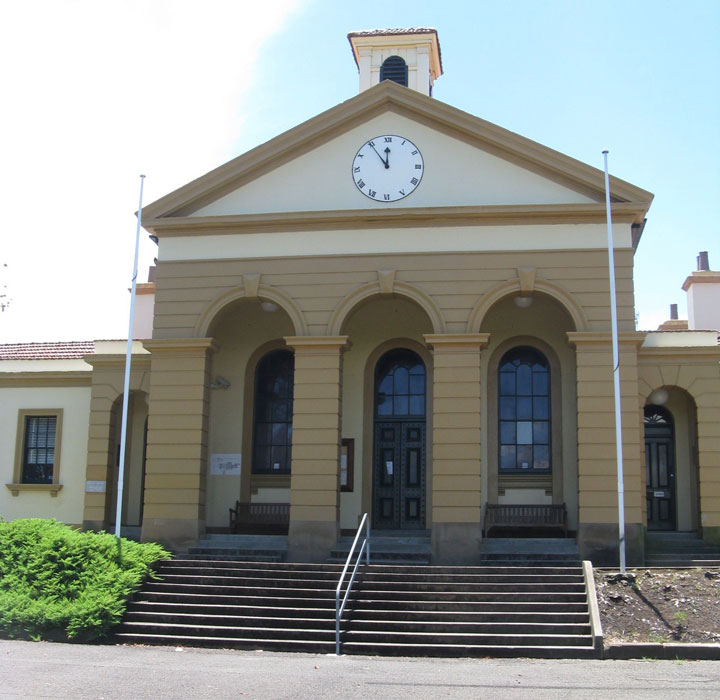
Photo: Peter de Waal
Mr Gould, in declaring the courthouse open, said the floods and difficulties of the past had resulted in West Maitland getting a handsome building. He described the different buildings in which court work had been carried on for the last 30 years, and the different situations made for the erection of a suitable building. Apart from the purchase of land the courthouse cost £11,700. The sum of £2700 was expended on lockup accommodation and police barracks, so that the courthouse proper cost £9000. Some people cried out about extravagance in erecting a building greater than the present requirements demanded. The Government did not look to the requirements of the population to-day, but recognised that buildings such as that would have to last for many years and meet the requirements of a much larger population. He regarded it as a distinct gain that country towns should have public buildings which were ornaments. They did not want all the ornate, palatial edifices erected in Sydney. Taking the year 1895 as a guide, he found that the court business transacted in West Maitland nearly equalled that of Dubbo and Goulburn, and was greater than that of Bathurst. The Newcastle returns were larger, but the work of East and West Maitland was two-thirds that of Newcastle, which was the second largest seaport of the colony, and the third largest of Australia. A gratifying feature was that the greater portion of the expenditure on public buildings exclusive of the sites had been provided from annual income. Under the present policy public buildings and other public works were provided for out of long-dated loans, the expenditure being thrown over a period of 25 to 30 years, so that as revenue was received in the future it would be called on to bear the cost where buildings of a reproductive character were erected. It was considered fair that the money should be supplied by loan. He paid a high tribute to the skill of Mr Vernon, and congratulated the people on having such a handsome building, and such a worthy police magistrate as Mr GF Scott, and such a bench of honorary magistrates.
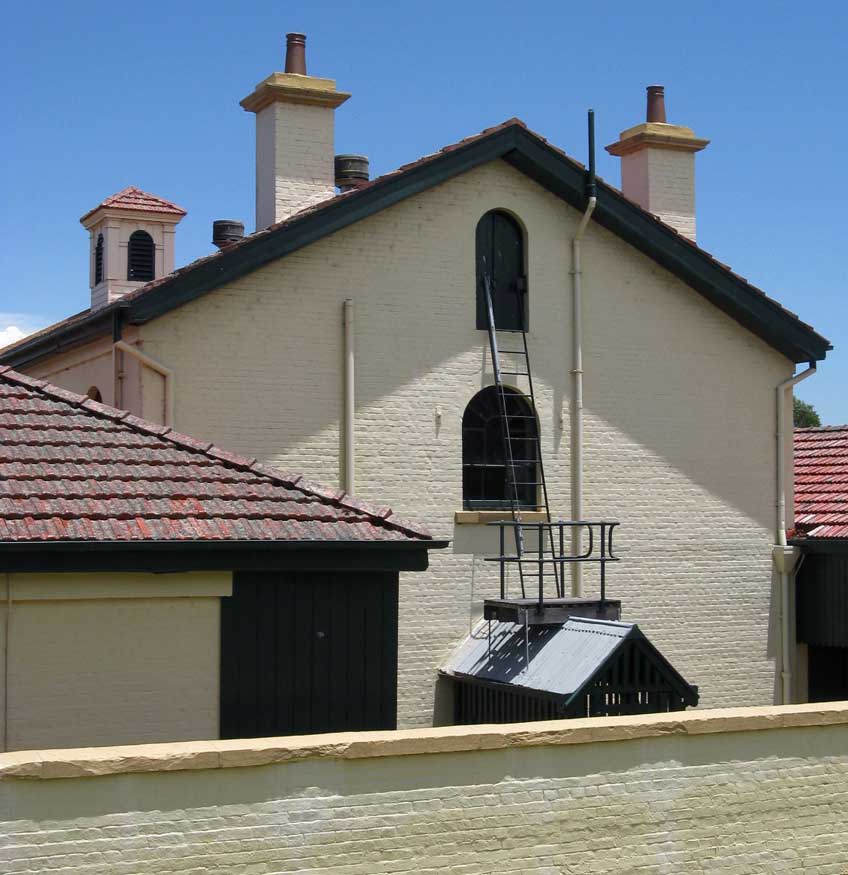
The Minister was subsequently entertained at a conversazione in the yard of the courthouse. Alderman Crothers, the Mayor, was in the chair, and between 90 and 100 ladies and gentlemen were present. Responding to the toast of the Ministry Mr Gould said that at a gathering like that the toast was not indicative of a political significance. The party now in power acted in accordance with their convictions and the promises they had made to the country. (Hear, hear.) He believed that the country was entering upon a new era of prosperity. People must not look to the Government for everything. If they did not help themselves the country would not prosper. People recognised that Mr GH Reid was a very hard and energetic worker. The efforts being made by the Premier in the direction of the federation were accepted with confidence by the people of the country, and it was generally regretted that Queensland was throwing obstacles in the way. It was hoped and believed, however, that at no distant date the northern colony would form an integral part of the Empire.
Mr WH Mullen proposed “Our member.”
Mr Gillies, in responding, advocated the erection of a clock in the courthouse tower and the erection of a building for the superintendent of police and for the stabling of the police horses. The people of the North wanted railway communication from Narrabri to Walgett. He also hoped that the Minister for Works would sanction the scheme for water conservation and for flood mitigation in the valley of the Hunter.
Mr JW Pender proposed the health of the Government Architect, and Mr Gould proposed the chairman. Both toasts were suitably acknowledged.
~ ~ ~ ~ ~
Australian Town and Country Journal, Sat 26 Dec 1896 3
MAITLAND NEW COURTHOUSE.
————
WEST MAITLAND, Dec 18.—The new courthouse was formally opened this afternoon by the Minister for Justice, Mr AJ Gould, who was accompanied by Mr Vernon, Government Architect. They were met at the High-street Station by the reception committee, and taken to the Royal Hotel for refreshments, after which they were escorted by a procession of the Maitland Cavalry, Federal Band, and the Volunteer Fire Brigade to the new building, which is a fine structure, situated at the corner of High and Sempill streets. The Mayor requested the Minister to open the building, which Mr Gould did in a suitable speech. The visitors were afterwards entertained at a conversazione in the court yard. The Mayor presided, and proposed the toast of “The Ministry,” to which the Minister for Justice responded. Mr WH Mullen proposed “The member for the district (Mr Gillies),” to which that gentleman responded. The Chief Secretary was to have been present, and regret was expressed that an important Cabinet business detained him in Sydney. The populace are rejoicing at having at last got a courthouse worthy of the town.
1 The Maitland Mercury and Hunter River General Advertiser, Sat 19 Dec 1896, p. 4.
2 The Sydney Morning Herald, Sat 19 Dec 1896, p. 9.
3 Australian Town and Country Journal, Sat 26 Dec 1896, p. 15.