Australian Town and Country Journal, Sat 27 Jan 1883 1
SOUTHERN PENCILLINGS.
————
By the Raven.
————
THE BRAIDWOOD DISTRICT.
I NOTICED the other day in a southern district paper an advertisement of some enterprising coach proprietor, in which the public were informed on this particular line there was “no walking up hills.” This happy state of things is not experienced by coach passengers from Nelligan to Braidwood. The first 12 miles of the journey is over a comparatively level road; this brings one to Currawan Creek, three or four miles beyond which, the ascent to the Sugarloaf mountain commences in earnest, which means that the passengers have to get out and walk. The ascent of this mountain is made by a winding road four miles in length, and in places of the most romantic appearance, in consequence of the number of tree ferns by which it is lined on either side. About half-way the traveller is enabled—there being a break in the timber—to get a view of the coast line, in which Bateman’s Bay, with the Tollgate and Schnapper Islands, forms a prominent feature. The country here is rich in timber, chiefly ironbark, but no really good land is to be met with until after the summit is reached. This being accomplished, an entire change in the atmosphere is perceptible; so much is this the case indeed, that on arriving here from the coast on an evening of the hottest day, an overcoat is appreciated. This difference in the temperature is not only due to the extra elevation, but also to the sea breeze, which here breaks into a fog, almost thick enough to be called rain; this, and the better quality of land on the inland slope of the coast range, hereabouts, is the cause of the immense forest growth in this neighbourhood.
Immediately on the descent of the Sugar Loaf Mountain, a road turns off to the left; this road runs to Buckenbour, near Broulee, and is largely used by the settlers there and at Bolaro, for packing maize and other produce to Braidwood and Araluen. A mile and half further the village of Monga is reached; this has been laid out as a Government township, and was at one time, when the Clyde-road was first opened and the Braidwood diggings in full swing, thought likely to become a place of considerable importance. The Little, or Mongarlo River, the first inland stream met, is crossed here. There are several sawmills in this vicinity, the timber trade being one which is likely to be largely extended with the improved facilities to market by railway. From here to Braidwood is a distance of 10 miles, by a splendid level road, passing over a stretch throughout of good agricultural land, which is, however, at present only devoted to pastoral purposes.
The Braidwood district consists, properly speaking, of the watershed of the Shoalhaven, from the southern boundary of the Shoalhaven district to the head of that river east and west, and comprises an area of 100 miles north and south by 25 or 30 miles east and west. It forms the first steppe of the tableland country, being situated between the Coast Range and the main Dividing Range, which latter divides the watersheds of the east coast from the western rivers. The township of Braidwood occupies a site 2500ft above the level of the sea.
The goldmining history of this district dates back to the earliest discovery of gold in Australia. Its principal goldfields are those on Jembaicumbene, Major’s Creek, Bell’s Creek, Araluen, Little River, and different parts of the Shoalhaven River. Major’s Creek was the first locality in which the precious metal was discovered; Bell’s Creek was the next. Both of these form the heads of the Araluen Valley, to which the gold was subsequently traced; here shortly after it was found in greater abundance still, a population from 10,000 to 12,000 people, all dependant on goldmining, having been supported in this valley up to 10 years ago, and for many years previously. The little river country and some parts of the banks of the Shoalhaven have also been found very auriferous.
Hitherto nearly the whole of the gold produced in this district has been from alluvial, the quartz reefs which exist in all the above localities having failed to as yet fulfil the expectations formed of them. Some of them, however, are of great promise, and have induced the erection of costly machinery. I might state that there are here two classes of quartz reefs, viz, those found in the granite country, as at Bell’s and Major’s creeks, and those in the slate formation, as at Little River and Nerriga, on the Shoalhaven. The notion now generally being entertained by miners, is that the reefs, if to be found here of a permanent and payable character, will have to be reached at a greater depth than has hitherto been the case, a little over 100ft being the greatest depth yet worked.
At Major’s Creek mining operations consist mostly now of what are known as “flooding off” claims, generally worked by men half graziers half diggers, some of whom between the two occupations make a good living, whilst others no doubt find themselves often in the predicament illustrated by the old adage, and between the two stools fall to the ground. The first reefing operations were started here 13 or 14 years ago; the stone was at first found to be very rich, and for a while several companies, who put up expensive plants, paid very good dividends; but as the rock hardened at a greater depth the veins “pinched in,” and ceased to pay working. Although it is the general opinion that the reefs at Major’s Creek will open out and eventually prove payable, the great outlay required to work them makes it hardly probable that enterprise will for some time be brought to bear in that direction.
The same general remarks as the above apply to the diggings at Bell’s Creek. Here active endeavours are being made to develop the reefs at a greater depth; this due in a great measure to the enterprise of Mr T Forsyth, an old resident, in holding on to his crushing plant and crushing for the public and also in giving his assistance by helping parties to raise stone.
An account of the Araluen goldfield I reserve for a separate article.
The reefs in the slate formation at Little River have of late received more attention on the part of capitalists than those in the granite. Here two or three large companies have commenced operations. The most important of these is that of Eisenstadter and Co, who have taken up the old “Homeward Bound,” a reef particularly rich on the surface, when first opened 12 years ago. At this time it was called the “Jeweller’s Shop,” 1500 or 1600 ounces having been taken out in a few weeks by three or four working men, without the aid of any other appliances than their picks and shovels, crushing being out of the question, as the gold clung in solid lumps to the quartz. Two of the above companies have erected machines here, and have been crushing for some little time; the results, however, are not known, except when the crushing has been for the public, on which occasions they have been far from satisfactory. The reefs here, however, as throughout the district, appear to have been richest near the surface, the whole of the old workings having paid well, and there is every reason to believe that, as on many of the Australian goldfields, where a basalt inflow has cut out the reefs, they will be picked up again much richer than before, when this volcanic overflow has been gone through. I understand the above companies intend to continue sinking with this object in view, in fact tenders have been called for in the local paper to put down the shafts to a much greater depth.
A new reef discovery has recently been made at a place called Captain’s Flat, at the head of the Mongarlo River, 15 miles west of Major’s Creek. This locality, although just within the borders of the Queanbeyan, is, to all intents and purposes, included within the goldfields of the Braidwood district. A road is now being surveyed between this place and Braidwood, a distance of 28 miles. There are two machines at work here (Mr Holtermann’s and Mr Blatchford’s), and another is about to be erected. Besides the gold reef, what is held to be a valuable discovery of copper has been made in this locality; at any rate, the ground taken up by the prospectors was considered an acquisition valuable enough to tempt no less than two parties of Sydney speculators to jump it, and regarding which there was such an exposure in the Assembly; the claim of the original holders, however, it is satisfactory to state, has been upheld by the authorities. Whatever value may be in this copper lode, I do not think, however, much will be done until the railway approaches within a much shorter distance of the neighbourhood.
Next to its mining resources, and perhaps of late years the first in importance, in this district, are its pastoral capabilities. Having all the characteristics of an English climate, it is eminently suited as a breeding district, and in perhaps a somewhat primitive style, this is what it has been principally confined to. Latterly, however, fattening has become much more common owing to the many improvements made by landholders, amongst which improvements ring-barking and the laying down of artificial grasses are the chief. To such an extent is this case, that a member of the leading firm of auctioneers in Braidwood informs me that the breeding and fattening paddocks here are now almost equal, and that there is a demand within the district for nearly all the store stock produced in it.
Horses seem to do well here, and if more care were taken in their rearing, attention to this class of stock should be a profitable pursuit.
The land here is generally considered rather too damp and fluky for sheep, although, as has been remarked in many other parts of the colony, when they were first introduced they did admirably, from which fact it would seem to be a law of nature, as with agriculture and the necessity of a rotation of crops, so with respect to our pastures, that they should not be made to support for too long a period, without a change, one class of stock. The virgin soil in all new countries appears to have been more favourable to the healthy development of every class of products, both in stock and agriculture, than subsequently, as for instance to total unfitness in many parts of the colony of land for the growth of wheat, which land formerly yielded most prolific crops, as well as the unaccountable diseases which have attacked many of our vineyards and orangeries, formerly healthy.
(To Be Continued.)
~ ~ ~ ~ ~
Australian Town and Country Journal, Sat 17 Feb 1883 2
SOUTHERN PENCILLINGS.
————
THE BRAIDWOOD DISTRICT.—(Continued).
————
By the Raven.
IN my last I touched upon the gold-mining and grazing resources of this district.
Dairying now appears likely to take a more leading position here than it has hitherto done, which is to be ascribed to the improvements in the land, before referred to, and to the approach of the railway, which will bring the district within easy reach of the markets of the colony. The first, and in fact, as yet the only one, to take a first departure in this direction, on any scale, is Mr John Wallace, of Nithsdale, who intends to go in principally for cheese-making, on the American factory system, to which end he has secured the services, as manager, of Mr B Griffiths, late of Bega, a gentleman of no small repute in this particular line. Mr Wallace at present milks a few over 100 cows, but intends shortly to increase this number very considerably and to establish milking stations on various portions of his estate, from whence the milk will be brought to the factory at the head station. Nithsdale consists of about 9000 acres of freehold land, hitherto entirely devoted to cattle and sheep rearing, and is situated on the Shoalhaven River, 14 miles south-west of Braidwood. As the permanent establishment of this industry in this district depends to a great extend upon the success attending Mr Wallace’s effort, it need hardly be stated that he has the good wishes of the whole community. The grass in most parts of this district seems well adapted for dairying purposes, every small farmer being in the habit of milking a few cows and making butter, as a rule of very good quality. The great drawback, however, to the increase of the industry has been a limited market.
A much greater boon, however, even than the acquisition of a fresh market would be the throwing open here of some of the large estates to bona fide settlement, as no reasonable man can consider that the possession of 80,000 acres of land, hemming in on three sides a town like Braidwood, which is in hopes of shortly having a railway to it, can be a proper or satisfactory settlement of the country. Such is estimated to be the extent of Mr R Maddrill’s estate, to which I allude, and which, with the exception of the few farms that are let, is almost in its primitive state. I hear, however, that it is the intention of Mr Maddrill, as soon as the railway reaches Braidwood, to cut up and either sell or let a large portion of his estate. This will, without doubt, give new life and energy to the district.
Another important district will undoubtedly be the timber trade; in fact the mills here, of which there are four, have hitherto been unable to supply the orders from Goulburn and other towns. When, however, the distance between Braidwood and the above town is reduced to one-half, as it will be when the railway reaches Tarago, an unlimited market will be opened up, as the eastern ranges within 12 miles of Braidwood are heavily crowned with valuable timber. A specimen of this I noticed at Fernbrook Monga, locality so called by reason of its magnificent tree-fern scenery, to which my sketch does but poor justice. Fruit culture ought to receive more attention here than it does, both the climate and soil being admirably suited to the growth of all kinds of English fruits.
The town of Braidwood occupies, as I before said, an elevation 2500ft above sea-level. It is built on top of a ridge, the backbone of which has the appearance of almost dividing it into two. Whilst this does not detract from, but rather adds to, its picturesque appearance, it certainly, from a sanitary point of view—facilities of drainage—is of great advantage. Quite a feature about this town are its trees, willow, acacias, and elms, as well as several hawthorn edges. These are seen to the advantage—that is, their number is more noticeable—from Mount Jellamaton, an isolated peak immediately to the south-west of the town, in fact almost within its boundaries. From the summit of this mountain, which, by the bye, is now used as a point of observation in the new system of trigonometrical survey, Braidwood, by the aid of the above trees and distance, appears a most enchanting spot.
A somewhat peculiar feature about the laying out of this town, which forcibly strikes the stranger, is that one end of the main street is blocked by the gaol and other by the burying-ground. Foremost amongst its public buildings in the Literary Institute, which has been well designed for the purpose, having a splendid hall and library and a reading room; this institution seems to be deservedly appreciated, and is doubtless a great boon to the community. I noticed some substantial buildings amongst the business places here. The Church of England denomination are erecting a new place of worship, of granite, which stone may be said to be one of the “natural productions” of the neighbourhood; the Roman Catholics have a very fine church built of the same material. The population of Braidwood is about 1200; its passenger traffic from Sydney is now almost altogether overland via Goulburn, which is distant 52 miles; the road at present being well supplied with coaches. Three separate firms are so engaged, two of whom run four-horse coaches daily. There are also two lines of coaches to Moruya (54 miles), one of which is daily, and a line twice a week to Nelligen on the Clyde River.
The most important estate here, after Mr Maddrill’s property, already mentioned, is that of the late Mr William Roberts, now owned by Messrs Hassell, Roberts, and Royds. This consists of 10,000 acres of good grazing land, clothed for the most part with natural grasses, and well-watered by the Jembaicumbene and other creeks. The country is mostly forest, with occasional plains, and the soil of a granite foundation with black soil on the flats. The stock is principally of the Hereford strain. The proprietors have, however, recently procured from the Wagga show two high-class Devon bulls and three cows. This estate has lately been increased to a large extent by the purchase of a portion of some church and school lands in the neighbourhood, the balance of which has since been resumed by the Government. In addition to the above the proprietors have also a valuable property near Araluen, called Bettowynd. Here the climate being so much more temperate than that of the tableland, the fat cattle are sent in the winter. In this respect Bettowynd is invaluable.
Exeter Farm, the residence of Mr T Roberts, one of the members of the above firm, is situated six miles from Braidwood, and is noted as having been the home of the winners of three Melbourne Cups, a Metropolitan, and a St Leger, as well as several other important races. Amongst some of the famous turf horses bred here may be mentioned Archer, Tim Whiffler, Exeter, Moss Rose, Mariner, Sailor, &c. I saw there the Sydney Cup for May 31, 1819, a very unpretentious piece of plate, and alongside it the Melbourne Cup won in 1867 by Tim Whiffler, and the Queen’s Plate, won by the same horse at the same meeting. I also saw what is a still greater curiosity even than the old Sydney Cup, viz, the articles of a contract taken by the grandfather of Mr Roberts for the clearing and stumping of George-street, Sydney. This is signed “Lachlan Macquarie.”
From Exeter Farm it is only three or four miles to the Major’s Creek township. This received its name from Major Elrington, who at one time had a sheep station here. I gave a description in my last of the mining operations being carried on at present in this locality. The township gives one the idea of a “has been.” the Major’s Creek Falls are well worth a visit. Here the creek takes a leap over a solid wall of granite 200ft or 300ft high, into the Araluen valley, of which a most extensive view is get from the spot.
An account of the Braidwood district would not be complete without some mention being made of Mr Frank Mason’s Krawarree Estate, which is situated on the Shoalhaven River, 32 miles south west of Braidwood. It comprises 10,000 acres, including land on both sides of the river for a distance of three miles; there are here some magnificent alluvial flats, which are laid down with rye grass, natural grasses being confined to the slopes. This property is highly improved, and is divided into eight paddocks, in each of which is a running stream. In addition to sheep and cattle rearing, Mr Mason milks some 60 or 70 cows for butter-making, and also cultivates a little wheat and oats. I send a sketch of the Krawarree homestead. In front of this is a fine lawn, on which several English trees are conspicuous. Four years ago this lawn was a dense mass of briars. On Krawarree is the hut where the Clarke bushrangers were captured, and near this hut a tree on which the marks of the bullets are still visible. There is a tri-weekly mail from Braidwood, the road being in excellent condition, as are, in fact, all the roads of the district, thanks to the efficient supervision of Mr Bunduck, the roads superintendent. Not far from a point of this road known as Emu Flat is the Big Hole, a sketch of which accompanies this latter. This is a peculiar cavity on the side of a hill, of terrible appearance, and of unknown depth.
Amongst the principal landholders in this district not already spoken of are:—Mr J Bunn, of St Omer; Mr WF Gordon, Manar; Mr Ryrie, MLA, Arnprior; Mr CE Dransfield, The Mill; Mr F Hindmarsh, Jinden; Mr J O’Brien, Mount Elrington; and Mr E Royds, Ballallaba.
~ ~ ~ ~ ~
Queanbeyan Age, Wed 21 Feb 1900 3
A handsome new structure is to be erected at Braidwood for a courthouse.
~ ~ ~ ~ ~
The Braidwood Dispatch and Mining Journal, Wed 11 Apr 1900 4
LOCAL NEWS.
———◦———
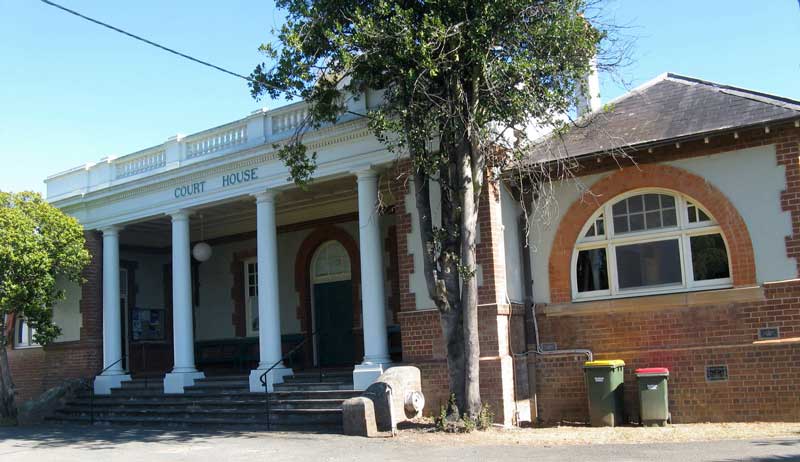
THE PROPOSED NEW COURTHOUSE.—The proposed new Courthouse, according to the plans, which are to be seen at the Clerk of Petty Sessions’ Office, is to be a most imposing structure. The floor of the building will be elevated 8 feet above the ground, with a portico in front to be approached by a flight of steps, the portico being 42 feet in length and 10 feet broad. The building will have a frontage of 76 feet and a depth of 80 feet. The court room will be 50 feet by 30 feets, and underneath it will be cells for prisoners, communicating with the court room by a staircase. A corridor will run round the sides and the rear of the building, giving access to different rooms, viz, the CPS’s office, a room for the public, a stove, the Police Inspector’s office and rooms for the jury, the Judge, the Crown Prosecutor, the legal profession and a witnesses’ room.
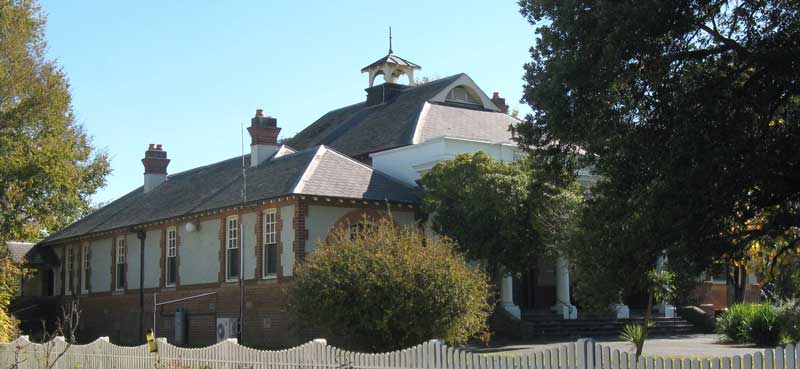
The building is to be of brick. The site has been marked out for it behind the present Courthouse and extending over the present lock-up keeper’s residence, which will be pulled down. The underground tank will either remain under the new building or be filled up. It is a pity that some movement was not made by the Council, backed up by the townspeople, to have got the site of the building fixed on the space of land between the present Courthouse and the Police Barracks, where there is plenty of room, at the same time allowing Wilson-street to be continued from Wallace-street to Ryrie-street, and thus giving the Government five chains frontage to each side of that street and improving the appearance of the new building, as well as opening up communication to the Public School, the sale yards and the numerous private residences in that locality, a thoroughfare which is more particularly needed now that the Council has closed the road, which has always hitherto been open to the public, through the land granted to the Council for the site of a Town Hall which some of the Council are so anxious to borrow the money to erect.
~ ~ ~ ~ ~
Goulburn Evening Penny Post, Thu 26 Apr 1900 5
BRAIDWOOD COURT HOUSE.
SEVEN tenders for the erection of a court-house at Braidwood were opened on Tuesday, the lowest being that of Underhill and Thatcher, £4,295 19s.
~ ~ ~ ~ ~
The Braidwood Dispatch and Mining Journal, Sat 17 Nov 1900 6
LOCAL NEWS.
———◦———
…
THE MINISTERIAL VISIT.—All the arrangements in connection with the visit of the Premier and Parliamentary party are complete, and to-day’s demonstration should be one that will be long remembered in the history of our town. In addition to the Premier, the Minister for Education, Mr Wood, and some 20 other members of Parliament will be present, amongst the number being the Hon A Ryrie, MLC, and the Hon E Grenville, both former representatives of this district, Messrs H Clarke, McGowan, Norton, Carroll Hawthorne, Hurley, Nelson, Miller, Terry O’Connor, Anderson, Richards, Meagher, and Ferris. The party will breakfast at Manar, and are timed to arrive in Braidwood at about 10 o’clock. The committee would like to see as many as possible meet the party at the appointed rendezvous Packwood. The foundation stone of the new Courthouse will be laid by the Premier at 11 o’clock. The school children will be marshalled at the Courthouse, and will sing several patriotic songs, after the ceremony, an adjournment will be made to Ryrie Park, where the free picnic for the children will be held. The visitors will subsequently be taken for a short drive to see the district, and will return to town for the banquet at half past 3 o’clock. The majority of them will leave for Sydney the same night. A dance in the Institute will afford visitors from the country to suitably wind up the day’s proceedings.
~ ~ ~ ~ ~
The Sydney Morning Herald, Mon 19 Nov 1900 7
THE PREMIER AT BRAIDWOOD.
———◦———
A NEW COURTHOUSE.
———
QUESTION OF RAILWAY COMMUNICATION.
——
(By Our Special Reporter.)
——
On Saturday the town of Braidwood was visited by the Premier (Sir William Lyne) and a Parliamentary party. The visitors included the Minister for Education (Mr Perry), the Minister for Justice (Mr Wood), Messrs EM Clark, Ferris, D Davis, AD Nelson, R Pyers, JG Carroll, G Anderson, W Affleck, JS McGowen, Spruson, E Terry, WF Hurley, MsLA, AJ Gould, MLC, T Rawlins on, W Clarke, and Alderman Jackson. Mr Austin Chapman, member for the district, who had made the arrangements for the visit, accompanied the party from Sydney. Leaving Sydney by the 9.20 pm train on Friday the visitors reach Tarago about 5 am, and leaving the train were driven to Braidwood; a distance of about 30 miles. Shortly after reaching Braidwood the Premier laid the foundation stone of a new courthouse. Then the visitors were driven to Jembaicumbene to see a centrifugal dredge at work, and by half past 3 o’clock in the afternoon they were back in Braidwood attending a banquet. The speaking at this function lasted till 7 pm, when the visitors left, and, being driven 30 miles back to Tarago, caught a train there shortly after 11 pm, and arrived in Sydney yesterday morning.
Unfortunately for the success of the function arranged, but fortunately for the district, it rained heavily nearly all day. The Premier and his colleagues congratulated the district upon the welcome downpour, and though the damp caused some discomfort the people of the town did not let that interfere with their arrangements for the entertainment of the Premier. About four miles out of the town a guard, consisting of Australian Horse (under Lieutenant Mackellar) and of Mounted Police (under Inspector McKeogh) was drawn up. Upon the arrival of the Premier they formed an advance guard, and rode before him into the town. The Fire Brigade (under Captain HL Mater) and a large number of townspeople in buggies joined in the procession, and Sir William Lyne made his entrance into the town with great eclat. The principal street was crowded with residents and school children, and as he passed along the Premier was enthusiastically cheered.
On the way from Tarago the party had been entertained at breakfast by Mr Gordon, of Mamas station, so within a few minutes after reaching Braidwood Sir William Lyne proceeded to lay the foundation stone of a new courthouse. There was a large gathering to witness the ceremony.
The Mayor (Alderman RM Higgins) read an address of welcome to the Premier. The address made reference to the drought from which the district had been suffering, and also mentioned that improved means of communication were necessary for the welfare and progress of Braidwood.
At this time it was raining, and the Premier in acknowledging the address of welcome said he hoped they would have occasion to remember the visit because of a copious fall of rain. Sir William Lyne then proceeded to lay the foundation stone of the new courthouse. He said that in the past there had been extravagance in the matter of courthouses, but in the case of Braidwood they were putting up a suitable structure at a reasonable cost. He declared the stone to be well and truly laid.
Brief addresses were given by the Minister for Justice, the Minister for Education, Mr Austin Chapman, Mr McGowen, and Mr Terry. Sir William Lyne was presented with a silver trowel, suitably inscribed, as a momento of the occasion. The function ended with cheers for the Premier and Mr Austin Chapman, and the singing of the National Anthem.
The visitors were then driven to Jembaicumbene, where they saw the Federal Centrifugal Dredge Sluicing Company’s plant at work, and where they had been invited to partake of a lunch provided by Mrs Rowley Hassall. Before leaving the Premier proposed Mrs Hassall’s health, and said he desired to acknowledge the kindness of Mrs Hassall in preparing everything for the company in such a sumptuous way. The toast was duly honoured, and Mr Hassall responded.
At half-past 3 o’clock the Premier was entertained at a banquet given in the Literary Institute by the Braidwood Railway League. The Mayor (Alderman RM Higgins) presided, and beside the members of Parliament there were present Messrs RJC Maddrell (president of the Railway League), James McDonald, W Gracie, James O’Brien, Julius Vider, S Bundock, John Mulgrave, DM Campbell (secretary Railway League), J Voister, HL Mater, J Byrne, T Ally, J Hyland, EM Royde, R Hassall, sen, R Hassall, jun, Mr Mackenzie, PM, Dr Read, and the Rev Father D’Arcy.
The Chairman announced that he had received apologies from Messrs W MacMillan, D O’Connor, and Henry Clarke.
After the toast of “The Queen” had been honoured the chairman gave “The Ministry and Parliament, coupled with the name of Sir William John Lyne.” He said he was very pleased on behalf of the residents to welcome the Premier, the Minister for Education, the Minister for Justice, and the large number of members of Parliament who had accompanied them. They looked upon the presence of such a large number of visitors as a special compliment. The Ministry were to be congratulated and complimented upon the large amount of good and useful work that had been accomplished. This Government had not been a Government of promises merely, but had made every honest endeavour to carry out its promises. (Cheers.) With regard to this Government he had noticed that while it had not neglected the city it had paid more attention to the wants of the country districts than its predecessors. (Cheers.) He would like to refer to the liberal and progressive railway policy of the present Ministry. In the matter of railway extension the Ministry had not gone upon the old cut and dried lines and had not looked so much upon railway extension as a commercial transaction, but as to whether it would open up valuable lands and develop rich resources. The Ministry had had a lot of hard work to do, some of which seldom fell to the lot of Ministries, such as the despatch of the troops and the stamping out of the plague. The fairest way to judge Parliament was by its work, and looking at the large amount of work accomplished they must come to the conclusion that the present Parliament was a good one.
The toast was honoured with enthusiasm.
Sir William Lyne, on rising to respond, was received with loud and continuous cheering. He said he was under the impression that he was invited to Braidwood to lay a foundation stone. It was not until he entered the room, and saw the menu card, that he became aware that the banquet was under the management of the Braidwood Railway League. They had, however, carefully refrained from referring to the question of a railway, and he presumed they did not want him to refer to it either. (Cries of “Yes.”) He had been informed that a railway to Braidwood would not pay, as it would be in juxtaposition to the sea traffic via Bateman’s Bay. He heard of a railway to Braidwood about 15 years ago. There was an agitation then, and if he was not mistaken the money was put on the Estimates and passed, and borrowed to build that railway, but it had been spent upon some other people’s railway. He regretted that was so. He was glad to hear the remarks made by the chairman about the progressive policy of the Ministry, and in regard to its action in attending to the wants not only of the city of Sydney but also of the country districts. The present Ministry desired to do its share in looking after the interests of the interior of this country. (Cheers.) They had tried to spend a little more money on the roads and bridges. The city with its huge population was to a large extent dependent upon the country for its existence. By extending railways they would develop the country, and railway work was one upon which money could be legitimately expended. They must by the energy of men and the employment of capital develop the county [sic], before they could increase its prosperity, which means the prosperity of the seaboard and centres of population. During the present year and last year they had tried to develop the colony more than for a good number of years past. Though this colony had a fair debt, it had an asset in the railways which not only paid interest but something more. In the sending of men to South Africa the Braidwood district came out very well in volunteering. Our young men had gained the admiration of the highest generals, and from that day forward we would know that our soldiers were not drawing room soldiers, but we had men the equals of the Imperial troops. (Cheers.) The effect of the action taken had been to raise the standard of the Australian troops, and to make then feel more confidence in their powers of defence than before the war. They knew that if any foreign foe attempted to land they had at least 100,000 men ready to defend their coasts. Of course, Australia’s first line of defence was the navy. He was proud to see that Mr Bisden, of Tasmania (a countryman of his), had won the Victoria Cross. (Cheers.) With the incoming Commonwealth Mr Bisden would be a countryman of Australia. (Cheers.) He believed that others were to receive this honour, and that many others deserved it. The Commonwealth celebrations would be on a very magnificent scale. It was the event of the century in Australia. He had an interview with the Railway Commissioners the other day, and urged that upon this special occasion in regard to the railways it should not be so much a matter of whether they would get a profit, but whether they would avoid a loss, and the result was the Commissioners were going to carry passengers to Sydney at half the excursion rates. Referring to the Industrial Arbitration Bill, the Premier said there should be some means whereby the people and the Government could step in and prevent the repetition of the industrial strikes of magnitude that had taken place in the past. The opposition shown to this bill in the Legislative Council arise merely from a want of knowledge and a want of trust in the people. The Premier referred to the Closer Settlement Bill, and in conclusion said he had to thank Parliament for assisting him to pass liberal legislation. (Cheers.)
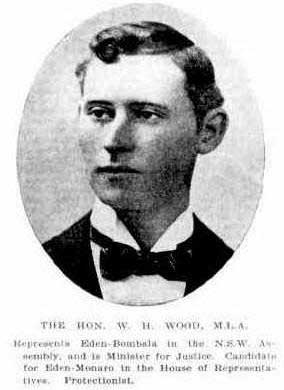
The toast was also acknowledged by Mr Gould, MLC, Mr Wood (who announced that he would be a candidate for that constituency for the Federal Parliament), and Messrs Perry, McGowen, Terry, and EM Clark, MsLA, also responded.
Mr Perry proposed “Prosperity to the Braidwood District,” which was acknowledged by Messrs WJ Chapman and RG Hassall.
The Premier proposed the health of Mr Austin Chapman, saying it gave him more than ordinary pleasure to do so, as Mr Chapman had been one of his personal friends ever since he (Mr Chapman) had entered the House.
Mr Chapman suitably acknowledged the toast, after which the Premier left on his return journey.
~ ~ ~ ~ ~
The Braidwood Dispatch and Mining Journal, Wed 21 Nov 1900 8
THE MINISTERIAL VISIT.
———◦———
A LARGE ASSEMBLAGE.
————
SUCCESSFUL FUNCTION.
————
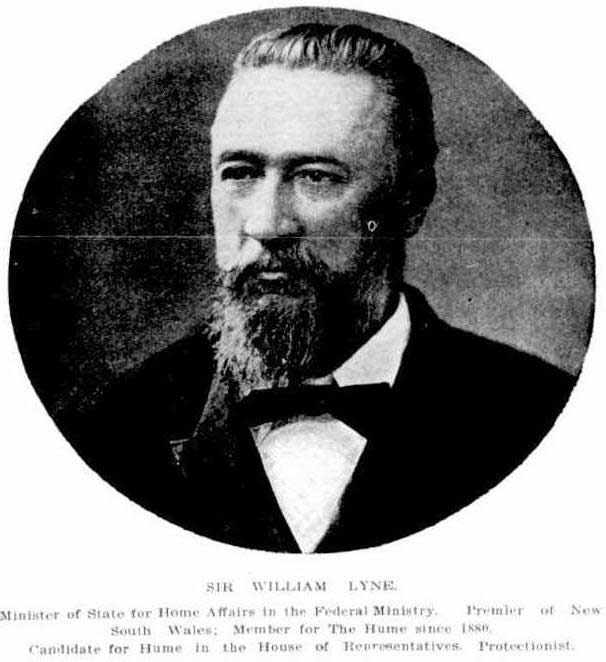
Journal, Sat 9 Mar 1901, p. 36. Reproduction: Peter de Waal
The demonstration in connection with the visit of the Premier, Sir William Lyne, and Parliamentary party on Saturday last was one of the most successful that has ever been held in Braidwood. Notwithstanding that the morning broke dull with a light drizzling rain at intervals, crowds of people wended their way to town from all parts of the district. Buggy load after buggy load of children poured into Braidwood at an early hour, and by 10 o’clock there must have been fully 1500 children assembled in front of the courthouse awaiting the arrival of the distinguished visitors, in addition to a similar number of grown-up people. Had the weather been fine, there is every reason to believe that the number would have been considerably augmented.
The Ministerial party left Sydney in a special Pulman [sic] car attached to the mail train on Friday night. They comprised the member for the district, Mr A Chapman, MP, Sir WJ Lyne, Premier, the Hon J Perry, Minister for Education, the Hon WH Wood, Minister for Justice, the Hon AJ Gould, MLC, Messrs W Affleck, JG Carroll, G Anderson, EM Clark, D Davis, WJ Ferris, WF Harley, JST McGowen, AD Nelson, R Pyers, WJ Spruson, E Terry, Ms P, [sic] Mr L Harnett, Sergeant-at-Arms, Mr McGuiness (private secretary to the Premier), Mr T Rawlinson (formerly member for Bega), Mr W Clarke, JP, Alderman Jackson, and reporters of the SM Herald, Telegraph, Evening News, Star, Newcastle Herald, and Reuter’s Telegram Co.
On arrival at Tarago the Braidwood Railway League had a cup of coffee ready for the visitors, which proved very acceptable after the cold journey. After a brief interval the party mounted the special coach which had been sent down for them, and escorted by six mounted police proceeded to Manar, where they were entertained at a sumptuous breakfast by Mr and Mrs WF Gordon, of Manar. The visitors spoke warmly of the preparations which had been made for them at Manar, and of the warm hospitality extended to them by their host and hostess and the Misses Gordon. They were met here by Messrs RJC Maddrell, RG Hassall, and WJ Chapman, representing the Braidwood Railway League. Mr Hassall, who had a spanking four-in-hand, took charge of the Premier and several other members, the remainder coming on with Messrs Maddrell and Chapman and in the coach.
A number of townspeople went out along the road to meet them in buggies and on horseback, in addition to whom and the police under Sub-Inspector McKeague the Braidwood and Araluen troops of the First Australian Horse, under Lieutenant Mackellar, formed part of the escort. On nearing town the members of the Braidwood Fire Brigade, under Captain Mater, seated on their engine driven by four horses, joined in the procession, which by this time had reached impressive proportions. The school children were lined up on either side of the road from the Courthouse to the Institute, while the Braidwood Brass Band assisted in the proceedings. On arrival the members of the party were dropped at the different hotels arranged for by the committee, where they were entertained with biscuits and liquid refreshments.
LAYING THE FOUNDATION STONE.
After having a wash, the party proceeded to the Courthouse for the purpose of laying the foundation stone of the new Courthouse. Prior to this function, the Mayor presented the Premier with the following address:—
“To the Honorable Sir WJ Lyne, KCMG.
“On behalf of the townspeople and the residents of the District generally, we tender you a hearty and cordial welcome on this the occasion of your first visit to this part of the colony. We trust, though your visit must necessarily be a brief one, you will see sufficient to enable you to form a correct and favorable opinion of the vast and hitherto undeveloped capabilities of the district as an agricultural, grazing and mining centre, and that it may, to a great extent, induce Government to help in developing our various resources.
“Unfortunately, in common with all the colony generally, we are at present suffering from drought, the past month being the driest on record, and the district does not in consequence present so attractive appearance as we could wish, but its past records are such as warrant us in expecting you on behalf of your Government to give its just claims most favorable consideration.
“We are favored with a most enjoyable and salubrious climate, and feel assured that easier, quicker and more convenient modes of access would materially help to develop its many natural resources, and in a short time make it a favorable sanitorium.
“In conclusion, we trust that your visit may prove a most enjoyable one, assuring you of our best wishes for your future welfare.
“Signed for and on behalf of the inhabitants of Braidwood and district.
“RM Higgins. Mayor.
The Premier, who was received with loud cheers, briefly replied, thanking the people of Braidwood for their kindly worded and cordial address. It was quite correct, he said, that this was his first official visit to their pretty town, although he did not come as a stranger, having visited the district on several previous occasions. He was therefore well aware of the kind of district it was, and he was also well aware of the salubrious climate, especially that morning. (Laughter.) He concluded by expressing the hope that the rain which threatened and which he could see was so badly required, would fall, in which case they would have something to remember the visit of himself and his Parliamentary friends by.
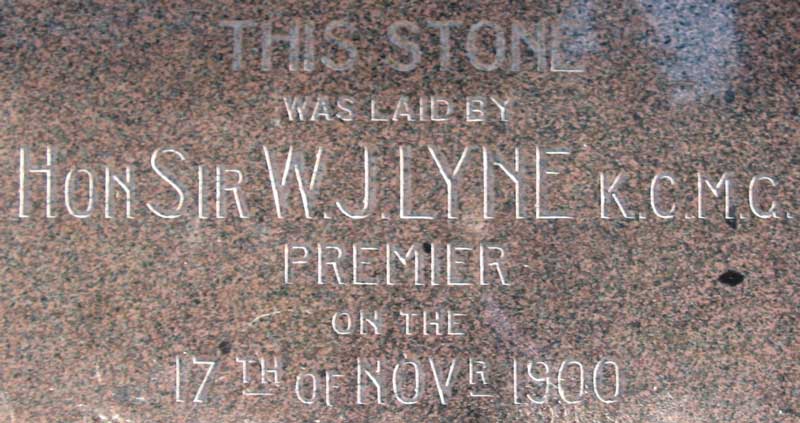
The Mayor then handed the Premier a silver trowel, suitably inscribed, and the foundation stone having been placed in position by Mr Thatcher, the contractor, the Premier declared it well and truly laid, the Band playing the National Anthem, which was taken up by the crowd. The stone was a polished block of Moruya granite and bore the following inscription in gold letters;—“This stone was laid by Sir William Lyne, KCMG, on November 17, 1900.”
The Premier delivered a brief address. He said that during a previous visit to Braidwood their member brought him through the Courthouse, which then struck him as being chiefly remarkable for the number of huge cracks which were apparent in it. The new building, he was glad to find, would be in consonance with the requirements of the town. In the past it had been the custom to erect elaborate and costly buildings altogether out of harmony with their surroundings. Something like £1,297,000 had been spent in this way, the cost of the buildings ranging from £12,000 to £20,000 each. This extravagant system, he was glad to say was now at an end, a fact which the present Government could take some little credit. There were eighteen Courthouses in course of construction from £1000 to £10,000, the latter being at Wagga. The contract price of the Braidwood Courthouse was £4295. While the district had only got what it was fairly entitled to in this Courthouse, he expressed the hope that the increased facilities it would afford all parties concerned, would not lead to an increase in the volume of criminal business. (Hear, hear.)
Speeches were also made by the Hon WH Wood, Minister for Justice, Mr McGowan, MP, leader of the Labor party and Mr Terry, MP, leader of the Independent party, and Mr Austin Chapman, MP. The Hon J Perry, Minister for Education, addressed a few words of advice to the children and the parents. At this stage the rain began to fall smartly, and umbrellas were freely brought into requisition.
The proceedings terminated with three cheers for the Premier.
VISIT TO JEMBAICUMBENE.
After the ceremony the visitors were driven out to Jembaicumbene by members of the committee in buggies, the honor of piloting the Premier falling to Mr RG Hassall, JP, in his four-in-hand and spanking team of bays. The object of the visit was to enable the visitors to see some of the country in the south portion of the district, as well as to inspect the mining operations now being carried on in this vicinity. The rain, however, rather spoiled the enjoyableness of the outing, but the inconvenience suffered in this repect [sic] was more than compensated for by the warmth of the welcome the party received on arrival at their destination. Here Mrs Hassall had provided a sumptuous lunch close to the Federal dredge in a large marquee. Everything one could wish for, whether in wines, spirits and beers, or in the more substantial features of the feast, was strongly in evidence. The sight of the tables was unquestionably a revelation to the visitors. They were led to expect an ordinary al fresco lunch; they were agreeably surprised to find that a banquet had been prepared for them. Indeed, the visitors one and all expressed the opinion that they had never seen anything better done by the best metropolitan caterers. Needless to say that with such a recherche repast before them, added to the keen appetite which the sharp mountain air had engendered, ample justice was done to the good things provided. At the conclusion of the luncheon, the Premier proposed the health of the host and hostess, Mr and Mrs RG Hassall, paying a well-deserved compliment to the warmth of their hospitality and expressing on behalf of the visitors the gratitude they felt for the evident trouble which Mrs Hassall had taken on their behalf. Mr Hassall made a suitable reply. The party afterwards inspected the Federal dredge, which they were courteously shown over by the manager Mr Welsh. They afterwards returned to town, reaching here about 4 o’clock.
THE BANQUET.
The banquet was held at the Literary Institute, and proved not the least enjoyable function of the day’s proceedings. Eighty-two gentlemen sat down to an excellent repast, prepared by Mrs Pooley, of the Royal Hotel, who is to be congratulated upon the faithful manner in which she carried out her part of the programme. The hall was profusely decorated with flags and ferns, and presented a rather attractive appearance. A number of ladies occupied seats on the stage.
Country Journal, Sat 9 Mar 1901, p. 36.
Reproduction: Peter de Waal
The Mayor occupied the chair, having on his right the Premier and the Hon AJ Gould, MLC, and on his left the Hon J Perry, Minister for Public Instruction, and Mr JST McGowen, leader of the Labor party. Mr RJC Maddrell, JP, President of the Railway League, filled the vice-chair, having on his right the Hon WH Wood, Minister for Justice. Apologies were received from Messrs W McMillan, D O’Connor, and H Clarke.
After the toast of the Queen had been given, the Mayor proposed the toast of “The Ministry and Parliament, coupled with the name of Sir WJ Lyne.” He said he looked upon the visit of the Premier and the two other members of the Ministry, as well as such a large contingent of members of Parliament, as a special compliment to the district. It was an honor which he could assure them was duly appreciated by the public of Braidwood. (Hear, hear.) He congratulated the Ministry upon the large amount of good and useful work, which it had accomplished. It was not a Government of promises, but it had made an honest endeavor to carry out the legislation which it had promised. There was one thing which particularly characterised the administration of the present Government, and that was while it had not neglected the city it had paid more attention to the wants and requirements of the country districts than any of it predecessors had done. (Cheers.) He referred particularly to the progressive railway policy of the Government. It had not gone on the old cut and dried lines in this matter, but had looked upon railway extension not so much from a commercial point of view, although he admitted this had to be taken into consideration, but as a valuable means of developing the resources of the country. (Cheers.) The Ministry had also paid a larger amount of attention to the roads of the colony, and in other ways had assisted to bring about the prosperity of the country districts. He congratulated the Government on its war policy, upon the vigorous manner in which it had combatted the plague, and the progressive legislation it had introduced. With regard to the Parliament, he was satisfied that would compare favorably with any of its predecessors. The toast was enthusiastically received.
The Premier, who was received with applause lasting some minutes, said that from the time of his arrival, even when they had presented him with an address before the laying of the foundation stone, he had to admit that they had shown admirable delicacy in not referring to the Braidwood railway. He was under the impression when he came here that his mission was to lay the foundation stone of their new Courthouse, and it was not till he came into the hall and glanced over the menu card that he learnt for the first time that that banquet was under the direction of the Railway League. (Laughter.) Since they had so very cleverly carried out that day’s function without any reference to the railway, he presumed that if they did not refer to it they did not want him to do so. (No, no.) He would be very sorry to disturb the harmony of the proceedings by referring to the railway, especially as he had been informed that the railway if constructed would never pay, seeing that it was in close juxta-position to the steamer with its cheap freight. (Laughter.) He had heard of the Braidwood railway a great many years ago in Parliament, and if he did not make a mistake it was carried in Parliament. He was under the impression, too, that the money ostensibly borrowed to build this line had been spent on some other fellow’s line. That was unfortunate because the money could not be recovered. He was sorry for this, but it could not be helped. He was glad to think that the policy of the Government had met with the approval of the people of Braidwood. He could assure them that the Ministry desired to add its quota to the interests of the interior, and for that reason had increased the expenditure upon roads and bridges. If the Government had desired one thing more than another it was to develop the interior of this country. (Cheers.) The city with its large population to a very large extent depended upon the prosperity of the country districts for its prosperity. The difference between this country and other countries like the United Kingdom and the United States was that while this development was brought about by private enterprise, here it had to be largely done by the Government of the country. The great developing agent, the railway, was here in the hands of the State instead of under the control of private companies as elsewhere, and therefore the Government required to exercise more activity and adopt a more progressive policy than if the railways were run by private enterprise. (Hear, hear.) This fact had to be taken into consideration when considering our national debt. If the cost of the railways of NSW were extracted from our total indebtedness, it would be found that the remainder was only a mere bagatelle. About £40,000,000 had been spent in railway construction, leaving only something like £20,000,000 representing expenditure on the other works of the colony. It was a matter for congratulation as far as the railways debt was concerned that the railways not only paid interest on the cost of construction but something more. (Cheers.) There was another fact to be taken into consideration in connection with our railways, and that was that the money spent up on roads and bridges and the development of the country generally assisted the State-owned railways, whereas if they were privately owned the money and this extra trade would to into the hands of private companies. (Cheers.) With regard to the despatch of troops to the Transvaal, the Premier said that the result of this action was to raise the standard of the Australian troops, and to make us feel more confidence in our powers of defence. Australia had been brought on a level with the nations of the world, who now knew that there was such a place as Australia better than they would have known in 50 years hence in the ordinary course of events. (Cheers.) The speaker went on to refer to the action of the Government with regard to the plague and the Early Closing Bill . Regarding the Compulsory Arbitration Bill , he said he could not understand the opposition shown in the Council to this measure, opposition which he ascribed to want of trust in the people who were rising rapidly under our liberal system of education to see things in a different light to what they did 20 years ago. The Premier referred to the Closer Settlement Bill and concluded by a feeling reference to the Old Age Pensioners Bill . He concluded a speech of an hour’s duration amidst loud applause.
Messrs Wood, Perry, Gould, McGowen, Terry and Clark also responded, the latter making a clever humorous speech, which was punctuated with roars of laughter.
The Hon J Perry proposed “Prosperity to the Braidwood District.” Perhaps the question, he said, of greatest benefit to our district was its railway. No doubt there were a good many besides Sir William Lyne struck with the necessity for something more being done than had been done in this district. The Government in the past had shown that they were sincere in their railway policy. They recognised that it was impossible for the inland towns of the colony to progress unless they are afforded means of railway communication, and he felt sure that if the people of Braidwood could make our a good case for their railway, and could show that it was a desirable line to construct not only from a paying standpoint but as a means of developing the latent resources of the district, that the Government would send it along to the Public Works Committee. If it could be shown that there was a reasonable prospect of its paying not necessarily immediately but in the near future, there was no doubt the Government in pursuance of its vigorous railway policy would have it constructed. (Cheers.) He was pleased to find that the district was on the eve of a greater development in regard to its mineral resources, and he felt confident that with good seasons Braidwood would soon again enjoy that measure of prosperity which at one time distinguished it. (Cheers.)
Mr WJ Chapman, JP, responded. He said the mining and grazing capabilities of the Braidwood district were well and favorably known throughout the length and breadth of the colony. It seemed to him that the time had arrived when a district like this in an enlightened age such as we lived in, the antiquated bullock dray should be relegated to the past and that it should be given the advantage of the iron horse. (Cheers.) In his opinion there could be no fitter way of celebrating the inauguration of the Australian Commonwealth than by giving Braidwood its railway. (Cheers.)
Mr RG Hassall also responded.
Sir William Lyne proposed the health of Mr Austin Chapman, MP, he said he had no better friend in Parliament than their member. Nor was there any more active member in the Assembly. His whole thought seemed to be to obtain something for the district he represented. He was therefore pleased to acknowledge him as a personal friend of his, one whom, he greatly admired for his manly character, and his many personal attributes in addition to his political strength made him one of the very best men in Parliament. (Loud Cheers.)
Mr A Chapman, MP, who was received with loud applause, said it was particularly gratifying to him to have the Premier and his colleagues and so many distinguished members of Parliament visiting the district, and he was more than gratified at the right royal reception which the people of Braidwood had that day extended to the party. With regard to the railway he was satisfied he could make out a good case for its construction, and that being the case he was convinced that the Lyne Government would see justice done to Braidwood in this respect. The Government, he was pleased to say, had shown an earnest and a consistent desire to develop the internal resources of the country, and that being so he felt confident that they would do the right thing by Braidwood when the time arrived. (Cheers.)
The toast of “The Mayor” was proposed in felicitous terms by the Premier, who congratulated Mr Higgins upon the successful manner in which he had fulfilled his duties. After an acknowledgement from the Mayor the proceedings, which were of a very pleasing character, terminated at about half-past 6.
The Ministerial party left by coach shortly afterwards for Tarago, and proceeded to Sydney, where they arrived on Sunday morning.
The arrangements in connection with the banquet were carried out chiefly by Messrs W Gracie, WJ Chapman, and A Chapman, MP, and the fact that everything passed off without a hitch reflects the greatest possible credit upon their management.
THE PICNIC.
It was unfortunate from the children’s points of view that the rain came just when it did, as it almost completely spoiled their day’s fun. Elaborate preparations had been made for their amusement by the ladies’ committee in Braidwood, who invited the co-operation of teachers of all schools within a 13-mile radius of the town. The invitation met with a ready response, as the result showed, over 1000 children turning up to take part in the day’s proceedings. The local children had been practising assiduously for some few weeks for the purpose of singing at the laying of the foundation stone, but owing to some misunderstanding this part of the programme had to be omitted. After the termination of this ceremony the youngsters adjourned to Ryrie Park, where they were regaled with buns and cakes ad lib during the afternoon. Notwithstanding the rain they indulged in various kinds of games, regardless of the damage done to their clothes, and succeeded remarkably well under the depressing conditions to enjoy themselves. Too much credit cannot be given to the ladies’ committee for the completeness of the arrangements, and for the whole-hearted manner in which they worked to further the pleasure of the children. Foremost amongst the ladies were:—Mesdames Bayly, Higgins, Kenny, Dobagn, Lindsay, Brown, Bray, A Chapman, WJ Chapman, Campbell, Mair, Clarke, Dobbie, Boyd, McDonald, TC Musgrave, JWE Baillie, Misses Dykes, E Taylor, Maher, Dobson Grenville, and McKensey.
During the afternoon toys were run for amongst the youngsters, and everything passed off smoothly.
The whole demonstration, in fact, was carried through without any serious hitch, which is sufficient proof that the organisation was very complete. This speaks well for the committee, as the whole proceedings were necessarily of a hurried character owing to the party having to return to Sydney the same night, and no time could be lost if the programme had to be carried through in its entirety, which we are pleased to say it was.
All the visitors were delighted with the trip, notwithstanding the personal inconvenience occasioned them by the rain. Several of them, indeed, informed us that as a demonstration it surpassed even that at Orange lately in connection with the federal capital, which the Braidwood committee might well take as a personal compliment.
At the instance of Mr A Chapman, MP, the Minister for Education promised to grant a holiday for the school children during this week in consideration of Saturday being wet, the choice of the day being left to Mr Inspector Baillie.
…
PETTY THEFTS.—Braidwood, whilst it may boast of its salubrious climate (very salubrious, indeed, the Premier remarked on Saturday, when he said he felt like an icicle on getting of the coach) and its many other natural advantages, there is no gainsaying the fact, would be very hard to beat for the mean character of some of the petty thefts which are continually being committed in the town. The other morning a resident discovered that his beehive had been robbed during the night by some expert with loose notions regard to matters of honesty. In some instances the unconsidered trifles thus feloniously appropriated consist of Sunday’s joint for dinner, in addition to dressed poultry in people’s kitchens, and even the fencing enclosing their premises is carried away to cook these stolen dainties with.
~ ~ ~ ~ ~
Australian Town and Country Journal, Sat 10 Aug 1901 9
COUNTRY NEWS.
…
The contractors for the new courthouse at Braidwood are now making good progress with the work. – Nearly all the brickwork is completed, and the roof is now being put on. Some difficulty has been experienced in obtaining carpenters.
~ ~ ~ ~ ~
Queanbeyan Age, Sat 1 Mar 1902 10
THE OLD COURT HOUSE.
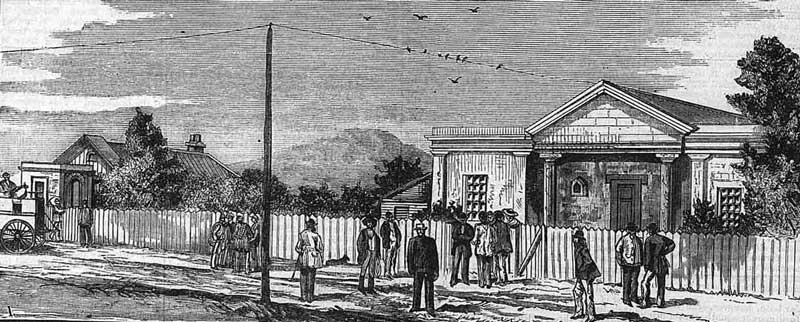
Image: Australian Town and Country Journal, Sat 17 Feb 1883, p.313.
Reproduction: Peter de Waal
The work of pulling down the old Braidwood Court House has been commenced. The material as formerly announced has been purchased by Mr RG Hassall for £90, such of it as will be fit for the purpose to be used in the erection of a dwelling house on his own land in Wilson street, opposite the Convent. The new Court House will be shortly finished and ready for occupation. The bricks, joists and flooring boards and other material in the old building are in an excellent state of preservation after having stood for over fifty years.
~ ~ ~ ~ ~
The Sydney Morning Herald, Tue 4 Mar 1902 11
SOUTH COAST.
———◦———
…
Braidwood, Monday.
Mr Lusk, the new CPS, has arrived from Forbes, and has entered upon his duties.
The new courthouse is nearly finished. It is proposed to invite members of the Ministry to take part in the opening ceremony. The old courthouse is being dismantled. The timber (local hardwood) is in a very sound state, after being used nearly 70 years.
Instructions have been issued to the police to stop all games in future both at race meetings and shows. These instructions will affect all shows and race meetings throughout the State.
~ ~ ~ ~ ~
The Braidwood and Araluen Express, Tue 29 Apr 1902 12
THE NEW COURT HOUSE.
————
Now that the old Courthouse has been removed and the grounds laid out, the imposing appearance and beauty of the new building can be properly seen and fully admired. Occupying the best site in the town, surrounded by beautiful trees, a truly pleasing sight is presented.
The building, inclusive of fire-service tanks, new fences, and the laying out of grounds, has cost about £500, and after a visit of inspection we have come to the conclusion that full value for the money has been received.
Convenience has not been sacrificed for appearance, as is the case in a number of modern buildings. The following accommodation is provided in addition to the Courtroom; CPS office and store room attached, offices for PM, Police Inspector, and Sheriff; rooms for jury (2), Judge, Crown Prosecutor, legal profession, and witnesses, having a total floor measurement of about 5000 square feet. In addition to the above, there are enclosed yards to the jury, Judge’s and PM’s rooms, with full conveniences attached. A shower bath and lavatory are included in the list of conveniences for the jury.
The walls have been built of brickwork throughout, carried upon cement concrete footings, the foundation walls being built in cement up to floor level, strengthened every four courses with galvanised hoop iron, one piece to each half brick in thickness of the walls. The foundation walls have a projection of two inches on the outside, beyond the walls above, and are finished off this a course of double pressed, splayed, plinth bricks; all outside arches and chimney necking and caps are built with the same class of bricks. The external walls are faced up to window sills with sand stock bricks; above that projecting quoins have been built to all door and window openings and salient angles, faced with the same bricks, the panels between being faced with roughcasting composed of broken granite, blue stone shivers, cement and yellow ochre; this, in addition to being a waterproof covering to portions of the walls, serves to brighten up the building. The chimney shafts above roofs have been faced with the same material. To guard against dampness, the external walls have been built with a cavity in the wall from level of two courses below damp-course to within four courses of the top of wall, and the two walls thus formed tied together with galvanised wire ties.
The window sills are of Bundanoon freestone, and door sills and outer steps, including the portico flight, have freestone risers and slate treads.
The roof covering is of the best quality purple Bangor slates, their rich appearance greatly adding to the beauty of the building. In each end of the main Court-room roof ventilating gablets have been inserted. These not only serve the purpose for which they were intended, viz, ventilators, but, in addition break the bare appearance which is always so noticeable in a large roof where the hips are allowed to die into the ridge. As a further set-off to the Court-room roof a structure, technically designated flèche, surmounts the centre of the rood, and is about 5 feet square on plan. The base stands up about twelve inches above the ridge of the main roof. From the corners of the base five inch square posts stand, carrying the flèche roof, shaped wooden brackets are housed into the posts and plates at all angles, greatly adding to the appearance of the structure. The roof and base, including all mouldings to same, are covered with muntz metal. All ridge cappings, box gutters, valleys and flushings are put in with the best mill-rolled lead.
Ventilation has not been overlooked. Large sized galvanised air gratings have been built in the external wall in the base courses under each room, and corresponding holes left in the inner foundation walls to ensure proper ventilation under all floors. To ventilate the rooms above, galvanised gratings have been built in on plinth course, and connected to galvanised Hit or Miss gratings seven feel above the floor on the inside of walls with galvanised iron tubes built into centre of the walls. In addition to the above ventilators, the Court-room ceiling is fitted with three large trumpet-mouths, which are connected with a large Jordan’s cowl in flèche with a nine inch diameter galvanised iron tubing.
The front of the building presents a very fine appearance, a large portico, in size about 10ft x 12ft, being the chief feature, the front of which is carried out in Doric order of architecture. Four fine columns, beautifully proportioned, rise from the portico floor, and are surmounted with an imposing entablature and balustrade. This work has been finished with cement over freestone and brick coring—the members being worked true and sharp, allow the cap, cornice, and architrave mouldings to stand out into bold relief. The portico floor, which is tiled with octagonal-shaped red tiles with a black dot, is arrived at by way of a broad flight of steps, constructed as before stated. Five doors open from the portico, being the entrances to the Court-room, CPS office, witnesses’ room, and two corridors.
The inside of the building is finished off excellently, the Court-room, of course, being the most elaborate. All the fittings are joinery in this room are of picked cedar, varnished, and all other joinery throughout the building, with the exception of the external doors and counter in the CPS office, is of the best sugar pine, painted. Floors are of 4in x 1¼in tongued and grooved Kauri pine.
The ceilings of the Court-room, CPS office, and portico are of stamped steel. That in the Court-room has a particularly fine aspect. The ceiling is divided into fifteen equal sized bays, the cornice mouldings being carried round each division, and the soffit finished off in panels. The cornices are very bold, and handsomely enriched. The whole being painted in delicate tints presents a most pleasing piece of work. The rest of the ceilings are lined with 4in x ¾in Kauri pine, tongued and grooved, and V-jointed.
The internal walls throughout have been plastered in the best possible manner, and colored with kalsomine. Venetian blinds have been fitted to all office windows.
With the exception of the Sheriff’s office, the rooms are all large, the smallest being about 15ft by 14ft; each room has a fire place fitted with cast iron backs and log bars; a mantel piece of good design is fixed to each. The painting throughout is of the best description. Very good taste has been displayed in choosing the tints.
Four fire service tanks of about 2,000 gal capacity each, have been erected on a substantially built brick stand, about 30ft to the right and rear of the building, and from these 3 inch galvanised iron pipes are laid to the streets at front and rear; a ball hydrant valve is fixed to the end in the main street. The water to fill these tanks is to be drawn from an underground tank (which is situated under the Courtroom floor and receives the water from the roofs) by means of a semi-rotary pump.
The grounds have been laid out and gravel paths formed, the latter being edged with battens on edge secured to pegs driven into the ground; this will prevent the gravel from spreading on to the beds.
The front fence, which is now being erected, is to be a wooden picket fence set upon a dwarf granite wall. The entrance gates are of neat design, and will have a fine appearance when completed.
Taking the building and its surroundings as a whole, it will be seen that from the laying of the foundation stone to the last coat of paint, the whole of the works, which have been under the immediate superintendence of Mr EH Boyd, as officer in charge, have been carried on in a manner which stamps Mr Boyd as a conscientious and able officer, while it reflects the highest credit on Messrs Underhill and Thatcher, as contractors. The building, as it stands completed, is an ornament to the town, with which the names of Mr Boyd, as clerk of works, and Messrs Underhill and Thatcher, as contractors, will always be associated.
~ ~ ~ ~ ~
The Sydney Morning Herald, Thu 8 May 1902 13
SOUTH COAST.
———◦———
…
Braidwood, Wednesday.
The new courthouse is nearly completed. A movement is on foot to have an official opening and to invite a member of the Ministry to perform the function.
1 Australian Town and Country Journal, Sat 27 Jan 1883, p. 170.
2 Australian Town and Country Journal, Sat 17 Feb 1883, p. 314.
3 Queanbeyan Age, Wed 21 Feb 1900, p. 2.
4 The Braidwood Dispatch and Mining Journal, Wed 11 Apr 1900, p. 2.
5 Goulburn Evening Penny Post, Thu 26 Apr 1900, p. 2.
6 The Braidwood Dispatch and Mining Journal, Sat 17 Nov 1900, p. 2.
7 The Sydney Morning Herald, Mon 19 Nov 1900, p. 5. Emphasis added.
8 The Braidwood Dispatch and Mining Journal, Wed 21 Nov 1900, p. 2.
9 Australian Town and Country Journal, Sat 10 Aug 1901, p. 14.
10 Queanbeyan Age, Sat 1 Mar 1902, p. 2.
11 The Sydney Morning Herald, Tue 4 Mar 1902, p. 4.
12 The Braidwood and Araluen Express, Tue 29 Apr 1902, p. 2.
13 The Sydney Morning Herald, Thu 8 May 1902, p. 10.