Below also see: William Archer, 1922
[Unfortunately no newspaper reports of William Archer’s 1920 trial could be located.]
William Archer, Gaol photo sheet 1
![SRNSW: NRS2467, [3/6105], State Penitentiary photographic description book, 9 Oct 1920-14 May 1921, No. 17527, p. 78.](../../images/trials/1920-Archer-6105-gaol-photo-17527-William-Archer.jpg "SRNSW: NRS2467, [3/6105], State Penitentiary photographic description book, 9 Oct 1920-14 May 1921, No. 17527, p. 78.") |
Gaol Photo Sheet - Transcribed Details
No. 17527
Date when Portrait was taken: 10-11-1920
Name: William Archer
|
Native place: Mittagong Year of birth: 5-11-1895 Arrived Ship: Trade or occupation Religion: C of E Education, degree of: R & W Height: 5' 5⅜" Weight On committal: 128 Colour of hair: Brown Colour of eyes: Hazel |
Marks or special features: Hair goes in hollow between eyes. |
|
(No. of previous Portrait ... ) CONVICTIONS |
|||||
|
Where and When |
Offence. |
Sentence |
|||
|
Canterbury PC Burwood |
5 9 |
11 11 |
1920 1920 |
Expose person Expose person (3 charges) |
1) 3 months HL. 2) 3 months HL | Accumulative 3) 3 months Hl |
William Archer, 1922
The Sydney Morning Herald, Mon 18 Sep 1922 2
CONSTABLE INJURED.
———◦———
William Archer, 27, appeared at the Central Police Court on Saturday morning on a charge of having maliciously inflicted grievous bodily harm on Constable [Richard] Allan Burnett.
The police prosecutor (inspector Spyer) stated that it was alleged that shortly before 6 pm in the Graham Hotel on Thursday, an altercation occurred between a man and a woman. The constable who was off duty stepped between the disputing couple, and, it was alleged, the man stabbed him in the shoulder, severing an artery.
The accused was remanded to next Friday, bail being allowed in £100.
~ ~ ~ ~ ~
Evening News, Thu 5 Oct 1922 3
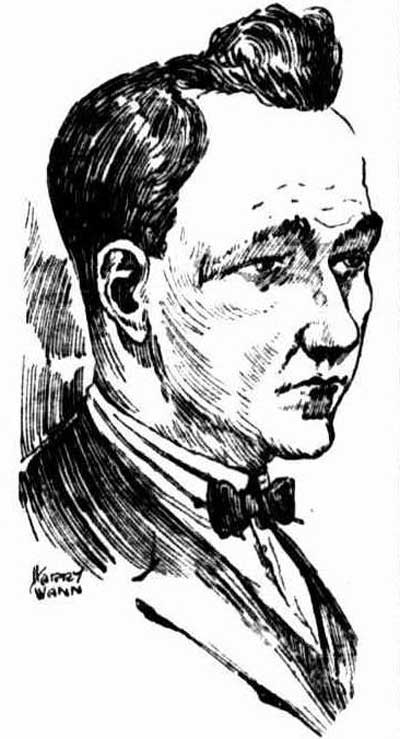
NSW), Sun 3 Dec 1922, p. 11.
Reproduction: Peter de Waal
A DAGGER
————
USED IN HOTEL.
————
ALLEGED STABBING
————
STORY IN COURT
————
The story of the alleged stabbing of Probationary Constable AC Burnett, at the Graham Hotel, Castlereagh-street, on September 14, was told at the Central Police Court to-day, when William Archer, 27, was charged with having maliciously inflicted grievous bodily harm on the constable.
It was stated in evidence that about 6 pm Burnett, who was off duty and in plain clothes, was coming out of the hotel, when he heard a glass smash.
Entering the parlor, he saw four women and four or five men. Archer was one of the party. Burnett told them they better get out. A little later, it was stated, accused struck at one of two women with a dagger. Burnett pushed the women aside, and accused then turned his attention to the constable, and drove the dagger into his left shoulder.
The wound inflicted was about four inches deep, extending down to the main artery and nerves of the arm. Burnett was in hospital until yesterday.
Accused, who reserved his defence, was committed for trial. Bail was fixed at £100.
~ ~ ~ ~ ~
The Bathurst Times, Fri 6 Oct 1922 4
ALLEGED STABBING
————
Sydney, Friday.
The story of the alleged stabbing of Probationary Constable AC Burnett, at the Graham Hotel, Castlereagh-street, on September 14, was told at the Central Police Court, when William Archer, 27, was charged with having maliciously inflicted grievous bodily harm on the constable.
It was stated in evidence that about 6 pm, Burnett, who was off duty and in plain clothes, was coming out of the hotel, when he heard a glass smash.
Entering a parlour, he saw four women and four or five men, Archer was one of the party. Burnett told them they had better get out. A little later, it was stated, accused struck at one of two women with a dagger. Burnett pushed the woman aside, and accused then turned his attention to the constable, and drove the dagger into his left shoulder.
The wound inflicted was about four inches deep, extending down to the main artery, and nerves of the arm. Burnett was in hospital until Wednesday.
Accused, who reserved his defence was committed for trial. Bail fixed at £100.
~ ~ ~ ~ ~
The Sydney Morning Herald, Wed 29 Nov 1922 5
QUARTER SESSIONS.
(Before Judge Cohen.)
Mr LJ McKean, Crown Prosecutor.
…
MALICIOUS WOUNDING.
William Archer, for who Mr ER Abigail appeared, pleaded not guilty to a charge of maliciously wounding Allan Richard Burnett, at Sydney, on September 14.
Burnett, a police constable, stated that her went into the Hotel Graham, Castlereagh-street, on September 14. He was in plain clothes and off duty, but on hearing a noise in one of the parlours he went to discover the cause. In the parlour he saw several men and women quarrelling. He put out two men, and told the others that it was time for the hotel to close. While he was talking to one of the women the accused rushed in and struck at him with a knife resembling a dagger. The blade penetrated the shoulder. Witness was taken to Sydney Hospital where he was a patient for a fortnight. He was off duty for six weeks.
The defence was an allegation that the constable aimed a blow at the accused, who was standing in the passageway. The accused, it was stated, had in his hand a knife, with which he was cleaning his pipe. Striking blindly back at the constable, the accused forgot that the knife was in his hand. Witnesses were brought to corroborate accused’s statement.
The accused was found guilty. A long list of previous convictions was read against him, and was sentenced to 18 months’ hard labour in Bathurst Gaol.
~ ~ ~ ~ ~
Truth, Sun 3 Dec 1922 6
AT ROSE ROONEY’S
———◦———
A STABBING AFTER A “SHIVOO”
————
CONSTABLE RESCUING A DAMSEL
IS DANGEROUSLY DAMAGED
————
Assailant Archer is Deservedly Dealt With
Somebody gave a birthday party at Rose Rooney’s Hotel Graham, in Castlereagh-street, on September 14. Though the liquor taps were turned on generously, the fun and frolic throughout the day appear to have been innocent and harmless enough. But the festival had a memorable and a somewhat tragic ending. The tale of that tragic ending—what advocate ER Abigail lamented as “the spoilt ending of a perfect day”—was told to his Honor Judge Cohen, and a jury at the Court of Quarter Sessions at Darlinghurst last Tuesday.
A young man answering the name of William Archer was indicted on the grave charge of having maliciously wounded Allan Richard Burnett, a young police constable, at the Hotel Graham, on September 14.
Archer was defended by Mr ER Abigail, and pleaded not guilty. Mr LJ McKean (instructed by Mr WC Lacey, of the Crown Law Office), was the Crown Prosecutor. The accused challenged seven jurors and the Crown ordered one to stand aside.
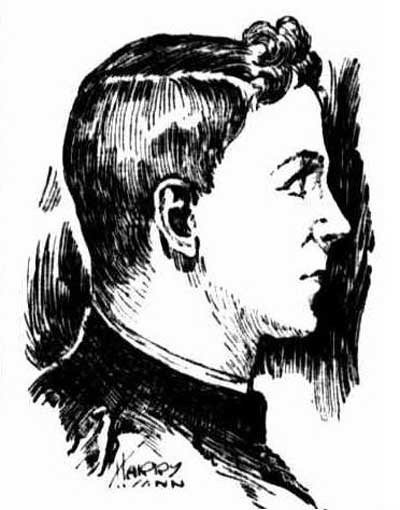
Truth, (Syd, NSW), Sun 3 Dec 1922,
p. 11. Reproduction: Peter de Waal
How Burnett Fared.
Constable Allan Richard Burnett, of No. 5 Police Station, Newtown, said that on the afternoon of September 14 he went into the Hotel Graham in Castlereagh-street, opposite the Commercial Travellers’ Club, shortly before 6 o’clock. He was in plain clothes and had a drink. Just about 6 o’clock witness heard sounds of an altercation in an upstairs portion of the hotel. He went to investigate and found a number of women and men in the room. Witness urged these people to leave the premises as it was not after hours and the hotel people wished to lock up. As witness was speaking to one of the women—Mona Versailles—the accused suddenly rushed at the woman. Accused had a knife or dagger in his hand, and as witness pushed the woman aside, the accused stabbed him in the left shoulder. When witness went into the room the accused was standing just outside. Having stabbed witness the accused ran away, followed by the woman Versailles and another girl. Witness was taken to Sydney Hospital, and remained there for a fortnight. He had been off duty for six weeks. He was not on duty that day.
Mr Abigail: What were you doing that day?
Witness: I didn’t leave barracks till after 5 pm.
Do you know any of the girls at the hotel?—I know one of them, a barmaid named Mabel Richards. I had known her some years.
Do you know a girl named Harper?—I’ve met her.
You have not been down long from the country?—Not long.
The licensee didn’t ask you to clear the hotel?—No.
You went into this parlor and told the people to clear out?—Yes.
The accused was doing no harm?—He was with the rest—eight or ten of them—and they were all quarrelling.
You put two men out?—Yes.
And you made a deliberate blow at accused?—No, I did not.
He was a stranger to you?—Yes.
When you were throwing those people out, did you notice a lot of people clustered round the door and in the passages?—No.
“A Small Argument”.
Hazel Glasson, a domestic servant, living at 121 Victoria-street, Darlinghurst, said that on the afternoon of September 14 she was at the Graham Hotel. There were other girls there, and she saw accused there also. Accused was with Mona Versailles, but witness had not seen accused before. The accused and his girl, Mona, began to have a “small argument”, so witness and her friend moved into another parlor. Shortly afterwards she heard someone call out, “I’m stabbed!” She ran into the next room and rendered assistance to Constable Burnett, who had been stabbed in the shoulder.
Mr Abigail: You knew Burnett?
Witness: I’d met him.
There was “a birthday” on that day at the Hotel Graham?—Yes.
And it was being celebrated with plenty of liquor?—Yes.
Was Constable Burnett drinking?—He had a drink with a girl upstairs.
When was that?—At about half-past 4.
Is that girl here to-day?—I don’t think so.
What became of that girl that day?—I can’t say I was with my own friend.
Mr McKean: You saw the accused there?
Witness: Yes, about 10 minutes before the stabbing.
Mabel Richards, a massive, smiling Hebe, said that she was a barmaid at the Hotel Graham. She deposed that on September 14 she was serving in the bar till about 6 o’clock. She saw Constable Burnett, Hazel Glasson and another girl there. It was after Constable Burnett had been stabbed that she saw him. He then had his coat off. After the stabbing she saw a man and a woman running downstairs, but did not see their faces.
Mr Abigail: It was a pleasant day you had that day?
Witness (smiling): Yes.
At what time did you first see Constable Burnett there?—I saw him early in the morning.
Did he come in for “a drop of the best”, or did he come in to see you?—I think he came to see Miss Rooney.
An Unexpected Caller.
Margaret Stanley, married woman, living apart from her husband at Cambridge Flats, Darlinghurst, said that in September the accused lived in the flat next hers. About midday of September 15, the accused clad only in pyjamas, and barefooted, suddenly appeared in her kitchen. To get there he must have jumped the intervening five-foot fence. She asked accused, “What’s wrong?” All he replied was, “Hus–s-s-sh!” Then Detective-sergeant Miller arrived also and took the accused away.
The depositions of Dr Edward Francis Evans, Resident Medical Officer at Sydney Hospital, were read. The doctor described the wound on Burnett’s left shoulder as he saw it when Burnett was brought to the hospital on the evening of September 14. It was an incised wound extending inward four inches, and had reached the main artery. It was over the upper and outer part of the left deltoid muscle. Burnett, by the time he reached the hospital, at 6.15 pm, had lost a deal of blood. There was a tourniquet round his arm when he arrived.
Detective-sergeant Jacob Henry Miller said that on September 15, at 1 pm, at No. 1 Cambridge Flats, Bourke-street, Darlinghurst, Mona Versailles opened the front door to his knock. Witness went inside, and in the kitchen of the next flat, that of Mrs Stanley, he saw the accused. In answer to a query, accused gave his name as “Saunders”. When told that he answered the description of a man who had stabbed Constable Burnett on the preceding evening, and asked where he had been at that time, the accused replied, “I won’t tell you where I was, but I was not at the Graham Hotel”. Mabel Richards subsequently, from a line of men at the Central Police Station, identified accused as the man who had stabbed Constable Burnett at the Hotel Graham on the evening of September 14.
This concluded the Crown case-in-chief.
The Defence—Self-Defence and Accident.
The accused man, William Archer made an unsworn statement from the dock.
He admitted having been at the birthday party at the Hotel Graham on September 14. The constable, after putting some women and some men out of the parlor, made a blow at him, and he struck back at the constable. Accused had a knife in his hand at the time, having been cleaning his pipe, but forgot the knife when he struck at the constable. He was very sorry for what had happened, and did not think the effect was so serious. The constable was in plain clothes and did not say that he was a policeman.
The accused called a number of witnesses to support his version of the tragic happening.
Francis Quinn, caretaker, said he lived at 12 Francis-street, Hyde Park. On September 14, at about 20 to 6, he saw the accused at the Graham Hotel. Witness and a friend had three drinks, and then went out to the back. As they were returning along the passage they saw one man make a blow at another. The second man returned the blow. The combatants were Constable Burnett and the accused. Burnett, after being struck, seemed to sink down, and was eventually taken to hospital.
Mr McKean: Have you seen accused since that day?
Witness: Not till this morning.
What sort of knife had accused in his hand?—A small one.
Where did the constable sink down?—Some four feet inside a room off the passage way. A chap named Gray was with me.
Did you see a knife at all?—I saw something in his hand, but it might not have been a knife.
Had accused anything else in his hand?—A pipe, I think.
William Denmark, foreman glass-blower, living at Rose-street, Woollahra, said the accused was a perfect stranger to him. He saw accused at the Hotel Graham on the evening of September 14. In a room off the passageway witness saw blows exchanged. The accused had a knife and a pipr in his hand. Witness only had a momentary glance at the man who struck at accused.
Witness picked out Constable Burnett in the court as the man who had been exchanging blows with the accused.
Bernard Gray, metal buyer, of Darlinghurst, said he had known accused for some time, but had no interest in this case. On September 14 at 20 to 6 o’clock he went to the Hotel Graham. At about 6 pm he saw a scuffle in one of the parlors. “They were running wild, and I did my best to avoid a crack”, sententiously remarked witness; “but from what I can read somebody else must have stopped one”. The accused was there, with a pipe in one hand and a knife in the other. Some one, a big heavy fellow, struck accused, who put up his hands to protect himself.
Constable Ivan John O’Brien, of No. 3 Police Station, said that on September 14 he was barracked at the Central. Constable Burnett and other constables were quartered in the same room at the barracks. Witness remembered Constable Burnett being stabbed on September 14.
“A Perfect Day” Marred.
In his address to the jury, Mr Abigail claimed that Constable Burnett was unworthy of belief. Though stationed away out at Newtown, he knew that that day beer was gushing freely at the Hotel Graham, and he accordingly found his way there. Burnett knew two of the girls at the hotel, but did not go there to see the pretty girls. Burnett was not in uniform. Furthermore, Burnett had not been in the police very long, otherwise he would not have acted as he did. Counsel wondered how this young constable would get on on some of the mining fields if he attempted to clear hotels at closing time as he did on this occasion. By his impetuosity Constable Burnett had marred the end of what otherwise would have been a perfect day. On this occasion Constable Burnett had pushed his shovel where there was no dirt. He bustled in amongst a party of total strangers in plain clothes and without saying who or what he was. Burnett made a blow at the accused, and the defence was that the wound he consequently sustained had not been maliciously inflicted by the accused. The Crown witnesses themselves had proved that Constable Burnett had been at the Hotel Graham repeatedly throughout that day. Three disinterested witnesses of undoubted good repute had given their versions of what had actually happened that evening. And their testimony showed that there was no malicious stabbing. The accused had a knife in his hand at the time, and it all happened in a flash.
“Too Much Picture-Show”.
Mr McKean told the jury that whether or not Constable Burnett had the right to sue the accused in the civil courts must not concern them. There was arising in our midst altogether “too much picture-show”—this was an example of it—in a low-class pub where an officer of the law was endeavouring to do his duty. If the accused had a clean defence why was objection raised to these questions put by the Crown as to where Constable Burnett had been during that day. What was the necessity for the accused to give the false name of “Saunders”; why the necessity of the sudden flight from the flat in which he lived; why his denial that he had been at the Hotel Graham at all that day? Of what value were the witnesses called for the defence, witnesses who could say that no blow had been struck by the accused when the constable victim was off duty for six or seven weeks? And where the wound was four inches deep, how could the defence be put forward that the wound was not malicious? And why was Mona Versailles not called? As a young and inexperienced constable, Burnett might not have been as tactful as an older officer might have been, but was that any reason why he should be maliciously stabbed in a low-class hotel while attempting to do his duty?
His Honor pointed out that the accused’s defence was that he had committed this injury in self-defence, and that the wounding of Constable Burnett was accidental. If the injury had been accidentally inflicted on Burnett, then the accused could not be guilty of malicious wounding.
Guilty!—Eighteen Months.
The jury found Archer guilty.
It transpired that Archer was a man of many aliases, and had a long list of criminal conviction, dating back to 1913. On September 15, 1920, he received his most notable sentence—two years hard labor for stealing—at the Melbourne Supreme Court. He was known as “Wesley”, “Collis”, and “Collins”. It was under the latter name that he was living in Darlinghurst with the woman Mona Versailles.
For his most recent offence his Honor Judge Cohen sentenced him to 18 months’ hard labor in Bathurst Gaol.
~ ~ ~ ~ ~
William Archer, Gaol photo sheet 7
![SRNSW: NRS2467, [3/6108], State Penitentiary photographic description book, 5 Sep 1922-24 Mar 1923, No. 19014, p. 197.](../../images/trials/1920-Archer-6108-gaol-photo-19014.jpg "SRNSW: NRS2467, [3/6108], State Penitentiary photographic description book, 5 Sep 1922-24 Mar 1923, No. 19014, p. 197.") |
Gaol Photo Sheet - Transcribed Details
No. 19014
Date when Portrait was taken: 29-11-1922
Name: William Archer
(aka William Collins, Wesley Clarence Archer)
|
Native place: Grafton Year of birth: 13-4-1895 Arrived Ship: Trade or occupation Religion: C of E Education, degree of: R & W Height: 5' 6¾" Weight On committal: 141 Colour of hair: Brown Colour of eyes: Brown
|
Marks or special features: Knuckle of of left middle finger injured. Long scar on inside right wrist. Outline of flag on chest. Round scar on left shin |
|
(No. of previous Portrait .. 13627) CONVICTIONS |
|||||
|
Where and When |
Offence. |
Sentence |
|||
|
Central PC. Queensland Brisbane Victoria Melbourne NSW Central PC Victoria Melbourne Supreme NSW Sydney Q.S |
14
7
8
27
15
28 |
12
8
11
8
9
11 |
1914
1916
1918
1919
1920
1922 |
Riotous
Stealing from the person
Attempted larceny from the person
Suspected person
Larceny
Malicious wounding |
20/- or 14 7 days H.L.
2 months H.L.
14 days H.L.
3 months HL
2 years H.L.
18 months H.L. |
|
And 3 previous convictions for which see Photo No. above |
|||||
1 SRNSW: NRS2467, [3/6105], State Penitentiary photographic description book, 9 Oct 1920-14 May 1921, No. 17527, p. 78.
2 The Sydney Morning Herald, Mon 18 Sep 1922, p. 7. Emphasis added.
3 Evening News, (Sydney, NSW), Thu 5 Oct 1922, p. 1. Emphasis in original text.
4 The Bathurst Times, Fri 6 Oct 1922, p. 1.
5 The Sydney Morning Herald, Wed 29 Nov 1922, p. 10. Emphasis added.
6 Truth, (Syd, NSW), Sun 3 Dec 1922, p. 11. Emphasis added.
7 SRNSW: NRS2467, [3/6108], State Penitentiary photographic description book, 5 Sep 1922-24 Mar 1923, No. 19014, p. 197.