The Richmond River Herald and Northern Districts Advertiser, Tue 30 Jan 1917 1
LOCAL AND GENERAL NEWS.
————
…
ALLEGED SERIOUS OFFENCE.—At Woodburn Police Court last week a Greek, known as Nicholas Theodore, [aka Nicholas Theodossopoulos], a restaurant hand, was presented a charge of attempting to commit a serious offence against a young fellow well-known on the Mid-Richmond. Accused, who was remanded till 10th February, is at present in the lockup at Coraki.
~ ~ ~ ~ ~
The Richmond River Herald and Northern Districts Advertiser, Tue 13 Feb 1917 2
BRIEF MENTION.
————
…
At Woodburn Police Court on Friday last, before the PM, Nicholas Theodore was committed for trial for an alleged attempted offence against a youth. Bail was allowed.
~ ~ ~ ~ ~
Northern Star, Mon 26 Mar 1917 3
A SERIOUS CHARGE.
At the Woodburn Police Court on 17th inst Daniel Donoghue and Frank Underhill were charged with conspiring to prevent the course of justice. Mr McIntosh (McIntosh and Best) appeared for accused, and Inspector Lewis prosecuted. It will be recollected that some weeks ago a Greek, known as Nicholas Theodore, was taken into custody on a charge of attempting an offence against William Donoghue, son of D Donoghue.
Before that case came on for hearing young Donoghue was missing, but he was found subsequently at New Italy, with a sum of money in his possession. It is now alleged that Carkagis was told the case could be settled for £50. Carkagis, paid over £10 as a first instalment. It was also alleged that the money had been paid to the witness Donoghue, to leave the district.
After evidence had been given by Constable Nicholls, James Carkagis and W Donoghue, the accused were committed for trial to the Lismore Court, bail being granted in the sum of £50. —“R. R. Herald.”
~ ~ ~ ~ ~
The Kyogle Examiner, Wed 28 Mar 1917 4
A SERIOUS CHARGE.
At the Woodburn Police Court on 17th inst Daniel Donoghue and Frank Underhill were charged with conspiring to pervert the course of justice. Mr McIntosh appeared for accused and Inspector Lewis prosecuted.
It will he recollected that some weeks ago a Greek, known as Nicholas Theodore, was taken into custody on a charge of attempting an offence against William Donoghue son of D Donoghue.
Before the case came on for hearing young Donoghue was missing, but he was found subsequently at New Italy with a sum of money in his possession. It is now alleged Carkagis was told the case could be settled for £50. Carkagis paid over £10 as a first instalment. It was also alleged that the money had been paid to the witness Donoghue, to leave the district.
After evidence had been given by Constable Nicholls, James Carkagis, and W Donoghue, the accused were committed for trial to the Lismore Court, bail being granted in the sum of £50. — Ballina “Beacon.”
~ ~ ~ ~ ~
Mullumbimby Star, Thu 5 Apr 1917 5
A SERIOUS CHARGE.
At the Woodburn Police Court on 17th ult., Daniel Donohue and Frank Underhill were charged with conspiring to pervert the course of justice. Mr McIntosh (McIntosh and Best) appeared for accused, and Inspector Lewis prosecuted. It will be recollected (says Ballina “Beacon”) that some weeks ago a Greek, known as Nicholas Theodore, was taken into custody on a charge of attempting an offence against William Donoghue, son of D Donoghue. Before the case came on for hearing young Donoghue was missing, but he wan found subsequently at New Italy with a sum of money in his possession. It is now alleged that Carkagis was told the case could be settled for £50. Carkagis paid over £10 as a first instalment. It was also alleged that the money had been paid to the witness Donoghue, to leave the district. After evidence had been given by Constable Nicholls, James Carkagis and W Donoghue, the accused were committed for trial to the Lismore Court, bail being granted in the sum of £50.
~ ~ ~ ~ ~
Daily Examiner, Sat 21 Apr 1917 6
LISMORE QUARTER SESSIONS.
Following is the calendar of cases set down for hearing before his Honor Judge Hamilton 7 at the Quarter Sessions commencing on Monday, April 23, 1917.
Witnesses will not be required to attend until the morning the case is set down for hearing:—
Monday, April 23:—
Louis Sonenfield conspiracy to defraud;
Nicholas Theodossopoules, [sic–Theodossopoulos] assault with intent to commit sodomy;
Daniel Donoghue and Frank Underhill, conspiracy to pervert the course of justice;
Sydney George Churchill, assault occasioning actual bodily harm.
Appeals:—
John Martin, assault on female;
William, Thomas Stanley Hill, (1) assault, (2) insulting words.
Tuesday, April 24:—
George Joseph Petrie and Joseph James Petrie, cattle stealing;
Walter William Higgins, sodomy.
Wednesday, April 25:—
Nundah, cattle stealing.
~ ~ ~ ~ ~
Northern Star, Wed 25 Apr 1917 8
LISMORE QUARTER SESSIONS.
———◦———
Before his Honor Judge Hamilton.
————
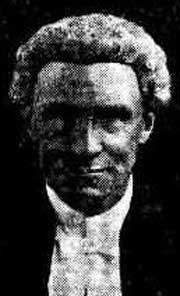
Image: The Sydney Morning Herald,
(NSW), Thu 31 Jan 1924, p. 8.
Reproduction: Peter de Waal
The Quarter Sessions was continued a the Court House yesterday morning. Mr R[obert] J[ardine] Browning prosecuted for the Crown.
…
ALLEGED CONSPIRACY
Daniel Donoghue and Frank Underhill were charged with having on the 9th February 1917 at Woodburn, conspired amongst themselves to pervert the course of justice.
The accused, who were defended by Mr W Curtis, instructed by Mr McIntosh, pleaded not guilty.
The following jurymen were empanelled .—Messrs. W Nolan, J Rogers. S Laws, F Gibson, T Kennedy, T Nicholl, G Knight, J Robinson, J Donaghy, J Noble, J Tulk, F Hicks.
For the Crown:—
Francis Edward Nicholls, a police constable, stationed at Woodburn, deposed he was the constable in the case of Nicholas Theodossa Polos [aka Nicholas Theodossopoulos] set down for hearing on the 9th February at the Woodburn Police Court. One of the witnesses was William Donoghue. The witness in question did not present himself, and witness went to New Italy and saw William Donoghue there. Witness searched him and found £17-14s-3d in his purse. Witness brought him back to Woodburn. Witness saw Daniel Donoghue and asked him if he knew his son was needed at the Court that morning. He said “Yes.” Witness said “Did you tell him to go away?” Donoghue said “No, I did not tell him to go away, but he could if he wanted to. He has been very distressed of late, crying at night on account of having to give evidence at the Court.” Witness said “Did you give him any money?” and Donoghue replied “I gave him three five pound notes.” Witness said “Where did you get the money?” Donoghue replied £10 was from my hyacinth cheque and I borrowed the other £5 from Underhill.” Witness then asked “Have you any money on you?” When Donoghue said yes, he had £7, witness asked “Why did you borrow the money from Underhill when you had money in your possession?” He said “I didn’t want to run myself short.” Witness then instructed him to go to the police office. Witness then went to Underhill and said “Did you lend Donoghue any money this morning?” Underhill replied “Yes I lent him a tenner.” Witness said “You are quite sure it was £10?” and he said “Yes, I am.” Witness asked did Underhill get any acknowledgment of the money and he said he did not. Underhill said he happened to be wearing the trousers he had worn to town the previous night, and that was how he had money in his pocket. Later in the day witness went to Donoghue’s house and there met both the accused and William Donoghue. Witness said to the accused Donoghue “Did any of the Greeks come to the house this morning?” and he said “No, I saw one coming towards the house and I went and met him.” The Greek had told Donoghue he wanted to see the boy and Donoghue said, he would not let him. Witness asked was that before the boy left and Donoghue said he thought it was. Witness asked did Donoghue ever tell the boy before that morning, that if he did not want to give evidence he could go away. Donoghue said “No.” Witness the[n] asked accused’s son if his father told him he could go away, and he said his father had given him permission to go to Grafton. Witness asked “If you were going to Grafton why did you go to New Italy, it was miles out of your road?” He said he had intended to catch the coach. The coach did not go within two miles of New Italy. Accused’s son said “The reason why I went to New Italy was because I did not want anyone to see me going.” Witness asked the boy if his father had told him what to with the money and he said no. Witness asked Underhill if he had seen any Greeks, and he said he had been in a Greek shop the previous night and was talking to one. Witness asked “Did you mention anything of the case to him?” and he said it was spoken of. Witness then went to the Greek shop with Underhill. That was the shop where Theodossa Poulos was employed. Underhill sat down and witness went to the back premises and saw James Carkagis. He brought the Greek out to Underhill and said to him “Is that the man you gave £10 to?” The Greek replied it was. Underhill winked at him and said “I paid you the £10 back.” The Greek said “No, I promised you £50 to settle the case and gave you £10 down.” Witness then took Underhill to the office and said “What have you to say now after hearing the Greek?” He said “What I told you to-day was not right.” Underhill then gave witness a written statement (produced) to that effect. Witness had no more conversation with either of the accused.
Cross-examined by Mr Curtis, Underhill had told witness before writing the statement that he wished to make some amends. Witness knew both the accused bore good characters, and were hard working men. Witness thought that Carkagis was a friend of Theodossa Poulos. Witness knew that Donoghue was a widower with a large family. When the summons was served on the accused Donoghue he had just received a cable stating his son had been killed at the front.
William Donoghue, son of the accused, deposed he was 17 years old and was absent from the Police Court on the 9th February. Witness was at New Italy at the time, and he did not attend the Court because he had never been in one and didn’t like to be there. Before witness went he asked his father if he could go to New Italy instead of going to the Court. Witness’ father gave him £15. Witness had some sisters and brothers in Grafton and was to give them some of the money. Witness went to New Italy to avoid anyone who might see him going. Before leaving home witness saw Underhill, who said he would give him £40 to keep away from the Court till 10 o’clock. That was before witness’ father had given him the £15. When Underhill mentioned about the £40 witness’ father was in the room. After breakfast witness went away to New Italy and was brought back by Constable Nicholls later in the day. At that time witness was carting for a living.
Cross-examined by Mr Curtis, witness remembered the day on which the Police Court was to have been held. Witness was not present when his father, Underhill and another man held a conversation. In giving his evidence at the Police Court witness had told everything.
James Carkagis, a fruiterer, living at Mullumbimby, deposed he was in Woodburn on the day the case of Theodossa Poulos was to come on. Witness knew Underhill before going to Woodburn. There witness saw Underhill and said to him [he] had heard that if the boy’s father got £50 he would square the case. The following morning witness saw Underhill in the town. Witness then, on Underhill’s advice, went to see Donoghue and had a conversation. Donoghue said to witness “If I get £50 I will have the boy away.” Witness said “How are you going to do that?” and he said “The boy did not got a subpoena from the police and so has a right to get away if he likes.” Witness then said “I’ll give you £10 now and the balance when my solicitor comes from Lismore.” Underhill was only a few yards away at the time and did not take any part in the conversation. Before witness left he gave Underhill £10 and saw Underhill give it to Donoghue.
Cross-examined by Mr Curtis, witness had explained everything to Mr McIntosh. Witness found out that Underhill had only met Donoghue the day before, but he knew Underhill very well. On the night witness had met Underhill they talked on things generally, and it was accidental that he found Underhill knew Donoghue. The only thing Underhill did in the matter was to show witness the way to Donoghue’s place. Witness was the man who made the arrangements to settle the case for a certain sum. In the course of the conversation witness said to Donoghue “This is a filthy case and should be settled out of Court.” Witness was trying to settle the case for his friend Theodossa Polos.
To the Crown: Witness did not have the £10 with him at Woodburn. Witness was in Sydney when he first heard of the case.
For the defence:—
Frank Underhill, a laborer, residing at Woodburn, deposed he had lived at Mullumbimby for four and a half years and had known Carkagis all the time. Witness was working at Woodburn and knew Donoghue only as a working mate. Carkagis had come to witness in the town and accidentally asked him where he could find Donoghue, as he was desirous of having the Court matter settled. Witness saw Donoghue later and told him the Greek wanted to see him, and Donoghue said, “If he wants to see me let him come to my place.” Witness went into town and told the Greek what Donoghue had said. The Greek asked witness where Donoghue lived. Witness told him and showed him the way out. Witness was present during a conversation between Donoghue and the Greek, and arrangements were made between the two for the £50. Donoghue thought £50 was little enough as compensation for what had happened [to] the boy. The Greek, Carkagis, offered £45 and Donoghue said that would do. The Greek then said to Donoghue “Take a cheque for £10 and I will give you a cheque for the balance.” Donoghue said, “I won’t take a cheque; it’s no good to me.” The Greek said he would have to send to Mullumbimby. Witness, knowing the Greek well, said, “If you give me a cheque I’ll give you £35.” The Greek said “All right, you can get the cheque from me in Woodburn.” The Greek then gave witness £10 to make the amount up to £35, and witness went home to get the money After getting the money witness gave it to Donoghue and went into town to get his cheque from the Greek. In the meantime the Greek had seen Mr McIntosh, the solicitor and told witness Mr McIntosh wanted to see him. After seeing Mr McIntosh witness made arrangements to have a car sent out for the boy. Witness had never got his £35 back from the Greek.
Cross-examined by Mr Browning: Witness did not know he was doing wrong in trying to square a criminal case. Witness was sure that Donoghue received £45. Witness made the arrangements to go out in the car. Witness wasn’t aware that Constable Nicholls had ’phoned from New Italy for the car to go out. Witness had told Constable Nicholls he had lent Donoghue £10, but that was not true. Witness made that statement because he did not want the matter to go before the Court.
To his Honor: Witness was at the Greek’s shop on the night before, after seeing Mr McIntosh.
The jury, after deliberating for a quarter of an hour, returned a verdict of not guilty, and accused was discharged.
His Honor remarked that, although the jury returned a verdict of not guilty, he held an opinion, quite to the contrary.
~ ~ ~ ~ ~
Northern Star, Thu 26 Apr 1917 9
JUDGE HAMILTON’S REMARKS.
————
At noon at the Quarter Sessions Judge Hamilton said:— As this is the day on which proceedings, are taking place all over Australia to commemorate the landing of the Australian troops at Gallipoli, I think it is fitting to show our accord with those proceedings that we should adjourn for a short time. In that way we shall, I think, be best recognising and following the spirit that animated the men whose actions are being celebrated to-day. This the anniversary of a day which certainly one of the greatest events, if not the greatest event, in the history of Australia occurred. The landing of our troops on the beach at Gallipoli on that day—a beach that will be for ever known as Anzac— was an event of the greatest moment to Australia, and the memory of the deeds of those gallant men who stormed the heights there and established themselves in a position which the enemy had considered absolutely impregnable, and under exceptional difficulty and danger, was not only gratifying to Australians, but was recognised throughout the whole world as establishing for ever the reputation of Australians as fit to take their place beside the greatest heroes the world has ever produced. And it certainly is a most fitting thing that that event should be commemorated, and I hope it will be commemorated from year to year for year in Australia. It was an action which was certainly comparable with the great deeds of the armies of other nations, which have always been celebrated by them. The authorities, I understand, have decided that the commemoration should be more of a solemn and religious nature than of rejoicing. Of course we all rejoice at what our soldiers achieved on that day, but certainly with that rejoicing there must always be, at any rate for us of this generation, mingled feelings of great sorrow. That glorious achievement was not consummated without severe loss, and there is hardly a family throughout the Commonwealth that did not lose some relative or friend either on that day or in the events of succeeding days in the same neighbourhood. It is a very meet, therefore, that we should consider the day as a very solemn anniversary. It ought to teach us lessons of self-sacrifice and devotion to duty, which are the highest expressions, probably, of a truly religious spirit. And certainly those qualities are not only in a great crisis like that through which the Empire is now passing, but through all time the most conducive to the well being of the community. I can only say that I hope that the losses that were sustained on the occasion which we commemorate to-day will imprint those lessons deeply in our minds, and that all of us in our respective spheres will impress on our children and our children’s children the necessity of a similar spirit. We are here celebrating what our own men have done, but it would be ungenerous and, I believe, quite out of keeping 'with the wishes and the spirit of those men of ours if we neglected to associate with them in our minds their comrades from New Zealand, and also, I believe, it would be the wish of those men that we should always recognise the equally great, if not greater, achievements of the famous 29th Division of the British Expeditionary Force, which had a similar experience about the same time. I now adjourn the Court for a quarter of an hour as an outward and visible sign of associating ourselves with the commemoration that is taking place throughout the whole Commonwealth.
Mr RJ Browning, the Crown Prosecutor, said he wished to testify to their admiration of the heroism of the Anzacs at Gallipoli. It was a feat of arms that would live in history for ever. The day should be celebrated not only by rejoicing at the gallantry of the Anzacs, but by taking part in a religious celebration to perpetuate the memory of those who had fallen in the great fight.
The Court then adjourned as directed by his Honor.
~ ~ ~ ~ ~
The Richmond River Herald and Northern Districts Advertiser, Fri 27 Apr 1917 10
WOODBURN CONSPIRACY CASE.
————
JUDGE DISAGREES WITH
JURY’S VERDICT.
————
At the Lismore sessions on Tuesday last, before his Honor, Judge Hamilton, Daniel Donoghue and Frank Underhill were charged with having, on the 9th February, 1917, at Woodburn, conspired amongst themselves to pervert the course of justice.
The accused, who were defended by Mr W Curtis, instructed by Mr McIntosh, pleaded not guilty.
The following jurymen were empanelled .—Messrs. W Nolan, J Rogers. S Laws, F Gibson, T Kennedy, T Nicholls, G Knight, J Robinson, J Donaghy, J Noble, J Tulk, F Hicks.
Francis Edward Nicholls, a police constable, stationed at Woodburn, deposed he was the constable in the case of Nicholas Theodossa Polos set down for hearing on the 9th February at the Woodburn [sic] Police Court. One of the witnesses was William Donoghue. The witness in question did not present himself, and witness went to New Italy and saw William Donoghue there. Witness searched him and found £17-14s-3d in his purse. Witness brought him back to Woodburn. Witness saw Daniel Donoghue and asked him if he knew his son was needed at the Court that morning. He said “Yes.” Witness said, “Did you tell him to go away?” Donoghue said, “No, I did not tell him to go away, but he could if he wanted to. He had been very distressed of late, crying at night on account of having to give evidence at the court.” Witness said “Did you give him any money?” and Donoghue replied, “I gave him three five pound notes.” Witness said, “Where did you get the money?” Donoghue replied £10 was from my hyacinth cheque and I borrowed the other £5 from Underhill.” Witness then asked, “Have you any money on you?” When Donoghue said yes, he had £7, witness asked “Why did you borrow the money from Underhill when you had money in your possession?” He said, “I didn’t want to run myself short.” Witness then instructed him to go to the police office. Witness then went to Underhill and said “Did you lend Donoghue any money this morning?” Underhill replied “Yes, I lent him a tenner.” Witness said “You are quite sure it was £10?” and he said “Yes, I am.” Witness asked did Underhill get any acknowledgment of the money and he said he did not. Underhill said he happened to be wearing the trousers he had worn to town the previous night, and that was how he had money in his pocket. Later in the day witness went to Donoghue’s house and there met both the acused [sic] and William Donoghue. Witness said to the accused Donoghue, “Did any of the Greeks come to the house this morning?” and he said “No, I saw one coming towards the house and I went and met him.” The Greek had told Donoghue he wanted to see the boy, and Donoghue said he would not let him. Witness asked was that before the boy left and Donoghue said he thought it was. Witness asked did Donoghue ever tell the boy before that morning that if he did not want to give evidence he could go away. Donoghue said “No.” Witness then asked accused’s son if his father told him he could go away, and he said his father had given him permission to go to Grafton. Witness asked “If you were going to Grafton why did you go to New Italy, it was miles out of your road?” He said he had intended to catch the coach. The coach did not go within two miles of New Italy. Accused’s son said “The reason why I went to New Italy was because I did not want anyone to see me going.” Witness asked the boy if his father had told him what to with the money and he said no. Witness asked Underhill if he had seen any Greeks, and he said he had been in a Greek shop the previous night and was talking to one. Witness asked “Did you mention anything of the case to him?” and he said it was spoken of. Witness then went to the Greek shop with Underhill. That was the shop where Theodossa Poulos was employed. Underhill sat down and witness went to the back premises and saw James Carkagis. He brought the Greek out to Underhill and said to him “Is that the man you gave £10 to?” The Greek replied it was. Underhill winked at him and said “I paid you the £10 back.” The Greek said “No, I promised you £50 to settle the case and gave you £10 down.” Witness then took Underhill to the office and said “What have you to say now after hearing the Greek?” He said “What I told you to-day was not right.” Underhill then gave witness a written statement (produced) to that effect. Witness had no more conversation with either of the accused.
Cross-examined by Mr Curtis, Underhill had told witness before writing the statement that he wished to make some amends. Witness knew both the accused bore good characters, and were hard working men. Witness thought that Carkagis was a friend of Theodossa Poulos. Witness knew that Donoghue was a widower with a large family. When the summons was served on the accused Donoghue he had just received a cable stating his son had been killed at the front.
William Donoghue, son of the accused, deposed he was 17 years old and was absent from the Police Court on the 9th February. Witness was at New Italy at the time, and he did not attend the Court because he had never been in one and didn’t like to be there. Before witness went he asked his father if he could go to New Italy instead of going to the court. Witness’ father gave him £15. Witness had some sisters and brothers in Grafton and was to give them some of the money. Witness went to New Italy to avoid anyone who might see him going. Before leaving home witness saw Underhill, who said he would give him £40 to keep away from the court till 10 o’clock. That was before witness’ father had given him the £15. When Underhill mentioned about the £40 witness’ father was in the room. After breakfast witness went away to New Italy, and was brought back by Constable Nicholls later in the day. At that time witness was carting for a living.
Cross-examined by Mr Curtis, witness remembered the day on which the police court was to have been held. Witness was not present when his father, Underhill and another man held a conversation. In giving his evidence at the police court witness had told everything.
James Carkagis, a fruiterer, living at Mullumbimby, deposed he was in Woodburn on the day the case of Theodossa Poulos was to come on. Witness knew Underhill before going to Woodburn. There witness saw Underhill and said to him he had heard that if the boy’s father got £50 he would square the case. The following morning witness saw Underhill in the town. Witness then, on Underhill’s advice, went to see Donoghue and had a conversation with him. Donoghue said to witness “If I get £50 I will have the boy away.” Witness said “How are you going to do that?” and he said “The boy did not got a subpoena from the police and so has a right to get away if he likes.” Witness then said “I’ll give you £10 now and the balance when my solicitor comes from Lismore.” Underhill was only a few yards away at the time, and did not take any part in the conversation. Before witness left he gave Underhill £10 and saw Underhill give it to Donoghue.
Cross-examined by Mr Curtis, witness was the man who made the arrangements to settle the case for a certain sum. In the course of the conversation witness said to Donoghue “This is a filthy case and should be settled out of Court.” Witness was trying to settle the case for his friend Theodossa Polos.
For the defence, Frank Underhill, a laborer, residing at Woodburn, deposed he had lived at Mullumbimby for four and a half years and had known Carkagis all the time. Witness was working at Woodburn and knew Donoghue only as a working mate. Carkagis had come to witness in the town and accidentally asked him where he could find Donoghue, as he was desirous of having the court matter settled. Witness saw Donoghue later and told him the Greek wanted to see him, and Donoghue said, “If he wants to see me let him come to my place.” Witness went into town and told the Greek what Donoghue had said. The Greek asked witness where Donoghue lived. Witness told him, and showed him the way out. Witness was present during a conversation between Donoghue and the Greek, and arrangements were made between the two for the £50. Donoghue thought £50 was little enough compensation for what had happened [to] the boy. The Greek, Carkagis, offered £45 and Donoghue said that would do. The Greek then said to Donoghue “Take a cheque for £10 and I will give you a cheque for the balance.” Donoghue said, “I won’t take a cheque; it’s no good to me.” The Greek said he would have to send to Mullumbimby. Witness, knowing the Greek well, said, “If you give me a cheque I’ll give you £35.” The Greek said “All right, you can get the cheque from me in Woodburn.” The Greek then gave witness £10 to make the amount up to £35, and witness went home to get the money After getting the money witness gave it to Donoghue and went into town to get his cheque from the Greek. In the meantime the Greek had seen Mr McIntosh, the solicitor, and told witness Mr McIntosh wanted to see him. After seeing Mr McIntosh witness made arrangements to have a car sent out for the boy. Witness had never got his £35 back from the Greek.
Cross-examined by Mr Browning: Witness did not know he was doing wrong in trying to square a criminal case. Witness was sure that Donoghue received £45. Witness made the arrangements to go out in the car. Witness wasn’t aware that Constable Nicholls had ’phoned from New Italy for the car to go out. Witness had told Constable Nicholls he had lent Donoghue £10, but that was not true. Witness made that statement because he did not want the matter to go before the court.
To his Honor: Witness was at the Greek’s shop on the night before, after seeing Mr McIntosh.
The jury, after deliberating for a quarter of an hour, returned a verdict of not guilty, and accused was discharged.
His Honor remarked that, although the jury returned a verdict of not guilty, he held an opinion, quite to the contrary.—“Northern Star.”
1 The Richmond River Herald and Northern Districts Advertiser, (NSW), Tue 30 Jan 1917, p. 2.
2 The Richmond River Herald and Northern Districts Advertiser, (NSW), Tue 13 Feb 1917, p. 2.
3 Northern Star (Lismore, NSW), Mon 26 Mar 1917, p. 3. Emphasis added.
4 The Kyogle Examiner, (NSW), Wed 28 Mar 1917, p. 2. Emphasis added.
5 Mullumbimby Star, (NSW), Thu 5 Apr 1917, p. 3. Emphasis added.
6 Daily Examiner, (Grafton, NSW), Sat 21 Apr 1917, p. 4. Emphasis added.
7 The Sydney Morning Herald, (NSW), Tue 12 Aug 1930, p. 10.
“JUDGE HAMILTON.
———◦———
Death Announced.
————
Judge Hugh Montgomerie Hamilton, formerly of the District Court Bench, and chairman of the Quarter Sessions, died at his residence, Tomabil. Wentworth-road, Strathfield, early yesterday morning. Since July, 1924, he had been living in retirement.
Judge Hamilton’s career was a remarkably interesting one. He was born in Parramatta on June 26, 1854. He received the greater part of his education abroad, and attended colleges at Geneva and Edinburgh. At Marlborough College, England, he distinguished himself in his studies and in sport; but it was as a Rugby footballer that he gained most prominence, being captain of the school’s first team. When he proceeded to London he joined the “Marlborough Nomads,” which became the leading London team. At that time, on account of his brilliance, he was placed in a most unusual position. England claimed him to play against Scotland, but Scotland also claimed him for the same match. He joined the Scottish team and played with them for two years. While in London he was also associated with boating and lacrosse.
Meanwhile he attended the University of London, and completed his studies in Heidelberg. He was called to the English Bar on May 15, 1878, and practised in England for 11 years. During portion of the time he was counsel to the Treasury of the Northern Circuit. He returned to Sydney in 1890 to rejoin his father, the late Mr Hugh Hamilton, formerly of Tomabil and Boyd stations, Forbes.
Judge Hamilton was appointed a permanent District Court Judge and Chairman of the Quarter Sessions in May, 1914. For nearly 20 years before that appointment he had been an Acting Judge in every Court in the State, with the exception of Broken Hill, Bourke, and Cobar. He was draftsman to the Royal Commission for the Consolidation of Statute’s of New South Wales, and was a Royal Commissioner on several inquiries. At the beginning of 1920 he was appointed chairman of the Compensation Board, provided for under the Liquor (Amendment) Act, passed in 1919. He was the author, with Mr GC Addison, of “The Crimes Act, 1900,” New South Wales, which was published in 1902.
In Freemasonry Judge Hamilton was a conspicuous figure for many years. He was Past Grandmaster of the united Grand Lodge of New South Wales; Sovereign Grand Inspector-General, 33rd degree A. and AS Rite; PGM of Grand Lodge Mark Master Masons, New South Wales; GZ of the Supreme Grand Chapter, Royal Arch Masons; and Principle Sub-Prior of Knight Templars of New South Wales; and Past GCN of Ark Mariners of New South Wales.
In regard to sport in New South Wales, Judge Hamilton was prominent in golf and football circles. He was one of the first to bring golf clubs into New South Wales, and, with Mr Kent, he played at Dame Eadith Walker’s estate at Yaralla, Concord. The two men later hired a room in a cottage at Bondi for a meeting, and as a result the Sydney Golf Club (now the Royal Sydney Golf Club) was formed. Judge Hamilton was vice president of the New South Wales Rugby Union. With Mr Milton, he Introduced “passing” into Rugby Union rules.
Prominence in yet another direction was achieved by Judge Hamilton when he took part in the Murchison expedition in the New Zealand Alps. As a result of the part he played in that expedition, the second highest mountain in Australasia, Mount Hamilton, near Mount Cook, is named after him.
Beautiful Chinaware had a strong fascination for him, and he made a fine collection. He was also a stamp collector, and a lover of animals, being a keen judge of dogs.
Judge Hamilton at various times held the following positions: Vice-president of the Royal Agricultural Society: vice-president of Furlough House; chairman of the United Charities Fund; president of the Poultry Club; president of the Horticultural Society; president of the Sydney School of Arts; president of the Kennel Association; vice-president of the Philatelic Society; and honorary life governor of the Royal Prince Alfred Hospital. He was chairman of directors of the Australian Metropolitan Life Assurance Company, Ltd.
Mrs Hamilton (formerly Miss Margaret Innes) predeceased him six years ago. There are two sons, Major John Hamilton, D.S.O., B.E., A.M.I.C.E., who is in the service of the Main Roads Board, and Dr George R Hamilton, of Macquarie-street, and one daughter, Dr Marie M Hamilton, of the Health Department.
The funeral will leave Wood Coffill’s chapel, 810 George-street, city, at 2.30 pm to-day for the Waverley Cemetery.”
8 Northern Star (Lismore, NSW), Wed 25 Apr 1917, p. 4. Emphasis added.
9 Northern Star (Lismore, NSW), Thu 26 Apr 1917, p. 4.
10 The Richmond River Herald and Northern Districts Advertiser, (NSW), Fri 27 Apr 1917, p. 4. Emphasis added.