The Yass Courier and General Advertiser, Mon 1 Apr 1912 1
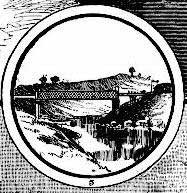
Image: Australian Town and Country Journal, Sat
24 Oct 1885, p. 859. Reproduction: Peter de Waal
LOCAL AND GENERAL
———
POLICE COURT.
———
Friday, March 29
Before Mr F[rancis] A[rundel] Ridley, PM.
INDECENT ASSAULT.—Michael Ryan, labourer, 28, was charged with indecent assault on Claude Murdock, [aka Murdoch] at Yass, the previous evening.
Constable Mackenzie, who caught the accused committing the offence, arrested him under the Yass [River] Bridge and lodged him in the lockup.
After hearing the evidence of the arresting constable and Murdock, the PM committed accused to the Yass Quarter Sessions in September. Bail allowed.
INDECENT LANGUAGE.—Claude Murdock, labourer, 16, was charged by constable Mackenzie with having used indecent language in Cooma-street, he was fined £1, or ten days hard labour in Yass gaol.
~ ~ ~ ~ ~
Depositions for Michael Ryan 24 Apr 1911 Goulburn trial 2
(a) Town. |
Letter from Bench of Magistrates at (a) Yass |
|
|
|
transmitting Depositions |
|
|
(b) Name in full of accused. |
in the case Rex v. (b) Michael Ryan |
|
|
(c) Offence. |
(c) Indecently assaulting a male person at on 28th March 1912 |
|
|
(d) Town. |
Petty Sessions Office, (d) Yass |
|
|
|
29th March 1912. |
|
|
|
Sir, |
|
|
(e) Name of accused |
case of (e) Michael Ryan |
|
|
(f) “His” or “her” |
who has been committed to take (f) his |
|
|
(g) “Circuit Court,” or |
trial at the (g) Quarter Sessions |
|
|
to be held at (h) Yass |
on Tuesday |
|
|
(h) Town where Court |
the 17th day of September 1912 |
|
|
The accused is (i) confined in the Gaol at Goulburn |
||
|
(i) “Is confined in the |
||
|
(k) As in Recognizance, both for Crown and defence, specifying also what witnesses gave evidence but were not bound over, with reason for omission. |
The Witnesses bound over are (k) Alexander MacKenzie, Police Constable of Yass and Claude Murdoch, Labourer of Yass
|
|
|
(l) Short description to enable identification. |
The Exhibits enclosed are (l) nil |
|
|
|
I have the honor to be, |
|
|
|
[Signed] Walter Scott, JP |
|
|
|
Clerk of Petty Sessions |
|
|
The Under Secretary, |
||
|
N.B.– When a Police Constable acts as Clerk of Petty Sessions, this letter should be signed by one of the Committing Magistrates |
||
|
4g 201-90 |
||
~ ~ ~ ~ ~
[Subpoena]
GEORGE THE FIFTH, by the Grace of
God, of the United Kingdom of Great
Britain and Ireland, and of the British
Dominions beyond the Seas, King, Defender
of the Faith, Emperor of India.
New South Wales, Goulburn
TO WIT. }
To: Thomas Riley and John Carroll both of His Majesty’s Gaol, Goulburn
Greetings:–
We command you and every of you, firmly enjoining you, that laying aside all pretences and excuses whatsoever, you and every of you be and appear in your proper persons, before Our Justices assigned to hold Pleas before us, on Wednesday the twenty-fourth day of April next, by Nine of the Clock in the forenoon of the same day, at the Goulburn in Our State of New South Wales, in the Court House situate in Goulburn
there to testify the truth, and give evidence, on the part of the Crown, before Our said Justices, touching a certain information to be preferred against
Michael Ryan in a case of indecent assault
in a case of
and that you so appear, from day to day, until the case is tried; and this you, or any, or either of you, are not to omit, under the penalty of One Hundred Pounds, to be levied upon your and every of your Goods and Chattels, Lands and Tenements, if you, or any, or either of you shall fail in the Premises.
Witness The Honorable Sir William Portus Cullen, Knight, Our Chief Justice of Our Supreme Court of New South Wales, at Sydney, the twenty-third day of April in the first year of Our Lord one thousand nine hundred and twelve.
For the Prothonotary
[Signed] L[ouis] A[ndrew] McDougall
Clerk of the Supreme Court.
Deputy Clerk of the Peace
Commissioner for Affidavits for the Supreme Court of New South Wales and Clerk of Petty Sessions for the Circuit Court Town of Goulburn.
~ ~ ~ ~ ~
Commonwealth of Australia.
Postmaster General’s Department, New South Wales.
Telegram.
Oxford Hotel, Chapman, Court House, Goulburn
Application Michael Ryan for legal aid refused.
[Signed] Williams, Under-Secretary Justice.
~ ~ ~ ~ ~
NEW SOUTH WALES POLICE.
Southern District,
Yass Station.
13th March 1912.
Report relative to antecedents of:–
Name: Michael Ryan
Offence: Indecent assault on a male person
Committed for trial at: Yass Quarter Sessions
Date: 17 September 1912.
Constable MacKenzie No. 6689 reports:– That there is nothing known of this accused at Yass where he arrived carrying his swag from Sydney only two days before his arrest.
His fingerprints are not known at the Fingerprint Branch Sydney.
The place of trial has now been altered from Yass Quarter Sessions to Goulburn Circuit Court on the 24th instant.
[Signed] Alexander MacKenzie, 1st Class Constable.
~ ~ ~ ~ ~
[Subpoena]
GEORGE THE FIFTH, by the Grace of
God, of the United Kingdom of Great
Britain and Ireland, and of the British
Dominions beyond the Seas, King, Defender
of the Faith, Emperor of India.
New South Wales, Goulburn
TO WIT. }
To: Constable McKenzie, Claude Murdock both of Yass.
Greetings:–
We command you and every of you, firmly enjoining you, that laying aside all pretences and excuses whatsoever, you and every of you be and appear in your proper persons, before Our Justices assigned to hold Pleas before us, on Wednesday the twenty-fourth day of April instant next, by Nine of the Clock in the forenoon of the same day, at the Circuit Court in Our State of New South Wales, in the Court House situate in Goulburn
there to testify the truth, and give evidence, on the part of the Crown, before Our said Justices, touching a certain information to be preferred against
Michael Ryan
in a case of Indecent Assault
and that you so appear, from day to day, until the case is tried; and this you, or any, or either of you, are not to omit, under the penalty of One Hundred Pounds, to be levied upon your and every of your Goods and Chattels, Lands and Tenements, if you, or any, or either of you shall fail in the Premises.
Witness The Honorable Sir William Portus Cullen, Knight, Our Chief Justice of Our Supreme Court of New South Wales, at Sydney, this third day of April in the second year of Our Reign, and in the year of Our Lord one thousand nine hundred and twelve.
(Signed)
For the Prothonotary
W[illiam] H[enry] Hazelton
Clerk of the Supreme Court.
~ ~ ~ ~ ~
Police Charge, No. 20
Court of Petty Sessions, Yass
29th March 1912.
Michael Ryan (28. NSW R.C.) for that on the 28th March 1912 at Yass in the State of New South Wales, he did indecently assault Claude Murdoch a male person, 16 years of age.
Plea:– Not asked to plead.
Committed to take his trial at the Quarter Sessions to be holden at Yass on the 17th September 1912. Bail allowed self in £80 and one surety £80 or two in £40 each.
[Signed] FA Ridley, PM.
~ ~ ~ ~ ~
Depositions of Witnesses.
New South Wales, Yass
TO WIT. }
The examination of Alexander MacKenzie of Yass in the State of New South Wales, Police Constable and Claude Murdoch of Yass in the said State, taken on oath this 29th day of March in the year of Our Lord one thousand nine hundred and twelve at the Yass Police Office, in the said State, before the undersigned, ----- of His Majesty’s Justices of the Peace in and for the said State, in the presence and hearing of Michael Ryan who was charged this day before me for that he the said Michael Ryan on the 28th day of March in the year of Our Lord one thousand nine hundred and twelve at Yass in the said State, he did indecent assault on Claude Murdoch a male person 16 years of age.
1
This Deponent Alexander MacKenzie on his oath, saith as follows:– I am a Police Constable and stationed at Yass.
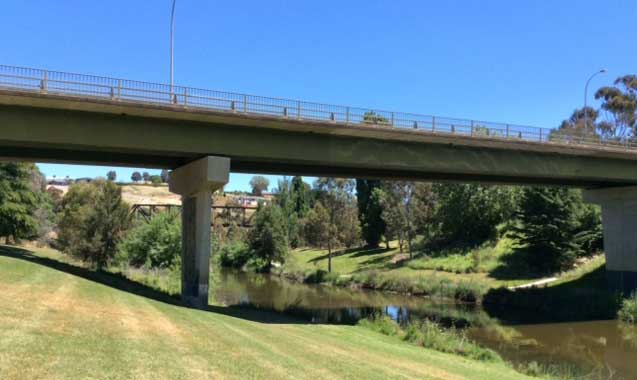
At 8 pm yesterday I was under the Hume Bridge in Cooma Street Yass, I there saw the accused lying on the ground with a lad named Claude Murdoch. Murdoch was apparently asleep lying face downward with his face towards the ground. The accused was lying at his back with a tent-fly covering most of his body and his head. Murdoch’s trousers were pulled down to his knees also the accused had his trousers down. The accused had his private person in his hand. The point of it was between Murdoch’s thighs and into the back passage. I struck a match and saw this. After I had stood there for ten seconds the accused uncovered his head and immediately put his person into his trousers and pulled his trousers up. I said to him “What have you been doing to the boy?” He said “Ah, don’t be dirty, do you think I would do anything dirty to the boy?” He then pulled the tent fly over the boy’s hind part which was exposed. I said to him “Who took the boy’s trousers down?” He said “He did himself.” I said “Who took your trousers down?” He said “I did myself, of course. I always take my trousers off before going to bed.” He then poked the boy in the side and said “Wake up, wake up.” The boy then made certain remarks. The accused said “Be careful, there is a cop alongside of you.” I then arrested the accused.
2
His braces were unbuttoned off his trousers except for one button, the right side button.
The boy’s braces were altogether unbuttoned off his trousers. I then took him to the lock up and charged him as he now stands charged. He made no reply to the charge.
When I came on the accused and Claude Murdoch, Murdoch seemed to be asleep. I did not rouse him. Then accused aroused him. Murdoch was snoring. When the accused roused him he seemed to be dazed and stupid from the effects of drink. I could smell it on him very strongly. I found a square bottle containing whisky close beside him. It is “Walker’s Square” and was about half full.
The remark that Murdoch made when he was aroused by the accused was “Leave me alone you fucking bastard, what do you want to do a thing like that to me for?”
To the accused: I spoke to the accused in the main street Yass about 6.30 that evening. I did not follow him under the bridge, I went as far as Comin’s Yass Hotel and no further. The accused was not asleep when I went down to the bridge. I did not wake him. I saw the accused doing what I have said to the boy.
To the Bench: The tent-fly covered the whole of the accused except from his waist to his ankles.
To the accused: I did not touch the tent-fly when I came upon the accused. Both parties were partly lying upon it.
[Signed] Alexander MacKenzie.
Taken and sworn this 29th day of March 1912, at Yass, in the State of New South Wales.
Before [Signed] FA Ridley, PM.
3
This Deponent Claude Murdoch on his oath, saith as follows:–
I am a labourer and reside at Yass. I know the accused. I first met him in Yass last Wednesday. I have not been in his company much. I was with him yesterday. I was at the show ground with him. I left the show ground about 2.30 pm with the accused. After I left the show ground I went into a paddock near the show ground and had a sleep. I was the only one that went into the paddock. No-one came near me while I was in the paddock. From there I went down underneath the bridge. I did not have any drink before I went down to the bridge. About 7 pm yesterday evening I went under the bridge. I went under the bridge alone. I there met the accused and another man named Thomas Riley. I had a drink of whisky near the bridge. The accused gave it to me. I had one nip. Before that I went to go to sleep when the accused woke me up to have the whisky. He said “Come into the shade,” meaning the shade of the bridge from the moon. The moon was at that time shining. I went under the shade of the bridge. I lay down there. The accused lay down with me. I think we had a tent over us. He then took off my trousers and he stuck it up me I mean he was trying to fuck me. He had pulled down my trousers. He then tried to put his private person into my rear passage. He did not say anything to me. I said to him “Let me go to sleep.” I went to sleep and I did not know anything until the Constable came along. I do not quite remember swearing at the accused. The Constable took both of us up to the lock up. I had only one nip of whisky.
4
I am not in the habit of taking whisky.
To the accused: The accused asked me for a “fuck.” He said “Give us a fuck,” and did what I have stated.
I could not say which of the two of us lay down under the bridge first. We both lay down in the shade of the bridge together. I did not see the accused go off to sleep. I did not ask the accused to let me sleep beside him as I had no clothes to cover me, nor anything like that.
To the Bench: I am sixteen years of age. I will be seventeen on the 14th of November next.
[Signed] Claude Murdoch.
Taken and sworn this 29th day of March 1912, at Yass, in the State of New South Wales.
Before [Signed] FA Ridley, PM.
~ ~ ~ ~ ~
(F. 2 – “Justices Act, 1902.”)
Statement of the Accused.
State of New South Wales, Yass
TO WIT. }
Michael Ryan (hereinafter called the defendant) stands charge before the undersigned, one of His Majesty’s Justices of the Peace in and for the said State, this 29th day of March in the year of Our Lord one thousand nine hundred and twelve for that he, the said defendant, on the 28th day of March 1912, at Yass in the said State, did indecently assault one Claude Murdoch, a male person 16 years of age and the said charge being read to the said defendant, and the witnesses for the prosecution, Alexander MacKenzie, Constable of Police of Yass and Claude Murdoch labourer of Yass being severally examined in his presence, and (the depositions to the said witnesses having been read to him), the said defendant is now addressed by me the said Justice as follows:– “Having heard the evidence, do you wish to say anything in answer to the charge? You are not obliged to say anything unless you desire to do so, but whatever you say will be taken down in writing, and may be given against you in evidence at your trial; and you are also informed, and are to clearly understand, that you have nothing to hope from any promise of favour, and nothing to fear from any threat which may have been holden out to you to induce you to make any admission or confession of your guilt, but whatever you now say may be given in evidence against you upon your trial notwithstanding such promise or threat.” Whereupon the said defendant saith as follows:– “Not guilty, Your Worship.”
[Signed] Michael Ryan.
Taken before me and read over to the said defendant at Yass in the said State, the day and year first above mentioned.
[Signed] FA Ridley, PM.
~ ~ ~ ~ ~
G. 190.
New South Wales, Yass
TO WIT. }
REX.
versus
Michael Ryan
Offence,— Indecently assaulting a male person at Yass on 28th March 1912
The accused stands committed to take his trial at the next Court of Quarter Sessions to be holden at Yass, in the State of New South Wales, on the seventeenth day of September 1912, or at such other Court to be holden at such place and time as the Attorney-General may appoint. Bail allowed the accused in £80 and two sureties in £40 each, or one in £80
[Signed] FA Ridley, PM
JP.
Dated at the Yass Police
Office, Yass
in the said State,
this twenty-ninth day of March
AD 1912.
4g 416 - 88
~ ~ ~ ~ ~
“Justices Act, 1902.”
Recognizance to give Evidence.
State of New South Wales, Yass
TO WIT. }
Be it remembered, that on the 29th day of March in the year of Our Lord one thousand nine hundred and twelve Alexander MacKenzie a Constable of the Police Force, stationed at Yass in the State of New South Wales, Claude Murdoch of Yass in the said State, labourer personally came before the undersigned, one of His Majesty’s Justices of the Peace for the said State, and acknowledged themselves to owe Our Sovereign Lord the King the sum of
FORTY POUNDS EACH,
of good and lawful money of Great Britain, to be made and levied of their goods and chattels, lands and tenements, respectively, to the use of our said Lord the King, his Heirs and Successors, if they the said before mentioned persons shall fail in the condition indorsed.
Taken and acknowledged, the day and year first above mentioned, at Yass in the said State, before me.
[Signed] FA Ridley, PM.
The condition of the within written Recognizance is such, that whereas one Michael Ryan was this day charged before Francis Arundel Ridley, Esquire, Police Magistrate and one of His Majesty’s Justices of the Peace for the said State, for that on the 28th day of March 1912 at Yass in the said State, he did indecently assault one Claude Murdoch a male person 16 years of age.
If, therefore, they the before mentioned persons shall appear at the next Court of Quarter Sessions to be holden at Yass in and for the State of New South Wales, on Tuesday the 17th day of September 1912, at nine of the clock in the forenoon and then and there give such evidence as they know, upon an information to be then and there preferred against the said Michael Ryan for the offence aforesaid, to the jurors who shall pass upon the trial of the said Michael Ryan.
Then the said Recognizance to be void, or else to stand in full force and virtue.
[Signed] FA Ridley, PM.
~ ~ ~ ~ ~
[On the depositions’ cover sheet is the following]
Quarter Sessions
Yass
17th September 1912
Circuit Court
Goulburn
24 April 1912
No. 127 5
AG 12/118
356
Depositions.
Rex
v.
Michael Ryan
Indecent assault
Committed at: Yass
on: 29th March 1912
~ ~ ~ ~ ~
Court. CC Goulburn
Date. 24-4-12
Cor. Cullen CJ Ch. of Q.S.
Plea. Not guilty
Verdict. (at 2.55 pm) Guilty
Judgment. Imprisonment with hard labour in Goulburn Gaol for one year.
John A Ferguson
Crown Prosecutor
Note.– In event of postponement, it should be stated whether accused admitted to bail.
~ ~ ~ ~ ~
Indecently assaulting male person
[Initialled] ROB
30.3.12
As this accused in Gaol, I suggest that his trial should be ordered to take place at Goulburn Circuit Court on 24th April next.
[Signed] WR Beaver
Clerk of the Peace
1.4.12
Approved
[Initial illegible]
2.4.12
~ ~ ~ ~ ~
Justice WP Cullen’s notebook 3
114
Goulburn – 24 April 1911 [sic–1912]
JA Ferguson hands in Commission to prosecute for the Crown.
Rex v Michael Ryan – Indictment for indecent assault on a male person.
Time: 28 March 1912
Place: Yass
Person: Claude Murdoch
Plea: not guilty
No appearances for prisoner.
115
Alexander MacKenzie – Constable, Yass. Saw accused at Yass 28 March last – 5.30 pm. Again In Cooma Street Yass. Not known to me then. Again at 8 pm. Under Hume Bridge in Cooma Street Yass. He was with a lad named Claude Murdock. 4 Did not know Murdoch. Another man under the bridge about 30 yards away a Thomas Riley was his name. It was a moonlight (night ?). The men were in the shade.
116
Accused was lying with Claude Murdoch under a tent fly. Murdoch was lying with face towards front – accused lying behind him &c.
Cross-examined by prisoner.
Re-examined.
Claude Wallace Murdock: Labourer, Forest Lodge Sydney. Was in Yass on 28th March, just knocking about. Had been working at odd jobs. Only knew prisoner when he came to Yass. Met him on the 27th there. Was with him again on the 28th.
117
We & another man we had been with went to Bridge. I went at 7 o’clock, lay down & went to sleep under bridge. Prisoner was asleep there when I went down. I lay down away from him – about 10 yards. I was not quite asleep when he woke me up & gave me a drop of whisky, 10 minutes after I went there. I had had 4 shandies in the afternoon. I was in the light & he told me to come & lie in the shade. I did so & we lay together – Thomas Riley was then sitting up against a post asleep – 5 or 10 yards away. I went to sleep – He tried to &c 5 me --- before I went to sleep &c &c &c.
118
Cross-examined.
Case for Crown closed
Witnesses for defence.
Thomas Riley. Don’t remember the constable stopping you – nor when going to the bridge. We had some drink under the bridge & went to sleep. The lad was there too. We had all been drinking & I do not remember anything about what happened.
119
John Carroll – Labourer – Yass. I saw Murdoch in the Yass lock-up. I was there with him 9 or 10 days. He told me he had a case in Goulburn – I asked him what it was – He told me it was indecent assault or something like that. I asked him was there any truth in it – he said “no”. He said he was made say it, that he was told to say it. He seemed very nervous about it.
120
Cross-examined. I did not know the boy before that. I have been talking about this matter with the prisoner in the Goulburn Gaol. I am awaiting trial there myself.
Re-examined.
The Prisoner [Michael Ryan] is sworn & gives evidence: Was asleep under the bridge. Constable woke me up & asked me what boy’s trousers were undone for. I said I suppose he undone them himself.
121
He asked me did I do anything to him. I said no I ain’t so dirty. He arrested the both of us – next morning he fetched in ½ a bottle of whisky into cell – asked me did I know anything about it – I told him no. I asked him could I get a doctor to see the boy – He said “later on in the day.” I heard the boy cry – I got (near ?) the (?) side the cell next (that ?) of his.
122
The constable was talking to the boy – I heard him say “Plead guilty – nothing will happen you.” That is all.
Cross-examined. The witness I have called here was brought here from the gaol. When the constable woke me up my trousers were not undone.
Case for prisoner closed.
In reply: Constable MacKenzie recalled.
123
When I came Murdoch was not sitting up. Denies other particulars alleged by prisoner.
Cross-examined.
Constable MHE Gray, Yass – Remembers prisoner & Murdock at Yass lockup – I did not advise Murdock to plead guilty or intimidate him in any way. Did not tell him nothing would happen to him if he pleaded guilty.
Claude Murdock (recalled).
124
So far as I can recollect neither of the constables told me to plead guilty – MacKenzie told me “you will be all right, nothing will happen to you.” I knew Carroll in the lock-up yard at Yass. I told Carroll I didn’t know whether prisoner assaulted me or not – I believe I told him I was made say it. No one ever did tell me to say it. Contradicts Carroll’s statement as to what he said at Yass lock-up.
125
Cross-examined:
Prisoner to jury says he is not guilty, but was drunk a couple of days in Yass.
I sum up.
Jury retire 11.30. – Scess 6 127
127
25 April 1912
Continued from p.124 7
R v Ryan
Jury return at 11.54 and ask that Constable MacKenzie be recalled for further question. He is recalled & in answer to Jury says: They were partly covered with the fly when I saw them under the bridge – Their private parts were exposed. The tent fly covered the upper part of their bodies. Prisoner’s head was covered. Murdoch’s was not.
Jury again retire at 11.56
Jury return at 2.55
Verdict: Guilty.
Remand for sentence till tomorrow.
25 April 1912: Sentence passed: one year’s imprisonment with hard labor in Goulburn Gaol.
~ ~ ~ ~ ~
Goulburn Evening Penny Post, Thu 25 Apr 1912 8
CIRCUIT COURT.
———◦———
The above was commenced on Wednesday morning at the Court House before His Honour the Chief Justice, Sir William Cullen. Mr P Halse Rogers was Judge Associate, and Mr JA Ferguson Crown Prosecutor. Mr W Chapman was present from the Crown Solicitor’s Office. Other legal gentlemen present were Messrs AM Betts, EF Thomas, PJ Meyer, AE Sendall, EA Betts, JC Walsh, and E Howard (of Yass).
Upon his Honour the Chief Justice taking his seat, Mr AM Betts stated that as the senior member of the profession practising at Goulburn he desired on behalf of the other solicitors and himself, as this was the first occasion of his Honour visiting Goulburn in his official capacity, to extend a warm welcome to him to Goulburn, which, as his Honour knew, was one of the oldest Circuit Court towns in the State. When, after the retirement and lamented death of his Honour’s predecessor, Sir Frederick Darley, it became known that his Honour was to be appointed to the position of Chief Justice, there was a general feeling of gratification in both branches of the profession in Sydney, and this feeling was fully shared in by all the solicitors practising in this district. His Honour’s predecessors in the position of Chief Justice were all gentlemen who were noted for their scholarly attainments, their great legal learning and ability, their strict integrity, impartiality, and devotion to the duties of their office, and when it was announced that the choice of a successor to Sir Frederick Darley had fallen on his Honour it was felt by all members of the profession that his Honour, if he might be permitted to say so, possessed all those qualifications which would enable him to maintain untarnished the high ideal and splendid example which had been set by his Honour’s predecessors in the responsible position of Chief Justice of the State. He need not say more, except to express the hope that his Honour would long occupy the position of Chief Justice, that his present stay in Goulburn would be of a pleasant nature, and that it would prove to be the forerunner of many similar visits to Goulburn when his Honour would attend to preside at the sittings of the Court.
His Honour thanked the legal gentlemen of the district for their kind sentiments towards himself.
INDECENT ASSAULT.
Michael Ryan was charged that at Yass on 28th March he did commit an indecent assault. Accused pleaded not guilty. No jurors were challenged by either accused or the Crown.
An order was made that all women and youths under 21 years of age should leave the Court.
Accused was not defended.
Evidence was heard, and accused was found guilty. The jury were absent about three hours. Accused was remanded till Thursday morning.
CIRCUIT COURT.
———◦———
Thursday, April 25.
Before his Honour the Chief Justice, Sir William Cullen.
SENTENCE.
Michael Ryan, found guilty on indecent assault, was sentenced to one year’s imprisonment in Goulburn Gaol.
…
PRISONERS’ AID ASSOCIATION.
————
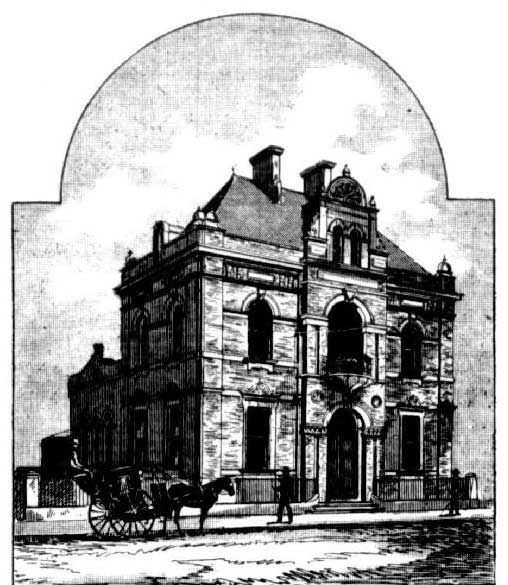
Image: Australian Town and Country Journal, Sat 16 Feb
1889, p. 26. Reproduction: Peter de Waal
The annual meeting of the local branch of the above was held in the [Goulburn] Town Hall on Wednesday evening, his Honour Sir WP Cullen, Chief Justice, presiding. The attendance was limited.
Mr EA Betts (hon secretary) read apologies from the Attorney-General, the Minister for Justice, the Comptroller-General of Prisons, Mr A James, MLA, Bishop Gallagher, and Mr Hugh Dixon, the former president. Mr Betts mentioned that a number of clergymen and others were unable to attend.
Appended are extracts from the report, which was read by the hon secretary:—
During the year 11 committee meetings were held. On the whole the meetings have been fairly well attended. Many of the prisoners who are discharged do not, owing to more favourable circumstances, require assistance; but to show that the assistance rendered is appreciated by many less fortunate ones, it may be mentioned that during the year 80 applications in all for assistance were received. This includes 11 that were not finally dealt with at the end of the previous year. In addition 10 applications were dealt with at last committee meeting, but the applicants are not due for discharge from the gaol until next month. Of the 80, 67 were actually dealt with, and 13 still remain under consideration. Of the 67 applications, 46 were assisted in the following ways, and in some instances, where the circumstances justified, the one applicant received assistance in several ways, such as being supplied with blankets, swag, etc, 35 were found employment, 16 were supplied with food and temporary lodging, 8 were supplied with clothing, 5 were supplied with swags, 4 were supplied with fares to enable them to proceed where employment waited them. The remainder were dealt with in various ways as the circumstances in each case warranted.
During the 12 months only one of those assisted returned to gaol, and in the year before not one of those who had received assistance from the association offended against the law in such a way as to be again sentenced to prison.
It is, of course, impossible to say what the state of affairs would be if such an association were not in existence, but the committee think that they may fairly claim that the satisfactory and encouraging results above mentioned are due, at any rate to some extent, to the assistance given at the critical stage of their release when friends and sympathisers were few.
Letters have been received from time to time from many expressing gratitude for the assistance afforded.
Without in the slightest degree questioning the wisdom of justice of the rule or law which directs that men of all trades must now be paid a certain wage, the fact is clear that the work of finding employment for discharged prisoners has been thereby rendered more difficult, for reasons which will be easily understood.
It may be interesting to know that since the formation of the Goulburn branch in 1902, in all 668 prisoners have been assisted, and only 41 have been again convicted. Up to the end of last May 2637 prisoners had been assisted in New South Wales, and more than 88 per cent of these have never returned to gaol.
The practically new regulation for release on license instead of remission of sentence makes the prisoner cautious whilst on license that he does not commit himself again, as otherwise he must return to gaol to complete his original sentence. We understand from the managing secretary that so far as the prisoners are concerned the license system is working satisfactorily.
Great interest is shown by the chaplains to the gaol in those applying for assistance, and it is a very pleasing matter to also note that here is no man more keen as to the interests of those about to be discharged than Mr Jackson, the governor of the gaol, and in this respect he has proved a most worthy successor to the late governor, Mr Graham, whom we all respected so much.
The managing secretary, Mr Willard, has always been most ready to assist the local branch in any way he could.
The committee have again to thank the residents of Goulburn and district in subscribing so liberally to the funds of the association, and desire to thank the Council for the use of the Town Hall for the monthly committee meetings and the annual meeting.
His Honour, in moving the adoption of the very satisfactory report, said that the evening called his mind back to the time when he first addressed an audience in Goulburn. It was over a score of years ago. His audience was a class of young men who were engaged as articles clerks and aspirants to that distinguished position in the various solicitors’ offices in Goulburn. He had come on behalf of the University of Sydney to inaugurate a course of law lectures, which he conducted by weekly visits for about three months. He could not, of course, recall his exact words; but he tried to draw the attention of the young men to the object with which civilised communities all over the world had created systems of laws and tribunals for their administration. He pointed out that the object was not to enable a number of capable young men to make their marks in the world, nor to enable the wily and shrewd practitioner to persuade some magistrate or judge and jury that if impartially looked at there was very little difference between black and white. He pointed out that the reason for these systems was to protect the community from violence and fraud, and from those who opposed the new order that made civilised life tolerable, that the community were determined it would not be expedient to have recourse to the system under which every man who was wronged set out with a strong hand to redress his grievances, that there would be offences and quarrels about property, and the only safety for the community was that for the decision of all the disputes there should be the substitution of some kind of barrier of reason or justice instead of the opposition or strength of the individual, and that everyone, whether practitioner or juryman or judge, who had anything to do with the carrying on of this system of laws had the duty cast upon him to see that the community got the benefit of the provisions which it was making for the establishment of these laws and their fair and just administration.
He had often heard jurors very lightly spoken of. He had always resented it, because it seemed to him that thought there were some who found their way on juries who had a light regard for their duty, in the main the people who served in this country on juries took their duties seriously. They would turn their minds to the high privilege it was sometimes to have a part in seeing that reason and justice shall prevail in the community. After the jury had done its work then the most serious part of the work perhaps began. The judge had, in the light of his experience and the information placed before him, to decide what the penalty shall be. When he had passed his sentence, what then? The long, painful, wearying experience of criminal procedure all over the world weakened the conscience and minds of men; but during the past few generations what might seem the strange discovery was made that all this elaborate paraphernalia was apt to produce a very great danger, because young men became habituated to the conversation of hardened criminals, and even hardened criminals themselves were subjected to systems of discipline which very often made the cure as bad as the disease, so that a long term of imprisonment often left a man a danger to the community for the rest of his life. The result of these considerations led to the amelioration of prison methods and the establishment of such societies as that holding its annual meeting that night. His Honour detailed the reforms instituted, and said they had had a marked effect not only here, but wherever tried. Such societies as this took into consideration that a man set free from gaol had a mark upon him which would be a handicap upon him in his efforts to obtain employment and bring about a reformation in his life, and in giving the helping hand they must have the gratifying consciousness which must come to all who had part in such work as this that in many cases the criminal who had fallen into offence and been convicted and purged his offence by serving his period of detention—that that criminal might be capable of reformation, and it must fill them with very great gratification on hearing a report which gave such ground for hope as the report that night. In all the records the same hopeful element appeared, the same gratifying results, which showed that this was something worth doing, and had met with the success that not a mere kindly consideration, but the kindly and reasonable and sensible intention embodied in the aims of these associations was capable of bringing about. He was pleased to see that in this district the same kindly consideration had been shown by representative persons apart from those who do the ordinary duties of the association. The religious bodies had done good work in helping to improve the conditions of those in the prisons, and in taking an interest in prisoners who were discharged. The Governor of the gaol had a high tribute paid to him in the report, which pleased him (the speaker) very much. He wished to express to them his high appreciation of the ladies and gentlemen throughout New South Wales who were taking this matter up seriously and trying to being the objects of the founders of the association to such success. (Applause.)
The Mayor, in seconding, said that when he learned the Chief Justice was to move the adoption of the report he accepted the duty of seconding with considerable diffidence, but he was there to do his best. There was no doubt that the society was doing good work, and the fact that only one who had been helped had returned to prison proved it. There was no more hopeless person on earth than the prisoner who had served a long term of years, and when turned out was utterly out of touch with his old occupation through the changes that had been made. They all knew that there was in some men’s minds always a brand on the man who had served his sentence. He would say that the man who had done time and reformed was a better citizen than men who were walking about and might have been in gaol but that they had been more fortunate. (Applause.)
Mr CW Furner, as one of the members of the committee, supported the motion. The report was very favourable. He believed Goulburn stood at the top of the list of the country branches of the association, which was a credit to the city. The clergy and choirs who had assisted to brighten the lives of the prisoners were deserving of thanks. There was a moral effect when a man coming out of gaol knew that he was not entirely friendless. The society blessed not only those it assisted, but those who had been able to give assistance.
(Applause.)
The resolution was carried.
Mr Willard, the managing secretary, conveyed the congratulations of the council to the local branch for their continued good work. It was also right for him to acknowledge the good work done by the Governor of the gaol. For his interest in those going out and for his collections on behalf of the society they were very grateful. The good work of the clergymen could not be over-estimated. One of the best evidences of the good that music and lectures had accomplished was the number of men who had expressed the lasting memory those concerts had made on them. From a disciplinary point of view much was to be said in favour of these concerts and lectures. To break the monotony, to elevate the thought, to create fresh resolution in the minds of prisoners was surely a worthy object. The speaker gave examples of the good effects of the work done by the association. The first fortnight after a man’s release from gaol was the most critical. The old hands were not at the present day found back in the gaols. When they found there was an association that would help them they determined to make an effort to turn over a new leaf. (Applause.)
The Rev JH Lewin moved—“That this meeting expresses its sympathy with the work and objects of the association, and earnestly commends the association to the continued support of the residents of Goulburn and district.” If it were a fact that the men coming out of gaol had a better show of getting a billet than others the people should be glad, because that was the time, as had been pointed out, when a helping hand was most needed. It had been a pleasure to him to assist in the work at the gaol. He knew of no work from a Christian minister likely to be so prolific of good results, especially where the prisoners were first offenders. It was often a heartbreaking experience to have to do with these men. The slightest word of sympathy often produced a flood of tears. His experience had been that the men who had been discharged had been glad to keep in touch with those who helped them, and were following in the right track. He knew of one case where a discharged prisoner had become a Sunday-school teacher. (Applause.)
Mr WH Wheatley, in seconding, said he had always taken an interest in the society, and hailed its inception with delight. There was a great deal of difficulty sometimes in getting the men into positions. Some of those who proclaimed the loudest against discharged prisoners were not too good themselves, and ought to be in gaol. They did not complain so much about a man having been in gaol as about his having been caught. However, the prejudice was breaking down. (Applause.)
The resolution was carried.
The election of committee resulted in the re-election of Messrs F Galbraith, WE Dwyer, SH Belcher, WS Foxall, CW Furner, P McShane, WH Wheatley, EA Betts, and CJ McShane, with the addition of Supt Saunders and Ald E Ashley. The Mayor, the clergy of all denominations, and the Governor and visiting officers of the local gaol are ex-officio. The Governor of the gaol is hon treasurer, and Mr EA Betts was re-elected hon secretary. Mr Betts returned thanks, and said he had been acting in that capacity for three years.
A hearty vote of thanks was accorded the Chief Justice for presiding on the motion of Mr Belcher, seconded by Ald Ashley.
His Honour, in returning thanks, said the work had his warmest sympathy, and with the committee and supporters they had there ought to be a good future for the society.
~ ~ ~ ~ ~
Michael Ryan, Gaol photo sheet 9
![SRNSW: NRS2138, [3/6079], Darlinghurst Photograph description books, 1911-1912, No. 12359, p. 113, R5115.](../../images/trials/1912-Ryan-6079-gaol-photo-12359.jpg "SRNSW: NRS2138, [3/6079], Darlinghurst Photograph description books, 1911-1912, No. 12359, p. 113, R5115.") |
Gaol Photo Sheet - Transcribed Details
No. 12359
Date when Portrait was taken: 4-5-1912
Name: Michael Ryan
|
Native place: Dubbo Year of birth: 16-11-1884 Arrived Ship: B. S. Trade or occupation Religion: R. C. Education, degree of: R and W Height: 5' 6" Weight On committal: 129 Colour of hair: Dark brown Colour of eyes: Grey |
Marks or special features: Scroll with “I love my mother” on left muscle, car and horseshoe on left wrist, tree with snake on forearm, heart with dagger on forearm, female right upper arm star on forearm |
|
(No. of previous Portrait ... ) CONVICTIONS |
|||||
| Where and When | Offence. | Sentence | |||
|
Goulburn CC |
24 |
4 |
1912 |
Indecent assault on a male person |
1 year HL |
1 The Yass Courier and General Advertiser, Mon 1 Apr 1912, p. 2.
2 SRNSW: NRS880, [9/7178], Supreme Court, Papers and depositions, Goulburn, 1912, No. 356. Emphasis added.
3 SRNSW: NRS5813, [7/9327], Judiciary, WP Cullen, CJ. Notebooks Circuit Criminal, 1910-23, pp. 114-125, 127. Emphasis added.
4 Spelling varies throughout.
5 Judge’s method of indicating words omitted, describing offence.
6 Indicates notes continue p.127.
7 Means 125.
8 Goulburn Evening Penny Post, Thu 25 Apr 1912, pp. 2, 4.
9 SRNSW: NRS2138, [3/6079], Darlinghurst Photograph description books, 1911-1912, No. 12359, p. 113, R5115.