The Glen Innes Examiner, Thu 19 Mar 1914 1
LOCAL AND GENERAL NEWS.
———◦———
…
AN ABOMINABLE CHARGE.
At the local police court on Tuesday, before Mr [Harry Ferdinand William] Fletcher, PM., Walter Jethro Swaffield, aged 16 years 2½ months, an immigrant youth, employed at the local Government Experimental Farm, was charged with committing an abominable offence against nature. After hearing evidence, the PM committed Swaffield to stand his trial at the Glen Innes Quarter Sessions, to be held on June 4 next. Bail was not applied for.
~ ~ ~ ~ ~
Depositions for Walter Jethro Swaffield 15 Apr 1914 Armidale trial 2
(a) Town. |
Letter from Bench of Magistrates at (a) Glen Innes |
|
|
|
transmitting Depositions |
|
|
(b) Name in full of accused. |
in the case Rex v. (b) Walter Jethro Swaffield |
|
|
(c) Offence. |
(c) Buggery |
|
|
(d) Town. |
Petty Sessions Office, (d) Glen Innes |
|
|
|
18th March 1914 |
|
|
|
Sir, |
|
|
(e) Name of accused |
case of (e) Walter Jethro Swaffield |
|
|
(f) “His” or “her” |
who has been committed to take (f) his |
|
|
(g) “Circuit Court,” or |
trial at the (g) Quarter Sessions |
|
|
to be held at (h) Glen Innes |
on Thursday |
|
|
(h) Town where Court |
the 4th day of June 1914 |
|
|
The accused is (i) confined in the Gaol at Armidale |
||
|
(i) “Is confined in the |
||
|
(k) As in Recognizance, both for Crown and defence, specifying also what witnesses gave evidence but were not bound over, with reason for omission. |
The Witnesses bound over are (k) For the Crown John Cook, Senior Sergeant of Police, Glen Innes. Charles Harold Bourne, Student, Experimental Farm, Glen Innes. Walter Bull, Farmer, Furracabad, Glen Innes. Richard Henn-Gennys, Manager, Experimental Farm, Glen Innes
|
|
|
(l) Short description to enable identification. |
The Exhibits enclosed are (l) “A” Warrant and depositions from Gunnedah Police Court. “B” Papers containing evidence of Inquiry held at Government Experimental Farm at Glen Innes. |
|
|
|
I have the honor to be, |
|
|
|
[Signed] WD Stafford |
|
|
|
Clerk of Petty Sessions |
|
|
The Under Secretary, |
||
|
N.B.– When a Police Constable acts as Clerk of Petty Sessions, this letter should be signed by one of the Committing Magistrates |
||
|
4g 201-90 |
||
~ ~ ~ ~ ~
Walter Jethro Swaffield defence witnesses required
|
HM Gaol Armidale 6th April 1914 |
||||
|
The undermentioned Prisoner at this Gaol committed for Trial at the Quarter Sessions to be held at Glen Innes on the fourth day of June 1914 have been duly warned, and require witnesses as below stated:– |
||||
|
No. |
Name of prisoners |
Offences |
Witnesses’ names |
Witnesses’ address |
|
1 |
Walter Jethro Swaffield |
Buggery |
No witnesses required |
|
|
The Clerk of the Peace, Sydney [Signed] John Jas Clifford, Gaoler. |
||||
~ ~ ~ ~ ~
Police Station, Glen Innes
14th April 1914.
The Superintendent of Police, Armidale
Re:– Attached telegram to warn Mr Henn-Gennys to attend Circuit Court at Armidale.
Senior Sergeant Cook reports that Mr Henn-Gennys has been warned to attend the Circuit Court at Armidale tomorrow as directed by the attached telegram, and will be there by the Glen Innes mail train tonight.
The other witnesses were warned not to attend.
[Signed] J Cook, Senior Sergeant.
~ ~ ~ ~ ~
Senior Sergeant Hogan, Armidale
Please hand these papers to the Deputy Clerk of the Peace, Armidale.
[Signed] Robert E Hood, Senior Sergeant, Armidale 15/4/14.
~ ~ ~ ~ ~
Commonwealth of Australia.
Urgent
Postmaster General’s Department, New South Wales.
Oxford Hotel 19 1/ Section 95 12 56
Police Glen Innes Swaffield’s case ask farm Superintendent Henn Gennys to attend Armidale Court tomorrow.
[Signed, AE] Withy Acting Clerk of Peace.
~ ~ ~ ~ ~
Police Station, Armidale
9th April 1914.
The Superintendent of Police, Armidale
Subject:– Rex versus Swaffield, indecent assault &c; Armidale Circuit Court.
Senior Sergeant Hogan reports:– The affidavit of Service of the Notice of Trial within referred to has been completed and is returned herewith.
[Signed] J Hogan, Senior Sergeant.
~ ~ ~ ~ ~
Police Station, Glen Innes
5th April 1914
The Superintendent of Police, Armidale
Rex versus Swaffield, Indecent assault, Armidale Circuit Court.
Notice of change of venue in the above case is forwarded for favour of service upon the accused in Armidale Gaol.
[Signed] J Cook, Senior Sergeant.
~ ~ ~ ~ ~
The Superintendent of Police, Armidale
Senior Sergeant Hogan reports:– He duly served a copy of the attached Notice of Trial on Walter Jethro Swaffield personally at Armidale Gaol on the 7th day of April 1914.
[Signed] J Hogan, Senior Sergeant, Armidale, 7/4/14.
~ ~ ~ ~ ~
[Notice of trial]
The Supreme Court of New South Wales
Criminal Jurisdiction }
THE KING against Walter Jethro Swaffield
TAKE NOTICE, that at the Supreme Court, to be holden at the Court House in Armidale in the State of New South Wales, on Wednesday the fifteenth day of April instant, at ten of the clock in the forenoon of the same day, an Indictment will be then and there filed on behalf of Our Sovereign Lord the King against you, on a charge of
Indecent assault on a male person
And that you will on that day, or on a subsequent day, during the said sittings of the Court, be called upon to plead to the said Indictment, and take your trial upon the said charge.
Dated this 21st day of August in the year of our Lord one thousand nine hundred and thirteen.
[Signature illegible]
for Crown Solicitor
To Walter Jethro Swaffield, Armidale Gaol
~ ~ ~ ~ ~
H Weaver, Solicitor Faulkner Street,
Armidale, New South Wales 11th April 1914
The Clerk of the Peace, Sydney
Dear Sir
Rex versus Swaffield.
3 Yours dated 10th instant reached my office yesterday I saw the Sergeant of Police this morning and he informed me Swaffield had stated he would plead guilty (there is no other course open). I saw Swaffield this afternoon and he told me he would plead guilty and in these circumstances the Crown might well save the expense of bringing all the witnesses to Armidale:
(Attendance of Crown witnesses dispensed with 14.4.14:)
I presume it is intended to call Mr Henn-Gennys (the farm super) and in Swaffield’s interest I think he might be called in as much as I would gather he may be able to say the youth’s conduct otherwise was exemplary. In my opinion the case is one for pity as he was apparently led astray by the other blackguard: Swaffield tells me he was 16 years of age on 26th December last: he certainly does not look more that 16 years of age.
Yours truly,
[Signed] H Weaver.
~ ~ ~ ~ ~
Police Station Armidale
10th April 1914.
The Superintendent of Police Armidale
Subject:– Rex versus Swaffield, indecent assault on a male person for trial at Armidale Circuit Court on 15/4/14.
Senior Sergeant Hogan reports:– He made enquiries from the Gaoler at Armidale, (Mr Clifford) who at the time questioned accused Swaffield and the latter stated it was his intention to plead guilty to the charge at the Circuit Court on 15th instant. The Gaoler also informed the Senior Sergeant that Swaffield had made an application for counsel to be assigned to him at his trial as he had insufficient means to engage a solicitor; and had not a solicitor representing him now.
[Signed] J Hogan, Senior Sergeant.
~ ~ ~ ~ ~
Police Station, Glen Innes
9th April 1914.
The Superintendent of Police, Armidale
Re:– Rex versus Swaffield, indecently assaulting a male person.
Senior Sergeant Cook reports that William Kidgell was a labourer at the Experiment Farm and left shortly after this offence was committed and went to Coonamble. Inquiries were made by Police at Coonamble, Gilgandra, Tooraweenah, and Gulargambone but he could not be found. He was last heard of at Tooraweenah in December last. He is a single man and has not fixed place of abode. There was no ill feeling between accused and Bourne up to the time of the offence, and then Bourne only told him he ought to be thrashed for what he had done.
Accused stated when here at the lock up, he would plead guilty, and now the charge has been reduced to indecent assault, it is most likely he will be advised by his solicitor to do so. Perhaps the Superintendent would be pleased to have inquiries made in this respect.
[Signed] J Cook, Senior Sergeant.
~ ~ ~ ~ ~
Office of the Clerk of the Peace,
Sydney, 7th April 1914.
Memo.
The Officer-in-Charge of Police, Glen Innes
4 Can Mr Kidgell who gave evidence at the Experimental Farm inquiry be traced?
If he is not far from Armidale it would appear more desirable to have his testimony than that of the witness Bull who did not see the actual offence committed.
Furthermore there appears to be some allegation of ill-feeling between Bourne (the principal Crown witness) and the accused.
Perhaps however it is the accused’s intention to plead guilty to the charge.
If the Police can get any authentic information on this point (and the Police at Armidale who is requesting the accused might be asked) I will be pleased to know.
[Signed] AE Withy, Acting Clerk of the Peace.
~ ~ ~ ~ ~
[Subpoena]
GEORGE THE FIFTH, by the Grace of
God, of the United Kingdom of Great
Britain and Ireland, and of the British
Dominions beyond the Seas, King, Defender
of the Faith, Emperor of India.
New South Wales,
TO WIT. }
To: Constable Peden of Mullaley
Greetings:–
We command you and every of you, firmly enjoining you, that laying aside all pretences and excuses whatsoever, you and every of you be and appear in your proper persons, before Our Justices assigned to hold Pleas before us, on Wednesday the fifteenth day of April instant next, by Nine of the Clock in the forenoon of the same day, at the Supreme Court in Our State of New South Wales, in the Court House situate in Armidale
there to testify the truth, and give evidence, on the part of the Crown, before Our said Justices, touching a certain information to be preferred against
Walter Jethro Swaffield
in a case of Indecent assault on a male person
and that you so appear, from day to day, until the case is tried; and this you, or any, or either of you, are not to omit, under the penalty of One Hundred Pounds, to be levied upon your and every of your Goods and Chattels, Lands and Tenements, if you, or any, or either of you shall fail in the Premises.
Witness the Honorable Sir William Portus Cullen, KCMG, Chief Justice of Our said Court, at Sydney, this third day of April in the fourth year of Our Reign, and in the year of Our Lord one thousand nine hundred and fourteen
For the Prothonotary
MJ [Michael Joseph] Dunphy
Clerk of the Supreme Court.
(Signed)
~ ~ ~ ~ ~
William Kidgell should be subpoenaed. He gave evidence at the inquiry held by the Manager of the Glen Innes Experimental Farm on 10th January last, but and the latter witness in his evidence to the Police Court on 17th March stated that he had left the farm. His occupation is a labourer.
[Initialled] WKS
4:4:14.
~ ~ ~ ~ ~
Police Station, Glen Innes
5th April 1914
The Clerk of the Peace, Sydney
Re:– Rex versus Walter Jethro Swaffield, Armidale Circuit Court.
Senior Sergeant Cook reports that a warrant for the arrest of Russell Canham was issued at the same time as that for Walter J Swaffield; but he has not been arrested yet. His last known address was near Barellan, but he had left there when action was taken against him and has not been traced yet.
Both these boys were allowed to leave the Experiment Farm, were taken to Sydney by the Manager and then allowed to get away for a month before the matter was brought to the knowledge of the Police here through the Inspector General of Police in Sydney, and it is probable that Canham has left the State.
[Signed] J Cook, Senior Sergeant.
~ ~ ~ ~ ~
Office of the Clerk of the Peace,
Sydney, 3rd April 1914.
Memo.
The Officer-in-Charge of Police, Glen Innes
5 With reference to the case mentioned in the margin be good enough to have me furnished with a report as (a) what has become of Russell Canham?, and (b) what is the explanation of his position in the matter? Why was he not charged also?
Senior Sergeant Cook is in charge of the case.
[Signed] AE Withy, Acting Clerk of the Peace.
~ ~ ~ ~ ~
Office of the Clerk of the Peace,
Sydney, 27th March, 1914.
Memo
The Acting Under-Secretary.
Rex versus Walter J Swaffield
(Indecent assault on a male person)
Glen Innes Quarter Sessions 4-6-14.
Re application for legal aid.
6 Before nominating an attorney to be assigned in this case, I wish to point out that the accused (who is a boy of 16 years of age) was committed for trial on 17th instant, and if not brought to trial before the Glen Innes Quarter Sessions (4th June next) he will have been in gaol nearly 3 months awaiting trial.
Under these circumstances, I would suggest that the venue be changed to the Supreme Court, Armidale, on 15th April next. If this suggestion is adopted, the extra cost to the country would be something like £7.
Should the trial take place at Armidale, I suggest that Mr Weaver be assigned at a fee of four guineas; but if the case is to remain for trial at Glen Innes I would nominate Mr MR Crossman at the same fee.
[Initialled] AE Withy, Acting Clerk of the Peace.
~ ~ ~ ~ ~
The Acting Clerk of the Peace.
Mr [H] Weaver has been asked if he will accept an assignment in this case.
~ ~ ~ ~ ~
NEW SOUTH WALES POLICE.
Norther District,
Glen Innes Station
17th March 1914.
Report relative to antecedents of:–
Name: Walter Jethro Swaffield (16)
Offence: Buggery
Committed for Trial at: Glen Innes Quarter Sessions.
Date: 4th June 1914
Senior Sergeant Cook reports:– Accused is an assisted immigrant from England under the Dreadnaught scheme and has only been a few months in this state. He arrived in Sydney and was sent at once by the Immigration Bureau to the Government Experiment Farm at Glen Innes as an apprentice, he was only there about 2 months when he committed this offence and was expelled from the farm. He says that the other boy “Canham” who has not been arrested yet, taught him to commit this offence. Both he and Canham were expelled for having firearms and using them on the farm without permission, but the above offence was the primary cause of their expulsion.
Accused’s finger prints were sent to the Fingerprint Branch, but nothing was known for him there.
[Signed] J Cook, Senior Sergeant.
~ ~ ~ ~ ~
Depositions of Witnesses.
New South Wales, Glen Innes
TO WIT. }
The examination of John Cook of Glen Innes, in the State of New South Wales, Senior Sergeant of Police Charles Harold Bourne, student, Experimental Farm, Glen Innes Walter Bull, farmer, Furracabad Glen Innes and Richard Henn-Gennys, Manager, Experimental Farm of Glen Innes in the said State, taken on oath this 17th day of March in the year of Our Lord one thousand nine hundred and fourteen at the Glen Innes Police Office, in the said State, before the undersigned, one of His Majesty’s Justices of the Peace and a Police Magistrate in and for the said State, in the presence and hearing of Walter Jethro Swaffield who is charged this day before me for that he the said Walter Jethro Swaffield on the 9th day of January, in the year of Our Lord one thousand nine hundred and fourteen at Glen Innes in the said State, did assault one Russell Canham, and then wickedly and against the order of nature carnally knew the said Russell Canham and did commit with the said Russell Canham the abominable crime of buggery.
~ ~ ~ ~ ~
Police Charge No. 37
Court of Petty Sessions, Gunnedah,
3rd March, 1914,
Walter Jethro Swaffield (age 16), 7 who is charged for that on the 9th day of January 1914, he did at Glen Innes, assault one, Russell Canham and then wickedly and against the order of nature, carnally knew the said Russell Canham and did commit with the said Russell Canham the abominable crime of buggery.
Remanded to Glen Innes where the offence was alleged to have been committed. Bail not applied for.
~ ~ ~ ~ ~
Walter Bull states he saw Canham & Swaffield going down the paddock on the night of the 9th instant. William Kidgell, C Bourne and myself went after them to see if we could frighten them with sheets, Bourne called me over, and I saw Canham and Swaffield with their coats, hats and belts off and their trousers down. Both boys were standing up.
[Signed] W Bull, 10th January 1914.
Witness: ER Collins
[Signed] RH Gennys, Chairman of Inquiry.
Exhibit “B” Police versus Swaffield buggery Police Court, Glen Innes, 17th March 1914
[Signed] Guy F[rancis] C[ameron] Griffin, Dep. Clerk.
~ ~ ~ ~ ~
Charles Harold Bourne states he and others (Walter Bull & William Kidgell) went after apprentices Canham & Swaffield on the night of 9th instant to play a joke on them – to frighten them with sheets. I heard someone talking and thought it was they, we went up to the spot. It was bright moonlight. Both boys had trousers unbuttoned and down. Swaffield was interfering with Canham in an unnatural manner. Canham was lying on his stomach and Swaffield was lying on top of him. When they (Canham & Swaffield) saw us Swaffield got off and I noticed that his penis was erect after being withdrawn from Canham’s back entrance. The boys then adjusted their dress.
[Signed] CH Bourne, 10th January 1914.
Witness: ER Collins.
[Signed] RH Gennys, Chairman of Inquiry.
~ ~ ~ ~ ~
William Kidgell states that on the night of 9th instant, he went down with Charles Bourne, and no to play a joke on Canham and Swaffield. We heard voices and proceeded to the spot, both boys were lying beside a log with their coats off and their trousers down. Canham was lying on his stomach and Swaffield was lying on top on Canham. We made them get up. I noticed that Swaffield’s penis was in erection.
W Kidgell, 10th January 1914.
Witness: ER Collins.
[Signed] RH Gennys, Chairman of Inquiry.
Address:– W Kidgell, P.O. Coonamble.
~ ~ ~ ~ ~
This deponent George Hugh Peden on his oath, saith as follows:–
I am a Constable of Police and reside at Mullaley. On Sunday 1st instant, from information received, I went to Kanowna near Mullaley. I saw the accused there, I said to him “Is your name Walter Jethro Swaffield?” He said “Yes.” I said to him “I have a warrant for your arrest.” I read He did not say anything in reply to that. I read the warrant to him and gave him the usual caution. In reply he said “I do not know that it was a crime until the Manager of the Experimental Farm told me so.” I then arrested him by virtue of 8 the warrant now produced. I conveyed him to Mullaley and afterwards to Gunnedah. I now pray
~ ~ ~ ~ ~
for a remand to Glen Innes where the offence was alleged to have been committed and where the principal witnesses reside.
[Signed] GH Peden.
No questions by accused.
Taken and sworn at Gunnedah, this 3rd day of March 1914 before me.
[Signature illegible], JP.
Remanded to Glen Innes where the offence was committed and where witnesses reside. Bail not applied for.
[Signature illegible], JP.
~ ~ ~ ~ ~
Warrant in the First Instance to Apprehend a Person Charged with an Offence.
(Divisions 1 and 2, “Justices Act, 1902.”)
9 To the Senior Officer of Police at Glen Innes in the State of New South Wales, and to all other Constables in the said State. Whereas information has this day been laid before the undersigned, one of His Majesty’s Justices of the Peace in and for the State of New South Wales, for that one Walter Jethro Swaffield hereinafter called the defendant, did, at Glen Innes in the State aforesaid, on the 9th day of January, in the year of Our Lord one thousand nine hundred and fourteen assault one Russell Canham and then wickedly and against the order of nature carnally knew the said Russell Canham and did commit with the said Russell Canham the abominable crime of buggery and oath being now made before me, substantiating the matter of the said information; these are therefore to command you, in His Majesty’s name, forthwith to apprehend the said defendant and to being him before some one or more of His Majesty’s Justices of the Peace in and for the State aforesaid, to answer to the said information, and to be further dealt with according to law.
Given under my hand and seal, this 23rd day of February, in the year of Our Lord one thousand nine hundred and fourteen at Glen Innes in the State aforesaid.
[Signed] WD Stafford, JP.
~ ~ ~ ~ ~
(“Justices Act, 1902.”)
Warrant to Convey the Accused Before A Justice Near the Place Where the Offence Was Committed.
To the Senior Officer of Police at Gunnedah in the State of New South Wales, and to all other Police Constables in said State.
Whereas Walter Jethro Swaffield (age 16 years) of Gunnedah, in the said State, hath this day been charged before the undersigned, one of His Majesty’s Justices of the Peace in and for the said State, for that he did at Glen Innes, on the 9th day of January, 1914, assault one, Russell Canham and then wickedly and against the order of nature carnally knew the said Russell Canham and did commit with the said Russell Canham, the abominable crime of buggery.
And whereas I have taken the Deposition of George Hugh Peden, a Constable of Police at Mullaley, a witness examined by me in this behalf; but inasmuch as I am informed that the principal witnesses to prove the said offence against the said Walter Jethro Swaffield reside at Glen Innes in the said State, where the said offence is alleged to have been committed: these are therefore to command you, the said Constable in His Majesty’s name, forthwith to take and convey the said Walter Jethro Swaffield to Glen Innes, in the said State, and there carry him before some Justice or Justices of the Peace in and near unto the place where the offence is alleged to have been committed, to answer further to the said charge before him or them, and to be further dealt with according to law; and I hereby further command you, the said Constable, to deliver to the said Justice or Justices the information in this behalf, and also the said Deposition of George Hugh Peden now given into your possession for that purpose, together with this precept.
Given under my hand and seal, this 3rd day of March, in the year of Our Lord one thousand nine hundred and fourteen, at Gunnedah in the State aforesaid.
[Signature illegible], JP.
Exhibit “A” Police versus Swaffield buggery Police Court, Glen Innes, 17th March 1914.
[Signed] Guy FC Griffin, Dep. Clerk.
~ ~ ~ ~ ~
Police versus Swaffield.
This Deponent on his oath, states:– My name is John Cook and I am a Senior Sergeant of Police at Glen Innes. On the 4th instant I received the accused from the Gunnedah Police together with the warrant and depositions which I now produce and marked Exhibit “A”. On the 14th instant I saw accused in the lock up and I said to him “I want to ask you a few questions but you need not say anything unless you wish but anything you do say will be given in evidence against you at your trial.” I said “Have you any friends that can find legal assistance here for your defence?” Accused said “No.” I said “Where is your father?,” and accused replied “He works at a brewery in London.” I said “How did you get out here?” He said “I saw an advertisement and went to the agent, off Mr Anderson in London and arranged a passage out here with him. On arrival in Sydney I went to the Immigration Bureau and they sent me up to the Experimental Farm at Glen Innes.” I said “You said to the arresting Constable when he read the warrant to you on this charge that you did not know it was a crime.” I said “What did you mean by that?” He said “I did not know it was a crime till the Manager told me.” I said “Who taught you to do it?” He said “Canham, the other boy whom I did it with.” I said “When?” “That night, the night we were caught, that was the first time.” I said “Did you actually do it to each other you and Canham?” He said “Yes we did.” I said “Do you mean you put your person into his back entrance and he did the same to you?” He said “Yes I don’t deny anything. I did not know it was a crime.”
Accused does not ask any questions.
[Signed] J Cook.
Taken and sworn at Glen Innes this 17th day of March 1914 before.
[Signed] HFW Fletcher, PM.
~ ~ ~ ~ ~
This Deponent on his oath states: My name is Charles Harold Bourne and I am a student at the Experimental Farm at Glen Innes. I know the accused before the court. He was also a student at the farm some time ago. I also know another boy named Russell Canham who was a student at the farm the same time as the other boy the present accused. I remember the 9th January last at about 7 o’clock seeing accused and the boy named Canham. I was in company with Walter Bull and another. We saw accused and the other boy go down towards the bush and I and the other two boys decided to have a lark. We went to the quarters and got a couple of sheets and after that we proceeded down to where we saw accused and the other boy go. We walked round for a little while with the sheets and we were about to go back again as we thought we missed them and we heard somebody talking and we proceeded to the spot. It was another boy named Cidgell who was with me and when we arrived there we saw Swaffield on top of Canham. Canham was lying on his stomach on the ground and they both had their trousers down. We did not say anything at first and Swaffield got off Canham and I immediately called Cidgell up who was some distance behind. As accused Swaffield got off Canham his penis was erect and I saw that he withdrew it from the behind passage of Canham. It was a bright moonlit night and I was only about a yard away from them. They got up, that is, accused and Canham and accused buttoned up his trousers and accused went away and Canham was sitting on a log. Canham did up his trousers a little while after I made some remark that they ought to be kicked off the place.
~ ~ ~ ~ ~
By the time accused and Canham got up there was only Cidgell and myself present. Bull came up whilst accused was going away. I told Canham to come up the mens’ hut then and we all went up together. Accused went up ahead to the quarters. Accused did not go near the mens’ hut. Next day I gave similar evidence at an Inquiry held by the Manager in the presence of accused and Canham.
No questions asked by accused.
[Signed] Charlie Bourne.
Taken and sworn at Glen Innes this 17th day of March 1914 before.
[Signed] HFW Fletcher, PM.
~ ~ ~ ~ ~
This Deponent on his oath states:– My name is Walter Bull and I am a farmer living with my father at Furracabad. In January last I was working at the Experimental Farm at Glen Innes. I know the accused and also a boy named Russell Canham. I remember seeing the latter on the 9th January last. I was in company with Charlie Bourne and a man named Cidgell. I saw accused and Canham making towards the bush on the night in question. They said they were going for a walk towards the bush. Bourne and I made up to frighten them and we got some sheets and I went round a distance. I afterwards came up to accused and Canham and Charlie Bourne and Cidgell. Accused and Canham were both standing up alongside a log. They had their coats and hats across the log and were just putting on their trousers. When I got there Charlie Bourne said to them “You ought to be ashamed of yourselves.” He said “Hurry up and put your clothes on,” and he took them up to the mens’ huts. Accused went up on his own first and we brought Canham up. And Charlie Bourne went across and got accused and brought him over too. We all went to our own places to bed. This was somewhere about 8oc. I gave evidence at an Inquiry next day in the presence of accused and Canham before the manager of the farm.
Accused does not ask questions.
[Signed] W Bull.
Taken and sworn at Glen Innes this 17th day of March 1914 before.
[Signed] HFW Fletcher, PM.
~ ~ ~ ~ ~
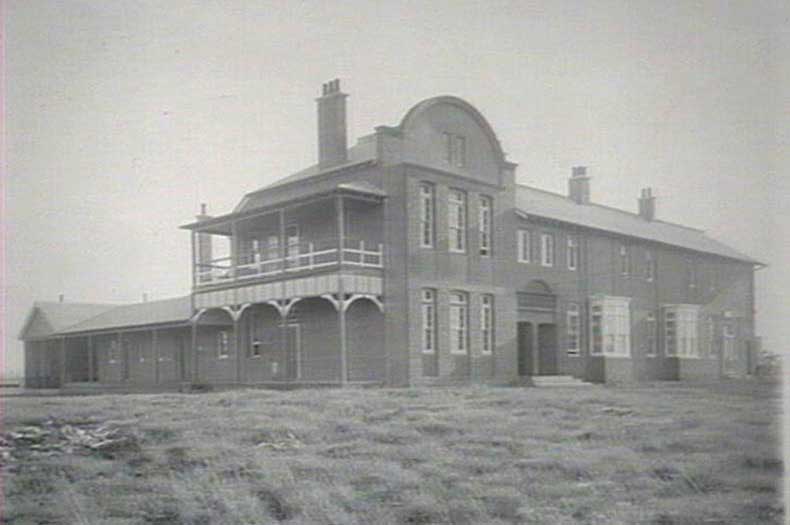
Image: NSW State Library collections. Reproduction: Peter de Waal
This Deponent on his oath states: my name is Richard Henn-Gennys and I am Manager of the Government Experimental Farm at Glen Innes. I know accused who was a student at the farm in January last. He was called an apprentice. A boy named Russell Canham was also there as an apprentice. I remember holding an inquiry on the 10th January last respecting the conduct of accused and Canham who were both present all the time. (Accused states he is satisfied that the papers now produced and contained in 3 sheets contain a record of the Statements of the witnesses on the inquiry held by the manager of the farm on the 10th January last regarding his and Canham’s conduct on the previous day.) I produce these papers containing evidence of the Inquiry held by me in the presence of Canham and accused and marked Exhibit “B”. Accused had an opportunity of making a statement and cross examining the witness on that Inquiry. He stated that the boy “Charlie Bourne” had ragged him or kicked him. He did not deny the statements of the offence alleged by the witnesses and accused and Canham were afterwards expelled from the farm.
By Bench: I believe accused and Canham to be both between the age of 17 and 18 years.
By Police: The man Cidgell who gave evidence on the inquiry was a labourer and has left the farm.
Accused does not ask questions.
[Signed] RH Gennys.
Taken and sworn at Glen Innes this 17th day of March 1914 before me.
[Signed] HFW Fletcher, PM.
~ ~ ~ ~ ~
(F. 2 – “Justices Act, 1902.”)
Statement of the Accused.
State of New South Wales, Glen Innes
TO WIT. }
Walter Jethro Swaffield (hereinafter called the defendant) stands charged before the undersigned, one of His Majesty’s Justices of the Peace and a Police Magistrate in and for the said State, this 17th day of March in the year of Our Lord one thousand nine hundred and fourteen for that he, the said defendant, on the 9th day of January, 1914, at near Glen Innes, in the said State, did assault one Russell Canham and then wickedly and against the order of nature carnally knew the said Russell Canham and did commit with the said Russell Canham the abominable crime of buggery and the said charge being read to the said defendant, and the witnesses for the prosecution, John Cook, Senior Sergeant of Police, Glen Innes Charles Harold Bourne, student, Experimental Farm, Glen Innes Walter Bull, farmer Furracabad, Glen Innes, Richard Henn-Gennys, Manager, Government Farm, Glen Innes being severally examined in his presence, and (he having stated that he does not desire the depositions of the said witnesses to be read to him) the said defendant is now addressed by me the said Justice as follows:– “Having heard the evidence, do you wish to say anything in answer to the charge? You are not obliged to say anything unless you desire to do so, but whatever you say will be taken down in writing, and may be given against you in evidence at your trial; and you are also informed, and are to clearly understand, that you have nothing to hope from any promise of favour, and nothing to fear from any threat which may have been holden out to you to induce you to make any admission or confession of your guilt, but whatever you now say may be given in evidence against you upon your trial notwithstanding such promise or threat.” Whereupon the said defendant saith as follows:– “I don’t wish to say anything but that I did not know it was a crime.”
[Signed] WJ Swaffield.
Taken before me and read over to the said defendant at Glen Innes in the said State, the day and year first above mentioned.
[Signed] HFW Fletcher, PM.
~ ~ ~ ~ ~
G. 190.
New South Wales, Glen Innes
TO WIT. }
REX.
versus
Walter Jethro Swaffield
Offence,— Buggery
The accused stands committed to take his trial ---- at the next Court of Quarter Sessions to be holden at Glenn Innes, in the State of New South Wales, on the fourth day of June 1914, or at such other Court to be holden at such place and time as the Attorney-General may appoint. Bail allowed the accused in £ and two sureties in £ each, or one in £ Bail not applied for
[Signed] HFW Fletcher, PM
JP.
Dated at the Police
Office, Glen Innes
in the said State,
this seventeenth
day of March
AD 1914.
4g 416 - 88
~ ~ ~ ~ ~
“Justices Act, 1902.”
Recognizance to give Evidence.
State of New South Wales, Glen Innes
TO WIT. }
Be it remembered, that on the 17th day of March in the year of Our Lord one thousand nine hundred and fourteen John Cook a Senior Sergeant of the Police Force, stationed at Glen Innes in the State of New South Wales, Charles Harold Bourne (see note below) of Glen Innes in the said State, student, Walter Bull of Furracabad, Glen Innes in the said State, farmer Richard Henn-Gennys of Glen Innes in the said State, manager, Experimental Farm personally came before the undersigned, one of His Majesty’s Justices of the Peace for the said State, and acknowledged themselves to owe Our Sovereign Lord the King the sum of
FORTY POUNDS EACH,
of good and lawful money of Great Britain, to be made and levied of their goods and chattels, lands and tenements, respectively, to the use of our said Lord the King, his Heirs and Successors, if they the said before mentioned persons shall fail in the condition indorsed.
Nota bene The Recognizance of Charles Harold Bourne and Walter Bull who are both MINORS were both taken and they entered into the above Recognizance. There was no-one else present to bind over in the case of these persons and their fathers were not present and they stated they could not find anybody else willing to enter into a Recognizance on their behalf – query whether they should be subpoenaed by the Crown.
Taken and acknowledged, the day and year first above mentioned, at Glen Innes in the said State, before me.
[Signed] HFW Fletcher, PM.
The condition of the within written Recognizance is such, that whereas one Walter Jethro Swaffield was this day charged before HFW Fletcher, Esquire, Police Magistrate and one of His Majesty’s Justices of the Peace for the said State, for that on the 9th day of January, 1914, at near Glen Innes in the said State, he did assault one Russell Canham, and then wickedly and against the order of nature carnally knew the said Russell Canham and did commit with the said Russell Canham the abominable crime of buggery.
If, therefore, they the before mentioned persons shall appear at the next Court of Quarter Sessions to be holden at Glen Innes in and for the State of New South Wales, on Thursday the 4th day of June, 1914, at nine of the clock in the forenoon, and then and there give such evidence as they know, upon an information to be then and there preferred against the said Walter Jethro Swaffield for the offence aforesaid to the jurors who shall pass upon the trial of the said Walter Jethro Swaffield.
Then the said Recognizance to be void, or else to stand in full force and virtue.
[Signed] HFW Fletcher, PM.
~ ~ ~ ~ ~
[On the depositions’ cover sheet is the following]
Quarter Sessions.
Glen Innes
4th June
Supreme Court
Armidale
15th April 1914
158 1
AG 14/74
Depositions.
Rex
v.
Walter Jethro Swaffield
Indecent assault on a male
Committed at: Glen Innes
on: 17th March 1914
~ ~ ~ ~ ~
Court. Armidale
Date. 15 April 1914
Cor. Cullen CJ
Plea. Guilty
Verdict.
Judgment. £ months imprisonment hard labour Grafton Gaol
RN Hodgson
Crown Prosecutor
Note.– In event of postponement, it should be stated whether accused admitted to bail.
~ ~ ~ ~ ~
Indecent assault on a male person
[Initial illegible]
24:3:14
What has become of Canham? It is desireth to have some explanation as to his (position ?)
[Initial illegible]
memo
3.4.14
~ ~ ~ ~ ~
Clarence and Richmond Examiner, Thu 2 Apr 1914 10
PERSONAL.
————
…
The Chief Justice of New South Wales has signified his intention of visiting Armidale on April 14 for the purpose of presiding the following day at the Circuit Court. Lady Cullen will accompany her husband.
~ ~ ~ ~ ~
Justice WP Cullen’s notebook 11
1
Armidale 15 April 1914
Mr Hodgson presents commission to prosecute for the Crown.
R v Walter Jethro Swaffield – Indictment for indecent assault on another male person.
Time: 15 April 1914
Place: Glen Innes
Person: Russell Canham
Plea: Guilty
Weaver: Solicitor for defence
2
Sentence passed: 9 months imprisonment with hard labour – Grafton Gaol.
Court adjourned sine die.
~ ~ ~ ~ ~
The Sydney Morning Herald, Thu 16 Apr 1914 12
CIRCUIT COURT.
———
Armidale, Wednesday.
The Chief Justice (Sir William Cullen) opened the Circuit Court this morning. The sheriff (Mr Maybury) was also in attendance. Mr RV Hodgson was Crown Prosecutor.
There was only one case, that of Walter Jethro Swaffield, who was charged with committing an offence at Glen Innes on January 9. Accused, who is 16 years of age, pleaded guilty. The Court was adjourned for an hour to permit of the depositions being read. Accused was given a good character by Mr Gennys, manager of the Experimental Farm, where he was employed at the time of the offence. On resuming, the Chief Justice sentenced Swaffield to nine months’ imprisonment in Grafton Gaol, with hard labour.
~ ~ ~ ~ ~
The Armidale Express and New England General Advertiser, Fri 17 Apr 1914 13
ARMIDALE CIRCUIT
COURT.
————
A BRIEF SITTING.
The annual local sittings of the Supreme Court commenced and concluded on Wednesday last, only one case of a criminal order being set down for hearing, a marked change, by the way, from the courts of the last two or three years.
His Honor Mr Chief Justice Cullen presided, Mr ECB Maybury, State Sheriff, being also in attendance. His Honor was attended by Mr BC Fuller as Associate. Mr RV Hodgson, instructed by Mr WK Stuart, of the Crown Law Office, acted as Crown Prosecutor. The other officials in the court included the PM, Mr G Atkin, Mr EMPHASIS ADDED. Cohen, CPS, Mr JJ Clifford, governor of the gaol, and Mr LB Lane, sheriff’s officer. The solicitors in attendance were Messrs H Weaver, DP Claverie, E Simpson, and W Murray.
AN UNNATURAL OFFENCE.
Walter Jethro Swatfield [sic] was charged with on the 9th of January, 1914, at Glen Innes, he did commit an unnatural offence.
Accused, who is a mere boy, pleaded guilty.
Mr H Weaver, assigned by the Crown, appeared for the accused. Mr Weaver said he would like his Honor to read the depositions through, after which he felt satisfied he would see the accused was not by any means the real offender. He was only 16 years of age, and the other youth should have been there occupying his place.
His Honor: Perhaps both should have been in the dock.
Mr Weaver: Yes, perhaps both, but I’m certain your Honor will see that this is more a case for pity than anything else. The young fellow, just blossoming into manhood, was led away, and is not by any means the real offender. When the proposition was made [to] him he expressed fear, and afterwards said he did not know there was any crime in what was done. Mr Weaver went on to say this ignorance was, of course, no excuse for breaking the law, but the fact and the accused’s youth were, nevertheless, some palliation for the offence, horrible though it was. Further, on quitting his employ in England, the accused boy had received excellent references. He was one of the lads who came out in connection with the Dreadnought scheme, and had only been six months in Australia. He went up to the Glen Innes experimental farm on landing, and was at once installed as a student apprentice on the farm. These farms were established to bring out decent and respectable members of society, and the very fact of him being one of those so brought out was an indication that he must have possessed a decent character. Some enquiry must have been made into his antecedents. The English authorities might send out some scum, but one would think that boys under the Dreadnought scheme would be beyond reproach. They were each Dreadnought boys, the other boy being a few months older than accused.
Mr Hogson: [sic] The other boy came out before accused, and was 19 years of age. He was at the farm nearly six months, and the accused was only there six weeks before the offence occurred. The older boy seems to have disappeared out of the country. Both were employed on the farm. The manager of the farm, Mr Gennys, certainly says the accused was rather easily led.
Mr Weaver: I’d like to call him.
To this his Honor agreed.
Richard H Gennys, was manager of the Experimental Farm, Glen Innes. He had some 16 or 20 boys on the farm. Accused went to the farm on 29th November, 1913. Up to the 9th of January the accused was a well-behaved boy, the only complaint he had against him being that he carried firearms, which was against the farm regulations. Many of the British boys, in fact, carried firearms.
The Crown Prosecutor: They have an idea this is a wild country, your Honor, where dangerous snakes, barbarous blackfellows, and highway robbers abound. (Laughter.)
Continuing: Mr Gennys said he had never had any trouble of the present kind before. The other boy was 19 years of age, and Swatfield was 15 on 29th of November last. The former’s conduct had not been very good—he was a nuisance.
His Honor: You mean idle?
Witness: He was very idle, disobedient, and he was a liar too. I was thinking of expelling him before the offence occurred.
His Honor said he would adjourn the court for half an hour until he read the depositions.
The Crown Prosecutor: I would remark, your Worship, the accused was arrested seven weeks ago, which might be considered when the sentence is being passed.
On the court resuming, the accused, in reply to the charge, said he had nothing to say.
Mr Weaver: Can I take it your Honor agrees with my view about accused not being the principal offender?
His Honor: that possibly may be so, but from the information before me at present there’s nothing to bear that out. The other boy was certainly older.
Mr Weaver: There is nothing to indicate that the accused was a suggesting party.
His Honor: There’s nothing to prove the opposite.
Mr Weaver: I would especially appeal to your Honor for all the clemency possible in the case. I really think a little advice from your Honor would doubtless do him more material good then a term of imprisonment.
The CP: The charge has been reduced, you’ll notice, your Honor.
Mr Weaver: Which certainly is a very generous action on the part of the Crown.
His Honor said that he had considered the case very carefully. The prisoner’s youth appealed to him and also the fact that he was away from his parents. Still it would set a very bad example if it was supposed that a boy brought into an institution of this description should have any mistaken leniency shown him on that account, while the evil effect on the other youths of the farm and of the country generally could not be gainsaid. The previous conduct of the accused had not apparently been open to any complaint. The laws for NSW gave every protection against wrong doing on the part of others, but also imposed all the greater obligation on people to see that they abstain from offences upon or with others. He always felt a degree of reluctance in imprisoning a youth for any extended period, while the conduct of the youth sentenced of course would also weigh a great deal with the executive in the course they might feel disposed to take. He wished in this case to mark the seriousness with which the law regarded offences of this Class, but at the same time to give the prisoner to understand that by good conduct he could redeem the disgrace brought upon him, (being ?) the institution from which he was expelled, and upon his parents. His Honor held the case would be properly met were the prisoner sentenced to nine months’ imprisonment with hard labour in Grafton Gaol. He hoped it would be a good lesson to him.
~ ~ ~ ~ ~
The Armidale Chronicle, Sat 18 Apr 1914 14
SUPREME COURT.
———◦———
A sitting of the Supreme Court of N S Wales was held at Armidale on Wednesday. His Honor, the Chief Justice, Sir WP Cullen, presided. He had as Associate, Mr Bryan C Fuller. Mr CEH Maybury, Sheriff, was in attendance. Mr RV Hodgson, instructed by Mr Stewart (Crown Solicitor’s Office), was Crown Prosecutor.
————
A GLEN INNES CASE.
There was only one case for trial.
Walter Jethro Swaffield was indicted that on 9th January, at Glen Innes, he did indecently assault Russell Canham, a male person.
Accused pleaded guilty.
Mr H Weaver, under assignment from the Crown, appeared for the accused.
Mr Weaver said he did not know this boy’s age, but he said he was 16 on the 26th December, and he ( Mr Weaver) thought from his personal appearance he could not be much more than that. His Honor would see, by reading the depositions, that the boy was not by any means the real offender. Of course he (Mr Weaver) did not say anything in palliation of the beastial [sic] offence with which the boy was charged, but perhaps the other man should be in the place in which accused was.
His Honor: Perhaps both of them should be!
Mr Weaver: It appeared to be a case of pity. Here was a young fellow just budding into manhood, led away by the other fellow—he thought by his conversation the accused was not by any means the offender, and when this other beast of a man made a proposition to him, he expressed some fear, and wanted to know if it was a crime. When the police saw him, he did not know he had committed any crime. He had a couple of certificates which the accused had received as to his character before quitting England. The accused was one of the lads who came out here in connection with the Dreadnought Fund. It was only some months since he came here. Immediately on arrival he went to the Glen Innes farm. The very fact of his coming out and taking advantage of that fund, raised as a national project, would cause certain inquiries to be made into his character and antecedents before he came out. Though unfortunately England sent out some scum here, every inquiry was made as to the character of those sent out in connection with this fund.
His Honor: Were both parties members of the Dreadnought Fund?
The Crown Prosecutor: The other boy was at the farm nearly six months, and the accused was only there about six weeks before the offence. The older boy seems to have disappeared out of the country. Both were expelled from the farm at the time. The manager of the farm was in Court, and when his Honor heard the character of both boys he would see that accused was rather easily led.
Richard Henn Gennys, manager of Glen Innes Experiment Farm, was put in the witness-box, and said he had some 16 or 20 boys on the farm. Accused came to the farm on the 29th November, 1913. He was there up to the 9th January. The boy was well behaved, generally speaking. Witness had no fault to find with him, except that he carried fire-arms against the rules. The English boys nearly all carried fire-arms.
The Crown Prosecutor: They have an idea this is a wild country—that they had to protect themselves against snacks, blacks, and highway robbers. (Laughter).
Witness (continuing) said according to the books, the age of the boy Canham was about 19. Canham’s conduct was not very good; witness was going to send him away because he was useless.
His Honor: Do you mean idle?
Witness: He was of a very idle disposition—he was a liar too.
His Honor then adjourned the Court to peruse the depositions.
On resuming.
In answer to the usual question if he had anything to say as to why sentence should not be passed upon him, accused, “No.”
The Crown Prosecutor pointed out that accused had been in gaol since he was arrested, seven weeks ago.
Mr Weaver again pointed out that accused was not the real offender.
His Honor: That possibly might be so—the fact of the other boy being older might suggest that, but so far as the information before me at present goes, there is nothing to bear that out. There are cases where it can be easily seen that an older boy can lead another into wrong-doing, but I have not that information in this case.
Mr Weaver: There are indications that he was not even a suggesting party.
His Honor: There’s nothing to show one way or the other.
Mr Weaver said he was going to appeal for mercy. The accused was just lad, and he thought a little bit of advice from his Honor would sink further into him then any possible correction in gaol, where the boy was likely to associate with criminals.
His Honor: There is information in the evidence upon which a more serious charge could have been laid.
Mr Weaver: It was quite generous on the part of the Crown to reduce the charge. It is one of those unfortunate cases in which it is hard to know what to do.
His Honor said he had considered the case very carefully. The extreme youth of the prisoner appealed to him—the fact that he was away from his parents and surroundings but it would be a very bad example if it were supposed that boys who were brought into institutions of this sort should have any mistaken leniency shown to them, because of the effect it had, not only upon those who had to be sent to the same institution, but on the youth of the country generally. In this case, the information showed that the previous conduct of the prisoner had not been open to any complaint. The laws of this country gave every protection against wrong-doing on the part of others, but they also threw obligation of seeing that people abstained from offences upon or with others. He always had a degree of reluctance in sending a youth to prison for any extended period. The conduct of a prisoner sentenced, of course, counted for a great deal afterwards in the view the Executive might have as to what should be done with him. His Honor wished in this case, to mark the seriousness with which our law regards cases of this sort, and at the same time to give the prisoner the proof that by good conduct hereafter he might redeem the disgrace he had brought upon himself, the institution he was connected with, and his parents and friends. He thought, on the whole, the right sentence would be nine months’ imprisonment, with hard labour in Grafton Gaol., His Honor added, “I trust it may be a good lesson to you Swaffield.”
Mr Henn Gennys asked his Honor if he might be permitted to speak to the prisoner before he was taken to gaol.
His Honor granted the permission and said perhaps a few words of advice from Mr Henn Gennys might be productive of good.
~ ~ ~ ~ ~
The Uralla Times, Sat 18 Apr 1914 15
SERIOUS OFFENCE.
———◦———
The annual sittings of the Supreme Court were held at Armidale on Wednesday. Only one case of a criminal order was set down for hearing.
His Honor Chief Justice Cullen presided.
Walter Jethro Swaffield was charged with that he did on the 9th of January, 1914, at Glen Innes, committed an unnatural offence on Russell Capham. [sic] Accused, who is a mere boy, pleaded guilty.
Mr H Weaver, assigned by the Crown, appeared for the accused. It transpired from the evidence given by Mr RH Gennys, manager of the Glen Innes experimental farm, that accused and the other lad, who had since disappeared, were among a batch of boys brought out from England last year under Dreadnought scheme. Capham, who was 19, had been there six months before the commission of the offence, and Swaffield, who was 16, only six weeks. Mr Gennys said the accused was a well behaved boy except that he carried firearms as most of the English boys did.
The Crown Prosecutor: They have an idea that this is a wild country, your Honor, where dangerous snakes, barbarous black fellows and highway robbers abound. (Laughter).
Mr Gennys said Capham’s conduct had not been very good, he was a nuisance.
His Honor: You mean idle.
Witness: He was very idle and disobedient, and was a liar, too. I was thinking of expelling him before the offence occurred.
After reading the depositions his Honor remarking first on the seriousness of the offence in question, sentenced the boy to nine months’ hard labour in Grafton Gaol.
Two civil cases were postponed till the June sessions, and the Court then adjourned sine die.
~ ~ ~ ~ ~
Walter Jethro Swaffield, Gaol photo sheet 16
![SRNSW: NRS2258, [3/5994], Grafton Gaol photographic description book, Jun 1910-Nov 1922, No. 241, p. 51, R5125.](../../images/trials/1914-Swaffield-5994-gaol-photo-241.jpg "SRNSW: NRS2258, [3/5994], Grafton Gaol photographic description book, Jun 1910-Nov 1922, No. 241, p. 51, R5125.") |
Gaol Photo Sheet - Transcribed Details
No. 241
Grafton
Date when Portrait was taken: 12-5-1914
Name: Walter Jethro Swaffield
|
Native place: England Year of birth: 1897 Arrived Ship: Beltana Trade or occupation Religion: C. E. Education, degree of: Read & Write Height: 5' 4½" Weight On committal: 125 Colour of hair: Brown Colour of eyes: Brown |
Marks or special features: Cast in right eye. Scar over left eye |
|
(No. of previous Portrait ... ) CONVICTIONS |
|||||
|
Where and When |
Offence. |
Sentence |
|||
|
Armidale CC |
15 |
4 |
1914 |
Indecent assault on a male person |
9 months H.L. |
1 The Glen Innes Examiner, Thu 19 Mar 1914, p. 4.
2 SRNSW: NRS880, [9/7191], Supreme Court, Papers and depositions, Armidale, 1914, No. 74. Emphasis added.
3 Mn: Glen Innes Police asked by wire to arrange for attendance 14.4.14
4 Mn: Rex versus Swaffield indecent assault on a male Armidale Supreme Court
5 Mn: Walter Jethro Swaffield indecent assault on male person Armidale Supreme Court 15.4.14
6 Mn: Submitted for approval to the venue of this case being changed to the ensuing sitting of the Supreme Court at Armidale. [Initial illegible], Acting Under-Secretary, 28.3.14
7 Mn: By Warrant
8 Mn: Exhibit “A”
9 Mn: Exhibit A Police versus Swaffield buggery Gunnedah Police Court
10 Clarence and Richmond Examiner, Thu 2 Apr 1914, p. 4.
11 SRNSW: NRS5813, [7/9330], Judiciary, WP Cullen, CJ. Notebooks Circuit Criminal, 1910-23, pp. 1-2.
12 The Sydney Morning Herald, Thu 16 Apr 1914, p. 12.
13 The Armidale Express and New England General Advertiser, Fri 17 Apr 1914, p. 4. Emphasis added.
14 The Armidale Chronicle, Sat 18 Apr 1914, p. 3. Emphasis added.
15 The Uralla Times, Sat 18 Apr 1914, p. 6. Emphasis added.
16 SRNSW: NRS2258, [3/5994], Grafton Gaol photographic description book, Jun 1910-Nov 1922, No. 241, p. 51, R5125.