Below also see: Harold Arthur Pollock, 1922 – Indecent assault
Thomas Wright and Arthur Arnold Pollock, 1927 – Indecent assault
The Sydney Morning Herald, Sat 23 Jul 1921 1
QUARTER SESSIONS.
(Before Judge Armstrong.)
Mr Norman Rowland Crown Prosecutor.
…
REMANDED FOR SENTENCE.
John McIntyre, who pleaded guilty to stealing a watch and chain, four rings, a military discharge, and £12, the property of Arnold Arthur Pollock, was remanded for sentence.
~ ~ ~ ~ ~
The Sydney Morning Herald, Thu 28 Jul 1921 2
QUARTER SESSIONS.
(Before Judge Armstrong.)
Mr WT Coyle, KC, Crown Prosecutor.
…
OTHER SENTENCES.
…
John McIntyre, who pleaded guilty to stealing a watch, rings, a military discharge, and other articles, the property of Arnold Arthur Pollock, on July 10, was sentenced to nine months’ imprisonment with hard labour in Goulburn Gaol. His Honor said he would suspend the sentence on McIntyre entering into a good behaviour bond for 12 months and making restitution to the amount of £12 within six months.
Harold Arthur Pollock, 1922
Truth, Sun 29 Jan 1922 3
STRANGE STORY.
———◦———
SAILOR-MAN NELSON’S
ALLEGATIONS
————
AGAINST ANOTHER SEA–FARING
MAN.
————
“ONLY FOR BLACKMAIL”,
SAY POLLOCK.
————
BUT IS SENT TO THE SESSIONS
FOR TRIAL.
————
A case with many peculiarities was that which Harold Arthur Pollock, a ship’s steward on shore, a square-built, clean-shaved man of 39 years, was called upon to answer at the Central Police Court on Friday. Mr Giles Shaw, SM, was on the bench. Pollock was charged with indecently assaulting a man named John Nelson, a sailor out of a ship, at lodging in Argyle-place on the 26th inst. Sergeant E White prosecuted. Mr Bloomfield defended.
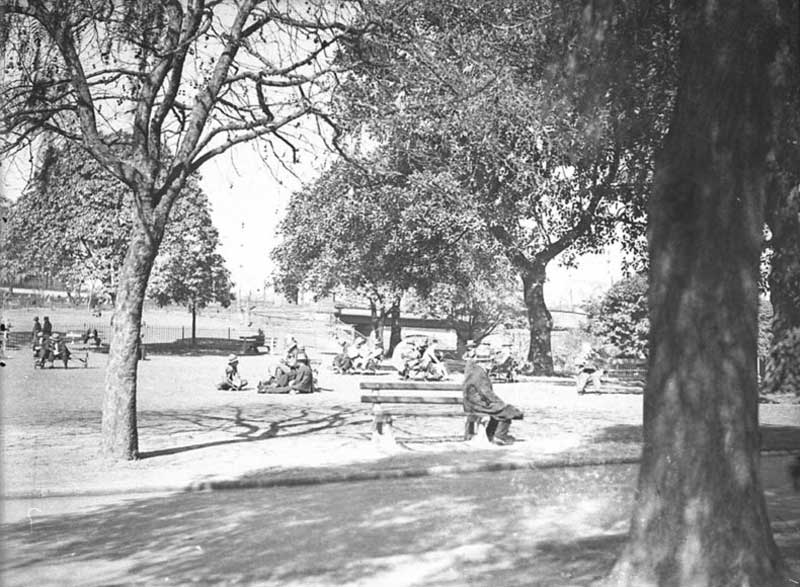
collection. Reproduction: Peter de Waal
John Nelson, a young man of no fixed abode, but respectably dressed, said that about half-past 4 o’clock on Anniversary Day he was seated on a bench in Belmore Park, when Pollock sat on the same seat and spoke to him. Something was said about the weather being nice for the sports, and then the short dresses of passing girls came under review, following which Pollock invited him for a drink. He didn’t mind, and so Pollock shouted a drink in the saloon bar of the Hotel Sydney, and more beer at other hotels—four glasses altogether. In time they reached the northern end of the city, and Pollock said he could get him a job aboard ship, and ascertaining that he had nowhere to stay, offered to put him up at his own lodgings. He expressed thankfulness for this, and they went to a house in Argyle-place, where Pollock paid for a week’s lodging for him. After being shown the room they went out to tea, for which Pollock paid, and afterwards returned to the house. Three beds were in this particular room, and they finished two bottles of beer which Pollock had provided. About half-past 9 Pollock came and lay alongside him, but he called, “Stop it, or there will be trouble”. Pollock said the beer was talking, and then became very familiar.
MUCH TOO FAMILIAR
for any decent man to stand. So he said, “If that’s the game, I’m going out, and will tell the first policeman”. Not meeting any in the street he called into the police station in George-street North, and went back to the house with Constable Nuss, who arrested Pollock.
Constable [Frederick] E[rnest] Nuss said that at 9.45 pm on Anniversary Day he accompanied Nelson to the house in Argyle-place, Miller’s Point, and saw Pollock in a back room. On being told the reason of the visit, Pollock replied, “It’s a lie”, and turning to Nelson, asked if he knew what he was doing. “I do; I thought you were a friend”, said Nelson. “I didn’t do you any harm”, said Pollock. “No, but it was not your fault you didn’t”, rejoined Nelson. Both were sober, and he heard that Nelson was a deserter from the Argyleshire.
In defence, Harold Pollock, a chef when at sea, said he had been lodging in Sydney when ashore for 25 years, but had been ashore only four days this time, and had never been in any trouble before. He met Nelson, as has been related, in Belmore Park, and during the evening shouted four drinks for him. Nelson said he was stopping with some Bristol friends in George-street, but had been a long time out of a ship. Out of kindness to a seaman in distress he bought him some cigarettes, and reflecting that he had left £10 in his clothes at the lodging-house, he thought it would be safer with him, and accordingly went for it. After tea they walked to Hyde Park and sat and smoked, and there Nelson, when asked where his friends lived, replied, “To tell you the truth I have no friends, and last night was my last in bed”. As he looked a decent fellow, he took him to his own lodgings, giving him 6s to pay for the room for a week himself, so the landlady wouldn’t know that he was penniless. Neither divested himself of clothes whilst in the room, and Nelson’s story was a confounded lie, and
ONLY TOLD FOR BLACKMAIL.
Neither lay on a bed, he never touched the man. It was God’s truth he was saying. The room was small, and it was a hot night, and the other occupant, a ship’s steward, hadn’t arrived before Nelson said, “This room is too hot”. He told Nelson that he need not stay unless he wished, and asked “What about the money?” Nelson said, “Oh, I’ll get that back, and a bit more”. Witness asked, “What for?” and went on, “You shall get nothing from me. You’re nothing but a scoundrel after the way I have treated you”. Then Nelson said, “You won’t give me any money. I know your game, and I’ll fix you up”. Pollock added that he was a returned soldier 4 of four years’ service, and that Nelson had manufactured a base lie against him.
Sergeant White: Have you plenty of money?—I have sufficient.
Have you helped others in a similar way?—Yes.
One was named McNaughton?—Yes.
And he helped himself. Did he accuse you of trying to commit an offence upon him?—No.
You took him to a room, and he robbed you?—Yes.
Why did you go to Nelson’s room when yours was on the bottom floor?—Well, we sat there drinking two bottles of beer.
Nelson, recalled, declared that he had not complained of the hot room, nor did he tell Pollock that he would get the rent back and a bit more. The only time money was mentioned was when he said to Pollock, “I’ll get your money from the landlady, and you can go to hell”. Pollock answered, “It doesn’t matter”.
Mr Bloomfield urged the magistrate to dismiss Pollock, saying that no jury would convict.
Mr Giles Shaw said it all depended on which the jury would believe.
Pollock was committed to the Sessions starting on February 1, and granted bail of £40.
Mr Bloomfield intimated that he would have to live in gaol, as he was a stranger here, and knew nobody.
~ ~ ~ ~ ~
The Sydney Morning Herald, Fri 17 Feb 1922 5
LAW NOTICES.
———
Friday, February 17.
———
…
QUARTER SESSIONS.
Chelmsford Kingsley Thrupp, stealing from the person; Peter Horn, stealing; Walter Bowling, stealing in a dwelling and stealing; Jack Chard, larceny (for sentence); Harold Arthur Pollock, indecency.
~ ~ ~ ~ ~
The Daily Telegraph, Sat 18 Feb 1922 6
CRIMINAL.
———
(Before Judge Scholes.)
Mr Rowland prosecuted for the Crown.
…
ACQUITTED.
Harold Arthur Pollock was acquitted on a charge of indecency and discharged.
~ ~ ~ ~ ~
The Sydney Morning Herald, Sat 18 Feb 1922 7
QUARTER SESSIONS.
(Before Judge Scholes.)
Mr N de H Rowland, Crown Prosecutor.
…
ALLEGED INDECENT ASSAULT.
Harold Arthur Pollock, [39], was charged with having committed an indecent assault [on John Nelson]. Mr W Niland appeared for the defence. The evidence of the complainant being entirely uncorroborated, the jury, without retiring, and with the advice of his Honor, returned a verdict of not guilty.
~ ~ ~ ~ ~
Truth, Sun 19 Feb 1922 8
POLLOCK’S PLIGHT.
———◦———
DIRTY ACCUSATION DISPROVED
————
SORROW OF A SEAMAN-
COOK.
————
A CHANCE ACQUAINTANCE IN THE
PARK.
————
Another of those nauseously ugly charges was given very short shrift when it came up for investigation last Friday before Judge Scholes and a jury, at the Quarter Sessions at Darlinghurst. It was a case in which two seafaring men were primarily concerned, a ship’s chef named Harold Arthur Pollock being accused of having committed an indecent assault upon John Nelson at Sydney, on the night of January 26 last.
The Crown Prosecutor was Mr W de H Rowland, and the accused was defended by Mr W Niland. He pleaded not guilty.
ON THE BENCH IN THE PARK.
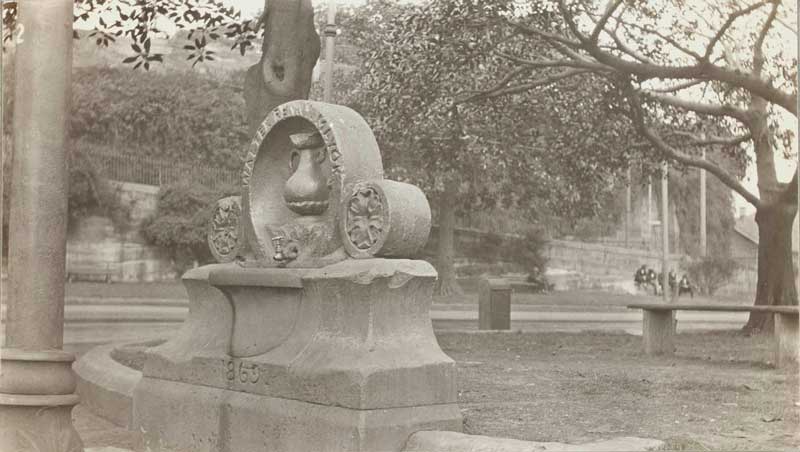
drinking fountain, 1924. Image: NSW State Library collection.
Reproduction: Peter de Waal
From the story outlined by the Crown Prosecutor, it appeared that the two seamen, quite strangers to one another, came to occupy the one seat in the Belmore Park on the afternoon of January 26, Anniversary Day. Casually a conversational acquaintance ripened, and eventually Pollock treated his newly-acquired friend to drinks at the Commonwealth Hotel, bought him his tea, and eventually fixed him up with room accommodation at 36 Argyle-place, where he himself was lodging. Pollock paid the piper throughout, for Nelson confessedly had no money, having
“SKIPPED THE GUTTER”
—ie, deserted—from his ship in Sydney Harbor. It was in this bedroom that the indecent offence allegedly occurred.
John Nelson, a neatly-attired young man with a distinctly “imported” accent, described himself as a laborer—at sea and ashore. On the afternoon of Anniversary Day last, January 26, he and accused were on the same seat in Belmore Park. After some desultory conversation he and accused went to the Commonwealth Hotel, where accused bought drinks. Then together they proceeded to the lodgings of accused at 36 Argyle-place, where the latter arranged to fix up witness with accommodation. After tea in Pitt-street they returned to the house at 36 Argyle-place, Miller’s Point. Accused had given witness 6s with which to pay for the room. He was shown into a room in which there were three beds, but he and accused were the only occupants. Witness and accused drank two bottles of beer in the bedroom, and at half-past nine o’clock witness partially undressed and lay in one of the beds. Accused lay alongside him, and began to indecently tamper with witness. Witness then went out and told the first constable he saw, having first warned accused that he intended doing so. The constable went to the house and arrested accused in the bedroom.
Mr Niland: When did you come to Australia?—Last August, by the Argyllshire [sic].
You deserted her here?—Yes.
You had no money when you met accused?—None at all.
Was the door of this room open?—Partially.
You had led accused to believe you were staying with friends from Bristol?—I didn’t like to tell him how I was fixed.
Accused promised to do what he could to find you work?—Yes.
“I THOUGHT YOU WERE A FRIEND!”
Constable Frederick Ernest Nuss, of No. 4 Police Station, described the arrest of accused in the top-room of 36 Argyle-place, Miller’s Point. When advised of the charge being made by complainant, the accused replied, “It’s a lie”, and turning to Nelson said, “Do you know what you are doing?” Nelson replied, “I do; I thought you were a friend”. When charged at No. 4 police station accused made no reply. Both accused and prosecutor were sober.
This constituted the Crown case.
The accused [Harold Arthur Pollock] gave evidence on his own behalf. He deposed that he was a chef aboard ship and had been paid off just three days before January 26. When accused met Nelson in the park, accused surmised that Nelson had deserted his ship. Eventually Nelson told accused he had no place at which to stay, and it was then that accused offered to assist him by finding him lodgings. Witness denied that indecency took place or was attempted by him. Nelson, when he left the room, said, “It’s too hot”. Nelson also made a demand for money, but accused declined.
returned soldier 4 of four
The Crown Prosecutor: When he left the room Nelson said, “It’s too hot”?
Accused: Yes.
Did he say what he meant was “too hot”?—The room, I took it.
You didn’t give him any further money?—No.
And then he left?—Yes, he left, saying, “I’ll fix you up”.
And he did “fix you up”?—Yes, but in a different way.
Mr Niland (to Nelson, who had been recalled by the Crown Prosecutor): Where did you sleep that night?
Nelson: I went to work that night on the Hawkesbury Wharf.
The foreman of the jury at this stage intimated they did not wish to hear any more evidence. The jury thereupon returned a verdict of not guilty without leaving the box, and accused was discharged.
Thomas Wright and Arthur Arnold Pollock, 1927
The Daily Telegraph, Tue 1 Mar 1927 9
LAW NOTICES
———◦———
TO-DAY’s LIST.
…
SYDNEY QUARTER SESSIONS.
No. 1 Court: Appeal of Esther Niblock on behalf of Edith Niblock (for sentence); Henry Pearce, Thomas Hillier, and Donald Harold Williams, break, enter, and steal; Charles Jones and Morgan Harris, break and enter with intent; Thomas Wright and Arthur Arnold Pollock, indecent assault; Frederick Jones, stealing a motor car.
~ ~ ~ ~ ~
The Sydney Morning Herald, Wed 2 Mar 1927 10
QUARTER SESSIONS.
No. 1 COURT.
(Before Judge Edwards.)
Crown Prosecutor, Mr Neil McTague.
…
ACQUITTED.
Arthur Arnold Pollock, 45, cook, was charged with indecently assaulting Thomas Wright, 19, labourer, at Sydney, on February 1, and the latter was charged with aiding and abetting.
Mr Redshaw (instructed by Mr S[imeon] Ellitt) appeared for Pollock. Wright was undefended. Both of the accused were acquitted and discharged.
1 The Sydney Morning Herald, Sat 23 Jul 1921, p. 7. Emphasis added.
2 The Sydney Morning Herald, Thu 28 Jul 1921, p. 4.
3 Truth, (Syd, NSW), Sun 29 Jan 1922, p. 11. Emphasis added.
4 There is a WWI service record in the name of Arnold Pollock (service number 7772, barcode 8019327) which can be viewed at www.naa.gov.au
5 The Sydney Morning Herald, Fri 17 Feb 1922, p. 5. Emphasis added.
6 The Daily Telegraph, Sat 18 Feb 1922, p. 14.
7 The Sydney Morning Herald, Sat 18 Feb 1922, p. 9.
8 Truth, (Syd, NSW), Sun 19 Feb 1922, p. 5. Emphasis added.
9 The Daily Telegraph, Tue 1 Mar 1927, p. 11. Emphasis added.
10 The Sydney Morning Herald, Wed 2 Mar 1927, p. 11.