George Chong, 1896
Below also see: George Ah Chong, 1900,
George Chong, 1925
Bendigo Advertiser, Fri 3 Jul 1896 1
OUR COUNTRY SERVICE.
———◦———
(From Our Correspondents.)
ALLEGED INDECENT ASSAULT AT
ECHUCA.
Echuca, Thursday.
This morning a half-caste Chinese boy named George Ah Cheong [aka George Chong] was arrested by the Echuca police on a charge of assault with intent. The allegations are to the effect that the accused and a boy named Hardin [sic] were yesterday afternoon driving in a cart to the village settlement when they saw the girl walking in a paddock towards the settlement. They recognised her as Margaret Phease, the daughter of a settler’s, and the accused got out of the cart and chased her. On catching up to her he threw her down, and attempted to criminally assault her. He then left her and caught up to the vehicle, which was standing on the road whilst Hardin gathered some wood. The girl, who is nine years of age, informed her parents, and the latter brought her to the police station. Senior-constable Love had her examined by Dr Smith, who found that she had been tempered with. The police at once searched for the accused, who is 13 years of age, and found him this morning. The boy will be brought up tomorrow morning.
~ ~ ~ ~ ~
Bendigo Advertiser, Sat 4 Jul 1896 2
OUR COUNTRY SERVICE.
———◦———
(From Our Correspondents.)
…
Echuca, Friday.
THE ALLEGED CRIMINAL OFFENCE.—At the Police Court this morning, before Messrs O’Bryan and Kelly, JsP, George Cheong, the half-caste Chinese boy, was charged with unlawfully and carnally knowing Margaret Phease, under 16 years of age. Mr O’Dwyer defended the accused. The girl described the alleged offence as having occurred in Stokes’ paddock whilst she was on her way home to the village settlement. She stated that accused placed his hand over her mouth, and, after the deed, told her not to tell anyone. However, she told her mother.
Herbert Harding, the youth who was driving with the accused when he jumped out of the cart on seeing the little girl in the paddock and committed the alleged offence, stated accused jumped out of the cart, and he saw him take hold of the little girl. Accused afterwards told him that he had knocked her down.
Dr Smith stated some violence had been used towards the girl, but no injury had been done to her. When accused was arrested he denied the offence, stating he was at a football match. He afterwards admitted catching hold of the little girl, but denied that he had done anything wrong. The bench considered a prima facie case had been made out, and committed the accused for trial at the Supreme Court on the 21st July. Bail was allowed in accused’s recognisance of £100, and two sureties of £50.
~ ~ ~ ~ ~
The Argus, Wed 22 Jul 1896 3
COUNTRY NEWS.
———◦———
…
ECHUCA.—The Chief Justice opened the July sittings of the Supreme Court on Tuesday, Mr JA Gurner prosecuting. A half-caste Chinese youth named George Cheong was charged with criminally assaulting a girl under 13 years of age named Margaret Phease. He was also charged with indecent assault. The jury brought in a verdict of indecent assault, and Cheong was sentenced to six months’ imprisonment, with hard labour, and to be privately whipped twice with a birch rod. The Chief Justice remarked that from previous records accused had a strong criminal tendency, and warned him as to his future conduct.—In the town-hall at night the Chief Justice gave an address on “Federation,” under the auspices of the local branch of the ANA. There was a good audience, and the speaker was accorded a very hearty vote of thanks at the conclusion of his address.
~ ~ ~ ~ ~
Bendigo Advertiser, Wed 22 Jul 1896 4
OUR COUNTRY SERVICE.
———◦———
(From Our Correspondents.)
ECHUCA SUPREME COURT.
Echuca, Tuesday.
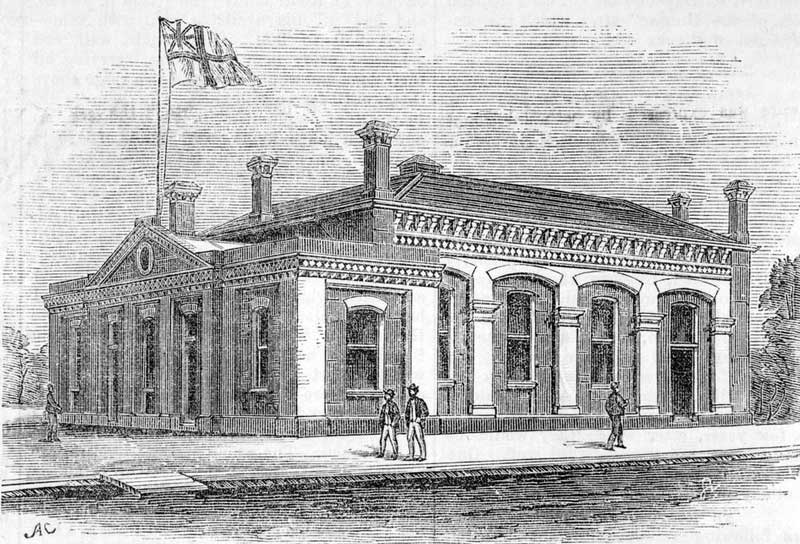
Image: Vic State Library collection. Reproduction: Peter de Waal
The July sittings of the above court were commenced to-day before his Honor Chief Justice Madden. A half-cast named George Cheong [aka George Chong] was charged with being unlawfully intimate with Margare [sic] Phease, under the age of 13 years, and he was charged with an indecent assault. Mr JN Garner prosecuted.
The principal witness, the girl Phease, detailed the circumstances of the alleged outrage upon her by the accused. She was crossing a paddock on her way home to the village settlement, when Cheong, who was driving along the road in a cart with a boy named Harding, left the cart, and ran after her, knocking her down and committing the assault, telling her not to say anything. She told her mother when she got home, and the police were informed.
Evidence was given by Mrs Phease, Wm Phease, Dr Orde Smith and Herbert Harding. After hearing evidence and the judge’s summing up, the jury brought in a verdict of guilty of indecent assault. His Honor referred to the evident tendency to criminal practices on the part of the accused, and warned him as to his future conduct. He said he would give him a light sentence on account of his youth. Cheong was then sent to gaol for six months with hard labor, and to be twice privately whipped with 10 strokes of the birch rod.
~ ~ ~ ~ ~
Truth, Sun 2 Aug 1896 5
AN IMPISH SATYR.
———◦———
A JUVENILE YELLOW DEVIL.
————
‘CHINAMAN LUCK’ STUCK TO
THE DEPRAVED MONGREL.
————
AT Echuca Supreme Court on Tuesday last George Ah Cheong [aka George Chong], a half-breed Chinese boy of 13, ‘son of the well-known Bella Ah Kew,’ says the local paper, was charged before Chief Justice Sir John Madden with unlawfully and carnally knowing with intent one Margaret Phease, under the age of 16 years, and, also with indecent assault on the said Margaret Phease.
Margaret Helena Phease, a little girl nine years of age, was placed in the box, and gave her evidence intelligently, but in such a low voice that his Honor decided to remove her from the witness box to the bench. Her evidence was, in effect, that on the 1st July as she was returning to her home at the Village Settlement from Echuca she saw, whilst crossing Stoke’s paddock, a Chinaman’s boy and another boy named Bert Harding, driving in a cart. The Chinaman’s boy jumped out of the cart and chased her, catching hold of her and knocking her down. (The witness here described the alleged assault.) When it had been accomplished accused asked her not to say anything, but she went home and told her mother what had occurred. She brought her (witness) into Echuca, and on the way encountered the Chinaman’s boy and Harding. Her mother called him ‘a young reptile,’ and he went behind the cart.
Cross-examined by Mr O’Dwyer—
Did you ever call the accused names?—No.
Did you not call him ‘monkey.’ Look at him before you answer?—I never called him names.
Are you quite sure?—Yes; I never saw him before.
Why did you run away when he jumped out of the cart?—Because I was frightened.
But you didn’t know he was going to run after you then?—I was frightened because he was a Chinaman’s boy.
How far did you run before he caught you?—I don’t know.
Did he put you across his knee and smack you?—No.
If he said he did he would be telling a story?—Yes.
Are you quite sure it isn’t you telling one?—Yes.
Where was Bert Harding all this time?—He was near Scott’s corner.
Lucy Jane Phease, mother of the girl, stated she lived with her husband at the Village Settlement. On the afternoon of the 1st July her daughter came home crying, and said that the Chinaman’s boy had done something to her. Witness examined her and found indications that she had been tampered with. She put the horse in the trap and brought the girl into Echuca. On the way she met the accused and Bert Harding,, and she asked the latter what accused had done to her daughter, but he replied that he did noot know. She also asked the accused, who did not reply.
Under cross-examination, Mrs Phease’s evidence was not shaken.
Dr T Orde Smith stated that he had been called on to examine the girl, and he said her appearance was sufficient to account for the violence she had been subjected to.
Herbert Harding, the lad who accompanied the accused in the cart, said he was going along leading the horse by the head when Cheong jumped out, and when he looked bach he saw that Cheong had hold of a little girl. Witness did not see what transpired, as he did not stop, but after he had got about half a mile on accused caught up to him. Witness asked him what he had done, and he said ‘I knocked her down.’ Witness replied, ‘You will get summoned.’
Cross-examined by Mr O’Dwyer—
If the accused says that the girl called him names before he jumped from the cart, would you contradict him?—Yes; nobody sang out.
When accused told you that he had knocked the girl down, didn’t you ask what for?—No, I didn’t.
Mr O’Dwyer spoke in defence, admitting that his client had ‘knocked the girl down,’ but it was in punishing her for calling out to him. That fact that, according to the doctor’s evidence, the attempted offence had not been fully accomplished, showed that it could not have been Cheong’s desire to commit the offence, as he had the girl at his mercy. Accused told the boy Harding that he had knocked the girl down, and this was perfectly consistent with his story that he had chased the girl to punish her for calling him names. He asked the jury to satisfy themselves beyond any shadow of a doubt before recording a verdict of guilty. The uncorroborated evidence of the girl was the one thing the prosecution depended on. It was well known that female children often invented strange stories, and juries were very careful before convicting any young man. In regard to the medical statement that the girl had been tampered with, the injuries could easily occur to the girl in many ways, so many that he could not dwell on the subject. If there were any reasonable doubts the jury should give the accused the benefit of them. He held that in such a serious charge the jury should carefully weigh the evidence.
His Honor, in summing up, said the question for the jury was that (1) if the accused assaulted the girl did he do so with intent to ravish her? and (2) was the assault an indecent one. The case for the defence was that accused has smacked the girl in a certain part. This in itself was an indecent assault with regard to a female. But, of course, it was not of so serious a character as other assaults. If the jury were not satisfied that the first and second counts had been proved, a verdict of common assault could be returned. The jury had to consider the story told by the little girl. If they thought she was telling the truth the first count was fully made out. The corroborative evidence was slight, that of Harding. It was true that some little girls manufactured stories, but the jury had to carefully examine the surroundings, and arrive at their conclusion. If the jury found accused guilty of an indecent assault, and this appeared to be so from the prisoner’s own admission that he smacked the girl on the buttocks, he would ask them to specially consider whether accused had been guilty of the offence alleged by the prosecution or of that alleged by the defence.
The jury retired for a brief time and then returned into court with a verdict to the effect that accused was not guilty on the first count, but guilty on the second count of indecent assault as alleged by the prosecution.
The prisoner had nothing to say. A previous conviction of larceny was put in against him.
His Honor said that the prisoner, had he been found guilty on the first count, would have been liable to be hanged. His previous actions led to the belief that if he again appeared before the Court he would perhaps be hanged. He informed the prisoner that he would be lightly dealt with on account of his age, and recorded a sentence of six months’ imprisonment with hard labor, and that he be twice privately whipped by receiving at each whipping 10 strokes with the birch rod.
From all of which it appears that the jury took a very lenient view of the most aggravated offence, and that Bella Ah Kew’s mongrel offspring has received his heritage of ‘Chinaman’s luck’ from his male progenitor.
George Ah Cheong, 1900
The Argus, Wed 23 Jan 1901 6
COUNTRY NEWS.
———◦———
…
ECHUCA.—The girl Elizabeth Ramsey, who was dressed in male attire, was brought before the Echuca Police Court on Tuesday morning, charged with vagrancy. The police produced a document from her parents, expressing their willingness to take her home and pay all expenses. She was accordingly discharged.
A youth, named Chong, [aka George Ah Cheong], charged with criminal assault, was committed to take his trial at the Echuca Supreme Court, on the 5th of March.
~ ~ ~ ~ ~
Bendigo Advertiser, Wed 23 Jan 1901 7
OUR COUNTRY SERVICE.
———◦———
…
Echuca, 22nd January.
…
At the Police Court to-day, before Mr Dwyer, PM, and Mr PJ O’Bryan, JP, a half-cast Chinese, 20 years of age, named George Ah Chong, was charged with indecently assaulting a girl seven years of age, at Echuca East, on 21st December. Sergeant Glenny prosecuted, and Mr AJ O’Dwyer defended accused. After hearing the evidence, the bench committed the accused for trial at the Echuca Supreme Court, to be held on 5th March. Bail was fixed in two sureties of £50 each, and accused’s own recognisance for £100.
~ ~ ~ ~ ~
The Argus, Wed 6 Mar 1901 8
COUNTRY NEWS.
———◦———
…
ECHUCA SUPREME COURT.
————
Echuca, Tuesday.
At the Supreme Court, before Mr Justice Williams, George Ah Cheong, aged 20 years, was charged with having assaulted a girl of seven years. The jury returned a verdict of guilty. Prisoner admitted two prior convictions, one for a similar offence, and was sentenced to 12 months’ imprisonment, with hard labour, in Bendigo Gaol.
~ ~ ~ ~ ~
Bendigo Advertiser, Wed 6 Mar 1901 9
OUR COUNTRY SERVICE.
———◦———
…
ECHUCA SUPREME COURT.
Echuca, 5th March.
The half-yearly sitting of the Echuca Supreme Court was held to-day before his Honor Justice Williams. The only case listed was one in which a half-Chinese youth named George Ah Cheong, aged 20 years, was charged with having on or about the 21st December last indecently assaulted a girl of seven years at Echuca East. Accused pleaded not guilty. The evidence showed that the brother found accused taking liberties with his sister, and he remonstrated with prisoner, who said he had only smacked the girl for giving him “cheek.” The defence was a denial, and that accused had simply smacked the girl. The judged summed up strongly against the prisoner, and the jury returned into court with a verdict of guilty. Prisoner having admitted two prior convictions—one for an exactly similar offence, for which he received six months’ imprisonment—was sentenced to 12 months’ hard labor in Bendigo Gaol.
George Chong, 1925
Narandera Argus and Riverina Advertiser, Fri 3 Jul 1925 10
LOCAL AND GENERAL.
————
…
COMMITTED FOR TRIAL.—At the court of petty sessions on Wednesday, George Chong was charged with committing a serious [indecent] offence on a boy [Mervan William Shung] on 30th June. Defendant was committed to take his trial at the Narandera Quarter Sessions on Wednesday, 15th July. Bail was allowed, self in £100, one surety in £100, or two sureties in £50.
~ ~ ~ ~ ~
Narandera Argus and Riverina Advertiser, Fri 17 Jul 1925 11
QUARTER SESSIONS.
———:○:———
Wednesday, July 15.
————
(Before His Honor Judge Bevan)
————
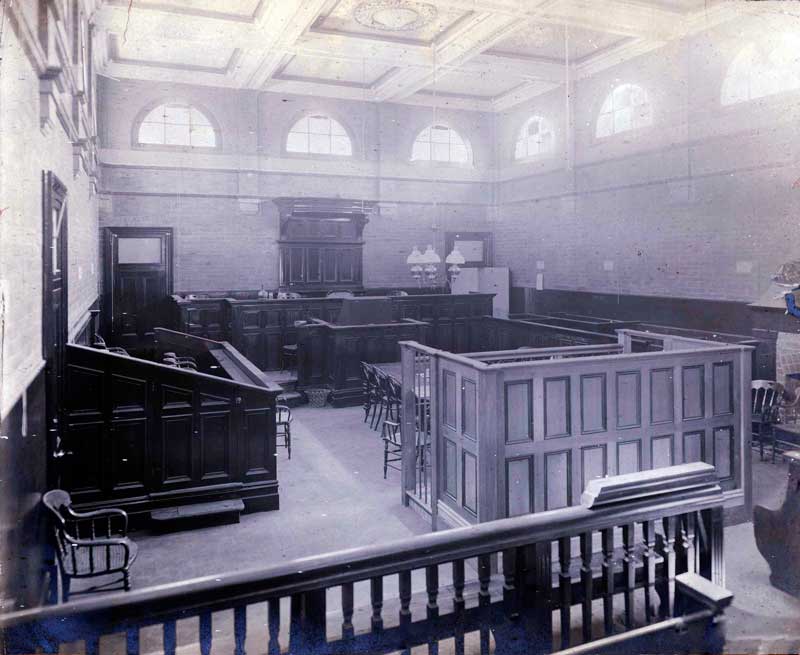
Photo ID: SRNSW 4346_a020 _a020000134.jpg
The Quarter Sessions opened here on Wednesday last. His Honor Judge Bevan presided. The legal profession was represented by Messrs OOH Dangar, Storkey (Crown Prosecutor), JJ Quirk, RE Upton, Narandera; and R Cater, Leeton.
…
George Chong, who was charged with committing a serious offence on a boy, and also with assaulting him, pleaded guilty to the second count of of [sic] common assault.
Mr Quirk appeared for accused.
In sentencing accused to two years’ hard labor in Grafton gaol, His Honor said if he had been convicted on the first count he would have sentenced him to a larger period in gaol. He would have passed the heavier sentence, not for the sake of punishing the prisoner but to put him out of the way, as such men as he was were a danger to all children in the community. He was apparently a sexual pervert, and men of his character should not be allowed to be at large.
A couple of previous convictions had been recorded against accused, one of which was a sexual offence.
…
————
THURSDAY
————
COMMENTS BY HIS HONOR
On taking his seat on the bench yesterday, His Honor Judge Bevan said that before the court of Quarter Sessions closed he thought he ought to say something with reference to the case which was tried on Wednesday. He said he need hardly refer to the facts, which were so recent. The two accused said that they awoke early on the morning in question and found the place on fire, and that they saved only a few articles and escaped from the house. Shortly afterwards they were seen by the police and asked a few questions. Two hours afterwards George Jones made a statement of confession, and a couple of hours after that Thomas Jones also made a statement to the police. The case turned on the question of whether the statements, which were out and out confessions, were true or not true. The jury before returning their verdict, made the statement that they found that the statements were signed while the accused were in a distracted state of mind; and that apart from the statements there was not sufficient evidence to convict. The jury also said they did not think the police used any third degree methods; and found the accused not guilty. It had not been his practice to in any way criticise the verdict of a jury; as there was something which might affect a jury and to a certain extent justify them in returning a verdict which might otherwise seem improper. There was nothing of the kind in this case, and he thought he ought to say something. A very large number of fires took place in this police district. Twelve fires had taken place in the last six months. It would be an unfortunate disaster if people committing arson escaped the punishment they deserved. There were statements made in the course of the evidence which suggested most dreadful corruption on the part of the police. There was not a tittle of evidence to support such suggestions. He was perfectly satisfied that Sergeant Thompson spoke the truth and he placed absolute reliance on what he said. It was quite true that the statements were signed by the accused, but the jury found that they were signed while the accused were in a distracted state of mind, and apart from the statements there was not sufficient evidence to convict. If the statements were true, they could not have more convincing evidence than they were. Evidence had been given that the accused were in a distracted state of mind. It had been stated that they asked Sergeant Thompson to write the statements, as they were too shaky; and that one of them, George, said he was upset, and two hours after making his statement, became sick. In his opinion George Jones was upset. He had done the thing on the spur of the moment without thinking about the serious consequences and the liability of being brought to account for it under the criminal law; and when asked about it had blurted out the truth. As he had said, a large number of fires had taken place, and there was the example to other people, whcih [sic] was very necessary. There was also the fact that if the verdict in this case was a sound one it would entitle the accused to sue the Atlas Insurance Co for the damage sustained. He did not think that there was need to say any more, but he entirely disagreed with the verdict; and he certainly hoped that if ever a case of the kind again came before the court it would not come before him. He had formed decidedly strong opinions as to the rights and wrongs of the case. No doubt both the young men had previously borne good characters; and he could only say that they did not appreciate the fact that in setting fire to their own property they attempted to obtain from the insurance company insurance to which they were no entitled.
…
THE LATE JUDGE ROGERS.
———◦———
JUDGE BEVAN’S TRIBUTE.
————
Before the business of the Quarter Sessions was entered upon on Wednesday last, His Honor Judge Bevan made the following reference to the death of the late Judge Rogers:—
“I regret to know that my eminent predecessor, Judge Rogers, has passed away. No man more thoroughly represented the highest aspirations of the bar than hi did. He distinguished himself greatly at the University and his eminence there foretold and active, useful future. As a practising barrister he was always distinguished by the force with which he handled his cases and the considerate and sportsmanlike way in which he treated those opposed to him. His satire, of which he was a master, was ever assuaged by his most kindly heart. No man ever lived with a more sincere and genial disposition. For many years he was a judge of this district, and many will remember the example of his dignity and great learning. He was an able, courteous, and kindly judge. We greatly regret the passing away of a man who was a most conspicuous lawyer and a most kindly friend to all.”
Mr Quirk, on behalf of the legal profession, also expressed regret at the death of Judge Rogers, and referred to his kindly and amiable disposition and to his eminence as a judge.
~ ~ ~ ~ ~
The Sydney Morning Herald, Sat 18 Jul 1925 12
COUNTRY NEWS.
———◦———
…
QUARTER SESSIONS.
Narrandera, Friday.
At Narrandera Quarter Sessions, before Judge Bevan,
…
George Chong pleaded guilty to a charge of committing common assault on a boy at Narrandera. He was sentenced to two years’ hard labour in the Grafton Gaol.
~ ~ ~ ~ ~
The Albury Banner and Wodonga Express, Fri 24 Jul 1925 13
NARANDERA.
————
(From a Correspondent.)
…
At the Narandera Quarter Sessions, before Judge Bevan,
…
George Chong pleaded guilty to a charge of having committed a serious offence. He was sentenced to two years’ imprisonment.
~ ~ ~ ~ ~
George Chong, Gaol photo sheet 14
![NRS2327, [3/5991], Maitland Gaol photographic description book, 1875-1930, No. 1957, p. 176, R5132.](../../images/trials/1925-Chong-5991-gaol-photo-1957.jpg "NRS2327, [3/5991], Maitland Gaol photographic description book, 1875-1930, No. 1957, p. 176, R5132.") |
Gaol Photo Sheet - Transcribed Details
No. 1957
Maitland
Date when Portrait was taken: 28-10-1925
Name: George Chong
|
Native place: Echuca, Vic Year of birth: 11-3-1880 Arrived Ship: Trade or occupation Religion: Meth[odist] Education, degree of: Nil Height: 5' 3¾" Weight On committal: Colour of hair: Black Colour of eyes: Brown |
Marks or special features: |
|
(No. of previous Portrait ... ) CONVICTIONS |
|||||
| Where and When | Offence. | Sentence | |||
|
Echuca [SC] Echuca SC * Echuca PC Narrandera Q.S |
21 21 29 15 |
7 12 1 7 |
1986 1900 1925 1925 |
Carnally know a girl under the age Indecently assault a girl Larceny Assault a male aged 10 years. |
6 months and two whippings of 12 months H.L. 10/- or 3 days H.L. 2 years H.L. |
|
* The correct trial date at the Echuca Supreme Court is 5 Mar 1901. The date entered on the gaol photographic description sheet is the date the offence was committed. |
|||||
1 Bendigo Advertiser (Vic), Fri 3 Jul 1896, p. 3.
2 Bendigo Advertiser (Vic), Sat 4 Jul 1896, p. 5. Emphasis added.
3 The Argus, Wed 22 Jul 1896, p. 6.
4 Bendigo Advertiser (Vic), Wed 22 Jul 1896, p. 3. Emphasis added.
5 Truth, (Syd, NSW), Sun 2 Aug 1896, p. 5. Emphasis added.
6 The Argus, Wed 23 Jan 1901, p. 6. Emphasis added.
7 Bendigo Advertiser (Vic), Wed 21 Jan 1901, p. 4.
8 The Argus, Wed 6 Mar 1901, p. 8.
9 Bendigo Advertiser (Vic), Wed 6 Mar 1901, p. 3.
10 Narandera Argus and Riverina Advertiser, (NSW), Fri 3 Jul 1925 p. 2. The newspaper title is consistently—between 1902 and 1925, the period included in these documents—named ‘Narandera’ and not ‘Narrandera’ as it currently is spelled.
11 Narandera Argus and Riverina Advertiser, (NSW), Fri 17 Jul 1925 p. 2. The newspaper title is consistently—between 1902 and 1925, the period included in these documents—named ‘Narandera’ and not ‘Narrandera’ as it currently is spelled.
12 The Sydney Morning Herald, Sat 18 Jul 1925, p. 16.
13 The Albury Banner and Wodonga Express, Fri 24 Jul 1925, p. 21.
14 SRNSW: NRS2327, [3/5991], Maitland Gaol photographic description book, 1875-1930, No. 1957, p. 176, R5132.