Nelson Waldomar Norgreen, 1907
Below also see: Nelson Norgreen, 1909,
Norgreen and Reynolds, 1910,
Neils Waldemar Norgreen, 1913,
Nelson Norgreen, 1916,
Neils Waldomar Norgreen, 1928 – Indecent assault
Neils W Norgreen, 1940
The Sydney Morning Herald, Mon 9 Dec 1907 1
MISSING MUSICIAN.
———◦———
Since Friday a 15-year-old lad named Oswald Barlow has been missing from his home in Paddington. He is musical, being a member of De Groen’s Band. He was last seen by his relatives at 4.30 pm on Friday, when he left home with the intention of proceeding to Centennial Park.
~ ~ ~ ~ ~
Evening News, Thu 12 Dec 1907 2
A MYSTERY SOLVED.
———◦———
YOUNG BARLOW’S BODY
FOUND.
———
The mystery surrounding the disappearance of WG Barlow, aged 14 years, who had resided with his parents at Leicester-street, Paddington, was solved on Wednesday. While walking along the northern end of Manly Beach, between Manly and Freshwater, on the look-out for shoals of fish, Nelson [Waldomar] Norgreen, a local fisherman, noticed a dark object being taken into a northerly direction by the current, which gradually brought it closer to the shore, when it was discovered to be a body face downward. With the assistance of a boat and another fisherman, Norgreen recovered the body, which was subsequently identified as that of young Barlow. It was taken into to Manly, and conveyed to the Circular Quay Morgue, pending a post-mortem examination by Dr Palmer.
The body, which was fully clothed, was in a very decomposed state. In the left breast, in the region of the heart, was found a lady’s hatpin, inserted its full length, in a slanting direction. The pockets contained a padlock, a number of screws, nails and bullets, and a tin box full of printing type; the lid of the box bearing the deceased lad’s initials.
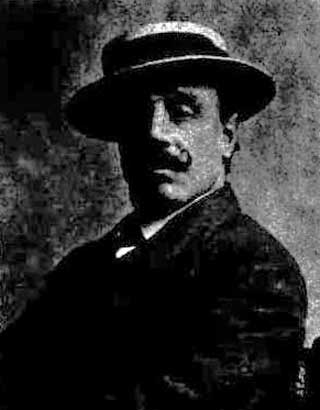
Image: Critic (Adelaide, SA), Wed 25 Jun 1913,
p. 24. Reproduction: Peter de Waal
The boy left his home on Thursday afternoon last, saying that he was going to Centennial Park. Failing to return home that night, the matter was reported to the police, who could obtain no clue as to his whereabouts. He was an accomplished musician, and a member of Mr L De Groen’s Band.
Lieutenant Bentley, of the State Military Band, writes:—“Young Barlow was, until a few months back, for some years, a member of the State Military Band. Both he and his brother were pupils of mine, and Oswald was a particular clever and assiduous pupil. A few months back, for some reason, the boy was compelled to sever his connection with the band, and to discontinue lessons he was receiving from me. Both brothers were particularly highly-strung; emotional lads, but I could do anything with them. Their father often told me that they would do anything I told them. I felt the separation keenly, but, as I do not now know the reason for this step, could not take any action. Oswald told a member of my band that he (Oswald) did not want to leave it. I know the lad’s temperament thoroughly, and I daresay he has brooded a good deal, and the added misery of being separated from his brother, between whom and himself there was a great bond of affection, has probably unhinged his mind. A lad of his ability and temperament cannot be treated as an ordinary lad of his age. He had the ways and intelligence of a man, and would have made a brilliant performer had he been left undisturbed in his studies. As it was, the lad probably felt that all his work and study would be thrown away. Those of the public who have heard him play in the Town Hall will remember what enthusiasm his playing evoked, and Sir Harry Rawson was particularly struck with his performance. I offer my heartfelt sympathy to Oswald’s parents in their sad bereavement.”
~ ~ ~ ~ ~
The Maitland Daily Mercury, Thu 12 Dec 1907 3
MURDER OR SUICIDE?
———◦———
MYSTERY OF THE SEA.
The body of Oswald WG Barlow, the 14-year-old musician who disappeared from his home in Leicester-street, Paddington, on Friday last, was found yesterday floating off Manly Beach, with a hatpin thrust through the heart.
Nelson [aka Neils] Waldomar Norgreen, a fisherman, was searching for shoals of fish along the rocks of Queenscliff Point, between Manly Beach and Freshwater, yesterday afternoon. Looking out to sea, he noticed a strange object floating about 300 or 400 yards away. A careful scrutiny satisfied him that the object was a human body, and he immediately went to Mr Charles Sly, who is also a fisherman in the district, and they both put off in the latter’s boat.
They found the body to be that of a youth, and dragged it into the boat. It presented a gruesome sight, and had the appearance of having been in the water for some considerable time. It was fully clothed. The body was removed morgue, where it was identified as that of young Barlow by his aunt.
An examination proved that death had not been due to an accident. A large hatpin, of the ordinary type, was found piercing the left breast, and although no medical examination was made last night, it appeared probable that the instrument had passed right through the heart. No other marks of violence were found, but of course it is possible that the long immersion would remove any marks if they had been present, and until the doctor has made his post-mortem examination no definite opinion can be passed.
In one of the pockets of the deceased’s coat was found a small tin, into which a number of slabs of lead, evidently from the linotype machine, had been packed. In another pocket a large quantity of nails was discovered. This [sic] objects looked as though they had been placed in the pockets with the object of weighting the body. Certain of the circumstances pointed to suicide, but on the other hand, many who have had great experience in these cases consider it very improbable for a 14-year-old boy to commit suicide, especially with such an instrument as a hatpin. The pin had entered the left breast, and was forced in several inches. This, if done by the lad himself, would require considerable moral courage, if indeed, it were at all possible. It was stated that young Barlow’s brother, to whom he was very attached, left home for New Zealand a few weeks ago, and since then the deceased had been despondent, evidently worrying over the separation.
On the afternoon of Friday last Oswald Barlow left his home, stating that he intended taking a walk as far as Centennial Park. He did not return at the usual time, and his relatives became anxious. They reported the disappearance to the police, and all efforts to trace his movements were unavailing.
Oswald Barlow, who was 14½ years of age, was described as a brilliant musician, performing on more than one instrument. He was for some time past a member of Mr L De Groens’s band, and was looked upon in the profession as one of the best local instrumentalists of his age.
~ ~ ~ ~ ~
The Sydney Morning Herald, Thu 12 Dec 1907 4
MURDER OR SUICIDE?
———◦———
MYSTERY OF THE SEA.
———
MISSING BOY FOUND DEAD.
———
HATPIN THROUGH THE HEART.
———
The body of Oswald WG Barlow, the 14-year-old musician who disappeared from his home in Leicester-street, Paddington, on Friday last, was found yesterday floating off Manly Beach, with a hatpin thrust through the heart.
Nelson [aka Neils] Waldomar Norgreen, a fisherman, was searching for shoals of fish along the rocks of Queenscliff Point, between Manly Beach and Freshwater, yesterday afternoon. Looking out to sea, he noticed a strange object floating about 300 or 400 yards away. A careful scrutiny satisfied him that the object was a human body, and he immediately went to Mr Charles Sly, who is also a fisherman in the district, and they both put off in the latter’s boat.
They found the body to be that of a youth, and dragged it into the boat. It presented a gruesome sight, and had the appearance of having been in the water for some considerable time. It was fully clothed.
The Manly police, who had been informed of the discovery, lost no time in having the body removed to the morgue, where it was identified as that of young Barlow by his aunt.
An examination proved that death had not been due to an accident. A large hatpin, of the ordinary type, was found piercing the left breast, and although no medical examination was made last night, it appeared probable that the instrument had passed right through the heart. No other marks of violence were found, but of course it is possible that the long immersion would remove any marks if they had been present, and until the doctor has made his post-mortem examination no definite opinion can be passed.
In one of the coat pockets of the deceased’s coat was found a small tin, into which a number of slabs of lead, evidenly [sic] from the linotype machine, had been packed. In another pocket a large quantity of nails was discovered. These objects looked as though they had been placed in the pockets with the object of weighting the body. Certain of the circumstances pointed to suicide, but, on the other hand, many who have had great experience in these cases consider it very improbable for a 14-year-old boy to commit suicide, especially with such an instrument as a hatpin. The pin had entered the left breast, and had been forced in several inches. This, if done by the lad himself, would require considerable moral courage, if, indeed, it were at all possible. It was stated that young Barlow’s brother, to whom he was very attached,, left home for New Zealand a few weeks ago, and since then the deceased had been despondent, evidently worrying over the separation.
On the afternoon of Friday last Oswald Barlow left his home, stated that he intended taking a walk as far as Centennial Park. He did not return at the usual time, and his relatives became anxious. They reported the disappearance to the police, and all efforts to trace his movements were unavailing. Until the body was found yesterday no definite information could be obtained. It was rumoured a few days ago that a boy answering to Oswald Barlow’s description had booked a passage to New Zealand, and this made his friends hopeful, as they thought that probably he had gone to join his brother.
Oswald Barlow, who was 14½ years of age, was described as a brilliant musician, performing on more than one instrument. He was for some time past a member of Mr L De Groens’s band, and was looked upon in the profession as one of the best local instrumentalists of his age.
That foul play might have been the cause of the young musician’s death was thought possible by many, but the police were unable to find anybody who was likely to wish for the lad’s death. It was at first believed by his relatives that the lad had been kidnapped, although they did not know of a single enemy who would be likely to want to do such a thing. Altogether the mystery looks at present like one of those in which no satisfactory conclusion can be arrived at.
~ ~ ~ ~ ~
Evening News, Fri 13 Dec 1907 5
YOUNG BATLOW’S DEATH.
————
Further light has been thrown upon the circumstances surrounding the death of young Barlow, whose body was found near Manly beach, with a hatpin stuck in the left breast.
An examination of the clothing shows that the hatpin did not pierce any portion of it, and as the clothes were buttoned up, it is assumed that the lad undid his clothes, even to his shirt, and then plunged the hat pin into his left breast, intending to pierce the heart. The pin took a downward direction, and it is probable the deceased, after buttoning up his clothes again, fainted and fell into the water, and was drowned. The police think the case clearly one of suicide, as there are several persons, including the lad’s school teacher, who have made statements regarding his morose and erratic behavior of late.
The funeral of the deceased lad took place on Thursday at Waverley, moving from his parents’ residence in Leicester-street, Paddington, and was largely attended.
~ ~ ~ ~ ~
Singleton Argus, Sat 14 Dec 1907 6
MISSING BOY FOUND DEAD.
———◦———
HATPIN THROUGH THE HEART
————
The body of Oswald WG Barlow, the 14-year-old musician whop disappeared from his home in Leicester-street, Paddington, on Friday last, was found on Wednesday floating off Manly Beach, with a hatpin thrust through the heart.
Nelson Waldomar Norgreen, fisherman, was searching for shoals of fish along the rocks off Queenscliff Point, between Manly Beach and Freshwater, on Wednesday afternoon. Looking out to sea, he noticed a strange object floating about 300 or 400 yards away. A careful scrutiny satisfied him that the object was a human body, and he immediately went to Mr Charles Sly, who is also a fisherman in the district, and they both put off in the latter’s boat. They found the body to be that of a youth, and dragged it into the boat. It presented a gruesome sight, and had the appearance of having been in the water for some considerable time. It was fully clothed.
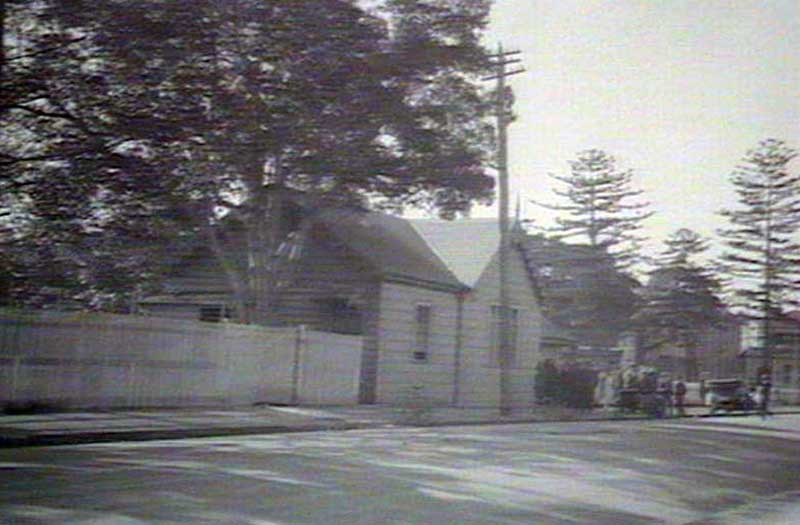
Reproduction: Peter de Waal
The Manly police, who had been informed of the discovery, lost no time in having the body removed to the morgue, where it was identified as that of young Barlow by his aunt.
An examination proved that death had been due to an accident. A large hatpin, of the ordinary type, was found piercing the left breast. No other marks of violence were found, but of course it is possible that the long immersion would remove any marks if they had been present.
In one of the pockets of the deceased’s coat was found a small tin, into which a number of slabs of lead, evidently from a linotype machine, had been packed. In another pocket a large quantity of nails was discovered. These objects looked as though they had been placed in the pockets with the object of weighting the body. Certain circumstances pointed to suicide, but, on the other hand, many who have had great experience in these cases consider it very improbable for a 14-year-old boy to commit suicide, especially with such an instrument as a hatpin. The pin had entered the left breast, and had been forced in several inches. This, if done by the lad himself, would require considerable moral courage, if, indeed, it were at all possible. It was stated that young Barlow’s brother, to whom he was very attached, left home for New Zealand a few weeks ago, and since then the deceased had been despondent, evidently worrying over the separation.
On the afternoon of Friday last Oswald Barlow left his home, stating that he intended taking a walk as far as Centennial Park. He did not return at the usual time, and his relatives became anxious. They reported the disappearance to the police, and all efforts to trace his movements were unavailing. Until the body was found on Wednesday, no definite information could be obtained. It was rumoured a few days ago that a boy answering to Oswald Barlow’s description had booked a passage to New Zealand, and this made his friends hopeful, as they thought that probably he had gone to join his brother.
Oswald Barlow, who was 14½ years of age, was described as a brilliant musician, performing on more than one instrument. He was for some time past a member of Mr L De Greens’s band, and was looked upon in the profession as one of the best local instrumentalists of his age.
That foul play might have been the cause of the young musician’s death was thought possible by many, but the police were unable to find anybody who was likely to wish for the lad’s death. It was at first believed by his relatives that the lad had been kidnapped, although they did not know of a single enemy who would be likely to want to do such a thing. Altogether the mystery looks at present like one of those in which no satisfactory conclusion can be arrived at.
Later.
A post mortem examination on the body was made by Drs Palmer and Paton. The result of their examination showed that death was due to asphyxia. As a hatpin was found stuck its full length into the left breast it was suggested that it penetrated the heart, and that death resulted from that. The post mortem, however, showed that the pin was driven downward, and only penetrated the flesh portion of the breast. In view of the fact that a quantity of lead, weighing about 3lb, was found in the pockets of the clothes Barlow was wearing, the case now appears to be clearly one of suicide. Although it appears fairly clear that there has been no foul play, the police are making inquiries, with a view to getting at the bottom of the matter.
~ ~ ~ ~ ~
Sunday Times, Sun 15 Dec 1907 7
FOUND DROWNED WITH HATPIN
IN HIS BODY.
The mystery surrounding the disappearance of Oswald WG Barlow, 14 years, lately residing with his parents at Leicester-street, Paddington, was dispelled on Wednesday.
The boy left his home on Thursday week in the afternoon, saying that he was going to Centennial Park. His parents became anxious at his failing to return that night, and reported the matter to the police. Inquiries were instituted, but no tidings could be learned as to his whereabouts.
Nelson Waldemar Norgreen, a fisherman tat Manly, was walking along the rocks and beach at the northern end of Manly Beach when he discovered the body, and, with Charles Sly, also a local fisherman, put out in a boat and brought the body in. It was fully clothed.
The body was taken into Manly, and subsequently to the morgue at Circular Quay. One eye was missing, and the remains were in a decomposed state. In the left breast, in the region of the heart, was found a lady’s ordinary hatpin, inserted practically its whole length, with a downward slant. The pocket contained a padlock, a number of screws, nails, and bullets, and a tin box full of printing type. A shield upon the box bore the deceased lad’s initials, and altogether the weight of the articles amounted to about 3lb. An aunt of the boy identified the body as being that of her nephew.
Barlow had been an accomplished young musician, and was a member of Mr L De Groen’s band. He became despondent after an elder brother, to whom he was greatly attached, left for New Zealand, and, apart from that fact, nothing is known to have been likely to cause his disappearance in such a quiet manner, and under circumstances so shocking.
Drs Taylor and Palmer, who made a postmortem examination on the body, found that the hatpin had been forced in between the fourth and fifth ribs, about the apex of the heart. It had taken a downward and backward course, and had finally punctured the stomach. An examination of the brain was also made, but as the body was in a state of decomposition it was impossible to trace the fine lines of disease which would have shown themselves in a fresh brain if any trouble existed. However, there was no gross disease of the brain. A good deal of congestion, particularly around the lungs, was found, and this and other signs led the medical men to pronounce the case one of death by drowning. The puncture of the stomach caused the boy to vomit, resulting in some food being lodged in the throat, probably choking the lad.
When the body was discovered it was fully clothed with the exception of the hat. The coat and vest were buttoned up in the usual way, and the shirt was not even punctured, showing that whoever thrust the hatpin into the side first laid the breast bare, and after having completed the work re-adjusted the whole of the clothing. There was otherwise an entire absence of marks of violence.
Where the boy entered the water is a question that the police are endeavouring to solve. They believe that he must have entered the sea at either Bondi or Coogee, and the body floated northwards.
The funeral, held at Waverley Cemetery, was attended by several schoolfellows, who marched in the procession.
~ ~ ~ ~ ~
Evening News, Mon 16 Dec 1907 8
OSWALD BARLOW’S
DEATH.
———◦———
EVIDENCE AT THE INQUEST.
————
WHAT A CLAIRVOYANT SAID.
————
An inquest was held by the Acting City Coroner into the circumstances attending the death of Oswald Barlow, 14, whose body had been found at the northern end of Manly Beach.
Mr Crowe (for Mr JW Abigail) watched the proceedings on behalf of Mr Barlow, father of the lad.
Mrs Perryman, an aunt of the boy, who lived two doors from the house, said she last saw him alive on the afternoon of the 6th instant, when he told her that he was going for a run in the park. Barlow was then in the best of spirits. Witness admitted to the Coroner that she suggested to the police that certain ponds should be dragged after his disappearance. This was owing to a visit paid to a clairvoyant, who told her that his body would be recovered in a day or two.
Mary Barlow, mother of the lad, said that she last saw him alive about 2.30 pm on the 6th instant. He appeared then to be in the best of spirits, and ate a good meal. Witness went out shortly after, and her son said, “Don’t be long, mother.”
To the Coroner: He practised music for four or five hours a day. He was under engagement to play in Mr De Groen’s band on the Saturday. As far as witness knew, he had no enemies, and he had never expressed any intention of taking his life.
To Mr Crowe, witness said that she had never seen the hatpin found in his body before.
To Mr McDonagh: He asked me if I should fret if he went away. I replied that I did not think I could live without him, and he replied, “Well, mother, I’ll give you no cause to fret.”
Charles Henry Neiferman said that he was a teacher at Paddington Public School. He had known young Barlow for the past three years. Witness last saw him alive at the corner of Queen-street, Paddington, when he looked lonely and despondent. He went over to him, and said, “Good day, Barlow.” He did not reply, but only raised his hat, which was not his usual manner.
To the Coroner: The boy was always bright and cheerful, and never, in witness’ presence, said anything about taking his life.
Robert Copsey, a friend of the deceased, said that shortly after 5 o’clock on the 6th instant he saw Barlow at the corner of Elizabeth and Oxford streets, Paddington. They exchanged the time of day, and deceased then walked slowly down Oxford-street towards the Town Hall.
To the Coroner: I frequently saw him, and he was always in the best of spirits.
George Townshend Cockerill, a teacher in the Paddington Public School, stated that he had known Barlow for the past eight years. He left school about two months ago, stating that he was going to take up a professional engagement in a band.
Lieutenant Bentley, bandmaster of the State Military and Police Bands, said that he knew Barlow intimately. Witness taught Barlow and his brother music, and they were also members of the State Military Band. At the beginning of September they both left the band. Witness had not seen deceased since.
To Mr Crowe: He was always cheerful, and never moody, and was rather more thoughtful than other boys of his age.
To Mr McDonagh: I think six hours’ practice a day rather too much.
Lewis De Groen, bandmaster of De Groen’s Vice-Regal Band, stated that he knew deceased. Barlow was present at the final rehearsal of witness’ band at the Glacarium [sic–Glaciariumi on the week previous to his disappearance. In witness’ opinion it was ridiculous to think that he would ever commit suicide.
To Mr McDonagh: I do not think six hours’ practice a day too much for a boy of his age. I also think it ridiculous to suggest that the lad committed suicide, as he of too bright a disposition, and the height of his ambition was to become a professional musician, so that he could help his father.
(Proceeding.)
~ ~ ~ ~ ~
The Sydney Morning Herald, Tue 17 Dec 1907 9
THE MANLY MYSTERY.
———◦———
EVIDENCE AGAINST SUICIDE.
———
CLAIRVOYANT’S WRONG CLUE.
———
The Acting City Coroner (Mr S Murphy, PM), held an inquest yesterday touching the death of Oswald Wellington George Barlow, whose body was found floating in the sea off Manly on Wednesday last.
Mr Crowe (for Mr JW Abigail) appeared to watch the case on behalf of the father of the deceased.
Mrs Perryman, residing two doors from and an aunt of deceased, said she saw him alive on the 6th inst, in the afternoon. He came into witness’s house, and inquired whether his mother was there, and she told she was not. He was asked whether he would have a cup of tea, and said: “No, thanks, I am going for a run in the park.” He appeared to be in the best of health and spirits. He was 14 years and 5 months old. Witness admitted that she suggested to the police that a certain pond should be dragged. She did so because she had been to a clairvoyant.
Mary Barlow, mother of deceased, said she last saw him alive at half-past 2 pm on the 6th inst, in her home. She was going out, and on her leaving he said, “You won’t be long, mother?” and she replied “Noo.” He had left school about four weeks before; after his brother’s departure. He continued his musical studies, practising sometimes four or five hours a day, sometimes less. Witness had not noticed that he was depressed at his brother leaving for New Zealand. She had never heard him express himself in any way that would lead to the belief that he intended to take his life. He was under engagement to Mr de Groen to start playing at the Glaciarium next day, and seemed very pleased at the prospect.
Charles Henry Lieferman knew deceased, and saw him at 5.20 pm on the 5th inst. He was standing against a post in front of St Matthias’ Church, Oxford-street, Paddington. Witness thought that he looked particularly lonely. He appeared despondent.
Robert Copsey, George T Cockerill, one of the teachers at the Paddington Public School, William George Bentley, lieutenant in the Australian Military Forces, and bandmaster of the State Military and Police Bands, and Lewis de Groen, musical conductor, described Barlow as being a bright, cheerful disposition, and generally did not credit the theory of suicide.
Other evidence having been given, the inquest was adjourned till Wednesday.
~ ~ ~ ~ ~
Evening News, Wed 18 Dec 1907 10
OSWALD BARLOW’S
DEATH.
———◦———
INQUEST RESUMED.
———
THE DOCTOR’S EVIDENCE.
———
The adjourned inquest opened on Monday by the Acting City Coroner (Mr Murphy), into the circumstances attending the death of Oswald Barlow, 14, lately residing with his parents in Leicester-street, Paddington, was continued this morning. Barlow’s body was found on Wednesday last floating in the water near the northern end of Manly Beach.
Mr James W Abigail watched the proceedings on behalf of the boy’s father, and Sub-inspector McDonagh was present in the interests of the police.
Charles Fall, treasurer of the State Military Band, stated that he knew the lad well. He resigned from the band in September last. Shortly afterwards the lad paid him a visit for the purpose of drawing some money that was owing to him. Witness said to him, “You’re a nice chap to leave the band,” and Barlow replied, “I do not want to leave the band, but it was father.”
Dr A[rthur] A[ubrey] Palmer 11 stated that he held a postmortem examination, in conjunction with Dr GH Taylor, on the body of Barlow, on December 12. The body was somewhat decomposed, especially about the head and nick. A hat pin had been inserted in the chest just above the fifth rib. The pin took a slant downwards, and the point has perforated the anterior wall of the stomach. There were no marks of violence on the body, but the back was partly eaten away by fish. There were no holes in the coat and shirt corresponding with the hole where the hat pin was found. The cause of death, in witness’ opinion, was asphyxia, caused by a quantity of food matter blocking the air passage.
To the Coroner: It would be possible for vomiting to be caused by the pin penetrating the stomach. In his opinion, the pin was inserted while he was alive. Witness also thought that he breathed while in the water, as a small shell was found in one of the air passages of the lungs. It would not take very much pressure to force the pin into the body.
To Mr Abigail: Witness found no signs of any assault. The pin could have been self-inserted by means of either hand. It would be very unusual for a boy of his age and nourishment to develop sudden insanity without some previous signs, but it had been known for a boy of that age to suddenly develop a suicidal tendency. The pin was not inserted by a fierce stab, and it could have been inserted by the lad himself.
To the Coroner: Nine-hundred and ninety-nine boys out of a thousand who commit suicide at the age 14, in his opinion would certainly be insane.
Joseph Barlow, the lad’s father, was recalled, and, in answer to Mr Abigail, said that the boy was never forced to practice either by witness or his mother, and he took plenty of exercise. Witness had never seen the hatpin (produced) in the boy’s possession.
This concluded the evidence, and the Coroner returned an open verdict.
~ ~ ~ ~ ~
The Sydney Morning Herald, Thu 19 Dec 1907 12
THE MANLY MYSTERY.
———◦———
CONCLUSION OF THE INQUEST.
———
AN OPEN VERDICT.
———
The Acting City Coroner, Mr S Murphy, PM, yesterday resumed the inquest on the body of Oswald Barlow, which was found floating off Manly Beach on the 11th inst.
Dr Palmer deposed to making a post-mortem examination on the body. A lady’s hat-pin was sticking in the left side of the chest. It had perforated the interior wall of the stomach, but there was no escape of the stomach contents. There were no other marks of violence. He was of opinion that death was due to asphyxia by drowning. He believed the hat-pin was inserted during life. It would not require great force to send the pin in where it was found.
To Mr Abigail: The brain was too much decomposed for him to be able to say whether it showed distress from long-continued study. Even had it been fresh, he could not have told. The pin was certainly not inserted with a fierce stab; it could have been inserted with either one or both hands. It would have been very unusual for the lad to have developed insanity under the circumstances. He would have expected the boy to have shown some indication previously. From the medical point of view, there was nothing in the case against suicide, but that presupposed insanity.
An open verdict was returned.
Nelson Norgreen, 1909
Evening News, Sat 24 Apr 1909 13
A PLUCKY RESCUE.
————
Two residents of Narrabeen, Messrs Hansen and Oldham, engaged a boat at Fairy Bower on Wednesday to enjoy a day’s fishing. While in the vicinity of Blue Fish they got into trouble with the breakers, and the boat upset. The occupants managed to clamber on to the keel of the craft. Their cries for help were heard by Nelson Norgreen, a young fellow, who was working up on top of the hill. He ran to Shelly Beach, and not being able to obtain assistance, he pulled a boat out, and succeeded in reaching the men in trouble, and safely landed them and their boat.
~ ~ ~ ~ ~
National Advocate, Tue 27 Apr 1909 14
A PLUCKY RESCUE.
————
Sydney, Monday.
Messrs Hansen and Oldham, residents of Narrabeen, whilst enjoying a day’s fishing at Fairy Bower, got into difficulties in the breakers. Their boat was upset, and they were left struggling in the water. Their cries for help were heard by Nelson Norgreen, a young man who was working in the vicinity. He immediately went to the rescue, and although unable to obtain assistance, took a boat out, and succeeded in safely landing both men and their boat.
Norgreen and Reynolds, 1910
Evening News, Tue 31 May 1910 15
PLUCKY RESCUE AT MANLY.
————
A plucky rescue was effected yesterday at Manly, when Miss Annie Smith was discovered to be in difficulties in the surf. Nelson Norgreen, who happened to be on the beach, dashed into the breakers fully dressed, and brought the lady to the shore. She was in a bad way, but soon recovered under treatment. Mr F Carroll and J Bennetts also rendered assistance.
~ ~ ~ ~ ~
The Sun, Fri 4 Nov 1910 16
A STARTLING REPORT.
————
DIVERS THOUGHT THEY SAW
WOMAN'S HAIR.
————
A startling report was circulated all over Manly this afternoon, Messrs Norgreen and Reynolds, who have been out in a little boat all day off Queenscliff Headland, have, almost at the risk of their own lives, been searching every nook and cranny for the body, which they are convinced is somewhere in the water. Numbers of people are watching them, as, with simply bathing slips on them, they dive from the side of their frail little craft, and disappear in the water. One of them went down about noon to-day, and he saw swaying about in the moving water from under a protruding ledge what looked like the hair of a woman. Again and again he went down, but was unable to reach the spot, and his companion called to the people on shore: “Here, she is!” At last the diver managed to reach the place only to find that the swaying tendrils were seaweed.
The plucky behavior of these two young men cannot be too highly praised. The water at this place is infested with sharks, and although these hideous creatures are not about in force, yet it is impossible to say when one or both of their lives may be in danger.
~ ~ ~ ~ ~
The Sun, Sat 5 Nov 1910 17
THE MANLY MYSTERY.
———◦———
MISS BESSIE GIBSON NOT
FOUND YET.
————
YESTERDAY’S WILLING SEARCHERS.
————
A MIXED COLLECTION.
————
This morning the hunt for Miss Bessie Gibson, who disappeared so mysteriously from Manly on Tuesday last, was continued. Organised search parties were out early, and dozens of searchers who started away into the bush on their own initiative were up and away at daybreak. Constable H Jones, of Manly, who has made a faithful search of the coastline from Queenscliff Headland two or three miles to the northward every morning since the young lady disappeared, followed out his morning programme, tramping along near the water’s edge. Messrs Jack Reynolds and A Norgreen, two experienced swimmers and divers, were again out in their boat off Queenscliff Headland, but up to the time this edition went to press nothing had been discovered.
Yesterday’s search was thorough and extensive. The Manly police state that the interest taken in the affair was extraordinary all day. There were over 60 calls on the telephone from people who asked if more help was wanted, and many more making suggestions, some possible, and many impossible. One lady rang up from up-country, and suggested that a black-tracker should be sent down to Sydney.
Neils Waldemar Norgreen, 1913
The Sydney Morning Herald, Tue 24 Jun 1913 18
LAW NOTICES.
———◦———
Tuesday, June 24.
————
…
QUARTER SESSIONS APPEALS.
The following appeals against magistrates’ orders and convictions will be heard at Darlinghurst Courthouse:—
…
Before Judge Docker.—Emanuel Scully, breach of motor traffic regulations; Neils Waldemar Norgreen, misbehaviour.
Nelson Norgreen, 1916
Evening News, Tue 15 Aug 1916 19
£30 FINE AT MANLY.
————
Nelson Norgreen appeared at the Manly Police Court, before Mr King, SM, on a charge of aiding and abetting in the sale of liquor on unlicensed premises.
Sergeant Small gave evidence that on August 5, when he visited certain premises on the Corso, he found Norgreen in the shop, and saw him bring beer for two constables who had been sent in by him. Accused was apparently employed by the owner of the premises, who at last Tuesday’s Court was fined £40 for selling drink.
Norgreen pleaded guilty, and was fined £30, in default three months’ hard labor. Three monthly instalments of £10 each were allowed.
~ ~ ~ ~ ~
The Sun, Tue 15 Aug 1916 20
SLY-GROG AT MANLY
———◦———
Nelson Waldemar Norgreen, charged at the Manly Police Court this morning with aiding and abetting in the sale of liquor without a license, was fined £30, in default three months hard labor.
Neils Waldomar Norgreen, 1928
The Sydney Morning Herald, Mon 16 Apr 1928 21
LAW NOTICES.
———◦———
Monday, April 16.
———
…
QUARTER SESSIONS.
No. 1 Court.—Robert Pickett Adams, bigamy (for plea only). Henry Douglas Stuart, fraudulent misappropriation; Neils Waldonar [aka Waldomar] Norgreen, indecency; Reginald Elwyn Hutchison, break, enter, and steal; Arthur Sydney Woods, robbery.
~ ~ ~ ~ ~
The Sydney Morning Herald, Tue 17 Apr 1928 22
QUARTER SESSIONS.
No. 1 COURT.
(Before Judge Cohen.)
Crown Prosecutor, Mr VH Treatt.
INDECENT ASSAULT.
Neils Waldemar [aka Waldomar] Norgreen, 41, fisherman, was charged with having indecently assaulted John Robson, at Harbord on February 22. Mr Dwyer (instructed by Mr WE Dwyer) appeared for the accused, who was convicted and remanded for sentence.
~ ~ ~ ~ ~
Evening News, Fri 20 Apr 1928 23
FISHERMAN GAOLED
————
ASSAULTED SCHOOLBOY
————
“THE amount of harm that men like you do to children of tender years cannot be guessed at, and you ought to be ashamed of yourself,” said Judge Cohen, at Darlinghurst Sessions to-day, in passing sentence of two years’ imprisonment on Neils Waldemar Norgreen, 41, fisherman, who had been convicted on a charge of having indecently assaulted a schoolboy at Harbord on February 22.
In pleading for leniency. Norgreen’s counsel said accused had protested his innocence at the trial, and he still did so. The Judge, however, said he saw no reason to doubt the verdict of the jury.
~ ~ ~ ~ ~
The Sun, Fri 20 Apr 1928 24
FISHERMAN GAOLED
————
SCHOOLBOY INCIDENT
“You ought to be ashamed of yourself,: said Judge Cohen at Darlinghurst Sessions to-day, addressing Neils Waldemar [sic] Norgreen, aged 41, fisherman, found guilty of unseemly conduct with a schoolboy at Harbord on February 22.
Such conduct, the judge added, did terrible harm to children of tender years. He sentenced Norgreen to two years’ imprisonment.
~ ~ ~ ~ ~
The Sydney Morning Herald, Sat 21 Apr 1928 25
QUARTER SESSIONS.
(Before Judge Cohen.)
Crown Prosecutor, Mr VH Treatt.
SENTENCES.
Neils Waldemar Norgreen, 41, fisherman, indecent assault upon a schoolboy, two years’ hard labour in Maitland Gaol.
~ ~ ~ ~ ~
The Telegraph, Mon 23 Apr 1928 26
TWO YEARS’ GAOL
———◦———
SENTENCE ON SERIOUS CHARGE
————
Sydney, April 21.
“The amount of harm that men like you do to children of tender years cannot be guessed at, and you ought to be ashamed of yourself,” said Judge Cohen at the Darlinghurst Sessions yesterday, when passing a sentence of two years’ imprisonment on Neils Waldemar Norgreen (41), a fisherman, who had been convicted on a charge of having indecently dealt with a schoolboy at Harbord on February 22.
In pleading for leniency Norgreen’s counsel said that the accused had protested his innocence at the trial, and he still did so.
The judge however, said that he saw no reason to doubt the verdict of the jury.
~ ~ ~ ~ ~
Neils Woldomar Norgreen, Gaol photo sheet 27
![SRNSW: NRS2467, [3/6121], State Penitentiary photographic description book, 24 Feb 1928-23 Jun 1928, No. 22977, p. 141.](../../images/trials/1928-Norgreen-6121-gaol-photo-22977.jpg "SRNSW: NRS2467, [3/6121], State Penitentiary photographic description book, 24 Feb 1928-23 Jun 1928, No. 22977, p. 141.") |
Gaol Photo Sheet - Transcribed Details
No. 22977
Date when Portrait was taken: 17-4-1928
Name: Neils Woldomar Norgreen
|
Native place: Sydney Year of birth: 11-7-1886 Arrived Ship: Trade or occupation Religion: R. C. Education, degree of: R & W Height: 5' 5½" Weight On committal: 147 Colour of hair: Brown togrey Colour of eyes: Blue |
Marks or special features: Female figure outside right forearm. Left eye turned outwards. Blind in left eye |
|
(No. of previous Portrait ... ) CONVICTIONS |
|||||
| Where and When | Offence. | Sentence | |||
|
Manly PC ditto Sydney Q.S |
3 12 16 |
9 11 4 |
1925 1925 1928 |
Indecent language Riotous behaviour Indecent assault on a male person |
£1 or 48 hours HL 10/- or 3 days HL 2 years HL |
Neils W Norgreen, 1940
The Sydney Morning Herald, Fri 3 May 1940 28
FAMILY NOTICES
…
FUNERALS.
————
…
NORGREEN.—The Relatives and Friends of Mrs PHILOMENA NORGREEN, Mrs AMY BATALIA, Mr and Mrs WF LEONARD, Mrs J PARKER, and Mr R SPURN are kindly invited to attend the Funeral of her beloved HUSBAND and their BROTHER, STEP-FATHER, and FRIEND, Neils W Norgreen; which will leave the Kinsella Chapels, Taylor Square, Darlinghurst, THIS (Friday) MORNING, at 10.30 o’clock, for the Eastern Suburbs Crematorium.
CHARLES KINSELLA Pty, Ltd, AFDA.
Oxford Street, Taylor Square.
Darlinghurst.
Phones, FL4136-7-8
1 The Sydney Morning Herald, Mon 9 Dec 1907, p. 6.
2 Evening News, (Sydney, NSW), Thu 12 Dec 1907, p. 8. Emphasis added.
3 The Maitland Daily Mercury, (NSW), Thu 12 Dec 1907, p. 3. Emphasis added.
4 The Sydney Morning Herald, Thu 12 Dec 1907, p. 7. Emphasis added.
5 Evening News, (Sydney, NSW), Fri 13 Dec 1907, p. 5.
6 Singleton Argus, Sat 14 Dec 1907, p. 1. Emphasis added.
7 Sunday Times, (Sydney, NSW), Sun 15 Dec 1907, p. 12.
8 Evening News, (Sydney, NSW), Mon 16 Dec 1907, p. 5. Emphasis added.
9 The Sydney Morning Herald, Tue 17 Dec 1907, p. 6. Emphasis added.
10 Evening News, (Sydney, NSW), Wed 18 Dec 1907, p. 8. Emphasis added.
11 The Sydney Morning Herald, Thu 7 May 1942, p. 7.
“DEATH OF DR AA PALMER
———◦———
Dr Arthus Aubrey Palmer, formerly New South Wales Chief Government Medical Officer, died at a Sydney Hospital on Tuesday night, aged 72.
In January, 1936, he retired after 27 years’ service in the Health Department.
Before arriving in Australia, he was principal demonstrator in anatomy at Queen’s College, Belfast, and demonstrator in anatomy at the Royal College of Surgeons.
In addition to being Chief Government Medical Officer, he was police surgeon and lecturer in medical ethics and medical jurisprudence in the Sydney University.
The OBE was conferred upon him in January of last year.
The funeral will take place this afternoon.”
12 The Sydney Morning Herald, Thu 19 Dec 1907, p. 5. Emphasis added.
13 Evening News, (Sydney, NSW), Sat 24 Apr 1909, p. 10. Emphasis added.
14 National Advocate, (Bathurst, NSW), Tue 27 Apr 1909, p. 2. Emphasis added.
15 Evening News, (Sydney, NSW), Tue 31 May 1910, p. 2.
16 The Sun, (Sydney, NSW), Fri 4 Nov 1910, p. 5. Emphasis added.
17 The Sun, (Sydney, NSW), Sat 5 Nov 1910, p. 1.
18 The Sydney Morning Herald, Tue 24 Jun 1913, p. 11. Emphasis added.
19 Evening News, (Sydney, NSW), Tue 15 Aug 1916, p. 3. Emphasis added.
20 The Sun, (Sydney, NSW), Tue 15 Aug 1916, p. 3.
21 The Sydney Morning Herald, Mon 16 Apr 1928, p. 7. Emphasis added.
22 The Sydney Morning Herald, Tue 17 Apr 1928, p. 7.
23 Evening News, (Sydney, NSW), Fri 20 Apr 1928, p. 10.
24 The Sun, (Sydney, NSW), Fri 20 Apr 1928, p. 5.
25 The Sydney Morning Herald, Sat 21 Apr 1928, p. 14.
26 The Telegraph, (Brisbane, Qld), Mon 23 Apr 1928, p. 15.
27 SRNSW: NRS2467, [3/6121], State Penitentiary photographic description book, 24 Feb 1928-23 Jun 1928, No. 22977, p. 141.
28 The Sydney Morning Herald, Fri 3 May 1940, p. 8. Emphasis added.