Robert Raquet, 1925
Below also see: Robert Raquet, 1926,
Robert Raquet, 1928 – Indecent assault,
Robert Henry Raquet, 1930,
Robert Henry, 1931,
Robert Raquet, 1933,
Robert Raquet, 1938 – Indecent assault,
Robert Raquet, 1940,
Robert Raquet, 1941,
Robert Raquet, 1953
The Blue Mountain Echo, Fri 23 Jan 1925 1
BEHIND THE LINO
———◦———
MIDNIGHT AT Medlow
————
THE RECORD OF RAQUET.
———
Capt T Whateley Rose put up a fine fight for Robert Raquet in Katoomba Court on Tuesday, but his line of defences went down before a tiny slip of paper produced by Sergt J Carter, on which was set forth Raquet’s record.
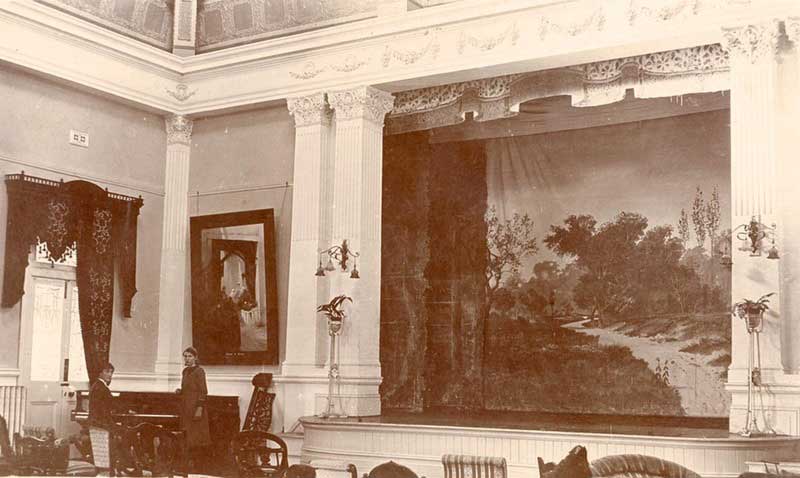
Image: NSW State Library collection. Reproduction: Peter de Waal
It was a peculiar case. Two men, the accused and Leonard Hunt, were employed as waiters at the Hydro Majestic. From something he had heard, the manger of the hotel, Mr Gerald Barry, accompanied by the assistant manager, Mr AJ Birney, proceeded to the room occupied by the two men, which was situated about 100 yards distant from the main building. Behind a piece of linoleum hanging on the wall a recess was discovered, in which reposed an electroplated electric light standard; six linen table covers were also found on a shelf above Hunt’s bed, mingled with other clothing.
The information on which Mr Barry acted had been supplied by Hunt. He was lying in bed one night, when he noticed Raquet industriously polishing and electric light standard similar to those which adorned the tables in the dining room. Thinking nothing of the matter at the moment, he went to sleep. He woke again shortly after midnight, and noticed his room mate concealing some article. His suspicions aroused, next morning he conducted a little investigation on his own account. There was a square of linoleum hanging on the wall. Behind which he knew a convenient recess to exist. On peering into the cavity, he perceived the electric light standard. One of the table covers also was lying beside a suit case belonging to Raquet. Hunt at once notified Mr Barry.
Raquet denied the impeachment in its entirety. He had not polished up any electric light standard, and had not interfered with the table covers.
It was then that Sergt Carter did a little cross-examining: “Are you a respectable man? He asked.
“Yes,” was the reply.
“Were you ever in Dubbo?”
Then came the debacle, Raquet had been convicted of indecent behaviour at Dubbo; of common assault on a woman at Manly; and, more significantly than all, he had been convicted at the Central, Sydney, in July, 1923, of stealing.
The Bench found him guilty of stealing the articles named, and imposed a fine of 5, with 25/- costs; in default one month’s hard labour.
● ● ●
While searching Raquet’s effects at Medlow, Const Ledger discovered a linen bed sheet, valued at 10/-. Raquet was charged with stealing the sheet from Fred Storer, of “Wykehurst,” Katoomba.
He pleaded guilty, and was fined £3.
Robert Raquet, 1926
Evening News, Wed 1 Dec 1926 2
JIU JITSU EXPERT
————
CHALLENGED POLICE
————
MOSMAN CHANTICLEER
————
EXTRAORDINARY behaviour by a man who, according to the police, was demonstrating his ability in the art of jiu jitsu to a number of boys in front of a Mosman picture theatre, was described at North Sydney Court to-day.
Robert Raquet, 27, physical instructor, said to be of French nationality, was fined £3 on a charge of having resisted Constable Page. On a second charged of having behaved in a riotous manner, he was fined £2, and he was similarly fined on a third charge of behaving used insulting words to the constable.
Constable Page told Mr Chippendall, [sic] SM, that, at 9.30 pm, on November 29, he saw defendant wrestling with a number of boys of 10 or 12 years of age on the footpath opposite a picture theatre in Military-road, Mosman.
FREE DEMONSTRATIONS
“I saw him throw several boys to the footpath,” added witness, “and place his foot on their chests. He then expanded his chest and crossed the footpath several times, causing obstruction to people.
“When I asked him what he meant by his conduct, he expanded his chest, placed it against my chest, and remarked that he would give me all the jiu jitsu I wanted.”
Witness said that, after arrest, defendant resisted violently, and when released momentarily during the struggle, he ran into a shop, where he made use of insulting words.
Pleading for leniency on behalf of defendant, Mr Roxborough told the magistrate that defendant was a teacher of jiu jitsu, and, on the night of his arrest, he had been giving a demonstration to the boys at their request.
Robert Raquet, 1928
The Sydney Morning Herald, Sat 13 Oct 1928 3
LAW NOTICES.
——
Monday, October 15.
——
…
QUARTER SESSIONS.
Mona Nicola and Ellio Nicola, malicious wounding; Robert Raquet, indecent assault; Sydney Thomas Osterlund, carnally know a girl under the age of sixteen years; William Robert McGrath, assault a girl under the age of sixteen years and commit an act of indecency.
…
————————
CHARGE DISMISSED.
———◦———
PREACHER BEFORE COURT.
——
ALLEGATIONS AGAINST
CONSTABLE.
——
Wagga, Friday.
Thomas Rogan appeared at the Wagga Police Court yesterday charged with offensive behaviour. Intense public interest was taken in the case, and the Court was crowded.
It was stated that Rogan was reading a Bible in the street, and was preaching, surrounded by a large crowd, when Constable Loy approached. It is alleged that Loy knocked the book from Rogan’s hand. Rogan waved the constable away, and it is alleged that Loy then pushed his hand into the old man’s face, knocking him over, the policeman falling on top of him. Loy then arrested Rogan, a crowd of 200 making a hostile demonstration, hooting the policeman and acting in a very threatening manner. A woman approached the policeman and requested him to treat the old man less harshly, but Loy ignored the request. The crowd followed to the lock-up, making hostile demonstrations the whole way.
In evidence Loy denied these allegations. The magistrate said that there was no evidence of offensive behaviour, and dismissed the case.
~ ~ ~ ~ ~
The Sydney Morning Herald, Mon 15 Oct 1928 4
LAW NOTICES.
——
Monday, October 15.
——
…
QUARTER SESSIONS.
Mona Nicola and Ellio Nicola, malicious wounding; Robert Raquet, indecent assault; Sydney Thomas Osterlund, carnally know a girl under the age of sixteen years; William Robert McGrath, assault a girl under the age of sixteen years and commit an act of indecency.
…
————————
MAN FALLS BETWEEN TRAMS.
———◦———
John Wren (60), of Canterbury-road Campsie, had a remarkable escape from death on Saturday afternoon, when he fell between two trams in George-street West.
Wren was alighting from a tram near Regent-street, and failed to notice another tram travelling in the opposite direction. He was struck by the footboard of the latter tram, and was dragged along the road for some distance.
Wren was taken by the Central District Ambulance to Sydney Hospital, where it was found that he had received only abrasions to the legs.
~ ~ ~ ~ ~
The Sydney Morning Herald, Thu 29 Nov 1928 5
QUARTER SESSIONS.
(Before Judge Curlewis.)
(Crown Prosecutor, Mr VH Treatt.)
…
INDECENT ASSAULT.
Robert Raquet (29), jiu-jitsu instructor, was charged with having indecently assaulted a boy, [Walter Reginald Thomas ], at North Sydney, on August 29.
Mr TS Holden (of the firm of Mr Mervyn Finlay) appeared for the accused, who was convicted. A number of previous convictions were recorded against him. A constable stated that the prisoner had been warned to leave Manly because he had been interfering with young children. As accused denied this, his Honor remanded him for sentence until this morning, so that the statement might be verified.
~ ~ ~ ~ ~
The Sydney Morning Herald, Fri 30 Nov 1928 6
QUARTER SESSIONS.
(Before Judge Curlewis.)
Crown Prosecutor, Mr VH Treatt.
ASSAULTING A BOY.
Robert Raquet, 29, a ju jitsu instructor, for whom Mr TS Holden (of the firm of Mr Mervyn Finlay) appeared, who had been convicted on a charge of assaulting a boy at North Sydney, on August 29, was called up for sentence.
Constables Fleming and Wylie both stated that the prisoner had started a gymnastic school in 1923, teaching principally young boys. There were complaints, and Raquet was advised to leave Manly. He appeared there later, and asked Fleming and Wylie if he would be allowed to start again in Manly, but they told him that he would not be tolerated.
His Honor sentenced the prisoner to 12 months’ imprisonment with hard labour, and recommended that he be placed under medical supervision. There was a long list of offences against him.
~ ~ ~ ~ ~
Robert Raquet, Gaol photo sheet 7
![SRNSW: NRS2467, [3/6123], State Penitentiary photographic description book, 8 Nov 1928-21 Mar 1929, No. 23474, p. –.](../../images/trials/1928-Raquet-6123-gaol-photo-23474.jpg "SRNSW: NRS2467, [3/6123], State Penitentiary photographic description book, 8 Nov 1928-21 Mar 1929, No. 23474, p. –.") |
Gaol Photo Sheet - Transcribed Details
No. 23474
Date when Portrait was taken: 30-11-1928
Name: Robert Raquet
|
Native place: London Year of birth: 4-2-1899 Arrived Ship: Osterley Trade or occupation Religion: R. C. Education, degree of: R & W Height: 5' 6⅝" Weight On committal: 156 Colour of hair: Dark brown Colour of eyes: Brown |
Marks or special features: Scar above elbow elbow right arm cleft in centre of chin |
|
(No. of previous Portrait ... ) CONVICTIONS |
|||||
| Where and When | Offence. | Sentence | |||
|
Dubbo PC Manly PC Central PC Katoomba PC North Sydney PC
Sydney Q.S. |
10 8 23 20 1
28 |
8 3 7 1 12
11 |
1916 1923 1923 1925 1926
1928 |
Indecent language Assault female Stealing Larceny Riotous
Indecent assault on a male person |
£1 or 3 days HL £2.10.0 or 14 days HL. £4 or 1 month HL £6.5.0 or 1 month HL £2 or 14 days HL Paid Fines 12 months HL |
Robert Henry Raquet, 1930
Lithgow Mercury, Mon 16 Jun 1930 8
MAIN-STREET SCUFFLE
———◦———
BRINGS SERIOUS INJURY
TO RESIDENT
————
VISITOR ARRESTED
————
As a result of an altercation in Main-street on Saturday morning, Arthur Johnson was admitted to the hospital later in the day with a probable fracture of the neck, and Robert Henry [Raquet], a physical culture instructor, was taken into custody.
According to one side of the story, Henry was endeavouring to persuade a junior employee of Johnson’s hairdressing saloon to take a course of ju-jitsu. Mr Johnson, snr, objected, and ordered Henry away from the premises, which it is alleged he refused to do.
A scuffle followed, in which Henry received a punch in the face, blackening one eye, and Johnson was then thrown heavily.
As a consequence, Robert Henry was charged before Mr JA Longworth, CM, at the Police Court this morning with having maliciously inflicted grievous bodily harm to Johnson.
Sergt Stewart asked for a remand until the 26th. Johnson, he said, was still in the hospital, although his condition was stated to have slightly improved.
Bail was fixed at £100, with sureties of an equal amount, and the defendant, in asking that this be reduced, said he had not been given in charge. On the contrary, he had requested that Johnson be taken into custody, as he had only acted in self-defence.
Mr Longworth refused to reduce the amount, and the defendant still protesting, was led from the court.
~ ~ ~ ~ ~
Lithgow Mercury, Fri 27 Jun 1930 9
JOHNSON AND JU-JITSU
———◦———
WRESTLING “PROFESSOR”
COMMITTED
————
SEQUEL TO MAIN-STREET
AFFRAY
————
Charged with maliciously inflicting grievous bodily harm to Arthur Johnston on June 14, Robert Henry Raquet, or “Professor” Henry, as he is known locally, was committed for trial to Bathurst quarter sessions by Mr HH Farrington, PM, at Lithgow Police Court yesterday.
Bail was reduced from £100 to £50, with sureties of an equal amount.
At the conclusion of the police case Mr Farrington intimated that he was satisfied a prima facie case had been made out against the defendant, whom he intended to commit for trial. In spite of this, Raquet persisted in proceeding with his defence with the result that the preliminary hearing was exceedingly protracted.
“HEADLOCK ON HIM”
Sergt Pardon said he spoke to defendant at the Exchange Hotel on the night of the assault, and was told that Johnson had interfered in a conversation, had struck the defendant, and blackened his eye. In retaliation, Raquet said he had put a headlock on Johnson to keep him quiet for a minute or two, but when he was released he fell to the footpath.
Defendant told him that he had asked the police to arrest Johnson, who was the aggressor, but they advised him to take civil action. He denied that he had struck Johnson.
Arthur Gordon Johnson, whose neck was still obviously stiff, said he saw the defendant talking with the lad who lathered up at his son’s hairdressing saloon, and heard him say “Hairdressing is no good for you. You want to learn to tickle the till.” Witness then interfered. He asked Raquet if he were trying to educate the boy and told him he had better “whizz off.” He replied that he would not go for witness or anybody else, and witness then gave him a push. Raquet adopted a fighting attitude, walking round witness, who said, “You had better go away.”
Instead, defendant caught him by the lower part of the body and threw him over his head, and before witness could regain his feet, had put one arm about his neck. As a result of his injuries, witness was later admitted to the hospital.
In answer to defendant, witness said he had several drinks, but was not under the influence of liquor. He did not threaten to break defendant’s neck if he did not go away, and he did not remember having punched him in the face.
BECOME A “PROFESSION ABALE”
George Henry Keeley said he was a barber’s assistant at Johnson’s hairdressing saloon, and was talking with the defendant in the doorway. Raquet was talking “a lot of rot,” and witness was not paying much attention to him, but he remembered hearing him say “Why don’t you leave this barber’s shop and become a profession able like me?” He also said something about learning to “tickle the till,” but Mr Johnson then interfered and threatened to give him a punch in the face.
“Henry started to walk around Johnson like a wrestler,” continued witness “Johnson stood with his hands closed. The defendant rushed at him and tried to get an arm lock, but Johnson swung round and hit him in the eye, knocking him over. Johnson went to pick him up, but the defendant rushed at him again and put the ‘Flying Mare’ on him. He then caught hold of Johnson’s hand and said, ‘Go for the police’.”
Dr Morris said he examined Johnson at his home and thought he was probably suffering from a fracture of one of the vertebrae. He ordered his removal to the hospital, where an X-ray revealed no bony lesion. Witness did not consider the injury would be permanent, but there was still some stiffness in the muscles of the neck, and Johnson was complaining of numbness down his arms and in his hands. It would be some time before he would be able to move his neck without pain.
At this stage the PM said he considered there was a case for defendant to answer and he would commit him for trial, but Raquet said he wanted to give evidence and the case was allowed to proceed.
“I AM DOING NO HARM”
Robert Henry [Raquet] said he was present touring the country teaching ju-jitsu. On June 14 he was speaking to Keeley, who was interested in the art, in front of Johnson’s hairdressing saloon, when Johnson came out and told him to clear out. He replied that he was doing no harm and felt justified in remaining where he was. Johnson said, “If you don’t hurry up I will make you,” and punched him in the face with his left hand.
He said, “You mean rotter,” and looked around for a policeman. As there were none in sight, he caught Johnson by the lapels of the coats and made a stomach throw over his head. As Johnson regained his feet defendant applied a forward head-lock, in order to hold him until assistance arrived, but when he released him Johnson fell to the ground.
He was then carried into the shop and defendant followed, but Johnson told him if he did not go away he would break his neck. As he left the premises the police arrived and he told them he wanted to give Johnson in charge, but was advised to take out a summons.
To Sergt Pryor: Robert Henry is my proper name. I went under the name of Robert Raquet and Robert Henry Louis Raquet. My correct name is Robert Henry Louis Raquet, but I have a professional name of Robert Rako. It was not used at the Manly, Dubbo and Central police courts.
Harold Rickard, a schoolboy residing in Lett-street, said he saw Raquet trying to protect himself and Johnson punch him in the face. Defendant then threw him over his shoulder.
Ronald Kessing said he heard the defendant say, in answer to Johnson, that he was used to being put away and did not go when asked. Johnson then hit him and he retaliated by throwing Johnson to the footpath.
Raquet was committed for trial at Bathurst Quarter Sessions on October 2, bail being fixed at £50, with two sureties of £25 or one in £50.
Robert Henry, 1931
Northern Star, Fri 27 Mar 1931 10
“BLOCKED TRAFFIC”
————
LISMORE POLICE COURT
————
“You are too officious. I will report you.” This what Robert Henry, ju-jitsu and physical culture instructor, who was the defendant at Lismore Police Court yesterday in a case of obstructing the free passage of public upon the footpath, said to Leslie H Johnston (municipal traffic officer) when told to move on. Henry did not appear, and was fined 10s, costs of court 8s, professional costs £2-2s by Mr EA Mahony, PM. Henry arrived after the case was dealt with and said he had left the court to get a witness.
Leslie Harold Johnston (municipal traffic officer) told the Bench that on March 18 he was on duty at the intersection of Magellan and Keen streets between the Rural School and Frith’s butcher shop. Henry had taken up a position on the footpath where the two footpaths joined in Keen-street, and was addressing a number of boys around him. The corner was a very busy one. Johnston asked Henry to move, as he was blocking the footpath. Johnston alleged that defendant became “hostile” and said: “Go away. You have no right o speak to me. You are rude.” Henry also remarked: “You are too officious. I will report you,” and, pointing to the boys gathered around asked, “Why don’t you move them?” Johnston replied, “You move on. You are the cause of their being here.” Again asked to move on, defendant said he was all right. Henry refused to give his name, but gave it later to a policeman.
Robert Raquet, 1933
Daily Examiner, Thu 23 Feb 1933 11
DISCHARGED
———◦———
BOUND OVER FOR 12 MONTHS
————
ALLEGED VAGRANCY CHARGE
————
DEFENDANT KNOWN TO POLICE.
————
Before Mr H Hawkins, PM, at the Grafton Police Court yesterday morning, Robert Raquet, 34, was charged with being an idle and disorderly person, having no visible means of support.
The defendant pleaded not guilty.
Constable RMA Robinson said that the defendant, who had been known to him fr the past four years, approached him in front of the Freemasons’ Hotel, Grafton, on February 21, saying: “You know my past?” Witness replied in the affirmative, and the defendant then said: “I do not want you to tell anybody about it.” Witness retorted: “I have noo intention of doing so, but you know what those offences you have been convicted on related to.” He reminded the defendant of a complaint made by the headmaster of a school at Kyogle, in 1930, relating to his conduct with school children, and the fact that the police had ordered him to leave the town the defendant admitted that he remembered the headmaster, but denied that he had been ordered to leave the town. Witness said: “Yes, it is correct, and the police refused to ‘let’ you the School of Arts.” Defendant then answered: “That is right, but I got the sample room at the Commercial Hotel,” Subsequently, however, he confessed that the police intervened and he was not allowed to carry on at the hotel premises. The defendant told him he was going to try and lead a straight life, provided he was given a chance. Witness answered: “You will certainly get a chance, but take my advice and have nothing to do with boys. I want you to understand that.”
Continuing, witness said that Constable Pinkerton brought the accused to the police station at about 6 pm on Tuesday, when the constable laid a complaint relating to his actions with some boys. Constable Pinkerton said he regarded the defendant’s conduct as unseemly. The defendant, when questioned by witness, said he had not paid his board at the boarding house at which he had previously stayed, and he (witness) told him it would be better for him if he left the town. Raquet replied that he did not want to leave, and after being charged with vagrancy, he called witness to the cell and said: “Lift this charge off me, and I will be in Brisbane to-morrow.”
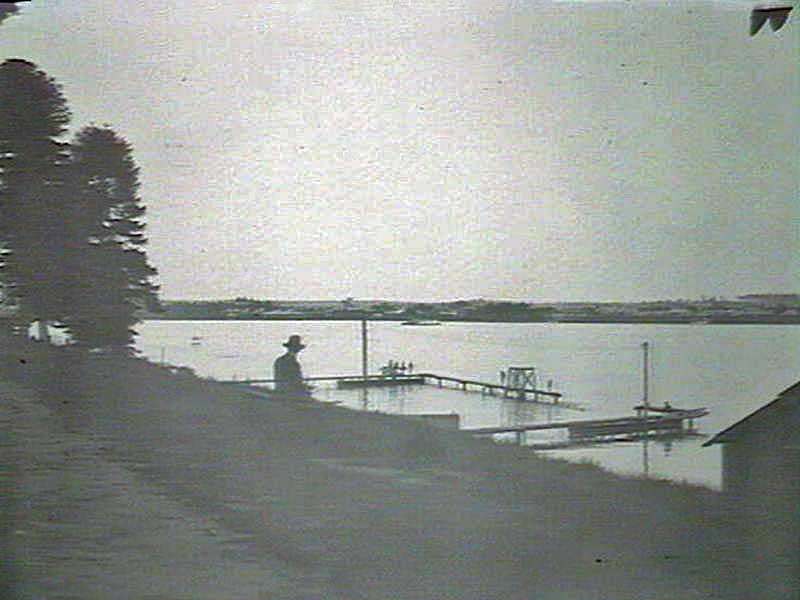
Image: NSW State Library collection. Reproduction: Peter de Waal
Replying to the PM, witness said the defendant told him he had no money, and that he was making arrangements with Mr Dorgan to lease a portion of the picture show on Thursday afternoon, for advertising purposes. When arrested, the defendant had 2d in his possession.
Questioned by the defendant, witness said that defendant had been ordered to leave Kyogle in 1931, and would have been charged had the police been able to get the evidence.
Detective Constable AJ Paterson said that the defendant, who was in the baths on February 17, came up to him and said: “Is that your little boy swimming around there?” Witness answered “Yes,” and the defendant continued: “He is a fine little chap, but he has not got the right style of swimming. I have been a swimming instructor, and I might take it on here.” Witness then reminded the defendant that he had seen him at the Darlinghurst Sessions four or five years ago. The defendant asked him: “Was it in connection with a boy?” and when witness said it was, the defendant replied: “You won’t say anything about it, will you? I am going to try and go straight, and it is my attention to live down the past; I want to regain my manhood.” Witness answered: “I will do nothing that will prevent you regaining your manhood, and providing that there are no complaints and I am satisfied that you are making a genuine effort to support yourself, things will be all right. Knowing you and your reputation, it will be my duty to watch you very closely.” Witness also informed the court that he received a telephone call at 3 pm on February 18, and went to a house in Queen street, and after engaging in conversation with a lady, he, in company with Sergeant McGrath, went in search of the defendant. On Tuesday morning, Constable Pinkerton told him something, and at about 5 pm he (witness) saw the defendant in the Grafton baths. The defendant came up to him, saying: “The baths manager has told me that he does not want me to come there. He tells me that the police informed him that I have a past, and to be careful. The manager told me that you were the man who made this complaint.” Witness told the defendant that his statement was correct, adding that Sergeant McAlpin had informed him that he had occasion to speak to him (defendant) outside the Lands Office about two years ago, and that he (defendant) then left the town. Witness recited a conversation he had relative to the movements of the defendant at Armidale, where, it was alleged, he had been ordered to leave the High School as a result of his conduct. Addressing the defendant, witness said: “You left Sonter’s boarding house without paying for your accommodation, and about the time you left, a man lost 30/-. I know that you have convictions for dishonesty. I know that you were convicted for stealing at Katoomba, from Woolworth’s, in Sydney, and it seems a peculiar thing that, wherever you go, complaints reach the police concerning your conduct. I am satisfied that you are not the class of person that will make good at Grafton.” After the defendant had been charged, witness showed him a photo in a criminal register, which he admitted was taken whilst he was serving a sentence for indecent assault on male person.
Replying to defendant, witness acknowledged that he (defendant) had suggested that the boys should come before the police to be questioned, but said that defendant could not tell him who the boys were. Witness remembered the defendant demonstrating to him his movements towards the boys. What he demonstrated did not appear to be unseemly.
Evidence for the prosecution was also tendered by Constable GJ Pinkerton, who described the defendant’s conduct whilst swimming at the baths at the time and had the defendant under observation for about five minutes. When questioned by witness concerning his conduct, the defendant said: “I was only teaching them ju-jitsu, and if you like I will give you a demonstration how I caught hold of them.” The boys, to whom witness referred would be between 10 and 12 years old. He did not ask the boys any questions about the defendant or the supposed incidents. Witness did not see defendant teaching the boys to swim.
Robert Raquet, who described himself as a physical culture teacher, said that after coming out of Grafton gaol on Friday he took up residence at Mrs Sonter’s boarding house at Villiers street and remained until Monday morning when he left the premises and went to reside at a boarding house in Pond street. He did not remember being asked to leave Kyogle, nor did he remember Constable Robinson at that town. He further denied that the headmaster at Armidale had complained of his conduct. Regarding the alleged baths incident at Grafton, he had told Constable Paterson that the police could ask the boys to give details as to how he handled them, but the constable had said that they were too young to understand, or words to that effect.
Witness continued: “I was demonstrating to the boys for fully 10 minutes the tricks of a theory of ju-jitsu and then I coached them in various movements of swimming. The only reason I had for touching the boys was to show them ju-jitsu holts.”
Upon leaving the boarding house, witness said he told Mrs Sonter he supposed he was indebted to her for board and lodgings for 2½ days. He said he would not receive any money until Friday, and asked her to wait until then. Mrs Sonter replied, “All right.” He had interviewed Mr Leo Dorgan and had obtained the use of a theatre to give a demonstration on Thursday afternoon. It was his intention to call a class on Friday afternoon and to charge a shilling each lesson in respect of pupils desiring to attend. Witness had also interviewed Mr Robinson, of the Crown Hotel, with a view to using the room suitable for massage purposes and exercises for business men and also a gymnasium, but he was given no definite reply. If the police insisted that he should leave the town he would be prepared to do so within a few minutes.
Cross examined by Sergeant McGrath, witness admitted having been previously convicted for an offence concerning a boy.
The Magistrate, discharged the defendant, under the terms of section 556A of the Crimes Act, 1900, conditionally upon him entering into a recognisance, himself in the sum of £10, to be of good behaviour and to appear for conviction and sentence if, at any time within 12 months, called upon to do so.
The defendant was bound over in open court.
~ ~ ~ ~ ~
Northern Star, Tue 28 Feb 1933 12
TWO CHARGES
————
Casino, Monday.
In Casino Police Court to-day before Mr CJM Hade, Chamber Magistrate, and CH Kelly, JP, Robert Raquet, alias Robert Henry, and Rowland Henry, pleaded not guilty to a charge of offensive behaviour in Walker-street, Casino, last Sunday night. The charge was dismissed.
There was a further charge against Raquet of having insufficient lawful means of support and he was sentenced to two months’ hard labour in Grafton Gaol.
~ ~ ~ ~ ~
Northern Star, Thu 2 Mar 1933 13
MORE BUTTER FAT PRIZES
————
…
Breach of Recognisances.—At Casino, before Mr CJM Hade (Chamber Magistrate) and Mr CH Kelly, JP, Robert Raquet was charged with a breach of his recognisances entered into at Grafton on February 22, and was remanded to appear at Grafton.
~ ~ ~ ~ ~
Daily Examiner, Fri 3 Mar 1933 14
SENTENCED FOR VAGRANCY.
In the Casino Police Court on Monday before Mr CJM Hade (Chamber Magistrate), and Mr CH Kelly, JP, Robert Raquet, alias Robert Henry, alias Rowland Henry was charged with behaving in an offensive manner in Walker street the previous night. There was a further charge against Raquet of having insufficient lawful means of support. The defendant pleaded not guilty and conducted his own defence. There were 15 previous convictions against the defendant for various offences, including larceny, assaulting a male person, resisting the police, etc, dating back to 1916, with the last conviction in Grafton for vagrancy on Wednesday of last week, when he was released on a bond to be of good behaviour for 12 months. On the offensive behaviour charge the information was dismissed, and for vagrancy the defendant was sentenced to two months’ hard labor.
Robert Raquet, 1938
Newcastle Morning Herald and Miners’ Advocate, Fri 14 Jan 1938 15
POLICE COURT
———◦———
Thursday, January 13
————
(Before Mr ME Soane, SM.)
————
STOWAWAY IMPRISONED.
Pleading “Guilty” to having stowed away on the steamer Cathay, between Brisbane and Newcastle, on January 12, Robert Henley, [aka Robert Raquet], a steward, was fined £5, in default imprisonment for 10 days.
Fourth Officer, FHJ Alton, of the cc Cathay, said that Henley was found at 9.50 am, on January 12, while the vessel was at sea. He had no permission to be on board.
Henley said he was sorry about it all. He was a first-class waiter, and found it impossible to obtain a job. Recently he received a letter from England, informing him of his father’s death. His mother was alone, and he desired to go to her. As a last resource, he decided to board the Cathay, hoping thereby to reach Sydney, where there was a greater possibility of obtaining work.
~ ~ ~ ~ ~
The Newcastle Sun, Wed 2 Mar 1938 16
IN THE COURTS
———◦———
ALLEGED BOGUS ADVT.
Robert Racquet, 39, physical culture expert, was charged before Mr Soane, SM, at the Newcastle Police Court to-day with having caused a bogus advertisement to be inserted in the “Newcastle Morning Herald,” knowing it to be bogus, on March 1. He was also charged with vagrancy.
Racquet was remanded to March 4. Bail was fixed at £20.
~ ~ ~ ~ ~
Newcastle Morning Herald and Miners’ Advocate, Thu 3 Mar 1938 17
POLICE COURT
———◦———
Wednesday, March 2
————
(Before Mr ME Soane, SM.)
————
BOGUS ADVERTISEMENT ALLEGED.
Robert Racquet, 39, physical culture expert, was charged with vagrancy at Newcastle on March 1, also that on the same day he caused to be inserted in the “Newcastle Morning Herald” a bogus advertisement, knowing it to be bogus.
Racquet was remanded to Friday. Bail was allowed in £20, with one surety in £20 or two in £10.
~ ~ ~ ~ ~
Newcastle Morning Herald and Miners’ Advocate, Sat 5 Mar 1938 18
POLICE COURT
———◦———
Friday, March 4
————
(Before Mr ME Soane, SM.)
————
BOGUS ADVERTISEMENT ALLEGED.
Because the evidence was not sufficient, Mr Soane discharged Robert Racquet, 39, physical culture instructor, on a charge of having inserted a bogus advertisement, knowing the same to be bogus, in the “Newcastle Morning Herald” on March 1.
Mr HL O’Neill (Messrs Johnson and O’Neill) appeared for Racquet.

(NSW), Tue 1 Mar 1938, p. 14. Reproduction: Peter de Waal
Detective Sergeant WL Alford said that Racquet came to the Newcastle Police Station on March 1, and said that Detective Paterson had warned him to leave town immediately, or he would be charged with vagrancy. He wanted an extra day or two. Witness questioned Racquet about an advertisement in the “Newcastle Morning Herald” on March 1. He said, “this advertisement, ‘Smart boy, about 14, about 7st or 8st, as door attendant, good wages, apply 10-11 am, 4 Parnell-place,’ did you insert it in the paper?” Racquet replied, “Yes.” Asked why he inserted the advertisement, Racquet said that he wanted a lad to assist him in giving exhibitions of ju-jitsu. He would have to train the lad, but one lesson would be sufficient that all he wanted. Racquet said that he could not arrange the exhibitions until he had someone to make an attractive display. He intended too use a hall near the school, or demonstrate in the school ground, if possible. Asked whether he had engaged a boy, Racquet said “No.” racquet said that about 15 boys called in answer to the advertisement. He had not engaged a boy because no one was suitable. Witness said he was satisfied that accused had no employment to offer, and put the advertisement in the paper for another purpose. Racquet was charged with vagrancy and searched. Three newspaper cuttings were found in his possession.
By Mr O’Neill: Racquet was residing at the address stated in the advertisement. Racquet went voluntarily to the police station. A police officer told him that a boy from Merewether had assisted Racquet in demonstrations. He did not know of anybody who had been deceived or misled by the advertisement.
Mr O’Neill submitted that the evidence was not sufficient to uphold the charge. A genuine address was given. Under the Crimes Act, the onus wason the police to satisfy the Magistrate beyond reasonable doubt that there was bogus intention.
The Magistrate said that there was no proof that the advertisement was false, or that Racquet did not require a door attendant. He might have strong suspicions similar to the sergeant’s, but he could not convict a man on suspicion.
No evidence was offered by the police on the second charge of vagrancy, and Racquet was discharged.
~ ~ ~ ~ ~
The Sun, Fri 13 May 1938 19
CONSTABLE IN
HOSPITAL
————
ALLEGED ASSAULT
IN PARK
Bail of £40 and a remand to May 27 was to-day, at Central Police Court, granted to Robert Louis Racquet, 39, a physical Culturist, who had been charged with having assaulted Constable John Westcott Lindley, causing actual bodily harm, and with offensive behaviour.
The prosecutor (Sergeant Magnay) said his instructions were that about 5 pm yesterday Lindley spoke to Racquet in Green Park, Darlinghurst, and Racquet made an attack on Lindley, who was taken to St Vincent’s Hospital with a probable fracture of a leg and an injured eye.
Mr Thornburn (Mr Mervyn Finlay’s office) said he had been instructed that Racquet was assaulted by the constable and anything that happened occurred while Racquet was defending himself.
Magnay said that Racquet, who had complained of being assaulted, had been examined by a Government doctor, and no injuries were found.
Pulling up a trouser-leg, Racquet said he was kicked twice.
~ ~ ~ ~ ~
The Sydney Morning Herald, Sat 14 May 1938 20
ALLEGED ASSAULT ON
CONSTABLE.
———◦———
PHYSICAL CULTURIST REMANDED.
Robert Louis Racquet, 39, physical culturist, was remanded until May 27, in the Central Police Court yesterday, on a charge of having assaulted Constable John Westcott Lindley, and caused him actual bodily harm, on May 12. He was also charged with having behaved in an offensive manner on the same day.
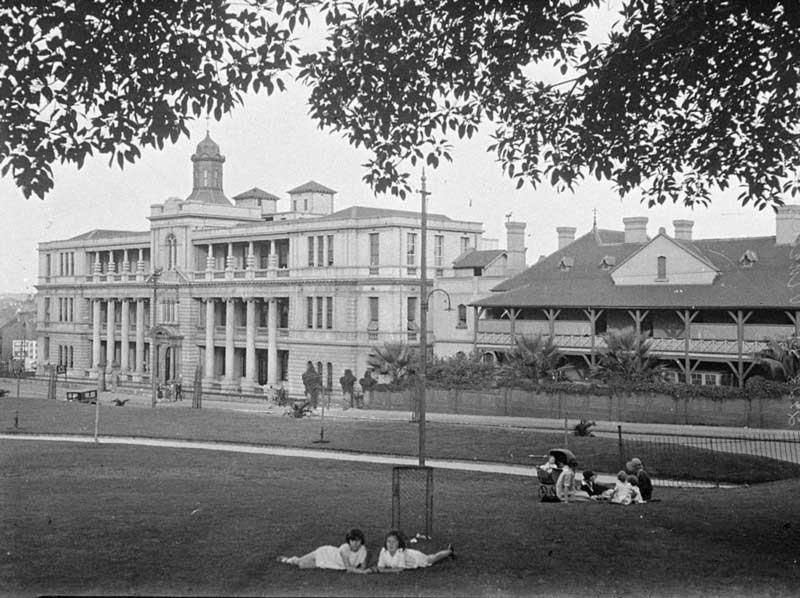
Image: NSW State Library collection. Reproduction: Peter de Waal
Sergeant Magnay (Police Prosecutor), who asked for substantial bail, said it was alleged that Constable Lindley spoke to Racquet, in Green’s Park, Darlinghurst. Racquet, it was alleged, attacked Lindley, who had to be taken to St Vincent Hospital. One of Lindley’s eyes was injured, and he had several injuries to other parts of his body.
Mr Thornburn, who appeared for Racquet, said that the defendant’s contention was that he had been assaulted by the constable. He went to the police station, and not until then was he arrested.
Sergeant Magnay said the Racquet had complained that he had been assaulted, and he had been examined by the Government medical officer that morning. It had been found that Racquet had no marks of injuries. He had only an old injury to his right little finger.
Racquet: I was assaulted all over the place. I was punched in the neck and kicked in the calf.
Bail of £40 was allowed.
~ ~ ~ ~ ~
National Advocate, Thu 13 Oct 1938 21
INDECENT ASSAULT
CHARGE
———◦———
Man Remanded in
Bathurst Court
————
Arrested on Tuesday afternoon by Detective Sergeant Wells. Of Bathurst and Detective Sergeant Delaney of the Sydney CIB, Robert Raquet, 39, was charged yesterday in the Bathurst police court with committing an indecent assault on a 13 year old boy.
Raquet was remanded by Mr RWS Kelly, Clerk of Petty Sessions, to appear in the court on October 20. Bail was fixed at £80.
The offence was alleged to have been committed in Bathurst on Tuesday.
~ ~ ~ ~ ~
National Advocate, Fri 21 Oct 1938 22
GENERAL NEWS
———◦———
FURTHER REMAND GRANTED
Robert Racquet [sic] (39), who is charge [sic] with having committed an indecent assault on a boy aged thirteen years, appeared in the Bathurst Police Court before Mr RWS Kelly JP yesterday, but was remanded again until Monday morning. The same bail of £80 was fixed.
~ ~ ~ ~ ~
National Advocate, Wed 16 Nov 1938 23
18 MONTHS’ GAOL
———◦———
MAN’S ASSAULT ON BOY
————
BAD CRIMINAL RECORD
————
BATHURST QUARTER SESSIONS
————
Sentencing Robert Racquet (39), a travelling jiu-jitsu instructor to eighteen months’ hard labor at the Bathurst Quarter Sessions yesterday, his honor, Judge McGhie, remarked that he would be failing in his duty to the public if he did not impose a sufficient sentence. Racquet was convicted on a charge of having indecently assaulted a thirteen-year-old boy at Bathurst on October 11.
“Since 1916 you seem to have had the habit of breaking the law in various ways and you have a previous conviction for this same type of offence,” [see: Robert Raquet, 1928, above] remarked his Honor.
“You got twelve months then, but I will have to make the sentence heavier this time.”
Mr F[rederick] W Berne (Crown-Prosecutor) told the jury that it was a particularly disgusting case, and in the matter of Racquet having indecently assaulted the boy it made no difference whether there was consent or not.
The boy was only young, and it would be a matter for his Honor to decide whether there was consent or not.
Several persons at the hotel saw him take the boy up to his room. He was apparently a jiu-jitsu expert and after taking the boy to the skating and the baths induced him to carry a parcel up to his room.
After the alleged offence, Mr Berne continued, Racquet gave the boy a parcel of papers to take out with him under the pretext that he was washing.
collection. Reproduction: Peter de Waal
Dr Harris of Bathurst said he examined the boy on October 11, but it would be difficult to detect any signs of interference.
Giving his evidence on oath the boy stood up in the box very confidently and told how he met the accused near the skating rink on October 11. Accused asked him would he like to go skating and gave him a lolly.
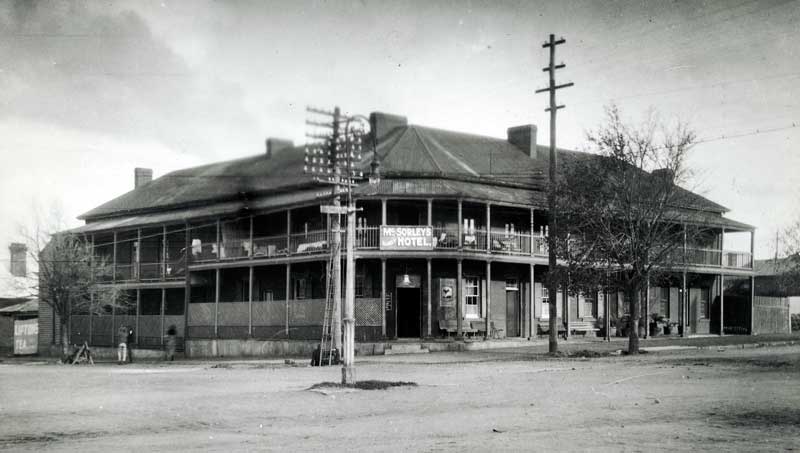
Racquet later took him to the baths and then to McSorley’s Hotel stating that he would show him some jiu-jitsu holds but if he said anything he would suffocate him.
After the alleged offence, they heard some one coming along the hall, accused wrapped up some newspapers and told him to say he had been up there for the washing. There was a girl walking along the hall when he went out and when he got downstairs he met Sergeant Wells.
As he was leaving the room, Racquet pretended to give him some money and said, “If they ask you, say shirts are 6d and singlets 3d.” The boy refused a request to return the following day.
In reply to Mr WH Henlen (for Racquet) the boy said Racquet told him to dump the parcel in a gutter when he got up the street. There was a window open in the room and also a door half open. Racquet had locked the door and asked him to close the window.
The boy’s father said the lad was only thirteen and attended school at Bathurst.
Edward Hopper, an employee of McSorley’s Hotel, told the court that when he saw Racquet on the evening of October 11 on the steps of the hotel vestibule, the accused was beckoning the boy to “Come on up.”
When witness went upstairs shortly afterwards he listened outside Racquet’s room, but could not hear anything. He had no authority to enter the room as the accused was a guest of the house.
Ross Rowe, a retired civil servant, said he was managing the Family Hotel on October 11. Hopper told him something and he gave certain instructions. Just before six o’clock Detective Sergeant Wells arrived and saw the boy leaving with a parcel. The accused snatched the parcel from the boy, but it was taken by Sergeant Wells.
Witness did not hear the conversation between the sergeant and Racquet. He took possession of the duplicate key and it would then have been impossible for anyone to get into the room until the police examined it.
Katherine Curtin, a waitress at McSorley’s Hotel, said she knew him as a boarder at the hotel. On October 11 she saw him take the boy upstairs. She followed shortly afterwards and listened outside but could not hear what was said.
Helen Jessie Fitzpatrick, a barmaid, said that on the day in question she went upstairs about 5.30 pm. The accused was standing at his door talking to the boy and she heard him say, “Bring me back my pyjamas. They are the most important.” He later added, “I gave you 2/-.”
Detective Sergeant Wells of Bathurst, stated that he went to the Family Hotel about 5.15 pm on October 11 and saw the manager Mr Rowe.
They saw the boy coming downstairs and when witness approached Racquet raced up and said, “Here, give me that parcel,” which he snatched from the boy.
When witness said he was from the police, accused asked, “What is wrong. Has something been stolen?”
He asked Racquet what was in the parcel, and he said, “Oh, that is only a joke.” In reply to a question by witness at that time as to what he was doing with the boy in his room Racquet said, “I was showing him a few grips.”
Sergeant Wells was with Detective Sergeant Delaney and they told the accused about his remarks to the boy concerning the washing and he replied, “Fancy the little —– saying that.”
They later went to the room and recovered some newspaper from the waste paper basket. This was sent to the Government micro-biologist for examination. The paper was produced in court.
In reply to Mr Henlen, Sergeant Wells said that he called the boy out on to the footpath and started to speak to him when Racquet appeared on the scene. Sergeant Delaney then took the boy a short distance away to question him. Witness did not see the small parcel the boy was alleged to have taken up to the room.
Sergeant Wells added that Racquet said to him, “If you give me a chance I will leave town tonight and you will never see me again. No harm has been done to the boy. Let me go.”
Detective Sergeant CJ Delaney of the CIB Sydney said he looked in the waste paper basket in the room occupied by the accused and retrieved pieces of newspaper. The paper in question was torn from the sheets wrapped in a parcel which Racquet tried to take from the boy when they saw him after the alleged offence.
To Mr Henlen witness said it would be possible to see portion of the room from the street. When they went upstairs the accused opened the door himself and pulled it to after they left.
In a statement from the dock Racquet protested his entire innocence of the charge.
“It is hard to sit here and listen to everything that has been said about me. But I want to make it clear that I am a physical culture man,” he said.
“I came to Australia from France when I was 17 and after farming for two years tok [sic] up teaching jiu-jitsu for a living. I worked for many schools in Sydney, and it is not unusual for me to be in contact with young people, as I find it easier to get students from the schools.
“Invariably I am popular with young people wherever I go. They like to see me and ask me questions and invariable when they see me they say ‘There is the jiu-jitsu man’.”
The accused did not deny meeting the lad at the skating rink. There were other boys there, he said, all singing out “Hello, Mr jiu-jitsu.” The boy who had just given evidence against him came up and said he wanted to learn jiu-jitsu. They walked to the baths together, but the baths were closed, and as they came back up the street the boy asked him about his jiu-jitsu clothes and said he would like to see them.
“I told him he could see the clothes but if he told the other boys at school I would choke him,” stated Racquet. “We went up to my room and the lad wanted to put the clothes on.
“I then showed him a few tricks in countering a punch, and later said I would give him 1/- a week to go to the pictures if he would come and wake me up each morning.
“The police have gone to a great deal of trouble to explain certain things, but as far as the parcel was concerned I told the boy, as he had dressed himself and was leaving that we would have a joke with the maid who was in the passage. I wrapped up some papers and said for him to tell her it was a parcel of laundry.”
Racquet said he admitted that he had misconducted himself in the room that afternoon but he did not interfere with the boy.
He denied telling the police that he would clear out if given a chance. When he looked out and saw the boy talking to the police he thought they were accusing him of stealing something. The man he was talking to looked like a commercial traveller.
“I treated the boy in an honorable way and never touched him,” Racquet concluded.
Addressing the jury Mr Henlen said that there was a doubt as to whether Racquet had actually committed the offence. It seemed strange that the boy had not cried out.
There was only the boy’s evidence against the accused in proving the guilt of the latter.
Mr Henlen told the jury that cases of this nature were easy to make, hard to prove, but harder still to prove the innocence of the accused. To find the accused guilty, he added, would make him a social outcast.
Mr Berne emphasised the fact that up to a certain point the accused admitted the boy’s evidence. Why should the boy come into court and tell lies and why should Racquet take him, a perfect stranger up to his room to teach him the jiu-jitsu holds, which could have been done anywhere. Was there any need for secrecy?
He told the jury that they could convict on the boy’s evidence, which was given under oath, the meaning of which he understood perfectly when Racquet even agreed with this evidence, except the allegations that he interfered with the boy.
The story about wrapping up the newspapers for a joke, Mr Berne dismissed as an absurd fabrication.
Racquet himself had admitted that the boy was naked in his room and that he gave him a shilling. Under these circumstances no person could be blamed for drawing inferences.
After a retirement of about half an hour, the jury returned with a verdict of guilty.
It was then revealed from prison records that since Racquet first came to Australia in 1916 he had been convicted for twenty various offences, including one of the same nature as the present charge. This was at the Sydney Quarter Sessions in 1928 when he was sentenced to twelve months imprisonment with hard labor for indecent assault on a male person.
His other convictions were:
• Dubbo, 1916, indecent behaviour [sic–indecent language], £1;
• Mudgee [sic–Manly] Police Court, 1923, assault £2;
• Central Police Court 1923, two charges of stealing, £4 and 7 days hard labor;
• Katoomba Police Court, 1925, two charges of larceny £2 and £3;
• North Sydney Police Court, 1926, three charges of riotous behaviour, resisting the police and offensive words, £2, £3, and £2;
• Central Police Court 1930, shop lifting, £10;
• Murwillumbah [sic–Lismore Police Court], 1933, obstructing pedestrian, £3/4/-;
• Grafton Police Court 1933, vagrancy, two months hard labor, also 14 days hard labor at Grafton;
• And two months at Toowoomba for vagrancy;
• Brisbane Police Court, June 1937, stolen property, £2, receiving £1.
• His latest conviction was at the Newcastle Police Court, this year when he was fined £5 for stowing away on a ship.
After being sentenced to eighteen months’ hard labor by His Honor for the charge heard yesterday, Racquet asked would it be possible for the sentence to be carried out on a farm.
“I will not make any such recommendation,” replied the Judge.
The sentence will be dated back from October 12, when he was taken into custody.
Robert Raquet, 1940
Truth, Sun 7 Jul 1940 24
SNACKS FROM COURTS
…
RAQUETS RACKET There are rackets AND rackets. In America, they’ve had some good enough to make the Grafter’s mate feel like a piker. You have to be original though, to get away with them, and that’s why Robert Raquet is now doing a six months’ stretch—he wasn’t original enough.
Raquet appeared at the North Sydney Court the other day. The charge was vagrancy, but against him it was stated that he left several North Shore boarding houses without paying his board, that he made remarks against the Empire, and that his conduct in schools where he was trying to form jiu-jitsu classes wasn’t nice.
Described as an “instructor,” Raquet’s record for a variety of offences isn’t the best. Queensland police know him as well as those of NSW.
He’ll have to think out a “newey” while he’s in quod.
Robert Raquet, 1941
Truth, Sun 12 Jan 1941 25
RAQUET: SUMMER HOUSE
FOR GIRL FRIENDS
ALL this begins when a character by the name of Robert Raquet finds himself in a most embarrassing predicament. He finds himself in a dock in Central Police Court one day last week, and while a dock in a police court is by no means a novelty to Robert, according to what the gendarmerie have to say about him, it is a very, very humiliating circumstance for him to be in, and one which makes him very self-conscious about it, indeed.
THE gendarmerie have it that Robert has no lawful means of support, and put it more succinctly by calling him a vagrant, which does nothing to Robert but to offend his proud nature, and put him where he has plenty of time to reflect on everything in general, and guest-house keepers in particular.
For if Robert does not use his glibness of tongue and sad expression to put off paying his bills, it is two’s-on that he will not fall foul of the officers of the law, though from what they have to say they also do not look too kindly upon Robert scraping acquaintance with small boys and teaching them ju-jitsu.
It seems that Robert also does some scraping on a violin, and what with one thing and another, he appears to be a most versatile character indeed, because he also describes himself as a painter, though whether he ever paints anything other than the rosy day when he is going to settle all the amounts due to various ladies who let him stay in their boarding-houses, the officers of the law do not say.
In fact it appears that Robert is quite a hand in inducing people to let him stay, promising them he will pay his board at the end of the week because he is financially embarrassed, but is about to effect a big deal, although the big deal apparently is never effected, and so Robert moves from guest house to guest house until the gendarmerie catch up to him.
HAS MORE HIDE
It also appears that Robert does not merely ask that his payment of board be put off to some convenient date, but also some novel suggestions to make to the landladies upon whom he imposes, one being that he convert a shed in the backyard of one guest house into a bungalow wherein he might entertain his lady friends.
The landlady to whom he puts this proposal is by no manner of means taken up with the idea, and she thinks Robert has more hide than somewhat, especially when he suggests she buy the materials with which to convert the shed into a bungalow.
Anyhow, one midnight during the festive season, Robert is seen standing on a Coogee street corner, and who should happen to pass by but a couple of members of the gendarmerie, who give him a great big hello and are so pleased to see him that they want him to talk about himself, and especially tell them what he is doing on the corner at midnight.
Robert says he is waiting for a tram to take him to Darlinghurst, but the gendarmerie remain sceptical and tell him that they have a number of complaints from guest house keepers, the complaints all being that he has a peculiar habit of forgetting to pay for his lodgings.
It seems that Robert is quite put out at the gendarmerie casting aspersions on his honesty and tells them quite reproachfully that the landladies do not mind him leaving, and though he does not realise it, he speaks a great truth, though he colors it up somewhat by saying they know he will pay them later.
Well, the officers of the law have an urgent telephone call to attend to, so Robert bids them a regretful farewell, but by and by they come back along that way, and who should they see standing on the opposite corner but the same Robert.
This time they do not give him a great big hello; in fact they curtly ask him why he is still standing there, and they are not satisfied when he tells them he is waiting for a tram to pass so that he can ask the conductor whether a wallet belonging to him has been found.
The upshot of it all is that they haul him off to the jug, declare he has no fixed place of abode, and charge him with being a vagrant.
JU-JITSU EXPERT
Robert comes before the magistrate and sits with his ears cupped in his hands listening to guest-house keepers from Coogee who come forward and state that while Robert has partaken of their hospitality he has failed to pay for it.
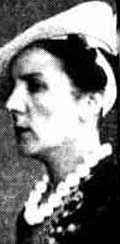
(Syd, NSW), Sun 12 Jan 1941, p. 20.
Reproduction: Peter de Waal
It seems that he tells the first landlady, Rhoda May Farrer, of Karuah-avenue, Coogee, that he is a ju-jitsu expert, and though she does not mind this, she very strongly objects to him turning her house into a ju-jitsu school, especially when he begins to take small boys to his room, allegedly to teach them the art of throwing other small boys around.
In fact, it appears that Robert, who is invited to stay on the understanding that he is to pay his board the following week, becomes most unwelcome, especially when he fails to produce any dibs and in addition objects to the housemaid entering his room at 11.30 am.
Robert is asked to back his bags but this, from what is said, is nothing but a slight inconvenience to him, for he moved out, but does not pay his bill, and moves into one guest house after another, all the time making promises to pay and never keeping them, and being asked to leave for one reason and another.
It seems that after two days, one landlady, Fay Murray, of Carr-street, Coogee, objects to his habits, and asks him to go, and another, Ethel Sarah Bishop, of Byron-street, Coogee soon gets tired of his repeated promises to pay and his talk about a big deal which never comes off.
NAME FOR SELF
It is to her he suggests that he turn a bush house into a bungalow so that he may entertain his lady friends, but she will have none of his proposition, nor does she countenance his alternative plan of erecting a tent in her spacious grounds.
So there is Robert, offending all these landladies and making quite a name for himself among the gendarmerie at Coogee, hauled before a magistrate, Mr Scobie by name.
It seems that this is the kindest magistrate Robert has ever struck, because in his 41 years of life, Robert has quite a number of these and other gentry who administer the law, for Robert has already done stretches in the jug, one for indecently assaulting a male and another for vagrancy.
Yes, indeed, this is a kind magistrate. Here is Robert, tired from moving from one place to another and quite worn out, so what does the magistrate do but kindly invite him to rest his weary limbs as a guest of the State for three months—and what is more, Robert does not even have to break any promises about paying his board. On the magistrate’s order he will be kept free.
~ ~ ~ ~ ~
The Sydney Morning Herald, Tue 4 Feb 1941 26
QUARTER SESSIONS
APPEALS.
(Before Judge Clancy.)
VAGRANCY APPEAL DISMISSED
An appeal by Robert Raquet, 41, painter, who was sentenced to three months’ imprisonment for vagrancy at Central Police Court on January 7, 1941, was dismissed.
Appellant said he had earned money giving Jiu-jitsu demonstrations in Public schools. He would call at a school and get permission from the master to address the pupils. Next day the children would pay him 6d or 1/ a lesson. He admitted that some schools declined to give him permission.
His Honor: I am surprised that in any State School a stranger can come up to a master and make arrangements to address the children on anything. I thought they would first get the permission of the department.
~ ~ ~ ~ ~
The Sun, Mon 23 Jun 1941 27
JIU JITSU
ASSAULT
IS ALLEGED
Robert Raquet, 42, who, at Newtown Court to-day, was committed for trial on a charge of assaulting Henry Edwards, 67, was described as a jiu-pitsu [sic] champion. Both of Edward’s wrists were fractured.
Image: NSW State Library collection. Reproduction: Peter de Waal
Constable Claude O’Donnell said he saw Edwards lying unconscious outside his dealer’s shop in King-street, Newtown, on June 5. Raquet told witness he had been into the shop too buy a gramophone, that an argument occurred as to who broke the spring, and that Edwards rushed him and fell through the doorway on to the footpath.
[Henry] Edwards, giving evidence, said that after the argument Raquet kicked him, dragged him to the door, picked him up, and threw him over his head on to the footpath. Raquet held the championship in jiu-jitsu.
Charles Holiday, railway employee, of Holdsworth-street, Newtown, said he saw Edwards “twisting in the air” after being thrown by Raquet.
POLICE DECLINED
William Smythe, storekeeper, King-street, Newtown, said the assault was the cruellest thing he had ever seen.
Raquet asked permission for a constable to be thrown in court by jiu-jitsu, as it was alleged he had thrown Edwards.
Constable Balmer (police prosecutor) objected that police could not be injured by exhibitions of that kind, and Mr Goldie, SM, refused the request.
~ ~ ~ ~ ~
The Richmond River Herald and Northern Districts Advertiser, Fri 4 Jul 1941 28
THE HORRORS OF GREECE
————
…
Described as a ju jitsu champion, Robert Raquet (42), was, at Newtown, committed for trial on a charge of assaulting Henry Edwards (67). Edwards, whose wrists were fractured, said that Raquet kicked him, dragged him through the door, picked him up and threw him over his head on to the footpath. William Smythe, a storekeeper of Newtown, said the assault was the most cruel he had ever seen.
~ ~ ~ ~ ~
The Sun, Thu 11 Sep 1941 29
JIU JITSU
IN COURT
Chief exhibit in an assault case at the Quarter Sessions to-day was the defendant, Robert Raquet, 41-year-old jiu-jitsu expert.
As evidence on his own behalf Raquet gave a vigorous gymnastic display on the floor of the court.
The Crown allegation was that Raquet had broken several ribs of Henry Edwards, 67, Newtown second-hand dealer by man-handling him and throwing him over his shoulder on to the asphalt footpath.
Raquet’s defence was that he had not laid hands on Edwards, when he pulled away from Edwards, who had clutched him by the coat sleeve, the old man could not recover his momentum and sprawled on to the footway.
The purpose of the gymnastic demonstration, Raquet told the jury, was to show the manner in which Edwards had fallen.
The trial, in which Raquet is conducting his own defence, has entered upon its fourth day, and is part heard.
~ ~ ~ ~ ~
Newcastle Morning Herald and Miners’ Advocate, Fri 12 Sep 1941 30
GYMNASTIC EXHIBITION
IN COURT
SYDNEY, Thursday.—Robert Raquet, 41, jiu-jitsu expert, gave a gymnastic exhibition in the Quarter Sessions to-day as part of his defence against a charge of assault.
It was alleged that Raquet had broken several ribs of Henry Edwards, 67, Newtown second-dealer, by man-handling him and throwing him over his shoulder on to the asphalt footpath.
Raquet gave a vigorous demonstration of how Edwards had fallen. He said he had not laid hands on Edwards. When he pulled away from Edwards, who had clutched him by the coat-sleeve, Edwards could not recover his momentum, and sprawled on to the footpath.
The hearing, which has already lasted four days, was adjourned.
~ ~ ~ ~ ~
The Sydney Morning Herald, Fri 12 Sep 1941 31
LAW NOTICES
———◦———
…
QUARTER SESSIONS, DARLINGHURST.
No. 1 Court.—Robert Raquet,
…
Jurors for No. 1 Court, except those in part-heard cases, not required further.
Robert Raquet, 1953
The Sydney Morning Herald, Wed 4 Mar 1953 32
LAW COURT NOTICES FOR TO-DAY
———◦———
…
QUARTER SESSIONS.
DARLINGHURST.
…
APPEALS
No. 8 Court, Queen’s Square.—Hearing: John Lewis Kennedy; William Stone Palfrey man; Frank Hope.
No. 2 Court, Queen’s Square.—Hearing: Alan Catkin; Frederick William Pearce; Noel Adrian Vidal; Robert Raquet.
~ ~ ~ ~ ~
The Sydney Morning Herald, Wed 18 Mar 1953 33
LAW NOTICES FOR TO-DAY
———◦———
…
QUARTER SESSIONS.
DARLINGHURST.
…
APPEALS
No. 2 Court, Queen’s Square.—Hearing: Herbert Alexander McBeath, William R Keogh, Arthur William Delaney, Victor Veneris, Cuthbert Denison Richards, Robert Raquet.
1 The Blue Mountain Echo, (NSW), Fri 23 Jan 1925, p. 2.
2 Evening News, (Sydney, NSW), Wed 1 Dec 1926, p. 10. Emphasis added and in original text.
3 The Sydney Morning Herald, Sat 13 Oct 1928, p. 12. Emphasis added.
4 The Sydney Morning Herald, Mon 15 Oct 1928, p. 8. Emphasis added.
5 The Sydney Morning Herald, Thu 29 Nov 1928, p. 7.
6 The Sydney Morning Herald, Fri 30 Nov 1928, p. 6.
7 SRNSW: NRS2467, [3/6123], State Penitentiary photographic description book, 8 Nov 1928-21 Mar 1929, No. 23474, p. –. Emphasis added.
8 Lithgow Mercury, (NSW), Mon 16 Jun 1930, p. 2.
9 Lithgow Mercury, (NSW), Fri 27 Jun 1930, p. 3. Emphasis added.
10 Northern Star (Lismore, NSW), Fri 27 Mar 1931, p. 4. Emphasis added.
11 Daily Examiner, (Grafton, NSW), Thu 23 Feb 1933, p. 7. Emphasis added.
12 Northern Star (Lismore, NSW), Tue 28 Feb 1933, p. 2.
13 Northern Star (Lismore, NSW), Thu 2 Mar 1933, p. 3.
14 Daily Examiner, (Grafton, NSW), Fri 3 Mar 1933, p. 4.
15 Newcastle Morning Herald and Miners’ Advocate, (NSW), Fri 14 Jan 1938, p. 20. Emphasis added.
16 The Newcastle Sun, (NSW), Wed 2 Mar 1938, p. 5.
17 Newcastle Morning Herald and Miners’ Advocate, (NSW), Thu 3 Mar 1938, p. 3.
18 Newcastle Morning Herald and Miners’ Advocate, (NSW), Sat 5 Mar 1938, p. 9. Emphasis added.
19 The Sun, (Sydney, NSW), Fri 13 May 1938, p. 6. Emphasis added.
20 The Sydney Morning Herald, Sat 14 May 1938, p. 5. Emphasis added.
21 National Advocate, (Bathurst, NSW), Thu 13 Oct 1938, p. 1.
22 National Advocate, (Bathurst, NSW), Fri 21 Oct 1938, p. 7.
23 National Advocate, (Bathurst, NSW), Wed 16 Nov 1938, p. 6. Emphasis added.
24 Truth, (Syd, NSW), Sun 7 Jul 1940, p. 21. Emphasis in original and added.
25 Truth, (Syd, NSW), Sun 12 Jan 1941, p. 20. Emphasis in original and added.
26 The Sydney Morning Herald, Tue 4 Feb 1941, p. 5.
27 The Sun, (Sydney, NSW), Mon 23 Jun 1941, p. 3. Emphasis in original and added.
28 The Richmond River Herald and Northern Districts Advertiser, (NSW), Fri 4 Jul 1941, p. 3. Emphasis added.
29 The Sun, (Sydney, NSW), Thu 11 Sep 1941, p. 3.
30 Newcastle Morning Herald and Miners’ Advocate, (NSW), Fri 12 Sep 1941, p. 6.
31 The Sydney Morning Herald, Fri 12 Sep 1941, p. 4. Emphasis added.
32 The Sydney Morning Herald, Wed 4 Mar 1953, p. 7. Emphasis added.
33 The Sydney Morning Herald, Wed 18 Mar 1953, p. 10. Emphasis added.