Percy Archibald McDonald, 1914 – Conspiracy
Below also see: Percy Archibald McDonald, 1914–Stealing,
Smith v. McDonald, 1914–Slander,
Percy Archibald McDonald, 1918–Action for slander,
Percy Archibald McDonald, 1919–False pretence,
Percy Archibald McDonald, 1919–Perjury,
Percy Archibald McDonald, 1922–Stealing,
Percy Archibald McDonald, 1923–Indecent assault,
Percy Archibald McDonald, 1924–Break, enter, steal at Katoomba,
Percy Archibald McDonald, 1924–Break, enter, steal at Cowan Creek,
Percy Archibald McDonald, 1943
McDonald v. Surtees, 1949,
McDonald v. Burns and anor, 1949
The Sydney Morning Herald, Mon 26 Jan 1914 1
LAW NOTICES.
———◦———
Tuesday, January 27.
…
QUARTER SESSIONS.
James Crawford, false pretences; George Harold Cloey, receiving stolen property; Percy McDonald, [aka Percy Archibald McDonald], conspiracy.
~ ~ ~ ~ ~
The Sydney Morning Herald, Tue 27 Jan 1914 2
LAW NOTICES.
———◦———
Tuesday, January 27.
…
QUARTER SESSIONS.
James Crawford, false pretences; George Harold Cloey, receiving stolen property; Percy McDonald, conspiracy.
~ ~ ~ ~ ~
The Daily Telegraph, Wed 28 Jan 1914 3
LAW.
———◦———
Tuesday, January 27.
———
QUARTER SESSIONS.
———
(Before Judge Docker and a jury.)
Mr Herbert Harris prosecuted for the Crown.
“NO CASE.”
Percy McDonald (defended by Mr Peterson) was charged with conspiring with Robert Benjamin West to defeat the course of justice.
In putting the case to the jury, the Crown Prosecutor said that subsequent to the trial of West on a charge of stealing a camera (when McDonald gave evidence to the effect that he was present when West purchased the camera from a man), it was ascertained that the article had been pawned by one of the men at a shop in Balmain. It was redeemed, and pawned again by the other man. It was contended on these grounds that the two men had conspired to hide these facts from coming out at the trial.
Mr Peterson submitted that there was no evidence that West and McDonald had conspired in the way suggested by the Crown.
His Honor said he did not think there was any evidence to support the charge, and therefore directed the jury to acquit.
Accused was then discharged.
~ ~ ~ ~ ~
The Sydney Morning Herald, Wed 28 Jan 1914 4
LAW REPORT.
———◦———
QUARTER SESSIONS.
(Before Judge Docker and a jury.)
Mr Herbert Harris, Crown Prosecutor.
CROWN CASE FAILS.
Percy McDonald was charged with, at Sydney, on October 17, having conspired with another man to defeat the course of justice.
Mr EJ Peterson appeared for the accused, who pleaded not guilty.
At the conclusion of the Crown case Mr Peterson took the point that there was no evidence that the accused had conspired as alleged, and, on it being upheld by his Honor, the jury was directed to acquit the accused, which was done, and he was discharged.
Percy Archibald McDonald, 1914 — Stealing
The Sydney Morning Herald, Thu 19 Feb 1914 5
POLICE COURTS.
———◦———
…
CHARGE OF STEALING FAILS.
At the Central Police Court on Tuesday, before Mr Wilkinson, SM, Percy McDonald was charged with stealing the sum of £88, the property of Isabella Beaton.
The accused conducted his own defence.
Isabella Beaton, a middle-aged spinster, living at present in Yurong-street, said that she had means, and arrived in Sydney from Victoria about three months ago. She had often heard the accused lecturing in the Domain and elsewhere, and she arranged to go with him to his mother’s house at Rozelle. When there the subject of providing a home for destitute woman was mentioned. The accused had often stated that there was a large number of women who were forced to sleep out in the parks, and she eventually decided financially to help him to establish a home. A house was found, and witness agreed to find the money (about £200) to purchase the goodwill and furniture.
In a later stage of the case Miss Beaton admitted that the money with which the accused was charged with stealing was lent by her to him, to be repaid at the rate of £1 weekly; therefore the case for the prosecution failed, and McDonald was discharged.
Smith v. McDonald, 1914 — Slander
The Argus, Thu 17 Sep 1914 6
SLANDER ACTION.
———◦———
SALVATIONIST AWARDED £50.
SYDNEY, Wednesday.—Mr Justice Pring and a jury to-day heard a case in which Neil Smith, an officer in the Salvation Army, sought to recover damages for slander from Percy McDonald. Plaintiff (Smith), who is manager of the Booth Memorial Home in Sydney, complained that McDonald had, in an address to a crowd in the street, made an absolutely false statement, to the effect that Smith had knocked down and kicked an old man, and had, in consequence, been fined £10.
The jury found for Smith, with £50 damages.
~ ~ ~ ~ ~
The Daily Telegraph, Thu 17 Sep 1914 7
LAW.
———◦———
Wednesday, September 16.
———
No. 1 Jury.
———
(Before Mr Justice Pring and juries.)
DAMAGES FOR SLANDER.
Neil Smith proceeded against Percy McDonald for £500 damages for alleged slander.
At the time of the grievances alleged, the plaintiff was an officer of the Salvation Army and had charge of the Booth Memorial Home. Defendant had, it was stated, falsely and maliciously spoke and published of the plaintiff the following words:—“Adjutant Smith, of Sussex Street Home, was struck by an old man. Smith knocked this man down and kicked in two of his ribs. He was brought before Mr Smithers this day week (meaning January 27) and fined £10. The reason this didn’t appear in the press was because the Army suppressed it.” Plaintiff pleaded that this utterance meant that he had been guilty of gross cruelty to an old man, for which he had been prosecuted and fined. This was untrue, and had greatly injured the plaintiff in reputation and caused him great pain of mind.
Mr James (instructed by Messrs Robson and Cowlishaw) for plaintiff. There was no appearance of defendant.
Counsel for plaintiff stated that the plaintiff made it a business to go about the city slandering the Salvation Army and accusing the officers by name of gross dishonesty and immorality.
The jury returned a verdict of £50 damages.
~ ~ ~ ~ ~
The Sydney Morning Herald, Thu 17 Sep 1914 8
LAW REPORT.
———◦———
…
No. 1 JURY COURT.
(Before Mr Justice Pring and a jury of four.)
…
ACTION BY SALVATION ARMY OFFICER.
Smith v. McDonald.
Mr James, instructed by Messrs Robson and Cowlishaw, appeared for the plaintiff. Defendant did not appear, and had filed no pleas in defence. This was an action brought by Neill Smith, an officer in the Salvation Army, against Percy McDonald, to recover compensation for slander. Mr James, in briefly outlining the case to the jury, said that plaintiff, as adjutant of the Salvation Army, had charge of Booth Memorial Home, and defendant was a man who came from England recently, and had been in the habit of making attacks upon the Army after their meetings whenever he could induce the crowd to listen to him. On February 13 of this year, addressing a number of people, defendant spoke in the following terms of the plaintiff:—“Adjutant Smith, of the Sussex-street home, was struck by an old man. Smith knocked this man down and kicked in two of his ribs. He was brought before Mr Smithers this day week (January 27) and convicted and fined £10. The reason this did not appear in the press was because it was suppressed by the Army.” This statement was utterly without foundation.
The jury returned a verdict for plaintiff with damages £50.
~ ~ ~ ~ ~
The Sydney Morning Herald, Fri 26 Feb 1915 9
BANKRUPT’S ESCAPE FROM CUSTODY.
———◦———
SCRAMBLE OVER A WALL.
———
An incident, which created excitement for the time being, occurred in the precincts of the Register in Bankruptcy’s Court, Elizabeth-street, Sydney, yesterday. Percy Archibald McDonald, silk flower maker, of Rozelle, who voluntarily sequestrated his estate on December 29 last, and who at present a confinee in the debtors’ Prison at Long Bay, was brought up for further examination by his official assignee (Mr WH Palmer), in custody of a warder. While waiting to be called for examination, McDonald told the warder he wished to go to the basement, wither the warder accompanied him. Taking the warder unawares, McDonald scrambled over the wall into St James’s-road, and bolted off.
McDonald stated in his examination on the 18th inst, that, in September last, Adjutant Smith, of the Salvation Army, proceeded against him for slander, and claimed £500 damages in the Supreme Court. The jury returned a verdict for the plaintiff for £50. He said he was in Melbourne when the action was heard, and was not represented at the hearing.
…
IN BANKRUPTCY.
(Before the Registrar, Mr FH Salusbury.)
…
SINGLE MEETINGS AND PUBLIC EXAMINATIONS.
…
Re Percy Archibald McDonald. Adjourned to March 4.
~ ~ ~ ~ ~
Percy McDonald, Gaol photo sheet 10
![SRNSW: NRS2467, [3/6091], State Penitentiary photographic description book, 7 Oct 1915-12 Feb 1916, No. 14689, p. –.](../../images/trials/1914-McDonald-6091-gaol-photo-14689-p.-1.jpg "SRNSW: NRS2467, [3/6091], State Penitentiary photographic description book, 7 Oct 1915-12 Feb 1916, No. 14689, p. –.") |
Gaol Photo Sheet - Transcribed Details
No. 14689
Date when Portrait was taken: 2-11-1915
Name: Percy McDonald
|
Native place: Sydney Year of birth: 14-6-1885 Arrived Ship: Trade or occupation Religion: C of E Education, degree of: R & W Height: 5' 6⅛" Weight On committal: 165 Colour of hair: Brown Colour of eyes: Blue |
Marks or special features: Letter “F.” inside right forearm. Top joint of right middle finger slightly crooked. Deep scar over right eye. |
|
(No. of previous Portrait ... ) CONVICTIONS |
|
Where and When |
Offence. |
Sentence |
|||
|
Balmain PC ditto ditto Wallsend PC Water PC Newcastle PC Central PC Victoria Ballarat PC Melbourne PC NSW Broken Hill Q.S Central PC England Birmingham PC Ponty Pool PC Puston PC Reading PC Essex PC NSW exd Central PC ditto exd Sydney Q.S Central PC ditto ditto |
10 7 9 – – 8 16
16 21
19 28
12 5 11 22 30
25 25 29 2 1 5 21 18 |
7 2 4 – – 6 4
5 5
8 2
3 5 9 3 6
6 11 12 1 11 12 1 7 |
1901 1902 1902 1906 1906 1907 1907
1907 1907
1907 1908
1909 1909 1909 1910 1910
1913 1913 1914 1915 1915 1917 1918 1918 |
Stealing Riotous Assault Riotous Collect for Charity without permit. Vagrancy Breach of Domain Bylaw
Indecent language Use threats
Incite person to commit crime Obstruct traffic
Travel on Railway without ticket. Inciting to Riot Conduct likely to cause Obstructing Occasion actual bodily harm
Breach of Domain Bylaw Breach of Domain Bylaw
Escape from Custody Breach of war precaution act Make statement likely to Attract crowd by street speaking |
30/4 or 7 days HL 15/- or 48 hours HL 43/- or 4 days HL Fined 2/-/-. Fine paid 10/- or 3 days HL. Fine paid 6 months HL £5.6. or 2 months HL.
£2 or 7 days HL £1 or 7 days HL
Bound over for 3 years to come up £10.8.6 or 4 months HL
Fine or 21 days HL Bound over Bound over or 21 days Bound over 6 months HL
50/- or 1 month HL. £2.10. Being the unexpired
14 days HL £5 or 2 months HL
£7.6. costs or 1 month HL |
Percy Archibald McDonald, 1918 — Action for slander
The Advertiser, Thu 19 Sep 1918 11
“LIAR AND THIEF.”
ACTION FOR SLANDER.
Brisbane, September 18.
In the City Police Court to-day Percy Archibald McDonald, stated to be a returned soldier, and well-known as a conductor of open air meetings, proceeded against Colonel HJ Sharp, of the Salvation Army, for £50 damages. The complaint was that the defendant falsely and maliciously said—“Percy A McDonald has been taken out of gaol and fed and clothed by the Salvation Army. He robbed the Rev Mr Paton, of the Liverpool Camp, of £7. He was driven out of camp by fixed bayonets and handcuffed on a transport. His discharge is bad, and he is a liar and lives on robbing the public. He will not be seen in Queensland after to-night; we will drive him out.” Owing to congestion of business, the hearing was adjourned.
~ ~ ~ ~ ~
The Brisbane Courier, Thu 26 Sep 1918 12
ALLEGED DEFAMATION.
———◦———
SALVATION ARMY COLONEL
AS DEFENDANT.
———
The small debts division of the City Police Court was crowded yesterday when the case was opened in which Percy Archibald McDonald claims £50 as damages from “Colonel”“ Sharp, of the Salvation Army, for alleged defamation. Mr GA Cameron, acting PM, was on the bench.
The plaint set out that defendant on September 10, at the corner of William-street and North Quay, falsely and maliciously spoke concerning the plaintiff, and in the presence of Detective McNaulty, Sergeant Warner, and Constable O’Sullivan, and others, as follows:—
“Percy McDonald has been taken out of gaol, and fed and clothed by the Salvation Army. He robbed the Rev Mr Paton, of Liverpool Camp, of £7. He was driven out of the camp by fixed bayonets, and handcuffed on the transport. His discharge is bad, and he is a liar, and lives on robbing the public. He will not been seen in Queensland after to-day. We will drive him out.”
The defence was not guilty, as alleged.
The plaintiff conducted his own case, and Mr Graham (instructed by Messrs Atthow and McGregor) appeared for defendant.
The plaintiff went into the box, and sad he resided at 318 Adelaide-street. He was a florist by occupation. On the date in question he was addressing a meeting at the corner of William-street and North Quay. He had just started, when defendant said, “Show the crowd your military discharge.” Plaintiff replied, “What has my discharge got to do with this meeting?” Defendant said, “A lot, you lying blackguard. You have been hunted out of every State by the police.” Plaintiff said to the crowd, “I fear a disturbance here. I will go to the other side of the road. I invite my Salvation friends to follow me.” Defendant then made use of the words complained of; and defendant and another Salvation Army officer then rushed plaintiff’s ladder, defendant saying: “You dirty blackguard. I’ll pul you off your platform.” Plaintiff then asked defendant if he would make a statement in writing of the charges he had made. Defendant said, “I have something here that will settle you.” Defendant held up a bundle of printed circulars and said: “Every soldier in Brisbane has one of these. It shows what you are, a convicted thief and a liar, who had been chased out of every town.” The police came up then, and Constable O’Sullivan told defendant he must stop. Defendant said to the constable, “Don’t you know who I am? I am Colonel Sharp, of the Salvation Army.” The constable then took Colonel Sharp away.
Plaintiff said that that was all his evidence. He desired to say, however, that the statements had caused him great pain and damage. At every meeting he held the circulars were thrown in his face.
By Mr Graham: He was 31 years old. He was born in Sydney. He never knew his father, but, of course, his mother spoke of his father. He refused to say who and what his father was.
Mr Graham asked that plaintiff be compelled to give the evidence.
Plaintiff: I suggest the matter of birth doesn’t affect my life, whether it is legitimate or otherwise. They said they were going to hold me up to ridicule. If a man’s father is in gaol it doesn’t reflect on his son. Perhaps if we go into Mr Graham’s—
Mr Graham (sternly): You answer my question. (At this stage there was considerable tittering from the back of the court.)
Mr Cameron: Before we go any further I will say here that it will be happier for every one and will save a lot of time if interjections of this kind do not continue.
Mr Graham: This man has alleged that he is the illegitimate son of General Booth, and he varies this statement by saying that he is the son of General Bramwell Booth.
Plaintiff: I contend that I am not on trial for any statement I am alleged to have made against the Army. Any statement I make does not justify the colonel making false statements against my name.
Mr Cameron reserved decision on the point.
Under further cross-examination plaintiff said that he was secretary of the Democratic Society of Returned Soldiers and Sailors, New South Wales. He did a lot of speaking, and handed considerable sums of money to charitable institutions.
He would produce the receipts for the court.
You have attacked the Salvation Army?—Yes, I have attacked the system. I have attacked the system for 16 years. We started the organisation in London. I have attacked their methods of exploitation.
You charge the Army with robbing the poor?—Yes. I said the Army collected clothes for the poor, and sold them.
Plaintiff then cited instances where he said he had seen it done.
You made certain statements about an ensign of the Salvation Army in Blackburn?—Yes.
You charged him with having cut three rings off the fingers of a dead woman?—No.
No. You were brought up in court, and charged with this, and you apologised most humbly?—No; I was fined for obstructing the roadway.
Did you not write a letter of apology?—No.
Answering questions about letters he had written to the Salvation Army, he said that he did write a letter from gaol to the Salvation Army in which he said, “Let me take up the position of a saved man in the Balmain Corps. I will keep praying every minute I have.” This letter was written in answer to one from the Salvation Army.
At this stage plaintiff asked for an adjournment to get legal advice.
Mr Graham: I propose to call evidence and cross-examine him at length about all his career. I have a very full record. I propose to go right into his past history.
Plaintiff: My past history will stand the test; it will stand the test with yours. I object to the admission of these letters. Judge Backhouse has ruled they are not admissible. I want an adjournment to get legal aid.
Mr Cameron said that he would take full responsibility for anything he did.
Plaintiff was further cross-examined by Mr Graham.
While you were in gaol, the Salvation Army offered to give your mother certain food.—Yes; but she refused to live on charity.
Mr Graham then asked plaintiff if he wrote a letter from the Debtor’s Prison containing the following:—“From my heart let me thank you for your courtesy to my mother. It makes me all the more sad for my treatment of you. The next time my mother visits you, will you get her to pray with you?”—This letter was dictated by Salvationists.
Mr Graham: I see, in the Debtors’ Prison.—It was suggested I should write that letter. They said, “If you write this letter, we will let you out.”
Mr Graham: You said in another letter that the first opportunity you got you would publicly kneel with them. Did you do it?—No, I don’t want to be a common spieler.
Asked if a certain Salvationist had got a judgement against him [see above: Smith v. McDonald, 1914–Slander] in New South Wales, plaintiff said: “You can get judgment for anything in New South Wales. Look at the IWW man.”
Are you a friend of the IWW?----Yes, I am proud to say I am.
You signed an agreement not to publicly speak against the Salvation Army?—Yes.
After you were out you continued to make statements against the Army?—Against the system, yes.
Did you say in Brisbane that you were an illegitimate son of General Booth?—No. What I said was that it was suggested I was General Booth’s son, satirically.
Plaintiff, proceeding under cross-examination, said that in January last, in Sydney, he was sentenced to six months’ imprisonment for making statements prejudicial to recruiting. This sentence was quashed by a higher court, as also was another sentence.
You have a military record?—My record in the military is good.
Mr Graham then read from a document, which he said was plaintiff’s civil record, as obtained by the military.
Plaintiff (perusing the statement): There is no such document. It is a forgery, signed by a private.
Mr Graham then read down a list of what he said were convictions against plaintiff.
Plaintiff, at the conclusion, said Mr Graham had been getting out lies about him.
Plaintiff (to Mr Graham): I’d would like to have you here for 10 minutes about your character.
Mr Graham: Did you have to leave Western Australia?—No.
Were you put on board a ship in West Australia?—No.
Mr Graham: You are wearing a couple of badges?—Yes, I got nearer to the Front than you did.
Haven’t you frequently lifted up your hat, and said, “There are my honourable wounds”?—No, it is a lie.
Under further cross-examination, witness made allegations against military officers and others. Asked if he were sent over to France under an armed guard from a detention camp, witness refused to answer.
Frank Lloyd Jones, called as a witness, corroborated plaintiff’s account of what defendant said on the night in question.
Plaintiff: I’ll stop the case if the defendant apologises. (Laughter.)
At this stage the case was adjourned until October 2.
~ ~ ~ ~ ~
The Brisbane Courier, Thu 3 Oct 1918 13
ALLEGED DEFAMATION.
The Central Small Debts Court was crowded yesterday, when further evidence was heard in the case in which Percy Archibald McDonald is claiming £50 damages for alleged defamation from “Colonel” Sharp, of the Salvation Army. Mr Graham (instructed by Messrs Atthow and McGregor), who appeared for the defendant, continued his cross-examination of the complainant. Witness declined to answer a question whether, when he was in France, he went to the Front, and on Mr Graham asking, “Is it a fact that you never went into the trenches at all?” he replied, “I have not said that I did.” He denied having made various statements against the military authorities, but admitted having said that soldiers who got consumption and had not been in the firing line were not entitled to the pension. In reply to further questions he said that since the previous hearing he had been to see “Colonel” Sharp to ask him if he would apologise and settle the case out of court, but the defendant had replied that he could not do so on account of the statement about the shirt. Complainant added that he had not attacked the Salvation Army in Brisbane until he found that the Army was issuing circulars about his character. The case was further adjourned until 9th instant.
~ ~ ~ ~ ~
The Brisbane Courier, Thu 10 Oct 1918 14
ALLEGED DEFAMATION.
————
SALVATION ARMY OFFICER
CHARGED.
————
Further evidence was heard yesterday, before Mr GA Cameron, Acting PM, in the City Small Debts Court, in the action in which Percy McDonald is claiming £50 damages from Colonel Sharp, of the Salvation Army for alleged defamation. Mr McDonald conducted his own case, and Mr Graham (instructed by Messrs Atthow and McGregor) appeared for defendant.
Edward Johnson, a mechanic, corroborated complainant’s statement that defendant made use of the alleged defamatory words, Colonel Sharp, witness said, was in a very wild state at the time.
For the defence, Russell Wyatt Phillips deposed that he was pay sergeant at Liverpool Camp in 1916. McDonald was charged at the camp with having obtained money under false pretences from Chaplain Paton, and also with having rented an office for the Comfort Fund, and having collected money for that fund without authority. McDonald borrowed the money from the chaplain, and said that he wanted it to give an old lady whose husband had died in Queensland so that she could bury him. The upshot of the affair was the Colonel Watson told McDonald he was a general nuisance, and that as he had missed embarkation on several occasions he (Colonel Watson) intended to “shanghai” him. McDonald was sentenced to 21 days’ detention. He called the colonel a highly insulting epithet, demanded a court-martial, and threw himself on the floor of the orderly room. Finally, a armed guard took him away. Nearly all of McDonald’s pay was absorbed in fines, &c, and there were also outside claims on his pay.
Mr Graham: McDonald says that his military record is good; is that so?
Witness: I should say that he was the biggest bounder we had in camp at the time.
Francis Lloyd Jones, formerly a resident at the Salvation Army Home, cross-examined by Mr Graham, declared that he had heard McDonald say that the People’s Palace was a “glorified brothel,” also that the Salvation Army collected clothes and sold them to pawn-brokers. He had fallen out with McDonald because he heard that McDonald had played a rather dirty trick on a poor girl. Previous to then they were friendly. McDonald had promised to give him £10 out of the verdict. (Laughter.)
To McDonald: He was not offered £to tell lies.
RW Phillips, originally paymaster of the 2nd Battalion, cross-examined by McDonald, said he had no authority from the military department to divulge a man’s record. He bore no malice against McDonald.
McDonald: Are you friendly towards me?—No. I do not know you—and I don’t want to know you. (Laughter.) Witness said he would not swear that McDonald had stolen money from a clergyman.
To Mr Graham: He was absolutely satisfied that McDonald took Chaplain Paton down for the money.
At this stage the case was adjourned till 2.30 pm on Friday next.
~ ~ ~ ~ ~
The Brisbane Courier, Sat 12 Oct 1918 15
ALLEGED DEFAMATION.
————
“COLONEL” SHARP’S EVIDENCE.
————
Further evidence was heard in the City Summons Court yesterday in the case in which Percy McDonald, claimed £50 damages from “Colonel” Sharp, of the Salvation Army, for alleged defamation. Plaintiff conducted his own case, and Mr Graham (instructed by Atthow and McGregor) appeared for defendant.
“Colonel” Sharp said he was in charge of the Brisbane district of the Salvation Army. He had been in the army for 34 years. Witness first knew McDonald 11 years ago, in Adelaide. He then was blackguarding the Salvation Army the same as he was now. On the evening of September 10 McDonald was talking on the North Quay. Witness said, “That’s an old game of bluff of yours Percy. If you are such a good man and run down the Salvation Army, why don’t you allow a reputable person to read out your military discharge.” McDonald moved away, and witness followed, and asked McDonald why he made certain allegations against the Army. Witness challenged McDonald to prove his allegation. McDonald denied that the Salvation Army had put him in gaol in Sydney, and witness told McDonald that he was a liar. Defendant asked him if it was true that he robbed the Rev Paton, and McDonald said it was not true. So far as McDonald’s version of the remarks on that night differed from witness’s version. McDonald’s was incorrect. McDonald interviewed witness three times after he issued the summons. McDonald said that he thought the case would not do either side any good. Witness replied that it would do his side good, and he was determined to push the case to the end. McDonald said that he had decided to withdraw the case. Defendant said that was his (McDonald’s) business. In further conversation, McDonald said he was going to give the whole platform work up, and do good work.
By McDonald: Do you know that I was driven from Western Australia by the police?—The pamphlet says so.
Under further cross-examination, witness said that he was out to let the people know who and what McDonald was. He had never known the Army send out circulars about any one excepting McDonald. The army contained converted thieves and all classes. He did not believe that clothing was sold to the inmates at the old men’s retreat. The People’s Palace did not deal with the “lost” woman, but its profits were devoted to social work.
Did you say that any man who believed in the red flag ought to be shot dead?—I don’t know. It’s quite like a thing I would say. Any man who is disloyal ought to be shot.
The case was further adjourned until 18th instant.
~ ~ ~ ~ ~
The Brisbane Courier, Sat 19 Oct 1918 16
ACTION FOR DEFAMATION.
————
MACDONALD V. “COLONEL”
SHARP.
———
The City Summons Court was crowded yesterday, when the action was continued in which Percy Macdonald [sic] proceeded against “Colonel” Sharp, of the Salvation Army, for £ 50 damages for alleged defamation. Mr GA Cameron, PM, was on the bench. The plaintiff conducted his own case, and Mr AD Graham (instructed by Messrs Atthow and McGregor) appeared for the defendant.
The defendant was cross-examined at great length by the plaintiff. He asserted that the plaintiff had told him that he had been criticising the Salvation Army for the last 16 years. Witness added, “I am not prepared to stand in Brisbane and permit you to blackguard the army.” Witness admitted having stated that plaintiff was a thief.
Do you get more pay now than when you were a miner?—I would be a fool if I did not after all the years I have lived. I had a wife and family, and in the early days I had 4d a week to keep them.
Now, I am not going to ask about your life, as the barrister asked about my life.—You can dig into my past as deep as you like.
Who was the last man you fought?—I do not know, I have had scraps with a good many.
Who was the last man you fought publicly?—That I cannot tell you. I fought on the mine.
A public exhibition for payment?—No, of course not. It was a private affair. We had a boxing saloon on the minefield, and we had a fair and square go.
But if you had a quarrel now you would reply by publicly calling a man a thief?—I never saw a man like you before. You are the only man of the sort I have ever met. Your past history ——.
What past history?—All your past.
Tell me one?—In 1908 you tried to take a man’s character away in Adelaide, one of the best men there is there—our bandmaster.
Charles Williams, inquiry agent in the intelligence section of the AIF, was the next witness. He had authority to produce the record of “No. 6518, Percy Archibald Macdonald,21st reinforcements of the 2nd Battalion.”
Witness was asked by Mr Graham what the plaintiff general reputation was so far as the military service was concerned.
Witness: I object.
Mr Cameron overruled the objection.
The witness said that the plaintiff was considered “a plausible and most pernicious blackguard.”
By the plaintiff: Can you tell me one person who considers me a plausible and most pernicious blackguard?—Yes.
Who?—I, myself.
Who else?—Sergeant James, Captain Wood, Lieutenant Woods, and every one I am acquainted with in Brisbane.
Further questioned, witness said he had his opinion by listening to the plaintiff’s addresses for some weeks.
Charles John Peiniger, well borer, at present residing at the People’s Palace, stated that he had attended meetings addressed by the plaintiff, who made charges against the Salvation Army. The opinion amongst soldiers was that the plaintiff was one of the lowest and filthiest beings in the world.
Plaintiff: I think this man ought to be medically examined. (Laughter.)
“Commander” Burhop, of the Salvation Army, also gave evidence.
The case had not been concluded when the court adjourned till Wednesday next.
~ ~ ~ ~ ~
The Brisbane Courier, Thu 24 Oct 1918 17
ALLEGED DEFAMATION.
————
Further evidence was heard in the Small Debts Court yesterday, before Mr GA Cameron, acting PM, in the action in which Percy McDonald claims £50 for alleged defamation from “Colonel” Sharp, of the Salvation Army. “Commandant” Burhop, of the Salvation Army, was cross-examined by McDonald.
Roger Gibbons, a returned soldier, said that McDonald’s reputation was good among the soldiers.
Mr Graham: You are a soldier; what is your opinion of a deserter?—It all depends what he deserts for.
Do you think a man could obtain money by false pretences and still be of good character?—Yes.
If a soldier said he was put in leg irons in the firing line for the enemy to fire upon, and if the same man said he was only 10 hours in France, and had never been in the firing line, would you call him a good man?—Yes.
Frank Jones also gave evidence.
Mr Graham contended that anything that “Colonel” Sharp had said concerning McDonald had been amply verified by the evidence.
Addresses were concluded,
Mr Cameron reserved his decision.
~ ~ ~ ~ ~
The Brisbane Courier, Tue 29 Oct 1918 18
ONE PENNY DAMAGES.
———◦———
DEFAMATION ACTION.
————
Mr GA Cameron, Acting PM, gave his decision in the Small Debts Court yesterday in the defamation action brought by Percy McDonald against “Colonel” Sharp, of the Salvation Army. McDonald claimed £50 damages.
Mr Cameron found that defamatory words were used, and gave a verdict for plaintiff. Nominal damages of 1d were awarded,, with £1/3/ costs.
Percy Archibald McDonald, 1919 — False pretence
The Sydney Morning Herald, Tue 9 Sep 1919 19
ALLEGED FALSE PRETENCES.
———◦———
Percy McDonald, 33, a dealer, appeared before Mr Clarke, SM, at the Redfern Police Court yesterday, charged with having collected, by false pretence and with intent to defraud, the sum of £60 from Rose Turvena [aka Trevena] Rowe, the property of Thomas Lee.
Rose Turvena Rowe stated in evidence that she knew Lee, a Chinese, who in June last was sentenced to 18 months’ imprisonment in Long Bay Gaol. On July 12, McDonald, then unknown to her, came to her home at Alexandria and asked for £60, in order to secure Lee’s release. He said that Lee, whom he had managed to see at the gaol, had sent him. Witness gave him £20 on that occasion, a similar sum at Rozelle later, and finally a third £20 when she met him in the city. McDonald spoke of a petition to the Minister for Justice, with whom he said he had influence.
Accused was committed for trial, bail being allowed.
~ ~ ~ ~ ~
The Daily Telegraph, Wed 29 Oct 1919 20
CRIMINAL.
———
At the Darlinghurst Quarter Sessions Percy Archibald McDonald was arraigned before Judge Cohen and a jury on three counts of false pretence. Mr WW Perry prosecuted for the Crown. McDonald conducted his own case, and pleaded not guilty. The case for the Crown was that in July last McDonald saw Mrs Rose Rowe at Alexandria and stated that he had interviewed Tommy Lee, a Chinese, who was serving a term of imprisonment in the Long Bay Penitentiary. McDonald said that Lee had given him authority to collect £50 from Mrs Rowe, the money to be paid into the office of the Minister for Justice as a good behaviour bond. He represented that Lee would be released in connection with the peace celebrations, and Mrs Rowe obtained the money, which was handed to McDonald. It was denied by Lee that he had given the accused authority to work on his behalf. McDonald in his defence denied that he got £50 from Mrs Rowe. The only money he got from her was a cheque for £16, and for this he gave a receipt. After a quarter of an hour’s retirement the jury returned a verdict of not guilty, and McDonald was discharged.
~ ~ ~ ~ ~
The Sydney Morning Herald, Wed 29 Oct 1919 21
QUARTER SESSIONS.
(Before Judge Cohen.)
Mr WW Perry, Crown Prosecutor.
…
Percy Archibald McDonald, who conducted his own defence, was charged with having on July 12, at Alexandria, obtained from Rose Trevena Rowe the sum of £20 by false pretences. There was a second charge of having obtained on July 15 a cheque for £16/10/ and the sum of £4 from Rose Trevena Rowe with intent to defraud. Accused was also charged with having on July 17 obtained the sum of £2 by false pretences from Rose Trevena Rowe. The defendant pleaded not guilty, and gave evidence denying the allegations. The jury returned a verdict of not guilty.
Percy Archibald McDonald, 1919 — Perjury
The Sydney Morning Herald, Fri 16 May 1919 22
DISTRICT COURT.
(Before Judge Scholes.)
A MEAT PIE.
Mary Mahoney, boarding-housekeeper, of Cathedral-street, Sydney, claimed £400 damages from Sargent’s Limited, of Sydney. The plaintiff stated that “the defendant company so negligently, carelessly, and unskilfully conducted itself in the manufacture, sale, and supply, to the plaintiff of a meat pie; that the same contained a rat, or mouse, or part thereof, and other substance, not fit for human consumption.” An alternative claim for the same amount was that the defendant company warranted that the meat pie was reasonably fit and proper for human food, and sold the same to the plaintiff.
The plaintiff stated that, on March 4 last, she went into the defendant company’s shop in George-street, near King-street, Sydney, and bought a meat pie. While eating portion of it she found a foreign-looking substance in it. She showed the pie to two of the principals in the shop, and afterwards took it to the board of Health for examination. While eating a piece of the pie she felt something strange in it, and she afterwards became very ill. Dr Acland O’Hara, who attended the plaintiff, stated that he found that she was suffering from gastritis, which could have been brought about by eating bad food. An officer of the Board of Health stated that on March 4 he examined the remains of the pie (produced in court). He found that it contained what looked like the portion of a rat or mouse.
WH Hamlet, analytical chemist, made in court an analysis of the remains of the pie, in which he found portions of an animal, probably a rodent, and some skin and hair. The portions consisted of a piece of tail, foot, and back or side. He could not say whether the foreign matter in the pie had been cooked.
Thomas Coggins, acting secretary of Sargent’s Ltd, said that on March 4 the plaintiff had showed him the pie and complained about it. Part of the crust was turned back, but he saw no cut in it. He examined the pie and found portion of a mouse, about one and a half inch in length. It was possible for something to have been inserted in the pie. He saw portions of the buttocks and tail. The factory manager for the defendant company gave details of the manufacture of the pies. If a rat or mouse got into the steam boilers it would be discovered. It was impossible for anything two inches long to pass into the cutting machine. The factory was absolutely rat-proof, but the witness would not say that it was mouse-proof. Other testimony was given as to the cleanliness of the factory premises, and the absence in it of rats or mice.
His Honor thought, on the evidence, there must be a verdict for the plaintiff. He did not think that she had suffered as much as she wanted to make out. A verdict for £25 was entered for the plaintiff. Mr CM Collins, instructed by Mr OF Alexander, appeared for the plaintiff, and Mr Halse Rogers, instructed by Messrs Sly and Russell, for the defendant company.
~ ~ ~ ~ ~
The Advertiser, Tue 1 Jul 1919 23
A MOUSE IN THE PIE.
————
ALLEGED CONSPIRACY TO
DEFRAUD.
Sydney, June 30.
Judge Scholes, on the application of Sargents, Ltd, caterers, to-day granted a new trial in the case in which Mary Mahoney, of Sydney, recently recovered £25 damages for sickness caused, as she alleged, by eating a portion of a pie which had been supplied her at Sargent’s, Ltd, premises, with fragments of a mouse or rat in it. The order for the new trial was granted on the affidavits put in by Percy Archibald McDonald and Frederick King, in which it was alleged that Mahoney had discussed with them the question of making £200 or £300 out of Sargent’s by introducing a piece of rat or mouse into a pie, which she would order in their presence. Both witnesses stated that they refused to act as Mahoney desired. In her affidavit Mary Mahoney denied having discussed with the two deponents such a question, and said she did not know either McDonald or King.
~ ~ ~ ~ ~
The Sydney Morning Herald, Tue 12 Aug 1919 24
SUPREME COURT.
——
FULL COURT.
(Before Mr Justice Sly, Mr Justice Gordon, and Mr Justice Ferguson.)
…
DISPUTE ABOUT A PIE.
Mahoney v. Sargents’, Ltd
This was an application to the Full Court to set aside an order made by his Honor District Court Judge Scholes, granting a new trial in an action brought by the plaintiff, Mary Mahoney, against Sargents, Ltd, in which the plaintiff claimed damages for suffering and injury, caused by being served with, and partaking of, pastry containing a deleterious substance, in which she was awarded £25 compensation. The case had been tried by his Honor without a jury. On the presentation of certain affidavits by the defendant. Indicating that further evidence was available, which, if given at the original trial might have affected his Honor’s decision, the Judge granted a new trial, and this was an application on behalf of the plaintiff to set aside his Honor’s order. Several grounds were mentioned in the notice of motion, the main point of law taken being that on the facts before him, as shown in the affidavits, his Honor was wrong in granting a new trial. Mr Collins and Mr Badham (instructed by Messrs Alexander, Brown, and Co) appeared for the applicant; and Mr Watt and Mr Halse Rogers (instructed by Messrs Sly and Russell) for the respondents, Sargents, Ltd.
The applicant’s non-compliance with section 144 of the District Courts Act in not having an objection to the Judge’s order made and noted at the time by his Honor was commented on at the beginning of argument, and subsequently by, their Honors in giving judgment. The effect of the omission was, as Mr Justice Gordon stated, that on this application the Court must assume everything in favour of the validity of the conclusion at which his Honor arrived on the application for a new trial. The facts, however, were fully placed before the Court, and in the result the appeal was dismissed with costs. It was pointed out that at the original trial of the action the issue was whether the plaintiff had found in a meat pie which she had bought from the defendants a portion of a rat, or whether she had herself put that portion of a rat into the pie for the purpose of making money out of Sargents. On the facts before him the District Court Judge found the issue in favour of the plaintiff, and awarded her £25 damages. Then an application was made for a new trial, founded upon an alleged fact, which the Judge must, on the motion before the Court, be taken to have found correct, that since the trial the defendants had had brought to their notice evidence to the effect that there were two witnesses who were in a position to prove that shortly before the occasion on which the plaintiff charged the negligence and breach of warranty against Sargents, Ltd, she had herself asked the two deponents to come down with her and assist her to commit a fraud upon the defendant. The whole question was: Was the freshly-discovered evidence so material to the point to be decided in the action that the Court could now say that the Judge who granted the new trial was wrong in so granting it? Their Honors were clearly of opinion that they could not, and that the application should be dismissed.
~ ~ ~ ~ ~
The Sydney Morning Herald, Fri 5 Sep 1919 25
No. 1 JURY COURT.
(Before Mr Justice Pring and Jury.)
…
ALLEGED UNWHOLESOME PIE.
Telfer v. Aerated Bread Co, Ltd.
The plaintiff in this action, Mary Telfer, tailoress, sued the Aerated Bread Company, Ltd. (Trading as Miss Bishop), claiming £1,000 damages for alleged breach of warranty and injury. The plaintiff stated that on an evening in April last she went into a shop owned and controlled by the defendants in King-street, Sydney, and asked for a roll. The waitress informed her that there were no rolls left, whereupon she ordered a meat pie. The pie was duly served, and after the plaintiff had eaten a portion of it she suspected that it contained some unwholesome foreign substance. A closer examination confirmed her suspicions, and caused her extreme nausea. She showed the pie to other customers in the restaurant, and to the attendants, and without any objection from the latter took the remainder home with her. It was subsequently taken to the Board of Health and analysed, when the foreign substance was found to be a portion of the body of either a rat or a mouse, which had been partially baked into the pastry. Plaintiff complained that her experience caused her such severe sickness that she was obliged to have medical treatment, was unfit to attend to her business, and for a long time was unable to take any sort or ordinary nourishment, being compelled to incur expense in getting special foods which her stomach would retain. The defendants were accused of breach of warranty conveyed to the public by their claim to be purveyors of pure and high class food. The defendants pleaded that they did not warrant as alleged, and denied that any unwholesome substance was found in the pie served to the plaintiff. The defence at the trial was mainly based on the latter plea.
Mr Perry and Mr Collins (instructed by Mr WD McMahon) appeared for the plaintiff; and Mr Broomfield (instructed by Mr Wm Arnott) for the defendant company.
In the course of evidence, given on behalf of the defendants, a witness [Percy Archibald McDonald] was called who said he had prior knowledge that a trick was intended to be played on the defendants, after an action similar to the present one, against Sargent’s, Ltd, was tried in the District Court. The witness also asserted that the plaintiff was a known associate of “crooks.” In cross-examination he admitted to several convictions in various State courts upon the charges of vagrancy, riotous behaviour, and obstructing traffic. It was also stated by an expert witness that while the remains of the pie under examination revealed the presence of portions of the body and fur of a rodent, there were external evidence of the foreign matter which should at once have been seen by the waitress and the customer. The foreman pastry-cook in defendants’ employ denied the possibility of an extraneous substance of the kind described passing the mincing knives in the firm’s factory.
The jury after a short retirement returned a verdict for the defendants.
~ ~ ~ ~ ~
The Advertiser, Tue 23 Sep 1919 26
THE MOUSE IN THE PIE.
————
ALLEGED CONSPIRACY.
Sydney, September 22.
The re-hearing of the action for £400 damages brought by Mary Mahoney against Sargeants’, [sic] Ltd, on the ground that a meat pie sold by the defendants to her contained portion of a rodent, by reason of which she became ill and sick, was before Judge Cohen and a jury of four to-day. Mr Windeyer, in opening the case for the plaintiff said this was the “old original lie case.” A new trial had been ordered on the affidavits of certain returned soldiers, 27 whom he would show to be “the lowest of the low, the vilest scum in New South Wales.” He would not say that Sargents, Ltd, were parties to a conspiracy to defeat his client’s claim, but they knew this man, McDonald, to be a “crook.” He was a man to whom Mrs Sargent had paid money to distribute her poems, and whom she had spoken of as “a clever crook.” on the word of such a man the widow of Frank Mahony, [sic] the artist, was to be held up as dishonorable. [sic]
Mary Mahoney repeated her evidence relative to the discovery of a furry substance in her mouth after eating portion of a pie on March 4 last in Sargent’s, near the GPO.
During the luncheon adjournment the jury visited Sargent’s, Ltd.
Percy McDonald said he was secretary of the Democratic Society of Returned Soldiers. He admitted several convictions. The hearing was adjourned.
~ ~ ~ ~ ~
The Sydney Morning Herald, Tue 23 Sep 1919 28
THE MEAT PIE CASE.
———◦———
MAHONEY v. SARGENT’S, LTD.
———
Last May, Mary Mahoney, boarding-house keeper, of 88 Cathedral-street, Sydney, claimed £400 damages from Sargent’s, Ltd, of Sydney, on the ground that the defendant company had supplied her with a meat pie which “contained a rat or mouse, or part thereof, and other substance unfit for human consumption.” The plaintiff’s case was that on March 4, she bought a meat pie at the defendant’s shop in George-street, Sydney, near the General Post Office. While eating portion of the pie she found in it a foreign looking substance, and she became very ill from eating it, suffering from gastritis. The allegations were denied by the defendants. Judge Scholes, who heard the case, awarded the plaintiff £25 damages. Some time after, the defendants applied to the same Judge for a new trial, on the ground that fresh evidence, not available at the trial, could now be adduced. His Honor acceded to the application for a new trial. The plaintiff then appealed to the Full Court against the order for a new trial. The appeal was dismissed.
The new trial began yesterday before Judge Cohen. Mr Windeyer, KC, and Mr Collins, (instructed by Messrs Alexander Brown and Co) appeared for the plaintiff; and Mr Watt and Mr Halse Rogers (instructed by Messrs Sly and Russell) for the defendant. Most of the preliminary evidence for the plaintiff was practically identical with that at the original trial. Mrs Mahoney repeated the details of the purchase of the meat pie and the illness suffered by her through eating portion of it. Dr O’Hara testified to his attendance on the plaintiff for gastritis. CF Francis, of the Board of Health, to whom the pie was taken, deposed that the pie contained portion of a rat’s tail and a foot. WM Hamlet, formerly Government Analyst, formed a similar opinion to the previous witness.
The first witness called for the defence was Percy Archibald McDonald, florist, and secretary of the Democratic Society of Returned Soldiers. He deposed that he knew the plaintiff, Mrs Mahoney, and also as Mrs Miles. By appointment he met her in Castlereagh-street, near the Theatre Royal, being introduced to her by a man named King. She told the latter to go away. The plaintiff then said, “I believe, Percy, you are well acquainted with old mother Sargent the top pea of the firm.” Witness said that he always saw the manager when he went to the firm. The plaintiff said, “King told me that you got hundreds of pounds out of Mrs Sargent.” He replied that he got no cash, but a lot of goods for the soldiers. Mrs Mahoney (the witness said) continued: “I know how to get money out of her,” and she asked him to come to Sargent’s King-street shop. He went, and she showed him, with the aid of a small pearl-handled knife, how to cut a meat pie and insert into it a piece of a cooked mouse. She said it would be easy to become sick by using a vomitting [sic] powder. After giving further details of the conversation, the witness said that he told Mrs Mahoney that he refused to be mixed up with the affair.
Cross-examined by Mr Windeyer, the witness said that he was now on bail, but he was not guilty of the charge of obtaining money by false pretences [see above]. He had given evidence in Miss Telfer’s case against the ABC [Aerated Bread Company]. Counsel then read a list of the number of alleged convictions against the witness. Some of these he admitted, and others he denied. Questioned as to his work at the war-front, the witness said that he had been in the trenches about 11 hours. He was put off the Comforts’ Fund because he had rebuked an officer who “sheared” £40 of the fund. He denied that he had been leg-ironed and put 30 feet in front of the trenches, exposed to German fire. He knew a man named Hummerston, and identified him in Court. The latter had something to do with Miss Telfer’s case. He did not know where a man named Gibbons was. He had given him a hiding for trying to get money out of him.
The witness’s cross-examination was adjourned till this morning.
~ ~ ~ ~ ~
The Advertiser, Wed 24 Sep 1919 29
A MOUSE IN A PIE.
———
THE ALLEGED CONSPIRACY.
Sydney, September 23.
The new trial in the case in which Mary Mahony [sic] claims £400 damages from Sargent’s, Ltd, was continued in the District Court to-day, before Judge Cohen and a jury of four. The case arose out of the alleged finding of a portion of a rodent in one of Sargent’s pies.
Percy McDonald, continuing his evidence, said he met Mrs Mahony outside the Theatre Royal. She took a parcel from her bag and, unrolling it, showed a piece of waxed paper containing two pieces of bread and a piece of a cooked mouse. The witness alleged that he had been assaulted by two detectives known as Lynch and Matthews.
Mrs Mahony (recalled) said the first time she had seen McDonald was when Sargent’s appeal was on. She had never kept a sly grog shop. Se [sic] had never got a rat from anyone.
The hearing was adjourned.
~ ~ ~ ~ ~
The Sydney Morning Herald, Wed 24 Sep 1919 30
MEAT PIE CASE.
———◦———
MAHONEY v. SARGENT’S, LTD.
——
ALLEGATIONS OF CONSPIRACY.
——
The new trial was continued yesterday before Judge Cohen, of the action for damages brought by Mary Mahoney, a boarding-house keeper, 88 Cathedral-street, Sydney, against Sargents, Ltd. The plaintiff alleged that the defendant company had supplied her with a meat pie which contained portion of a rat or mouse,
Mr Windeyer, KC, and Mr Collins (instructed by Messrs Alexander Brown and Co.) Appeared for the plaintiff; and Mr Watt and Mr Halse Rogers (instructed by Messrs Sly and Russell) for the defendant.
Mr Windeyer resumed his cross examination of the witness McDonald. Witness said that when he met Mrs Mahoney in Castlereagh-street, she took a small parcel from her bag, and showed him a piece of cooked mouse.
Richard Clayton, also known as Keenan, gave evidence that he had gone to Mrs Mahoney’s house in Cathedral-street with a couple of returned soldiers. He was introduced to Mts Mahoney, who produced beer, for which she was paid 1/6 a bottle. He had also met Mrs Wilson at the house. About March last, and again in April he had caught a young rat at Mrs Mahoney’s request, and given it to her. She informed him she wanted the rat for a joke.
John Grice, factory manager for Sargents, Ltd, said he supervised the manufacture of pies. After describing the process he said that it was impossible for a piece of a rat’s tail the length of that alleged to be found in the pie to have come through the machine. He had never seen or heard of a rat in the factory.
Cross-examined by Mr Windeyer, witness said that two men, Bannister and McNaughton, had called upon him within the past two weeks on the question of a pie.
Mr Windeyer: Did you tell them you didn’t want them to go away dissatisfied?—I don’t recollect saying that.
Mr Windeyer: Was the pie crushed against your clothes?—No. It was crushed in my hand.
When Mr Windeyer produced a couple of pieces of meat about three inches long, which had gone through the machine in the presence of the jurors on the previous day, witness admitted it was possible for such pieces to go through, but it was most unusual.
In reply to Mr Watt, witness described the visit of the two men referred to. About eight or ten days ago, the manageress of one of the shops telephoned him to say that two men were coming to see him about a pie they had purchased. The two men arrived and showed him the pie. He could not say whether it had been made in Sargents’ factory. In the pie was a piece of gristle. He took the pie from them and offered to recompense them with a box of cakes or something similar, and left the factory.
Mr Windeyer: Was there any hair on the gristle?—Yes; a little.
Mr Windeyer: have you had another complaints about pies?—No; I have not.
Agnes Amelia Chinnery, married woman, said she knew Mrs Mahoney well, and had lived in her house for five weeks from March last. Mrs Mahoney often spoke to her about her action against Sargents. She told witness of another woman who alleged she had found portions of a rat in a pie at Sargents, but could not claim damages as she had not paid for the pie when she made the discovery. Mts Mahoney had told her she had taken the case to a solicitor who did not seem enthusiastic about it, and she had subsequently taken it to another solicitor. Mrs Mahoney often spoke of Mrs Wilson and Mrs Howard. On one occasion Mrs Wilson came to the house.
Replying to Mr Windeyer, witness said Sargents were paying her 3/10/ a week for her investigation in the case. She was employed by Cooks.
Thomas Coggins, acting secretary of Sargents, Ltd, identified a letter that had been received by Sargents from solicitors on behalf of Mrs Wilson, dated February 4, 1919, claiming compensation for having been served by Sargents with pie alleged to contain portion of a rat.
Archibald Campbell, professional rat catcher, said that during the course of his employ by Sargents he had never found a rat in their Burton-street factory. It was a rat-proof building.
Mr Watt intimated that he did not intend to put the man King in the witness-box.
Mr Windeyer claimed that King should be put in the box, and subjected to cross-examination, as the new trial had been granted on the evidence of King and McDonald. Counsel for defendants had taken this course only when they discovered that King had made a statement in the presence of detectives.
Mr Watt: It was a grave breach of professional etiquette to trap a man into making a statement when you knew he was our witness.
Mr Windeyer: When we believe a man has perjured himself it should be done.
His Honor refused to issue a Bench warrant for king.
This concluded defendants’ case.
Detective-Sergeant Prior said he attended the office of Alexander, Brown, and Co, on the afternoon of September 2. Witness, with Constable Thomas and Johns, the police shorthand writer was secreted in the strongroom off Mr Alexander’s room. He could overhear the conversation in Mr Alexanders’ room. Gibbon, King, and Mrs Mahoney were there, with Messrs Brown and Alexander.
Mr Watt’s objection to evidence as to the conversation was upheld. Production of the shorthand notes was also disallowed.
Thomas Robertson, acting inspector of police, said that about six months ago someone from Sargents came to him and asked him to ascertain the address of McDonald.
Witness was bout to detail his conversation with McDonald, when Mr Watt objected. The objection was upheld.
Detective-Sergeant O’Brien said his work included the detection of sly-grog shops. Mrs Mahoney’s house was not known to the police as having a bad reputation.
Thomas McKenzie Kew who had resided at 88 Cathedral-street for six months, gave evidence as to the respectability of the house.
Reginald Arthur Hummerston said he enlisted in the AIF in Western Australia in February, 1917. He returned to Western Australia from England on March 31 of this year. He arrived in Sydney on April 20. He had never met McDonald in his life until he saw him in the detective office. He had gone to the detective office to take out a warrant for McDonald’s arrest, on the alleged grounds that he had false accused witness of conspiring with him to defraud Sargents. He went to plaintiff’s solicitors after reading McDonald’s allegations.
In reply to Mr Watt, witness said that his only connection with a claim for damages against Albany Bell in Western Australia in respect of an allegation of a pie containing portion of a rat was as managing clerk for the firm of solicitors appearing for the plaintiff. That was settled out of court for £100.
Mrs Mahoney (recalled) said that the first time she ever saw McDonald was in the court on the day of Sargents’ appeal. She had never seen the witness Clayton before.
William Bannister and John McNaughton, postal employees gave evidence concerning a pie purchased at Sargents about eight or ten days ago. They had taken the pie to the manager of Sargents’ factory and subsequently had informed plaintiff’s solicitor of the matter.
Counsels’ addresses will be delivered this morning.
~ ~ ~ ~ ~
The Sydney Morning Herald, Thu 25 Sep 1919 31
MEAT PIE CASE.
———◦———
MAHONEY v. SARGENTS, LTD.
——
VERDICT FOR DEFENDANTS.
——
The jury yesterday returned a verdict for defendants in the action for damages brought by Mary Mahoney, a boarding-house keeper, of 88 Cathedral-street, Sydney, against the firm of Sargents, Ltd, in respect of a meat pie supplied by the latter, alleged to contain portion of a rat or mouse.
Mr Windeyer, KC and Mr Collins (instructed by Messrs Alexander, Brown and Co) appeared for the plaintiff, and Mr Watt and Mr Halse Rogers (instructed by Messrs Sly and Russell) for the defendants.
In his address Mr Watt, leading counsel for the defendants, declared that McDonald had shown then the very origin of the plot. The whole thing smelt of fake, he said. It was more than a coincidence that in the whole history of Sargents there had been only two of these cases one from this woman and one from her sister—within a month or two of each other. The highly impossible story was explicable only on the basis of fraud.
Mr Windeyer, KC, described the tactics of the defendants as humbug. Why had they refused to put the man King in the box, he asked. They knew very well that he could have proved King’s evidence was all perjury. It was disgraceful that a man like McDonald should have been brought forward to vilify the character of Mrs Mahoney.
After his Honor had concluded a summary of the evidence, and had directed the jury to retire, one of the jurors said he was not clear how it was that Sargents had got hold of McDonald, when he was the only person who said he saw the portions of the rat in the possession of Mrs Mahoney. He asked his Honor to elucidate the point.
Judge Cohen: That is for you to decide on the evidence.
After the jury had retired Mr Rogers asked for permission to recall the secretary of Sargents to remove any doubt as to how they got into touch with McDonald.
His Honor would not accede to the request.
The jury retired at 3 pm. A little over an hour later, his Honor announced that the jury asked if a majority verdict would be accepted by counsel.
Mr Collins refused to accept the majority verdict.
At 4.30 pm the jury came to agreement, and returned a verdict for defendants.
~ ~ ~ ~ ~
The Sydney Morning Herald, Tue 21 Oct 1919 32
ALLEGED FALSE EVIDENCE.
———◦———
Before Mr Adrian, SM, at the Central Police Court, yesterday, Percy Archibald McDonald, 31, a florist, was charged with having given false evidence in the case of Telfer v Aerated Bread Company, Limited.
The accused remanded till October 27, bail being allowed.
~ ~ ~ ~ ~
The Sydney Morning Herald, Fri 31 Oct 1919 33
CHARGE OF PERJURY.
———◦———
A charge of perjury, preferred against Percy Archibald McDonald, aged 31, a florist, was heard at the Central Police Court yesterday. Mary Telfer, of Boundary-street, Darlinghurst, said that she was the plaintiff in what was known as the pie case against the Aerated Bread Company, tried before Mr Justice Pring early in September. During the hearing of that action accused swore that he knew her, and that he had met her near St Mary’s Cathedral with a Western Australian criminal early this year. That evidence was untrue, for she (Telfer) had never seen McDonald in her life until the day of the trial of her action.
Evidence in support of prosecutrix’s statement was given by Ernest Hodda and Reginald Arthur Hummerston, returned soldier. McDonald, the accused, who maintained that his previous evidence was true, was committed for trial, bail being allowed.
~ ~ ~ ~ ~
The Sydney Morning Herald, Fri 5 Dec 1919 34
CENTRAL CRIMINAL COURT.
(Before Mr Acting Justice Ralston.)
Mr WT Coyle, Crown Prosecutor.
…
Percy Archibald McDonald, who defended himself, was charged with perjury. In the Crown case it was stated that the perjury was committed while the accused was giving evidence in the Mary Telfer action against the Aerated Bread Company, in which the plaintiff claimed damages for having found a portion of a mouse in a pie. McDonald gave evidence for the defendant company, and the plaintiff lost the action. McDonald, who went into the witness box, denied that he had committed perjury. The evidence he gave in the pie case, he said, was the truth.
The jury found the accused guilty, and he was remanded for sentence until to-day.
~ ~ ~ ~ ~
The Advertiser, Sat 6 Dec 1919 35
A PERJURED WITNESS.
———
TWO YEARS HARD LABOR.
Sydney, December 5.
Percy McDonald, who was found guilty of perjury in connection with what is known as the mouse in the pie cases, was to-day sentenced by Mr Justice Ralston to two years’ hard labor. His Honor said he did not see how the jury could have come any other verdict. The conversation the accused had deposed to was clearly intended to refer to something that took place before any of these pie cases had come to court. It was intended to show a conspiracy to bring these cases to the court, and he was satisfied the accused, who had other convictions in other States, regarded very lightly what he said on oath.
~ ~ ~ ~ ~
The Sydney Morning Herald, Sat 6 Dec 1919 36
CENTRAL CRIMINAL COURT.
(Before Mr Acting Justice Ralston.)
Mr WT Coyle, Crown Prosecutor.
…
Percy Archibald McDonald, who had been found guilty of perjury in connection with the action which was brought by Mary Telfer against the Aerated Bread Company, after the alleged discovery of portion of a mouse in a pie, was sentenced to two years’ imprisonment, with hard labour, in Goulburn Gaol.
Percy Archibald McDonald, 1922 — Stealing
The Sydney Morning Herald, Sat 22 Apr 1922 37
LAW NOTICES.
———
Monday, April 24.
…
QUARTER SESSIONS.
Percy Archibald McDonald, larceny; Florence Hamilton, larceny; Robert Stevens, embezzlement.
~ ~ ~ ~ ~
The Sydney Morning Herald, Mon 24 Apr 1922 38
LAW NOTICES.
———◦———
Monday, April 24.
…
QUARTER SESSIONS.
Percy Archibald McDonald, larceny; Florence Hamilton, larceny; Robert Stevens, embezzlement.
~ ~ ~ ~ ~
The Daily Telegraph, Tue 25 Apr 1922 39
THE COURTS
———◦———
…
CRIMINAL.
———
(Before Judge Scholes.)
Percival Archibald McDonald was charged at the Quarter Sessions (Mr Rowland prosecuting), with stealing a quantity of carpenter’s tools, and a kit bag, the property of James Armsby. Accused, who was undefended, was acquitted.
~ ~ ~ ~ ~
The Sydney Morning Herald, Tue 25 Apr 1922 40
QUARTER SESSIONS.
(Before Judge Scholes.)
Mr N de H Rowland, Crown Prosecutor.
ALLEGED STEALING.
Percy Archibald McDonald was charged with stealing 20 carpenter’s tools in a kit bag, the property of James Armsby. The Crown case was that Armsby, who was a carpenter residing at Milson’s Point, saw accused at a house in Castlereagh-street, city, on February 20, when accused engaged him to learn toy making as a returned soldier. Armsby started work, but when returned home next day was knocked down by a motor cycle and taken to the North Sydney Hospital. He was discharged on March 11, and went to the place in Castlereagh-street, where he had left his tools, but found the place looked up. The tools were afterwards found in a pawnshop. The Crown alleged that they had been pawned by accused for £2.
For the defence accused admitted that he had pawned the goods, but claimed that he had received Armsby’s permission to do so.
In reply to Mr Rowland he said the factory where the toys were being made was controlled by the NSW ex-Soldiers’ Industrial Association, which was not registered.
The jury returned a verdict of not guilty, and accused was discharged.
Percy Archibald McDonald, 1923 — Indecent assault
The Sydney Morning Herald, Wed 5 Dec 1923 41
LAW NOTICES.
———
Wednesday, December 5.
…
QUARTER SESSIONS.
Herbert Taylor and Herbert Henry Melane, break, enter, and steal; Percy Archibald McDonald, indecency; Nicholas Malouf, stealing and receiving; Walter Bede Crossingham, break, enter, and steal.
~ ~ ~ ~ ~
The Sydney Morning Herald, Thu 6 Dec 1923 42
QUARTER SESSIONS.
(Before Judge Scholes.)
Crown Prosecutor, Mr LJ McKean.
…
BENCH WARRANT TO ISSUE.
Percy Archibald McDonald, against whom there was an indictment, charging him with a serious offence, [indecently assaulting, Leslie Robert Smith], alleged to have been committed at Glebe on October 13, failed to appear and his recognisances were forfeited, and a Bench warrant ordered to issue.
Percy Archibald McDonald, 1924 — Break, enter, steal at Katoomba
The Blue Mountain Echo, Fri 6 Jun 1924 43
THE KATOOMBA BURGLARY EPIDEMIC
SUSPECTS COMMITTED FOR TRIAL
GOOD WORK BY POLICE
Rarely, of late years at least, has the Police Court been so crowded with spectators as it was on Tuesday last. The big draw was dur ch9iefly to the somewhat dramatic introduction of yet another phase of what is popularly known as the “Katoomba burglary epidemic.” That case was the star turn on the charge sheet, with Percy Archibald McDonald (“the Meat-Pie King”), Horace Lister, and Leonard Wilson King, claiming the spotlight in a five-act drama which might, appropriately, be entitled, “Burglar Bill’s Mountains Holiday.” Although it was largely a one-man show—the ubiquitous Percy having to tackle both heavy and light roles—it was much appreciated, at least by the audience, albeit the property-hands and the scene shifters had a rough time at the hands of the stellar artist. That was little to be wondered at, considering that the “props” were valued at about £300 and, in bulk, would have very nearly filled Dave Brown’s motor pantechnicon. Percy himself well-expressed the scene when he remarked to a witness whom he was putting the rule over, “It looks as if we’ve burgled a second-hand shop.”
THE MOUNTAINS HOMES.
The accused, who appeared before PM Helm, on remand, charged with breaking into and stealing from “Silver Mist,” Lilianfels Road, the residence of William John Baker, the well-known Hunter Street (city) cutler, were further charged with similar offences at the following Katoomba places:—Goldsmith Bros’ office, Bent Street; “Sylvan Mists,” Warialda Street (dwelling of Charles Danvers, Hampton Court, Bayswater Road, Darlinghurst); “Towaree,” Cliff Road (dwelling of Frederick W Bradley, retired, of “Wallace,” Rose Bay); and AJ Watts and Sons’ steam laundry works, Clissold Street.
Detective Sergeant Matthews prosecuted, and accused were undefended. This in Court phraseology only, Percy politely informing the Bench that he thought he was quite capable of attending to that part of the business himself. At the outset, there was as much trouble as there would have been if the electric Ernie Abigail had been conducting the defence. The prosecution said that the evidence it had to offer was practically the same in all the five cases, and suggested that, to save time and repetition, they should be taken conjointly.
PERCY AS BARRISTER.
“I object to that procedure,” exclaimed Percy. “We have a case to meet, Your Worship, and we had no warning that it was the intention of the police to bracket four others on to it.”
Sergeant Carter: They were notified of that intention.
Percy: It’s a lie. We knew nothing about it, and such a procedure will deprive us of our right to call witnesses.
The Bench (severely): Conduct yourself properly.
Accused flopped on to his seat with as much indignation as would be displayed by a rebuffed barrister, repeating, “It IS a lie!”
The Bench: I shall take the cases conjointly; get on with the case.
Percy (with a superior exhibition of legal etiquette): May I be accommodated with pencil and paper, and a seat at the table, Your Worship?—You can have writing materials, and there is room for you a the Press table.
SAFE-BLOWING.
Sergt Carter began with the incident of Goldsmith’s safe-blowing case in the early hours of May 3. Four salient points were introduced which have not previously been reported—the finding of two sets of footprints and a button, which had, apparently, been torn off an overcoat while someone was in the act of climbing the timer-yard fence; there was also the significant evidence that this button was identical with similar ones found on an overcoat missing from the Katoomba Steam Laundry, and which was found in the bath-room at “Sylvan Mists.” Also, in the pocket of that coat was a glass-cutter, which was missing from the timber-yard office.
Sergt Carter went on to say that he and Constable Walcott had connected these clues with the “Sylvan Mists,” the “Silver Mist,” and the laundry cases. He measured the footprints, and found those at the timber yard and at “Silver Mist” compared, as also did the impressions left in the soft earth compare with a pair of shoes one of the accused was found to be wearing. Yet another clue was the discovery that one of the two umbrellas left by someone at the timber yard, had been stolen from Bray’s place in Cliff Street.
PERTINENT PERCIVAL.
The foregoing evidence created the biggest sensation of the examination, and it was accentuated when accused subjected witness Carter to masterly questioning. Sergeant Carter said he took the measurements with a piece of string, which, when produced in Court, was found to be almost exactly the same length as the shoes.
Accused: Did you make a note of the length of the footprints?—No.
Why didn’t you; is that the way you do things at Katoomba?
The Bench: I have nothing to do with the police administration.
Accused, at a later stage, questioned Constable Walcott on the same subject, and elicited from him that he and Sergeant Carter had examined the footprints at the timber yard and at “Silver Mist,” and found them to compare with the shoes.
Accused: Did you see the sergeant measure the footprints in the timber yard.—No.
Were you together all the time?—No.
How long were you separated?—I stayed in the office a few minutes after the sergeant went into the yard before I rejoined him.
The Bench: He says they were together practically all the time.
Accused (eagerly): Let him alone, Your Worship. He is answering me very well.
The how did you get the measurement?—The sergeant took them at another place.
Oh, did he? And what did he measure with?—A stick.
Accused chuckled and rubbed his hands together. “That is splendid!” he exclaimed. “He measured them with a stick, did he? That will suit me.”
O! WHAT A NIGHT!
Sergt Carter then proceeded with the “Sylvan Mists” case. He said he visited the place in company with Constable Ledger, and the agent—T Lawrie. It had been broken into and ransacked. A lot of spent matches and cigarette and cigar butts were lying about, and there was ample evidence that someone had been enjoying a feast, helping themselves liberally to whisky, wines, sardines, plum pudding and asparagus. Mr Danvers’ bed had been lain on by someone who had been sick on the sheets.
Percy: No wonder. What could you expect after a glorious night-out like that?
An overcoat was found, in the pockets of which were found two handkerchiefs, which had been stolen from “Silver Mist,” and a glass-cutter (the one referred to as missing from Goldsmith’s timber-yard), two sweaters had also been left behind, also the upper portion of a pair of trousers.
Giving evidence later, Mr Danvers said that a number of fancy beads, trinkets, and a silver manicure set were missing from his wife’s bedroom. He had since identified these goods, among other things produced in court.
Accused: How do you identify the manicure set?—From my knowledge of them.
Where did you buy them?—I have no knowledge.
Accused: You are going to fall in over this.
The Bench: You are going to fall in if you are not careful.
Accused: All right, all right! You have said that twice (mimickingly).
“SILVER MISSED.”
The next trek was to “Silver Mist.”
Sergt Carter described how the place had been entered, and the finding of the footprints (as mentioned in the timber-yard case.
Percy: Did you say you found the door open?—No, it was unfastened.
Used crockery and cutlery were on the table, and a saucepan and frying pan, which had been used were near by. They had been wiped with a greasy cloth, apparently to remove finger-prints. The rooms had been ransacked. The lower portion of a pair of trousers, corresponding with the upper portion found at “Sylvan Mists,” were found. These two articles, together with three blankets, which were found in the bush near Lurline Street by Mr W Soper, on the following morning, were later identified by Mrs Baker as her husband’s property.
Const Walcott gave evidence of his having previously visited the place.
In answer to a question by accused McDonald, he said he found the back door unlocked, and it might have been possible for anyone, other than accused, to have gained access.
Sergt Carter, at this stage, stated that when McDonald was shown the two umbrellas, he, without being questioned as to them, asked: Were these found near the place where the safe was blown?
Accused: Didn’t you know at the time I asked that question that two officers had previously told me acc about the incident?—I know you were never told of it.
Accused: Tut, tut, tut (in righteous disgust). Now, what DO you think of that?
Witness further stated that, when accused was shown the overcoat (with the missing buttons) in the pockets of which were found the handkerchief and the glass-cutter, he said he had never seen them before.
Accused: Thanks. What a wonder!
THE SLEUTH WHO SCORED.
Const Robert Ledger, who was responsible for the arrest of the accused men, told the story of the manner in which it came about, leading to McDonald signing a voluntary statement, and the recovery of about £300 worth of property, which he admitted having stolen from Katoomba. A pin could have been heard dropping while this evidence was being given.
Ledger, in company with Const McMillan, was on plain clothes duty at Parramatta, on May 27. He looked in at the cells, and saw McDonald under detention on a city charge. He hailed him, and McDonald, in surprise, replied, “What are you fellows doing down here from Katoomba?” Witness said, “Oh, we’re just having a look round to see what we can find out.”
Accused: Have you found out anything about the Katoomba robberies?
Witness: Which of the robberies?—“Silver Mist” and those places.
No, we have not got them yet, but we are getting pretty near them.
Accused: What will happen to me if I tell you something about them?—I don’t know; it all depends.
Well, I can tell you where to find all the stuff from Silver Mist.”
Witness then said he would call again in about an hour’s time, and see what he had to say. At the appointed time, witness called again, and asked accused if he had made up his Mond about the Katoomba robberies. He replied that he had decided to tell all he knew about them.
Accused (sotto Voce): Yes, but I wouldn’t have done so, only that I thought he was on our track, and it was all up.
SINNER WHO REPENTED.
Accused said he was sick of this life, and wanted to make good. He thought it was only fair that the stuff should be returned.
At his request, witness wrote out a statement (produced), purporting to be a full and true confession. Const McMillan was present, and duly witnessed it. According to the statement, a licensed luggage carrier in Katoomba was implicated. It was set forth that this man met accused in Gang Gang Street, about 8 o’clock, on Saturday night. He hailed accused, and after a while asked him if he could do a “tank” (meaning a safe). Accused replied that he never had and never would do such a thing. On the following day, the carrier took accused to “Silver Mist,” and gave him a glass of wine, after which he pointed out a big bundle of clothes, saying “Don’t touch those, they are booked.” the carrier then gathered together a heap of other things, which he said accused could have if he would give him a quid and he would get his van and take them to the station for him. The money was paid, but the van did not turn up at the appointed hour. Accused waited till it was dark, when he was joined by Lister and, together, they decided to take the goods to the station, after first discarding a bundle of blankets to lighten the load. They left with the goods for Sydney by the 6.45pm train.
The statement further set forth that McDonald had bought a wristlet watch from a Katoomba motor man; he paid £2 for it, not knowing at the time that it had been stolen.
Witness went on to describe how, following out accused’s instructions, he, with Const McMillan, Sergt Walsh, Const Brown and Const Waters visited No 7a Kerr Street, Lidcombe, where they arrested the other two accused—Lister and King.
(Continued on page 3)
…
Katoomba Burglaries
———◦———
(Continued from page 1)
————
Percy said Lister contemplated opening a fried fish shop at that address with King and himself to assist.
ON THE TRAIL.
Leaving Const Waters in charge of the men, Const Ledger and the other police visited the residence of Hannah Gray, Percy’s married sister, at “Endeavour Cottage,” Parramatta Road, Auburn, and that of his aunt, Sarah Allsop, “May Cottage,” Albert Road, Auburn, where all the goods were recovered.
Later evidence elicited that Mrs Gray had purchased her portion from Percy in good faith, believing his tale that he had obtained them from time to time at sales, and had pawned them. Mrs Allsop said she had received her lot, comprising a carving knife, a small knife and a spoon from Percy as a birthday present. Both women readily handed over the loot, and satisfied the police as to the truth of their explanations.
HIS LITTLE JOKE.
Referring to the police visit to “Silver Mist,” Const Ledger said that on the way back, they met the owner, Mr Baker. Percy greeted him: “Hallo, Mr Baker, that’s a fine name you have given to your house.”
“How’s that?” was the reply. “Well, you call it ‘Silver Mist,’ don’t you? And silver has been missed.”
McDonald objected to the incident being put in as evidence. “It was only one of my little jokes,” he said, “and we all got a bit of fun and a laugh out of it.”
To Ledger: You will admit that my written statement proved to be true?—Yes, except in the case of the two Katoomba men you implicated. That has yet to be investigated.
KING’S STATEMENT.
King’s alleged part in the case was little touched on. In a statement he signed, he said he first met McDonald at Albury last April. He had come up to Katoomba with the other two and had returned to Lidcombe ahead of them, Percy paying all his expenses. He first saw the goods when the other two returned home and unpacked. He then asked McDonald where the stuff came from, and was told it was “some of Mac’s Katoomba property,” which he required at Lidcombe.
LOCAL COLOURING.
Another sensation was created in court when Harry Trinder, carrier, of “Waverley House,” in Leichhardt Street, Katoomba, was called. He said he first met Percy at Long Bay in 1916. He met him in Gang Gang Street on Saturday night, May 3, and got his assistance in conveying a client’s luggage to the station. An hour or so later, he again met him in Waratah Street and, after a brief chat, he left him, and did not again see him in Katoomba until he was confronted with him at the police station.
Percy: Where were you going when I met you in Waratah Street?—To play cards.
Why should I try to send you to gaol; you and I have always been good friends, haven’t we?—We have never been good friends that I know of.
Where did I first meet you?—In Long Bay.
Yes, and I was a good friend to you there when I gave you some weed, wasn’t I?—Yes, you did that.
Do you remember saying at the police station that on Sunday night you were in the bush getting wood at 6pm? Yes.
And didn’t Sergt Carter assert that he saw you at 5 pm?—He corrected that.
Now, give us the names of some of the people you met at the two-up school.—I didn’t go to a two-up school.
Oh, you went to a Christian Endeavour meeting, did you?
The Bench: What is all this about?
Percy: We are talking about a High School, Your Worship.
Percy (to witness): How long is it since you were pinched for pinching fowls at Penrith?—About three months.
The Bench (severely): Was he convicted?—Yes. I merely wish to exercise my right to test his credibility.
COMMITTED FOR TRIAL.
The Bench found that a prima facie case had been made out against all three accused.
The trinity pleaded not guilty, and were committed for trial at the Parramatta Quarter Sessions, July 14.
Bail being applied for, Detective Sergt Matthews stated that accused McDonald had absconded from bail in November last and a substantial amount was asked for.
Percy: I did not abscond; if I did, it is a funny thing they have not gone on with it. I would also like to remind Your Worship that I gave the police every assistance, and that all the property has been recovered.
For accused McDonald and Lister, bail was fixed at £20 on each of the charges, and surety in a like amount. For King, half that amount.
————————
“JUST A TRIVIAL CASE.”
A further charge against McDonald, in connection with the wristlet watch, was remanded to the local court next Tuesday, similar bail being allowed.
Percy (still assuming a legal air): Couldn’t we take the case now, Your Worship? It is only a trivial one, and would not take us ten minutes.—I can’t give you ten minutes.
The amateur lawyer and alleged burglar, and his companions, were then removed, and the court went on with its usual routine.
…
FELL AMONG THIEVES
———◦———
BLUDGEONED IN COURT
————
THREE BLIND DRUNKS.
———
When three weary-looking “hics” snuggled up in the dock, at the Police Court , on Tuesday morning, they found themselves sandwiched between the three accused in the Katoomba burglary cases. Percy McDonald, well-groomed for his day’s “outing,” looked pitifully at the cove alongside him, and quoting the Biblical parable, whispered that “he had fallen among thieves.” It proved more appropriate than either dreamt of.
“What are you up for?” asked Percy.
“Oh, just drunk; the three of us.”
“You’re pm velvet,” prophesied accused. “What about me?”
All three drunks were first offenders at the Katoomba Court, and there were no aggravated circumstances—just common drunks—“five-bob-or-the-rising” type at the worst.
Number one had a previous conviction at another court.—Fined £2 or 14 days.
“Ask him if he means it,” whispered Percy.
Number two was a clean-skin.—Fined £1 or seven days.
Ditto, number three.
“Blimey,” said the (?) audibly, “you blokes fell among thieves alright. Thank God I’m for Parramatta.”
The audience in the court was astounded, and the next case further roused their ire. A motor hog pleaded guilty to driving at 40 miles an hour—in Katoomba Street—a 15 mile limit area. It was emphasised that the street was busy at the time, and that the Cop had to use shorthand to photograph his number-plate—53816.
After the heavy fines inflicted on the unfortunate drunks, it seemed a cert that the speeder would bring at least a tenner, especially when PM Helm paused for reflection before commenting on the danger of excessive speed in a busy street.—£1 or 14 days.
“That’s because he didn’t fall among thieves,” whispered the jovial crook to the slowly-recovering drunks. You three WERE stiff!”
~ ~ ~ ~ ~
The Sydney Morning Herald, Mon 24 Jun 1924 44
COUNTRY NEWS.
———◦———
BATHURST CALEDONIAN SOCIETY.
Bathurst, Saturday.
The Bathurst Caledonian Society has been resuscitated after a lapse of many years. It was decided at the inaugural meeting to hold the gathering of the clan each year on New Year’s Day. The following executive committee was elected:—Patron: Mr Athol Stewart; chieftain, Mr John Miller; vice-chieftains for Bathurst, Messrs James Beddie (Mayor), John McPhillamy, AG Ambrose, G McKenzie; vice-chieftains for Turon, Oberon, and Abercrombie Shire Councils respectively, Messrs AE Prior, T McKibbin, and A Campbell; committee, Messrs A Kenniwell, AT McIntyre, Vic Reid, JK Mitchell, and RP Stirling; musical director, Mr WH Crago; hon secretary, Mr Sam Beddie; hon treasurer, Mr B Gregg. The Society is already in a healthy financial position.
…
MOTOR CAR DESTROYED.
West Maitland, Saturday.
A Fiat motor car, the property of Mr George Dimmock, was destroyed by fire on the Buchanan-road on Thursday night. In attempting to put out the fire Mr Dimmock was burned about the arms and face, and his coat caught fire.
————
ENGLISH RAILWAY EXPERTS.
Lithgow, Saturday.
The two English railway experts, Sir Sam Fay and Sir V Raven, spent three-quarters of an hour at Eskbank yesterday on their return journey from the main Western line and branches. They made an inspection of the shunting yards and the loco[motives] sheds. Their tour west was to Dubbo, via the Coonabarabran branch, and on to Bourke, the return journey being via Orange, Bathurst, and Lithgow. They were accompanied by the chief traffic manager.
————
ALLEGED BREAKING AND ENTERING.
Katoomba, Saturday, [31 May 1924].
Percy Archibald McDonald, Horace Lister [aka Lester], Leonard Wilson King, arrested at Lidcombe, and brought to Katoomba, were charged at the local Court yesterday with breaking and entering Silver Mists, the Katoomba property of WJ Baker, Hunter-street, Sydney. A remand was granted on the police application.
————
HENTY RAILWAY SERVICE.
Albury, Sunday.
At a meeting of the Albury Chamber of Commerce, a letter was received from Mr C Young, hon secretary of the Pleasant Hills Progress Association, stating that his association was agitating for the restoration of the old steam service on the Henry-Rand railway line. The motor train service, it was stated, was most unreliable and unsatisfactory, and the support of the chamber was requested in an agitation for the return to the old order of a tri-weekly mixed steam service. It was decided to support the request.
~ ~ ~ ~ ~
The Blue Mountain Echo, Fri 18 Jul 1924 45
MELODRAMATIC FINISH
———◦———
McDONALD’S FINAL OUTBURST
————
UNBELIEVED BY JURY.
———
Percy Archibald McDonald finished his “public career” as a police-court entertainer on Tuesday, when, at the Parramatta Sessions he re-appeared, in company with the two Canadians, Horace Lister and Leonard Neilson, charged with the Katoomba breaking, entering and stealing cases. Full details of these charges appeared recently in the “Echo” columns, and all witnesses were present and re-told their stories.
In a remarkable address to the jury from the dock, McDonald alleged that a statement concerning this and other cases had been force from him by the police by violence and threats, and that finally he had signed a statement, containing things that were not true, to “save his life.”
He stated that Detective-Sergt Matthews, in a cell at the Parramatta police station, had intimidated him by almost choking him, and that Plain-clothes Const Waters had punched him in the face for a similar purpose.
The accused pleaded not guilty, but were not represented by counsel. McDonald had applied to the Crown for legal aid, ut this, he said, had been refused.
The case for the Crown showed that on the night of May 3, McDonald and his companions had been in Katoomba, and while they were there the offence had been committed. Shortly after this a house and shop in Lidcombe had been searched, and some of the stolen items found there. The three had occupied this house for some time. Further than this, a statement had been made by McDonald which, the Crown contended, admitted the offence.
Early in the case, McDonald objected to this statement.
“It was forced from my by brutal treatment,” he said. “I made it to protect my life.”
McDonald said he had been taken to the Parramatta police station; and there, isolated in a cell, had been attacked by Matthews.
“He caught me by the throat and screwed my shirt until I could hardly breathe, and he was kneeling on the lower part of my body,” said McDonald. He said ‘I am going to get a —— statement from you about those robberies.’ Then he hit me on the head. I said I would go into the office and make a statement. Matthews replied, “This is the place to tame you.’ I made the statement, but there is no truth in it. That statement was made to protect my life. I got such a hell of a time in the cell.”
Lister said he had been conducting a fish and chips business at Lidcombe, assisted by the other two, and had purchased the cutlery, etc, from a man named Herrick (who had since died) for his business.
He stated that he had been in a room at the station with a policeman, who had told him to make a statement. He had not done so, and Const Waters, of Parramatta, had gone into the room, pulled the blinds down, and said, “We’ll make the —— speak.” he rushed over, and both thee and Detective Matthews grabbed him and held him until he could hardly breathe.
Waters said, “Now you’ve got two more minutes to make the statement. If you don’t you are going to get worse.”
“Const Ledger brought me into the padded cell,” said Lister, “and I thought I would have a chance to tell them where I got the stuff. The constable walked out, and Const Stevenson was near the door. I asked him if I was going to have any dinner. He said ‘We don’t feed prisoners here who don’t tell the truth.’”
McDonald then addressed the jury. He spoke for ever an hour, using all the skill and judgement of a legal man. Inter alia, he said:—
“With the police, reason is only a secondary force. Their stock-in-trade is convictions, and to sheet it home to the right or wrong person doesn’t matter. I am sure you don’t recognise what I’ve had to put up with. Every move I have made has been met with repression.
“Once Mr Shand asked a policeman if he was told to tell lies, and he said he was. He saw he had put his foot in it, and the whole Department of Justice rushed to help him.”
McDonald complained that a witness in the case, one Trinder, had been purposely sent away from the court. When his name was called he failed to answer.
This witness, he said, would have helped him materially in his case.
“I say that statement was made by me when in danger of my life,” he added. “I suppose you know eleven men have been found dead in police cells before. I don’t suggest that the police killed them, but there are possibilities that if we get gentle creatures like Waters and Matthews there should be more dead men. Waters knows that the governor of the gaol said he would not hold the police responsible for anything that happened in the cells in future. I can give you the names of thirty men that have been kicked along Long Bay yard by the police. One man, Charles Fusko, was kicked in the kidneys, and can’t walk. As God is my judge, this thing has been done.
The Crown will pull hell to pieces to convict. Sometimes the police make mistakes, but I don’t think they have made mistakes here. I think they are complete liars.”
After a lengthy retirement the jury returned with a verdict of guilty in the case of McDonald and Lister, and not guilty in the case of Leonard.
McDonald was sentenced to twelve months’ imprisonment, and Lister to six months.
~ ~ ~ ~ ~
The Katoomba Daily, Tue 22 Jul 1924 46
SILVER MISSED FROM ‘SILVERMIST’
————
Percy McDonald Again
————
MAKES WEIRD CHARGE
————
Against Local Police
————
Some weird allegations against the police, including one member of the local force, were made by Percy McDonald, who with Horace Lister and Leonard King, were charged at the Parramatta sessions last week with having broken and entered dwellings at Katoomba during last month. McDonald, it will be remembered, was brought before the Katoomba Police Court, and the manner in which he conducted his case caused much comment. His subsequent allegations against the police—evidently made to impress the jury—were not substantiated, which is abundantly shown by the fact that he and one of his companions in guilt were sentenced to imprisonment.
McDonald, speaking from the dock said that the first he knew of any robberies in Katoomba was when Lister brought the letter to the lock-up. That letter was from Councillor William Herrick, in which he stated that certain property sold by him was the proceeds of a robbery in Katoomba. When he showed that letter to Ledger the constable remarked that thta [sic] was “no—good to them.” He wanted a statement.
He then passed him a flask of brandy. He still refused to perjure himself, but Ledger got him by the throat, at the same time “kneeing” him and all the time exclaiming: “I want a statement.”
Ledger told him that he would get more when he got to Katoomba. He got “such a hell of a time in the cell” that he was willing to sign anything to escape further punishment. He would call evidence to show the state he had been left in. He called William Chisholm, who said that he was awaiting trial. He had been shown various bruises on McDonald’s body. In his opinion the bruises were the result of being kicked.
Horace Lister (speaking with an American accent), said he was a Canadian and had served with the Seaforth Highlanders. He had purchased the goods found at 7 Kerr’s Road, Lidcombe from William Herrick. He was interviewed at the police station by Detective-Sergeant Matthews and Constable Waters. Waters asked: “Has he said anything?” and Matthews then remarked: “We’ll make—speak.”
Matthews got him by the throat and Waters struck him on the side of the face, telling him at the same time that if he did not talk promptly he would “get some more.”
Constable Ledger then took him into the padded cell. He thought that, as there was only one man present, and “he seemed pretty white,” he might have a chance. But he still refused to make a statement. He did not cross-examine Constable Waters, as he was lying, and he knew it was no use asking him questions. He understood that Councillor Herrick had since committed suicide [see newspaper reports below]. He had a good war record and a clean discharge.
Leonard Neilsen King, a tall dark youth, said he first met McDonald at Albury. At that time he (King) had just come out of hospital, and was out of work. McDonald had paid his fare to Sydney and got him employment. Constable Brown took some papers from 7 Kerr’s Road, Lidcombe, including certain papers belonging to him.
He could produce his military papers—if he so desired, but he would have to tell where his parents were, and he positively refused to do that. He declined to say whether he was the son of a British general; he objected to the questioning. This was in reply to McDonald.
“You want to be careful; this man is getting you to say all sorts of things,” advised Judge Armstrong.
“That is an observation entirely uncalled for,” said McDonald, heatedly. “That has
…
MCDONALD AGAIN
———○———
(Continued from Page 1.)
been the atmosphere all through.”
Constable Waters, recalled, said that McDonald told him he had received the bruises when he was getting away from a house at Cowan Creek, where he had committed a robbery.
He was not aware that he was known as “Sugar Bag Waters,” and had never heard that he had been referred to as “The Hun.”
Addressing the jury McDonald spoke for upwards of an hour. He traced the whole of the proceedings, severely censuring the Crown Prosecutor for his methods.
At times he rose to a pitch of real eloquence, speaking feelingly of his services to his native land, with casual reference to the grand old flag and the love of justice that distinguished Britishers from all other peoples. But for the police he had no admiration.
“In another Court Mr Shand had elicited the reply that the telling of lies by the force was justifiable. Big, burly ruffians were permitted to use any form of brutality in order to force statements from terrified prisoners!” declared Percy.
The two poor lads charged with him were unable to speak on their own behalf, but they had been refused the assistance of counsel. Notwithstanding that the police had then in their possession moneys that could have purchased such aid.
But of course the police denied that any deception had been used. And they had also denied the assaults complained of.
Police would not do anything of the; oh, no.
Yet it was a fact that eleven men had been found dead in police cells during the past three years!
He did not suggest that the police killed them. Nothing of the kind. Gentle creatures like Waters and Matthews and Ledger would not hurt anyone!
There were at the present time a number of men in Long Bay who alleged that they had been severely handled by the police, but that could not be true. Charles Fusto, who was crawling about the yard at Long Bay because he could not walk, declared that he had been kicked—over the kidneys—by the police, but that, of course, could not be true either.
McDonald complained bitterly of the attitude of both the Judge and the Crown Prosecutor towards him. During the lunch hour Detective MacArthur had said to him: “You are not getting much of a go from the Judge.” he had not got much of a “go.” But that was only on a par with the treatment he had received throughout his trial.
The Crown would pull hell to pieces to secure a conviction.
“It is not often we get such eloquence,” said Mr Crawford.
“If you had to rely upon your eloquence,” remarked Percy, you’d be selling peanuts.”
McDonald went on to say that the Crown Prosecutor had read passages into King’s statement that were never there.
He had never known a case conducted as that had been.
He had realised quite early what kind of chance he would have if he were not being tried by a jury, but he could depend upon his fellow citizens to give him a fair go.
He did not say that the police had made mistakes. He said they were liars.
He challenged the Crown to produce the photographs taken after the alleged assault by the police. But he well knew that that challenge would not be taken up.
The finding of the jury was that McDonald and Lister were guilty. King was acquitted.
In his closing remarks, McDonald appealed to the Judge to consider Parramatta Gaol as the scene of his enforced holiday, as he could assure him it was a very pleasant place to spend some leisure time.
~ ~ ~ ~ ~
Percy Archibald McDonald, Gaol photo sheet 47
![SRNSW: NRS2467, [3/6112], State Penitentiary photographic description book, 6 Jun 1924-11 Oct 1924, No. 20291, p. 138.](../../images/trials/1914-McDonald-6112-gaol-photo-20291.jpg "SRNSW: NRS2467, [3/6112], State Penitentiary photographic description book, 6 Jun 1924-11 Oct 1924, No. 20291, p. 138.") |
Gaol Photo Sheet - Transcribed Details
No. 20291
Date when Portrait was taken: 19-7-1924
Name: Percy Archibald McDonald
(aka Percival McDonald, Percy Kelso, Percy McDonald)
|
Native place: Balmain Year of birth: 14-6-1886 Arrived Ship: Trade or occupation Religion: C of E Education, degree of: R&W Height: 5' 6" Weight On committal: 189 Colour of hair: Brown Colour of eyes: Blue |
Marks or special features: Letter “P.” inside right forearm, scar on right side of head. Right eye defective. Hollow above right eye.
No photo available |
|
(No. of previous Portrait .. 14689, 16912) CONVICTIONS. Convicted with William Chisholm & Horace Lister |
|
Where and When |
Offence. |
Sentence |
|||
|
Central CC High Court of Australia Central PC Parramatta Q.S Sydney Q.S
Sydney Q.S. Criminal Appeal Court |
4 29 15 15 29
23 24 |
12 4 2 7 7
10 11 |
1919 1920 1922 1924 1924
1924 1924 |
Perjury
Break & enter a dwelling house Break & enter a dwelling house Receiving
|
2 years H.L. Application for leave to appeal refused
12 months HL. Sentence to date 2 years HL. Appeal upheld - conviction set aside. 4 years PS. Appealed 27-10-1924 Appeal struck out there being no |
|
and 29 previous convictions for which see Photo Nos. as above |
|||||
~ ~ ~ ~ ~
The Sydney Morning Herald, Tue 26 Aug 1924 48
COURT OF CRIMINAL APPEAL.
(Before Mr Justice Gordon, Mr Justice James, and Mr Acting Justice Ralston.)
…
REX v McDONALD.
This was an appeal by Percy Archibald McDonald against his conviction before Judge Armstrong at Parramatta Quarter Sessions in July last on a charge of breaking and entering a dwelling-house and stealing therein, for which he was sentenced to twelve months’ imprisonment with hard labour. At the trial the Crown tendered evidence of other housebreakings separate from that charged in the indictment. The ground taken on appeal was that the Crown should not have given evidence of other house-breakings than the one charged. The appellant appeared in person, and Mr Weigall for the Crown.
The Court upheld the appeal, set the conviction aside, and ordered a new trial.
~ ~ ~ ~ ~
The Sydney Morning Herald, Sat 30 Aug 1924 49
COURT OF CRIMINAL APPEAL.
(Before Mr Justice Street, Acting CJ, Mr Justice Gordon, and Mr Justice James.)
REX v LISTER.
The appellant in this case, Horace Lister, had been convicted with another, Percy Macdonald, at Parramatta Quarter Sessions, in July last, on a charge of housebreaking, and sentenced to six months’ imprisonment with hard labour. He lodged an appeal, but abandoned it, and the Court formally upheld the conviction. His associate Macdonald’s appeal was heard by the Court in due course, and their honors held that inadmissible evidence had been given in the case, and ordered a new trial. Mr Weigall, representing the Crown, now pointed out to the Court that the ground upon which Macdonald’s conviction was set aside applied equally to Lister’s case. The latter, in fairness, had therefore been asked if he would wish his appeal restored to the list, and consented. The Court acquiesced in the Solicitor-General’s suggestion, and reconsidered the case, the result being that the conviction against Lister was also set aside and a new trial ordered.
~ ~ ~ ~ ~
The Sydney Morning Herald, Wed 22 Oct 1924 50
QUARTER SESSIONS.
(Before Judge Rolin.)
Crown Prosecutor, Mr LJ McKean.
…
ALLEGED HOUSEBREAKING.
Percy Archibald McDonald, 34 years of age, florist, and Horace Lister, 28 years of age, florist, were charged with breaking and entering the dwelling-house of John Baker at Katoomba on May 5, and stealing three rugs and other goods. They were alternatively charged with receiving the goods, well knowing them to have been stolen.
The accused had subpoenaed as witnesses the Minister for Justice (Mr Ley) and the senior Crown Prosecutor (Mr WT Coyle, KC). The Crown Prosecutor, Mr LJ McKean, contended that the evidence of these gentlemen was not material to the case. His Honor asked what evidence the Minister for Justice could give, and in reply McDonald said that at the previous trial, which was set aside by the Court of Criminal Appeal, evidence was given respecting third degree methods, and he wished to question Mr Ley on the matter. His Honor refused to make an order for additional witnesses.
The matter stands part heard.
~ ~ ~ ~ ~
The Sydney Morning Herald, Thu 23 Oct 1924 51
QUARTER SESSIONS.
(Before Judge Rolin.)
Crown Prosecutor, Mr LJ McKean.
…
ALLEGED HOUSEBREAKING.
Evidence was concluded in the hearing of the charge of breaking and entering the dwelling-house of William John Baker, at Katoomba, on May 5, and stealing three rugs and other goods, preferred against Percy Archibald McDonald and Horace Lister, who are alternatively charged with receiving the goods, well knowing them to have been stolen.
The matter stands part heard.
~ ~ ~ ~ ~
The Sydney Morning Herald, Fri 24 Oct 1924 52
QUARTER SESSIONS.
(Before Judge Rolin.)
Crown Prosecutor, Mr LJ McKean.
ALLEGED STOLEN GOODS.
The hearing was concluded of the charge preferred against Percy Archibald McDonald and Horace Lister, of breaking and entering the dwelling-house of William John Baker, at Katoomba, on May 5, and stealing three rugs and other goods. The accused were alternatively charged with receiving the goods, well knowing them to have been stolen. A previous conviction of the accused had been set aside, and a new trial ordered, on the ground that evidence had been given by the prosecution of more than one offence.
The jury acquitted Lister, who was remanded to his former custody, and McDonald was convicted of receiving the goods, well knowing them to have been stolen, and remanded for sentence.
~ ~ ~ ~ ~
The Sydney Morning Herald, Sat 25 Oct 1924 53
QUARTER SESSIONS.
(Before Judge Rolin.)
Crown Prosecutor, Mr LJ McKean.
…
PENAL SERVITUDE.
Percy Archibald McDonald, 37 years of age, florist, who was convicted of receiving goods well knowing them to have been stolen, was called up for sentence.
During the trial, a prisoner in Long Bay Gaol, named William Gillard, gave evidence that it was he and not McDonald that had committed the crime. In a statement read in court yesterday, Gillard confessed that his story was a fabrication, that he had shouldered the blame for the purpose of having McDonald set free. He also stated that he had been under McDonald’s influence.
The Crown Prosecutor said that if the Judge desired Gillard to enter the witness box he might be able to make some intimation under which the Crown would file an indictment against Gillard for perjury. The practise of younger criminals giving false evidence in favour of older criminals, added Mr McKean, was becoming too common.
Constable Waters said that he had known the prisoner for 14 years. He was a most vile man, who associated with criminals, especially with the younger men.
His Honor, in passing a sentence of four years’ penal servitude on McDonald, said that the prisoner was possessed of a lot of low cunning, and had not scrupled to make unfounded charges against reputable citizens. He invented monstrous stories against the police, and had even gone the length of attacking the character of a dead man of most reputable character.
On being led to the cells, McDonald shouted out insulting and offensive remarks to the Judge.
Mr McKean, the Crown Prosecutor, said he thought that the thanks of the Court were due to Sergeant Blyth, police officer in charge of the Court, and the gaol recorder, Mr Mortimer, for the able manner in which they had taken care of the 10 prisoners from Long Bay Gaol, who had been subpoenaed by McDonald for the defence. The task of looking after them, said the Crown Prosecutor, was not a light one, as there were some desperate characters among them.
~ ~ ~ ~ ~
The Brisbane Courier, Tue 27 May 1924 54
FOUND IN CREEK.
———◦———
A HOMEBUSH TRAGEDY.
———
Sydney, May 26.
The body of William Herrick (56) was found lying in the mud in a creek at Homebush yesterday. It is thought that he fell over the top of a culvert into the creek, and, apparently being stunned by the fail, lay with his face in the mud until death occurred through suffocation.
~ ~ ~ ~ ~
The Sydney Morning Herald, Tue 27 May 1924 55
ALDERMAN’S FATAL FALL.
The body of William Herrick, aged 56 years, who resided in Parramatta-road, Homebush, was found in a creek near the Parramatta-road, Flemington, on Sunday morning. When the discovery was made by David Clarke, of Gunter’s-avenue, Homebush, who was returning home from church at the time. Merrick was lying face downwards in some mud and water. The body was removed to the Western Suburbs Hospital. It is believed that Herrick fell into the creek from the stone embankment—a distance of eight feet—and was drowned while temporarily stunned by the fall. Deceased was employed at Arnott’s biscuit factory, Homebush, and was an alderman of the Homebush Municipal Council.
~ ~ ~ ~ ~
The Sydney Morning Herald, Tue 17 Jun 1924 56
IMPOSITION CHARGE DISMISSED.
———◦———
Percy Archibald McDonald was charged at the Parramatta Police Court with imposing upon Herbert Robert Mather, secretary to the Auburn and Parramatta Ambulance ball, by means of falsely representing that his name was Taylor, and that he was secretary to the Returned Soldiers’ Association at Parramatta, and obtaining tickets valued at £5/10/.
The defendant submitted there was no case against him. He said he was secretary of the British and Returned Soldiers and Sailors’ League, and it had the approval of Sir George Fuller, who had loaned the Assembly Hall at the Education Department to convene the meeting, the membership totalled 11,000 returned soldiers and sailors. Taylor was the treasurer until he went to Queensland. He asked Mather for the tickets, and most of them had been sold and the money was in possession of Councillor William Merrick at Homebush. He had no intention of defrauding the ambulance, and intended paying the money to Mathers. He had receipts for over £1,700 he had collected for charities.
The magistrate said there was not sufficient evidence to support the charge.
Percy Archibald McDonald, 1924 — Break, enter, steal at Cowan Creek
The Sydney Morning Herald, Tue 8 Jul 1924 57
QUARTER SESSIONS.
No. 1 COURT.
(Before Judge Edwards.)
…
No. 2 COURT.
(Before Judge Rolin.)
Crown Prosecutor, Mr TS Crawford.
…
BAIL APPLIED FOR.
Percy Archibald McDonald, who is awaiting trial on a charge of breaking and entering, applied for bail.
His Honor was informed that McDonald, who had been charged with indecent assault in December last, absconded from his bail, and had been arrested only recently, and it was during the period that he was at large that he was alleged to have committed the offence with which he stood indicted.
McDonald, who went into the witness-box, alleged that the reason he did not appear at the December sessions was that he and his two witnesses were suffering from injuries received through being assaulted by a detective. “I am going to ask the Court’s protection,” he said, “as I don’t want to be ill-treated when I return to the cells.”
In refusing the application for bail, his Honor said it would be preposterous to grant bail to a man who only a few months ago had evaded his trial. He had told an extraordinary and incredible story for having been rendered unconscious by a police officer, and had also made charges against the Justice and the Police departments.
~ ~ ~ ~ ~
The Sydney Morning Herald, Tue 29 Jul 1924 58
QUARTER SESSIONS.
No. 1 COURT.
(Before Judge Edwards.)
Crown Prosecutor, Mr WT Coyle, KC.
ALLEGED HOUSEBREAKING.
William Chisholm, Percy Archibald McDonald, and Horace Lister were charged with breaking and entering the dwelling-house of Charles Benson, at Cowan Creek, on May 19, and stealing a gramophone, a quantity of cutlery, household goods, and clothing, the value of the goods being assessed at £100. They were alternatively charged with receiving the goods, well knowing them to have been stolen. All the accused were undefended.
The case for the Crown was that Mr Benson had a week-end cottage at Cottage Point, Cowan Creek, which he left securely locked upon May 11. On returning to the cottage on May 24 he found that the place had been broken into and a large quantity of property stolen. Portion of the goods was found at Lidcombe, while he recovered other articles in Parramatta-road, Auburn, the tenant of the house stating that she bought them from McDonald. Another lot of the stolen property was obtained from an aunt of McDonald’s in Albert-road, Auburn.
After the arrest of the three accused McDonald and Chisholm made voluntary statements, which they signed, admitting that they, with Lister, had committed the offence. McDonald objected to his statement being put in evidence against him, and asked that the jury be allowed to retire whilst he argued as to the admissibility of the document, which he alleged was untrue, and had been obtained from him by threats and assaults by the police.
After argument, his Honor allowed the statement to go before the jury, and offered to send McDonald’s objections to the Attorney-General.
At the close of the Crown case Chisholm entered the witness-box, and stated that he only made the statement under duress, as Sergeant Walsh, of Parramatta, had threatened that if he did not make a statement similar to that of McDonald he would write to his mother and sister in New Zealand and let them know the trouble he was in. If he did as the police wished he was to be dealt with as a first offender. The statement he made was entirely untrue.
From the dock, McDonald said that there was no truth in the statement he made to the police, as it had been obtained from him in consequence of an assault upon him by the police, in which he was almost choked. He was also kicked, and having in his war service received an injury to his head, which necessitated a silver plate, he was afraid of being struck on that spot. It was at the insistence of the police that he made the statement admitting his guilt.
Lister entered the witness-box, and also protested his innocence. He stated that the police throttled him, and punched him, in the endeavour to force him to make a statement, but he absolutely refused.
The matter stands part heard.
~ ~ ~ ~ ~
The Sydney Morning Herald, Wed 30 Jul 1924 59
QUARTER SESSIONS.
No. 1 COURT.
(Before Judge Edwards.)
Crown Prosecutor, Mr WT Coyle, KC.
HOUSEBREAKING AND RECEIVING.
Evidence was concluded in the charge brought against William Chisholm, Percy Archibald McDonald, and Horace Lister, of breaking and entering the dwelling-house of Charles Benson, at Cottage Point, Cowan Creek, on May 19, and stealing a gramophone, a quantity of cutlery, household goods, and clothing, the value of the goods being assessed at £100. They were alternatively charged with receiving the goods, well knowing them to have been stolen.
McDonald and Chisholm were convicted on the charge of breaking, entering, and stealing, and Lister was convicted of receiving. Chisholm and Lister were recommended to mercy on account of their youth.
His Honor said that he agreed with the verdict. He thought that Chisholm and Lister had been led by McDonald.
Being asked if he had anything to say why sentence should not be passed upon them, McDonald, in a long speech from the dock, maintained that he was innocent, and although a long list of convictions (many of which he questioned, especially all those recorded in England) were read out against him, he contended that he abhorred crime, and was not a criminal. He stood there as a convicted man, but still a good man. He also made remarks about the “brutal” police.
His Honor said that he could not believe for one moment what had been said by McDonald about the police. He regarded the prisoner as a most dangerous man, who had been the cause of leading the other young men astray. McDonald was sentenced to two years’ imprisonment with hard labour in Bathurst Gaol. Chisholm was bound over in his own recognisance in £25 to come up for sentence if called upon within three years. Lister was remanded for sentence until the next morning.
~ ~ ~ ~ ~
The Sydney Morning Herald, Thu 31 Jul 1924 60
QUARTER SESSIONS.
No. 1 COURT.
(Before Judge Edwards.)
Crown Prosecutor, Mr WT Coyle, KC.
…
RECEIVING.
Horace Lister, who was convicted of receiving stolen goods last Tuesday, was sentenced to nine months’ imprisonment with hard labour in Goulburn Gaol.
~ ~ ~ ~ ~
The Sydney Morning Herald, Fri 22 Aug 1924 61
DEATHS.
…
McDONALD.—August 20, 1924, at the residence of her sister, Mrs H Clarke, Akarina, Rochester-street, Homebush, Mary Ann, widow of the late Daniel McDonald (late of Rozelle), and dearly loved mother of Florrie, Jane, Annie (Mrs Gray), Charles, Donald, and the late Thomas McDonald, and dearly loved sister of Mrs H Clarke.
~ ~ ~ ~ ~
The Argus, Sat 23 Aug 1924 62
A MOTHER’S BURIAL.
———◦———
PRISONER ALLOWED TO ATTEND.
SYDNEY, Friday.—“My poor old mother is dead. She is to be buried at 1 o’clock. Would the Court grant me leave to pay my last respects?” This appeal was made to-day to the Court of Criminal Appeal by Percy Archibald McDonald, who was under sentence for breaking into a dwelling and stealing. He said that he was willing to go to the funeral in custody of a constable. The Court granted his request.
~ ~ ~ ~ ~
The Sydney Morning Herald, Sat 23 Aug 1924 63
COURT OF CRIMINAL APPEAL.
(Before Mr Justice Gordon, Mr Justice James, and Mr Acting Justice Ralston.)
Mr Weigall (instructed by the Crown Solicitor) appeared for the Crown.
HIS MOTHER'S FUNERAL.
Rex v McDonald.
At the opening of the Court of Criminal Appeal one of the appellants, Percy Archibald McDonald, who was under sentence for breaking into and stealing from a dwelling, made an application to their Honors for temporary bail. He stated that he only wanted to be absent from the Court for a day for the purpose of attending his mother’s funeral. She was to be buried at midday, and he wanted to show his respects. He was willing to go in the custody of a constable. Mr Weigall, Crown prosecutor intimated that if the Court were disposed to grant the application, such a thing had been done before, and the Crown would raise no objection. The Court directed that McDonald be allowed to absent himself for the day, attended by an officer.
~ ~ ~ ~ ~
The Advertiser, Fri 14 Nov 1924 64
“USELESS AND HOPELESS.:
————
PRISONERS UNSUCCESSFUL
APPEAL.
Sydney, November 13.
The Federal High Court to-day refused a new trial to Percy Archibald McDonald, who was convicted of housebreaking and sentenced to two years’ imprisonment.
Sir Adrian Knox said it was not in the public interest that people should make useless and hopeless applications to the court.
The appellant replied that it was not in the public interest that he should rot in gaol, being an innocent man.
~ ~ ~ ~ ~
The Sydney Morning Herald, Sat 22 Nov 1924 65
PRISONER ESCAPES.
———◦———
FROM SUPREME COURT.
———
STILL AT LARGE.
———
![SRNSW: NRS10958, [1/3259] NSW Police Gazette, 1924, p. 625. Photo: SRNSW](../../images/trials/1914-McDonald--NRS10958-1_3259-Police-Gazette-1924-p.-625.jpg "SRNSW: NRS10958, [1/3259] NSW Police Gazette, 1924, p. 625. Photo: SRNSW")
Photo: SRNSW
Percy Archibald McDonald escaped from the custody of a gaol warder at the Supreme Court yesterday afternoon.
McDonald was awaiting the hearing of his appeal to the Full Court of Criminal Appeal against the sentence of two years’ imprisonment imposed by Judge Edwards on July 30 last, when he was found guilty of breaking and entering a dwelling at Cowan Creek.
The prisoner was in charge of an armed warder from the Long Bay Penitentiary. Shortly after 4 o’clock the warder decided to telephone to the Darlinghurst station for a patrol van to transport McDonald back to the cells. The warder entered the telephone bureau, keeping a watchful eye upon his prisoner whilst he used the instrument.
McDonald did not move until the warder turned to speak directly into the mouthpiece of the telephone to make his conversation more distinct. In that instant the sentenced man gained his freedom. The many exists from the rambling old building gave him excellent opportunity to get clear away.
At about half-past 4 o’clock yesterday McDonald visited a house at Homebush. He was in a motor car, and made a request for money, but was told to leave the place immediately. Last night he is alleged to have been seen in a crowd of people at a carnival at Auburn.
~ ~ ~ ~ ~
The Advertiser, Tue 6 Jan 1925 66
A HUMOROUS PRISONER.
———
“JUST OFF TO ENGLAND.”
———
SMART RETORT TO A WITNESS.
“Are you sure I escaped?” said a
prisoner to a police witness. “If
you did not you would not be
here,” was the reply. “You are
here.” he retorted. “Did you
escape?”
On November 21 last year, Percy McDonald, a prisoner, who had been sentenced to four years’ imprisonment in New South Wales for housebreaking and receiving, was taken by a warder to the Court of Criminal Appeal, Sydney, where an appeal against his conviction was being heard. Apparently while the attention of the warder was engaged the prisoner escaped. After his flight, McDonald, who is stated to be a Sydney Domain orator and a maker of artificial flowers, disappeared from the ken of the police. On Saturday Detective-Sergeant [James] Comans, a Sydney officer, who is on exchange duty in Adelaide, saw a man who answered to the description of the missing prisoner, in the enclosure at the Morphettville racecourse. He took him in charge, and on Monday morning, under the name of Percy McDonald, the stranger was charged in the Adelaide Police Court, with having escaped from custody on November 21.
Detective-Sergeant All church, who prosecuted, said McDonald appealed in Sydney against a conviction of four years’ imprisonment for receiving and housebreaking on November 21. He was taken to the Court of Appeal, and while there escaped from custody. A warrant was issued for his apprehension, and on Saturday Detective-Sergeant Comans, Detective Harrold, and Plainclothes Constable Volern arrested the defendant at the Morphettville racecourse. He said “I thought I would be picked up here. I was just off to England.”
Detective-Sergeant Comans gave evidence on similar lines, and produced the provisional warrant for McDonald’s arrest.
The Defendant—As a matter of fact, you know I did not escape from custody?—I know you did. You were sent to the Court of Criminal Appeal in the custody of a warder and you escaped.
Where you there?—No.
So you don’t know?—I know from the police records that a warrant was issued for your arrest for escaping from custody.
The Defendant (to the SM)—I am just asking these few questions because I want to get out the truth. (To the witness)—Are you sure I escaped?—If you did not you would not be here.
Did you escape from custody?—No. I was never in custody.
The Defendant—Well you are here. (Laughter). Were you in court when I escaped?—No, but it caused quite a stir over there.
I usually cause a bit of a stir when I am in the soup. How do you know I escaped?—It was reported.
Where? In the newspapers?—No, by the warder and the police authorities.
There may be other Percy McDonalds in New South Wales?—Yes, there may be other persons of that name.
Did I attempt to escape on Saturday?—No.
I just smiled, didn’t I?—Yes.
Do you remember that when I was in court I said a police officer had thrown Percy Brunton overboard and fired five shots at him?—Yes; and that you went over too.
You know an attempt was made on my life while I was in gaol?—You called a lot of prisoners as witnesses.
You know they tried to drive me out of New South Wales, the same as they did Jesus out of Jerusalem?
The SM.—You are going a little far a field.
The Defendant (smiling)—I would like to go a little further afield, your worship.
Mr Haslam—If you can prove you are not the person mentioned in the information I will be glad to hear you?—I am Percy McDonald. I want to know how Mr Comans knows I escaped from custody.
The SM—I don’t want to hear you.
The Defendant—How are you coming to that conclusion?
The SM—I do not want to come to any conclusion.
McDonald—Good heavens! It is not coming to a conclusion, yet you keep me in gaol.
McDonald then proceeded to examine the witness concerning his knowledge of the appeal against his conviction. He concluded with, “Mr Comans is usually very fair. I have had dealings with him before.”
The defendant was remanded in custody until next Monday.
~ ~ ~ ~ ~
The Advertiser, Wed 14 Jan 1925 67
AN APPRECIATIVE
VISITOR.
————
“WILL RETURN SOON.”
————
SANCTUARY CLAIMED.
————
According to his own statement Percy McDonald greatly appreciated his stay in South Australia, and he does not look forward with any pleasurable anticipation to returning to Sydney, where, he says, “ceratin death” awaits him. McDonald, who was arrested by Detective-Sergeant Comans, of Sydney, at the Morphettville Racecourse on a provisional warrant, charging him with having escaped from custody at Sydney on November 21, was remanded by Mr EM Sabine, PM, in the Adelaide Police Court on Monday to await the bearer of the original warrant. On Tuesday morning he was ordered by Mr LH Haslam, SM, to be returned to Sydney in the custody of Constable Ryan to answer the charge of escaping from custody.
Constable Ryan produced the original warrant for the apprehension of McDonald. When he read it to the defendant, he said, “It is all right. I am the man you want.”
McDonald—That warrant is taken out for an alleged escape from custody, is it not?—Yes.
The SM—The only point for my consideration is whether you are the man mentioned in the warrant, and I am not interested in the subject matter of the charge.
McDonald—But I object to being remanded to Sydney. I should not be sent.
The SM—On what ground?—On the ground that I was legally and properly released and given my freedom.
The SM—You mean that you are not guilty of the charge?
McDonald—Yes.
The SM—I cannot go into that aspect of the case.
McDonald—I contend that under the ruling of the Lord Chief Justice of Great Britain you have no power to send me back to Sydney. I can quote an authority.
The SM—Your identity in relation to the charge is all that concerns me.
McDonald—Identity is not sufficient to send me back to Sydney to meet a charge without some prima facie evidence on that charge. You have a look at, 114 King’s Bench, Rex v. Winterbine on the Lord Chief Justice’s ruling. I want to take my oath and give some evidence to you. When an attempt is made on a man’s life and he is allowed his freedom as long as he disappears for life from the place where the attempt was made, I think that is a matter which must interest you, your Worship, when you are about to send me back. I claim sanctuary in this State. You can get justice in South Australia.
The SM—Can’t you get that in New South Wales?
McDonald—Does your Worship think so? They kill people in New South Wales. Percy Brunton was killed there. You are bound as a representative of British justice to protect me from being taken back to certain death.
The SM—You have no claim on this State. You have British justice in New South Wales.
McDonald—Have I? Policemen are promoted in New South Wales for taking the life of a man because he was a political critic. I have been shown humane treatment in Adelaide. Anyhow, Mr Edwards has the particulars of my case.
The SM—You will be remanded to Sydney.
McDonald—Can I have bail?
The SM—You can get that when you reach Sydney.
McDonald—To ask in Sydney, New South Wales, is like throwing pearls before swine. One thing you have here that they have not in New South Wales, is the system of visiting justices at the gaol, to whom you can make your complaints.
The SM—Don’t they have that system there?
McDonald—Only to give a man bread and water. You are not allowed to speak to them at all. You have something to be proud of, and I am coming back soon.
Mr Haslam—I hope you do. It will prove that this charge is unfounded.
McDonald—There is as much difference between you and Mr Sabine as there is between Dr Mannix and Billy Hughes. You are just and humane, and I hope you will keep like it.
“Oh!” replied Mr Haslam smilingly.
~ ~ ~ ~ ~
The Register, Fri 30 Jan 1925 68
ESCAPED FROM CUSTODY.
———◦———
McDONLAD COMMITTED.
————
Sydney, Thursday.
Percy Archibald McDonald, aged 38 years, described as, a florist, was committed for trial to-day on a charge of having escaped from the custody of a warder at the Sydney Supreme Court. While the warder was calling for the police patrol van to take McDonald back to Long Bay Gaol, the prisoner disappeared. He was arrested in Adelaide.
In a statement in Court, McDonald attempted to shield himself by asserting that the gaol authorities desired to get rid of him, and that he believed he was to be given an opportunity to get away.
This assertion was emphatically denied.
Percy Archibald McDonald, 1943
Truth, Sun 14 Mar 1943 69
FLOWERS FLY IN “BATTLE”
OF IDEOLOGIES
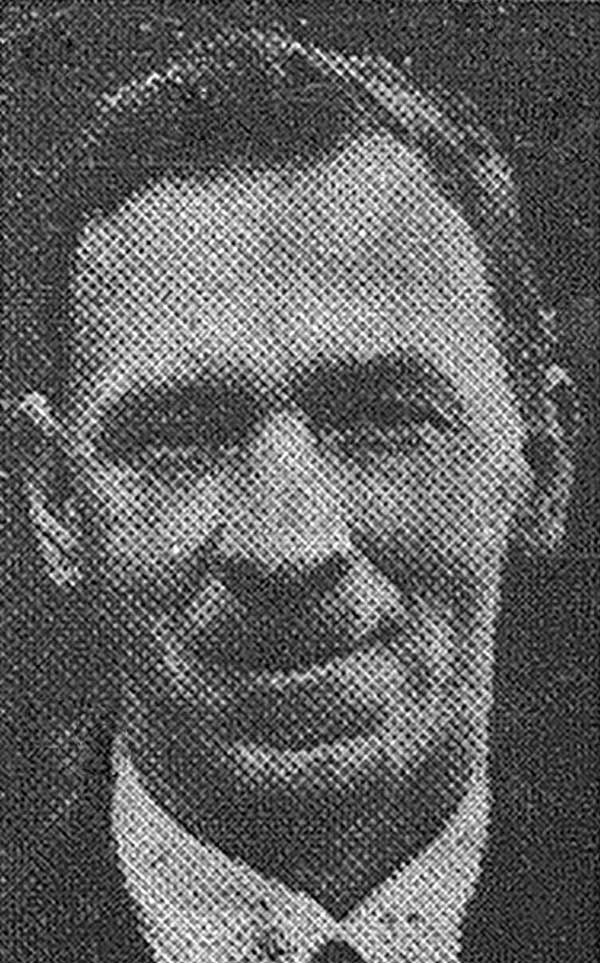
(Syd, NSW), Sun 14 Mar 1943, p. 27.
Reproduction: Peter de Waal
While hearing a case in Central Summons Court last week in which Hal Alexander, secretary of Actors’ Equity, and Percy Archibald McDonald, Domain speaker, were involved, Mr Sutherland, SM, told McDonald to remember the court was not the Sydney Domain and Alexander that it was not the forum at the Actors’ Club.
McDonald, who apart from his Domain doings, makes and sells artificial flowers, had taken out a summons against Alexander, alleging that on January 26, in Pitt Street, Alexander maliciously damaged about £2 worth of his make-believe marigolds and carnations.
McDonald said that he lived at 77 Rochester Street, Homebush, and Alexander gave his business address as 236 Pitt Street.
McDonald said that Alexander, without ceremony, kicked his artificial blooms into the air, and they fell to earth on the footpath and rolled into the water-filled gutter. Some had been trampled underfoot by passers.
Alexander denied the charge, and said that McDonald had brought the action, hoping to make political capital out of it.
The information was dismissed.
McDonald said that he was going about his lawful occasions when he met Alexander, who asked him, “Are you still on the police pay roll? McDonald replied, “Go away, you Communist.”
Other words followed and, according to McDonald, Alexander made a swipe at him and kicked his flowers into the air.
Alexander’s story was that McDonald had made a swipe at him with the flowers, which struck his arm and eight or 10 flowers fell to the footpath.
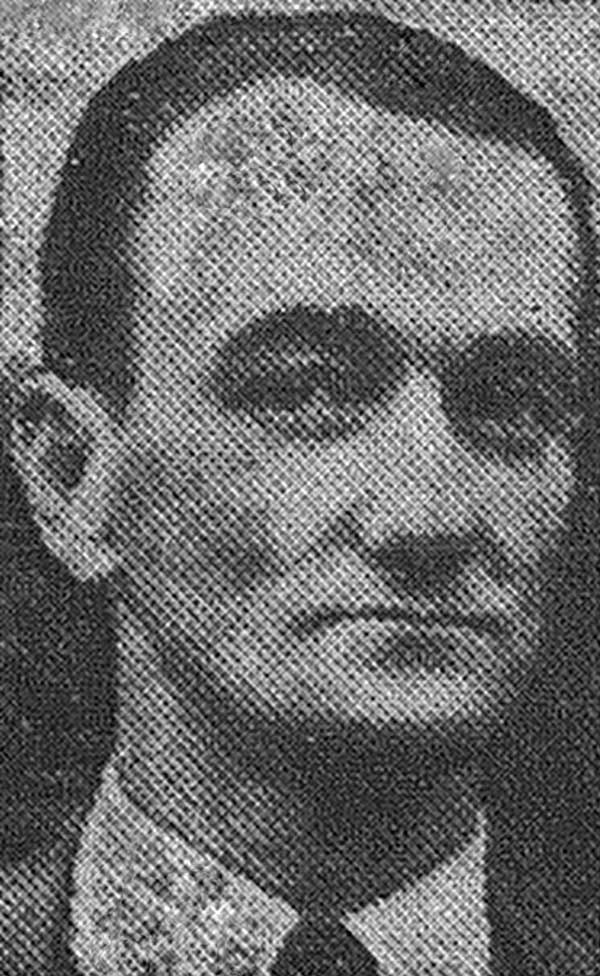 Mr PR Stephenson. Source: Truth, (Syd, NSW), Sun 14 Mar 1943, p. 27. Reproduction: Peter de Waal |
Questioned by McDonald, Alexander said that he was the secretary of Actors’ Equity. McDonald: You don’t like me, Mr Alexander?—I do not like you for your backward and anti-democratic statements. I do not like your attitude to the war. You know that my platform is anti-Communist?—I know that your platform is anti-British, anti-Australian and anti-democratic. To further questions Alexander said that he had gone to the Military Intelligence in connection with Mrs Pankhurst Walsh and Mr Stephenson of the Australian First Movement. |
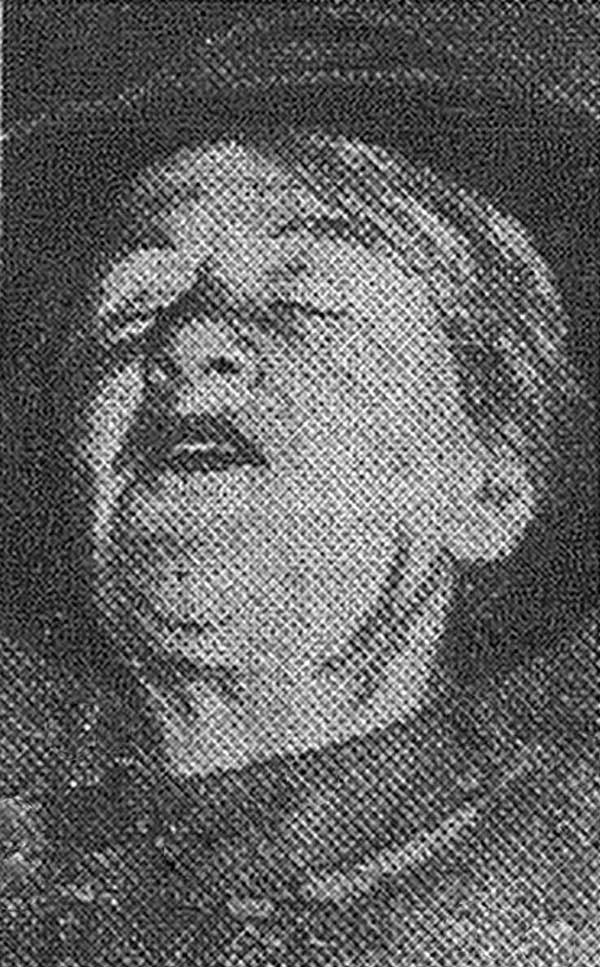 Mrs Pankhurst Walsh. Source: Truth, (Syd, NSW), Sun 14 Mar 1943, p. 27. Reproduction: Peter de Waal |
McDonald v. Surtees, 1949
Truth, Sun 13 Mar 1949 70
PERCY THE “PIE MAN”
IS WITH THE UPPER
CRUST NOW
If you’ve ever been within coo-ee of Sydney Domain you must know Percy Archibald McDonald, the gent with the leather lungs, who has been bellowing there for more Sundays than we care to contemplate. Well, strange as it may seem, in view of his unenviable record, Perce plans to be a politician. Stranger still, he is marching under the Liberal Party banner and, if endorsed, proposes to take on no less a person than Mr EJ Ward in East Sydney! Perce, who boasts in the Domain practically every Sunday that he has been in 42 gaols (although he coyly told Truth this week that that Bradman-like figure is only kidstakes for the benefit of the proletariat), says he is “just the man East Sydney needs.”
A Liberal Party spokesman admitted that Perce is a member and one of the four preselection candidates for East Sydney, but added that, even if the local committee selected him, the executive was sure to knock him back.
Several dyed-in-the-wool Liberals became somewhat more than choleric when they were told that a black baa-lamb like Perce was kicking up his heels in the pristine flock.
What the electors of East Sydney think about it Truth didn’t bother to find out. You wouldn’t need a college education to answer that one.
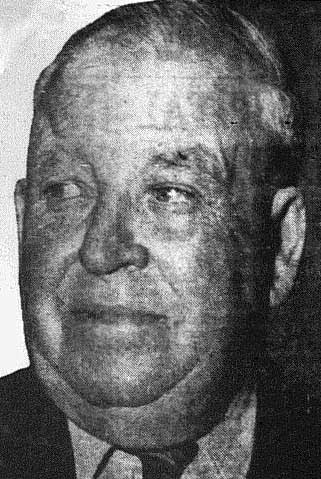
(Syd, NSW), Sun 13 Mar 1949, p. 6.
Reproduction: Peter de Waal
As some of his long-minded listeners know—and frequently remind him rather vociferously—Perce may, or may not, know all there is to know about politics, but there’s one thing on which he is by way of being something of an expert, and that’s meat pies—those succulent, savoury creations which are best eaten with plenty of rich, red tomato sauce and a spot of spuds on the side.
TWO PIE CASES
Perce, knows a thing or two about them, all right, but he’s apt to get a bit crusty if you mention them—not that he’s a dribbler and objects to brown gravy on his vest. Far from it! What he has against meat pies is that they landed him in Long Bay, which, you’ll agree, is something to beef about.
That was 30 years ago, in connection with two actions for damages against two of Sydney’s pie purveyors who were alleged to have sold “Nellie Blys” with portion of rodents reclining among the meat and gravy. Perce was a leading witness on both occasions, with big boots on championing fair name of “Nellie Bly.”
“Nellie,” as old hands will remember, left the court without a stain on her character. It was proved that the chances of a mouse masquerading as a bit of minced steak were so infinitesimal as to be farcical, and that a number of discrepancies were associated with the allegations.
Of course, as was to be expected, meat pies went out of favor [sic] as a quick lunch and were superceded by a “cuppa tea and buttered tea cake” or those old standbys, sandwiches and cakes.
The eclipse was only temporary, however, and “Nellie” was soon back on her throne. For Perce the consequences were more serious. He told the court that he had some prior knowledge of the cases, but in one he got his days and dates badly minced.
Result was that Perce stood his trial for perjury, and picked up a penalty of two years in the pokey.
But more of that anon. What we’ve been leading up to is Perce’s new theme song, which goes something like this:—
There’ll be pie, yes there’ll be pie,
By and by; oh, by and by;
There’ll be pie, yes there’ll be pie,
In the Liberal Party sky.
Truth went out to his neat little cottage at 77 Rochester St, Homebush, this week and listened to him warble a verse or two of the captivating ditty.
As he sang, his two dogs (which he had locked in the front room for safe keeping) and his two budgerigars (from their cage on the back verandah) provided an obbligato.
Quoth Perce: “The Liberal Party policy appeals to me because it is all British. The Communist menace must be met. I was a member of the Labor Party for 44 years, but now it is so corrupt that Labor is a false name for it. It is dominated by Communists and filled with racketeers.
MEMBER OF PARTY
Truth: “Are you a member of the Liberal Party?”
Perce: “Definitely! I have been collecting and working for the party for some time now.”
Truth: “Does the Liberal Party know of your criminal record?”
Perce: “Every man, woman and child in Sydney knows it, and most of them love me for it. Anyhow, in my policy speech to the selection committee I’ll tell them of my record and convince them that my experiences in prison fit me better to serve the people and protect Australian youth from the politically-created perils of liquor, gambling, drug addiction and white slaving, which flourish in Sydney and are aided and abetted by the Labor Party.”
Truth: “Has there been any comment from the Liberal Party on your record?”
Perce: “I haven’t heard any, but they can’t regard it too seriously, because I have been collecting for them out this way for over 12 months.”
Truth: “You frequently tell your Domain audiences that you have been in 42 gaols?”
Perce: “Oh, that’s just a bit of baloney for the mob’s benefit.”
Truth: “But you have been in gaol, haven’t you?”
Perce: “A couple of times. I got two years for perjury and four years for receiving.”
Truth: “The perjury charge arose out of the famous pie case, didn’t it?”
Perce: “That’s so, but it was a bit of bad luck. I got mixed up and said I saw a man in Sydney when he was on board a ship, so they gave me two years.”
“JUST THE MAN”
Truth: “And you really think you should be in Parliament?”
Perce: “I’ll say! I’m just the man East Sydney needs. I’ve spoken in that area a lot and everybody likes me. Take it from me, if there’s a man to beat Eddie Ward it’s Percy McDonald.”
Prior to being ushered off the premises by Perce and politely declining “30 or 40 persimmons off me own tree,” Truth tried to learn, at first hand, some more about the pie cases, but, unfortunately, in the intervening 30 years Perce has run the two cases more or less into one and is distinctly hazy on names and dates.
However, Truth files show that, in May, 1919, Mary Mahoney, a boarding-house keeper, of Cathedral St, sued Sargent’s Ltd for £400, claiming that she had found portion of a rat or mouse in a pie. She was awarded £25 damages, but a new trial was ordered and a verdict given for the company. It was found that there was not the slightest foundation for the slander on the pies, and Sargent’s were completely exonerated.
EVIDENCE AT TRIAL
McDonald gave evidence at the new trial that Mahoney had shown him portion of a cooked mouse which she had wrapped in a napkin. Another witness said he obtained two young rats for the woman.
In the same year, Mary Telfer, a Paddington tailoress, claimed £1,000 from the Aerated Bread Co, trading as Miss Bishop, alleging that she had been served with a pie containing portion of a rat or mouse. In this case, the jury found for Miss Bishop without any trouble.
Percy was a prominent figure during the hearing. He claimed to have met Telfer and “a West Australian crook named Hummerston,” near St Mary’s Cathedral and that the pair had tried to interest him in a scheme to put a mouse in a pie at either Sargent’s or Miss Bishop’s. He said he had scornfully refused.
That was a bad “blue” on McDonald’s part, because he was subsequently charged with perjury and witnesses swore that at the time he said he met Hummerston the latter was returning to Australia from World War I.
Upshot was that Perce was sentenced to two years.
Interested in Perce’s standing with the Liberal Party, Truth approached the chairman of the NSW branch (Mr WH Spooner) and asked a few questions. Here they are:
Truth: Is McDonald a member of the Liberal Party?
Mr Spooner: Yes.
Truth: Has his nomination been received for the East Sydney pre-selection?—Yes.
Truth: Are you aware of his criminal record?—No.
Truth: He has told us that you are aware of it. Is that correct?— I do not know whether or not he has a criminal record. Inquiries will be made.
Truth: Can you give any idea of his prospects of selection as Liberal Party candidate for East Sydney?—All candidates will be selected in accordance with the party’s constitution. In my opinion, there is no possibility of McDonald being selected as a Liberal Party candidate.
All of which sees to indicate that Perce’s pie is a “sinko” even before he sharpens up his knife and fork. Whether true-blue Liberals will be prepared to let sleeping mice lie is a rodent of a far different color [sic].
For the information of the Liberal Executive, Truth can say that Perce has a record dating back to 1901. He has about 45 convictions in New South Wales, West [sic] Australia, South Australia and England. These include perjury, receiving, escaping from custody, breaking and entering, causing actual bodily harm, vagrancy, riotous behavior [sic] and breaches of the War Precautions Act .
~ ~ ~ ~ ~
The Sydney Morning Herald, Thu 23 Jun 1949 71
REPORTS FROM THE COURTS
…
DISTRICT COURT.
…
Judge Holden and juries.—No. 9 Court, Queen’s Square.—10: McDonald v. Surtees. (Jurors required at 10.)
~ ~ ~ ~ ~
The Canberra Times, Sun 26 Jun 1949 72
LIBEL ACTION FAILS
AGAINST “TRUTH”
————
Sydney, Friday.
A £400 libel action, brought against Joseph Mark Surtees, publisher of “Truth,” by Percy McDonald failed to-day when a District Court jury returned a verdict in favour of Surtees.
McDonald claimed that an article, published under the heading of “Percy the Pieman, is with the upper crust now,” on March 13, had defamed him.
The article had charged him with crimes he had never committed and was malicious and false.
Surtees pleaded not guilty, truth and public benefit.
McDonald admitted during cross-examination that he had numerous convictions, including one of perjury.
McDonald v. Burns and anor, 1949
Tribune, Wed 15 Sep 1948 73
RIGHTWINGER SAYS 21
DIV ‘DOING GOOD JOB’
One Rightwing delegate to last week’s meeting of NSW Labor Council praised Division 21 for “doing a good job protecting our wives and daughters.”
“And I hate policemen as much as anyone,” the delegate, Mr Levy (hairdressers), declared amid interjections.
By 70 votes to 57 the Rightwing-dominated Council rejected a motion to ask the McGirr Government to stop police making shorthand checks of labor movement meetings in the Doman [sic].
Use of police shorthand writers in the Domain was a threat to the liberties of all sections of the labor movement, Mr Matt Munro (Wharfies) declared in moving for a deputation to Mr McGirr to seek their withdrawal.
“Some of these shorthand writers are representatives of 21 Division, which is becoming increasingly active in interfering with the Labor movement,” said Mr Munro.
MORAN’S FINE
“Recently, Mr Stan Moran of my union was fined £5 for speaking of “Judge Great Blockhead” in the Domain on the basis of a shorthand writer’s evidence.
“This conviction was made despite the fact that earlier, a figure in a Six-Hour procession through the city, had been labelled “Judge Great Blockhead” and had passed without comment.
“While shorthand writer attend all labor movement meetings to spy on what is being said and done, they do not attend the meetings of Percy MacDonald, a paid ‘Liberal’ agent who every Sunday dispenses filthy abuse of everybody in the Labor Party from Mr Chifley down.”
People like Messrs Darby, Bridges and Cramer could appear in the Domain calling for scabs to take wharfies’ jobs but were not bothered by 21 Division or their shorthand writers.
Shorthand note-taking by police at Labor movement meetings was a serious breach of free speech and was against the constitution of both the Labor Council and the country.
Statements by Mr T Gordon (Painters’ and Dockers) that police shorthand men were planted in all union meetings, including the Council itself, were bitterly assailed by Rightwinger Coulter (PIEU) [Printing Industrial Employees’ Union].
Mr Gordon’s charges were baseless and the motion was a waste of Council’s time, said Mr Coulter.
Mr Collier (AEU) [Amalgamated Engineering Union] appealed to the Council not to lose sight of the original resolution.
“We do not know that every political meeting of the workers s covered by either 21 squad or security police. There is nothing baseless about the charge that a man has been hailed [sic] before the Court on shorthand writer’s evidence. That has actually happened,” he said.
“IMPRACTICAL”
Mr James (AJA) [Australian Journalists Association] said he considered any move to stop shorthand note-taking in the Domain was impractical. He denied suggestions by Mr Gordon that journalists could be associated in giving information on the labor movement to the police.
In reply, Mr Munro reminded delegates that rejection of the move by Council would mean serious rank and file criticism for those responsible.
Division 21 will eventually reach around to all unions if allowed to go unchecked, then those responsible for stopping any move to curb them will have a lot to answer for.
“If there are any delegates here ready to support 21 Division then I think they are in the wrong place.”
On a show of hands the motion was declared lost by 70 votes to 57.
~ ~ ~ ~ ~
The Advertiser, Thu 24 Mar 1949 74
LIBERAL PRE-SELECTION
CANDIDATE GAOLED
Sydney, Mar 23.
Percy Archibald McDonald, an elderly pensioner, who is one of four men seeking Liberal endorsement for East Sydney seat at the Federal elections, was gaoled for six months in the Central Summons Court today for theft.
McDonald, who is also a well-known Sydney Domain speaker, was charged with stealing 18 stainless steel knives from Air Force House, Goulburn street. He denied the theft.
~ ~ ~ ~ ~
The Canberra Times, Thu 28 Apr 1949 75
COMMUNIST PAPER
SUED FOR LIBEL
————
Sydney, Wednesday.
Percy Archibald McDonald, a Domain orator, claimed damages in the District Court to-day from the publisher of the communist paper, “Tribune,” W Burns, of Auburn, and from HB Chandler, of Forest Lodge, printer.
McDonald declared that an article in the “Tribune” on September 15, 1948, stated he had immunity from the police in lawlessness and that he uttered filthy statements publicly in which he was aided and abetted by the police.
According to McDonald the article also stated he was a paid agent of the Liberal Party.
Pleading not guilty Burns and Chandler claimed truth, public benefit and fait comment.
The hearing was adjourned until 10 am to-morrow.
~ ~ ~ ~ ~
The Sydney Morning Herald, Thu 28 Apr 1949 76
LAW COURT REPORTS
…
DISTRICT COURT.
…
Judge Lloyd and jury.—No. 9 Court, Queens’s Sq.—10: McDonald v Burns and anor, (part heard).
~ ~ ~ ~ ~
The Canberra Times, Fri 29 Apr 1949 77
AWARDED FARTHING
ON £400 CLAIM
————
Sydney, Thursday.
Percy Archibald McDonald, a Domain orator, who had claimed £400 damages for defamation from W Burns, of Auburn, and HB Chandler, of Forrest Lodge, as the result of an article which appeared in the “Tribune” on September 15 [1948], was awarded a farthing damages.
Claiming truth, public benefit and fair comment, Burns and Chandler pleaded not guilty.
~ ~ ~ ~ ~
Truth, Sun 1 May 1949 78
ONE FARTHING FOR
PERCY THE PIEMAN
Plaintiff in a defamation suit in the District Court this week, Domain spruiker Percy Archibald McDonald got a verdict, but he won’t be able to buy ant Rolls Royces or steam yachts with the damages he was awarded.
The jury, while finding for McDonald, also known as “Percy the Pieman,” awarded him the microscopic sum of one farthing damages. He was thus given what is known in law as “a contemptuous verdict.”
Percy, when he gets his farthing, will be able to make a down payment on a pie.
Percy, whose action was brought against the Tribune newspaper, had claimed £400, which is the highest sum a plaintiff can recover in an action of this sort in the District Court.
McDonald complained that he had been defamed by the following words, contained in an article published in the Tribune on September 15, 1948:
“While shorthand writers attend all Labor Movement meetings and spy on what is being said and done, they don’t attend meetings of Percy McDonald, a paid ‘Liberal agent, who, every Sunday, dispenses filthy abuse of everybody in the Labor Party from Mr Chifley down.”
Nominal defendants in the action were W Burns and HB Chandler, publisher and printer respectively of the Tribune.
Neither Burns nor Chandler gave evidence, though several witnesses were called for the defence.
Judge Lloyd made no order as to costs.
McDonald conducted his own case; Mr Harold Rich for Burns and Chandler.
1 The Sydney Morning Herald, Mon 26 Jan 1914, p. 3. Emphasis added.
2 The Sydney Morning Herald, Tue 27 Jan 1914, p. 4. Emphasis added.
3 The Daily Telegraph, Wed 28 Jan 1914, p. 14.
4 The Sydney Morning Herald, Wed 28 Jan 1914, p. 9.
5 The Sydney Morning Herald, Thu 19 Feb 1914, p. 5. Emphasis added.
6 The Argus, Thu 17 Sep 1914, p. 13.
7 The Daily Telegraph, Thu 17 Sep 1914, p. 3.
8 The Sydney Morning Herald, Thu 17 Sep 1914, p. 4.
9 The Sydney Morning Herald, Fri 26 Feb 1915, p. 4. Emphasis added.
10 SRNSW: NRS2467, [3/6091], State Penitentiary photographic description book, 7 Oct 1915-12 Feb 1916, No. 14689, p. –.
11 The Advertiser, Thu 19 Sep 1918, p. 10.
12 The Brisbane Courier, Thu 26 Sep 1918, p. 4. Emphasis added.
13 The Brisbane Courier, Thu 3 Oct 1918, p. 4.
14 The Brisbane Courier, Thu 10 Oct 1918, p. 9. Emphasis added.
15 The Brisbane Courier, Sat 12 Oct 1918, p. 13. Emphasis added.
16 The Brisbane Courier, Sat 19 Oct 1918, p. 11. Emphasis added.
17 The Brisbane Courier, Thu 24 Oct 1918, p. 4. Emphasis added.
18 The Brisbane Courier, Tue 29 Oct 1918, p. 8.
19 The Sydney Morning Herald, Tue 9 Sep 1919, p. 4. Emphasis added.
20 The Daily Telegraph, Thu 29 Oct 1919, p. 11.
21 The Sydney Morning Herald, Thu 29 Oct 1919, p. 9.
22 The Sydney Morning Herald, Fri 16 May 1919, p. 5. Emphasis added.
23 The Advertiser, Tue 1 Jul 1919, p. 7.
24 The Sydney Morning Herald, Tue 12 Aug 1919, p. 5.
25 The Sydney Morning Herald, Fri 5 Sep 1919, p. 4. Emphasis added.
26 The Advertiser, Tue 23 Sep 1919, p. 7.
27 To view the digitised service record (service number 6548, barcode 1843322) of Percy Alexander McDonald go to: www.naa.gov.au
28 The Sydney Morning Herald, Tue 23 Sep 1919, p. 6. Emphasis added.
29 The Advertiser, Wed 24 Sep 1919, p. 6.
30 The Sydney Morning Herald, Wed 24 Sep 1919, p. 8. Emphasis added.
31 The Sydney Morning Herald, Thu 25 Sep 1919, p. 4.
32 The Sydney Morning Herald, Tue 21 Oct 1919, p. 5.
33 The Sydney Morning Herald, Fri 31 Oct 1919, p. 5. Emphasis added.
34 The Sydney Morning Herald, Fri 5 Dec 1919, p. 7.
35 The Advertiser, Sat 6 Dec 1919, p. 9.
36 The Sydney Morning Herald, Sat 6 Dec 1919, p. 9.
37 The Sydney Morning Herald, Sat 22 Apr 1922, p. 9. Emphasis added.
38 The Sydney Morning Herald, Mon 24 Apr 1922, p. 7. Emphasis added.
39 The Daily Telegraph, Tue 25 Apr 1922, p. 2.
40 The Sydney Morning Herald, Tue 25 Apr 1922, p. 5.
41 The Sydney Morning Herald, Wed 5 Dec 1923, p. 9. Emphasis added.
42 The Sydney Morning Herald, Thu 6 Dec 1923, p. 6.
43 The Blue Mountain Echo, Fri 6 Jun 1924, pp. 1, 3, 4. Emphasis added.
44 The Sydney Morning Herald, Mon 24 Jun 1924, p. 12. Emphasis added.
45 The Blue Mountain Echo, Fri 18 Jul 1924, p. 3.
46 The Katoomba Daily, Tue 22 Jul 1924, pp. 1, 3. Emphasis in original and some added.
47 SRNSW: NRS2467, [3/6112], State Penitentiary photographic description book, 6 Jun 1924-11 Oct 1924, No. 20291, p. 138.
48 The Sydney Morning Herald, Tue 26 Aug 1924, p. 6.
49 The Sydney Morning Herald, Sat 30 Aug 1924, p. 12.
50 The Sydney Morning Herald, Wed 22 Oct 1924, p. 9.
51 The Sydney Morning Herald, Thu 23 Oct 1924, p. 6.
52 The Sydney Morning Herald, Fri 24 Oct 1924, p. 6.
53 The Sydney Morning Herald, Sat 25 Oct 1924, p. 14. Emphasis added.
54 The Brisbane Courier, Tue 27 May 1924, p. 9.
55 The Sydney Morning Herald, Tue 27 May 1924, p. 10.
56 The Sydney Morning Herald, Tue Jun May 1924, p. 6. Emphasis added.
57 The Sydney Morning Herald, Tue 8 Jul 1924, p. 6. Emphasis added.
58 The Sydney Morning Herald, Tue 29 Jul 1924, p. 6.
59 The Sydney Morning Herald, Wed 30 Jul 1924, p. 10.
60 The Sydney Morning Herald, Thu 31 Jul 1924, p. 6.
61 The Sydney Morning Herald, 22 Aug 1924, p. 8.
62 The Argus, Sat 23 Aug 1924, p. 26.
63 The Sydney Morning Herald, Sat 23 Aug 1924, p. 12.
64 The Advertiser, Fri 14 Nov 1924, p. 15.
65 The Sydney Morning Herald, Sat 22 Nov 1924, p. 17.
66 The Advertiser, Tue 6 Jan 1925, p. 9. Emphasis in original and added.
67 The Advertiser, Wed 14 Jan 1925, p. 10. Emphasis added.
68 The Register, Fri 30 Jan 1925, p. 8.
69 Truth, (Syd, NSW), Sun 14 Mar 1943, p. 27. Original emphasis and added.
70 Truth, (Syd, NSW), Sun 13 Mar 1949, p. 6. Original emphasis and added.
71 The Sydney Morning Herald, Thu 23 Jun 1949, p. 8.
72 The Canberra Times, Sun 26 Jun 1949, p. 6.
73 Tribune, Wed 15 Sep 1948, p. 7. Emphasis original and added.
74 The Advertiser, Thu 24 Mar 1949, p. 3.
75 The Canberra Times, Thu 28 Apr 1949, p. 6.
76 The Sydney Morning Herald, Thu 28 Apr 1949, p. 8.
77 The Canberra Times, Fri 29 Apr 1949, p. 2.
78 Truth, (Syd, NSW), Sun 1 May 1949, p. 10. Emphasis in original text and added.