Below also see: Percy Orlando Reynolds, 1894,
Percy Orlando Reynolds, 1896,
Percy Orlando Reynolds, 1907,
Percy Orlando Reynolds, 1908
The Australian, Windsor, Richmond, and Hawkesbury Advertiser, Sat 5 May 1883 1
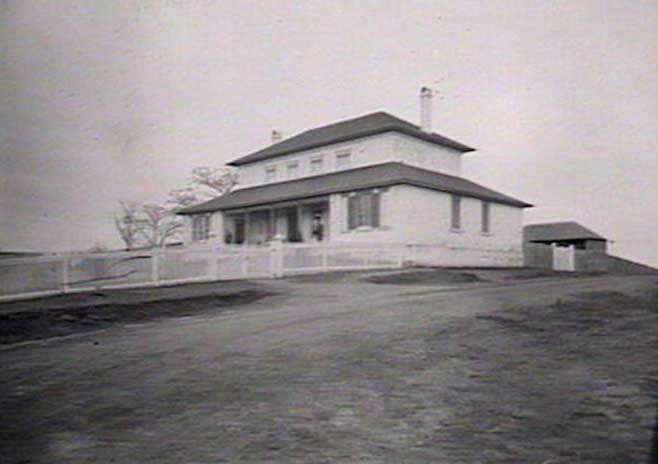
Reproduction: Peter de Waal
WINDSOR QUARTER SESSIONS.
————
Tuesday, May 1st, 1883.
(Before District Court Judge Wilkinson.)
Mr Irving prosecuted for the Crown.
…
ASSAULT WITH INTENT.
Percy Reynolds was indicted that he did, at Sackville Reach, on the 17th February last, assault with intent one Ellen Maria Ruth Leet, a child of 6½ years of age. A second count charged him with indecently assaulting the said child, and a third count charged him with assault.
Prisoner pleaded not guilty and was defended by Mr Richardson.
Jury: Messrs E Bowd, GT Johnston, E Carey, A Robinson, T Holland, W Brown, James Dargin, WG Smallwood, W Maxwell, W Prendergast, WM Masters, and John Gow.
We have already published this case in extenso. The prisoner carries the mail between Windsor and Sackville Reach, and the little girl lives with the Postmistress and her husband, being an adopted child. On the day in question he enticed the child to a quarry near her residence, and there the offence complained of is said to have been committed. The prisoner, when apprehended, admitted that he was with the child in the quarry, but was there only at play with her, and did not hurt her.
After the counsel had addressed the jury for the defence, and the judge had summed up the evidence, the Court was adjourned until 2 o’clock.
Upon the re-assembling of the Court the jury was brought into the box, and delivered a verdict of guilty on the second count, with a recommendation to mercy on account of the youth of the prisoner.
Sentence: The Judge in sentencing the prisoner, said had this offence been committed a few months later, now that the Criminal Law Consolidation Bill had been passed, he would most certainly have been flogged. He could not send him to Windsor Gaol as requested. The sentence of the Court is, that he (the prisoner) be confined in Darlinghurst Gaol for a period of 18 months with hard labour.
Percy Orlando Reynolds, 1894
Windsor and Richmond Gazette, Sat 6 Jan 1894 2
WINDSOR POLICE COURT.
————
Friday, January, 5th.
Before Mr WH Becke, PM, T Primrose and W Moses, J’sP.
…
DESERTION.
Eleanor Elizabeth Kiley proceeded against Percy Orlando Reynolds, of Wilberforce, for the support of his illegitimate child, she being the mother.
As defendant had agreed to an order of 54/- per week through the mother of the child, the Bench granted an order for that amount, payable weekly to Constable Rogers, Wilberforce, and costs of Court.
~ ~ ~ ~ ~
Windsor and Richmond Gazette, Sat 31 Mar 1894 3
WINDSOR POLICE COURT.
————
Friday, March 16. Before Mr Becke, PM.
…
Percy Orlando Reynolds was charged with disobeying an order of the court to pay to one Ellen [sic] Elizabeth Kiley 5/- weekly for the support of his illegitimate child.
Pleaded not guilty.
Constable [Robert] Rogers deposed that he had served the order on defendant, who had paid something to him; there was a sum of 5/- due up to March 16; complainant informed witness on the 17th that it had not been paid; he told her that he heard that the case had been settled between them, and complainant said that such had not been the case; witness informed defendant that he would take out a summons if the money was not paid; defendant said, “I’ll pay neither of you; I’ll let it go to court first; I have it in black and white from her.”
To defendant: Complainant denied writing letter to the Sergeant of Police at Windsor; she wrote one to him (witness), which had been handed into the Court; she denied that the case had been settled, and did not admit writing to Senr-Sergeant Boyd.
Senr-Sergeant Boyd deposed that he received a letter some weeks ago, dated at Colo, and signed by Elizabeth Kiley; did not know the handwriting; the letter stated that a settlement had been made between herself and defendant; he afterwards saw the alleged writer of the letter, who looked at it and denied having written it; she complained that defendant had failed to comply with the order of the Court.
To defendant: The handwriting of the letter received by Constable Rogers corresponded with that of the letter from Colo.
Defendant said he was willing to contribute towards the support of the child, and had been doing so; he had made an arrangement with the mother to support it.
The presiding magistrate commented strongly on the defendant’s conduct, and ordered the arrears to be paid into Court forthwith; if he neglected to pay regularly in future he would be sent to gaol; the unfortunate woman had no doubt been intimidated, but he intended to uphold the law; he had doubts about the two letters, and if he found that they had been put in to defy the law he would take steps to have the guilty parties punished, and he would see that the unfortunate woman was protected.
The arrears and costs of Court were paid.
~ ~ ~ ~ ~
Windsor and Richmond Gazette, Sat 28 Apr 1894 4
WINDSOR LICENSING COURT.
————
Monday, April 23.—
(Before Messrs WHH Becke, LM, Dr Callaghan and GM Pitt, J’sP.)
…
BREACH OF LICENSING ACT.
————
…
ANOTHER CASE.
James Patrick Shea, licensee of the “ Old Retreat Newly Revived,” was charged that he did on the 11th inst keep his licensed premises open for the sale of liquor after hours to persons not being bona-fide travellers.
Mr JJ Paine appeared for defendant, who pleaded not guilty.
Senr-Sergeant Boyd, Licensing Inspector for the Windsor district, gave formal evidence.
To Mr Paine: There was an officer of the Police stationed at Wilberforce; as far as witness knew, he he [sic] was at Wilberforce on the night of the alleged offence; did not lodge the complaint.
Herbert Atkins, a blacksmith, residing at Wilberforce, remembered the night of the 11th inst; was in the hotel that night; was in there last at a quarter-to-twelve; entered the hotel through the big-room door; went straight through the parlor into the bar and had a drink of Port wine; defendant served him; Percy Reynolds was with him; Constable Rogers was in the parlor; he could not see the bar from where he sat; the bar-door was closed; was in Windsor the same evening making a complaint to the Sergeant of Police against the Constable at Wilberforce; left Windsor about 11 o’clock; went straight away to Wilberforce, a distance of 3¼ miles; when he arrived there went to the hotel and had a drink.
To Mr Paine: Constable Rogers had not had any occasion to take proceedings against him—nothing to speak of; was on friendly terms with Constable Rogers, not intimate, but as good as they had always been; was before the Court as a defendant about two months ago; was charged with having a few old slabs in his possession, and was convicted and fined; Constable Rogers gave evidence for the prosecution; this prosecution was purely a matter of duty on his part, and not out of any ill-feeling; had never threatened to have Rogers reduced; the side-door he entered at the hotel was a public one; went into the hotel to see if Constable Rogers was still in there; did not enter the hotel altogether for the purpose of having a drink, but to see if Constable Rogers was inside; did not consider his entering after hours was unlawful when he went in for a good purpose; the good purpose was to see if Constable Rogers was attending to his duty; Reynolds paid for the drinks; after they left the hotel they went outside and rode on the bank, when Constable Rogers accosted them, and asked what they were doing; only went into the hotel once after 11.
To the Senr Sergeant: Considered it a matter of duty to lay the information; had no ill-feeling against the licensee or Constable Rogers.
Percy Orlando Reynolds, a butcher, was in company with last witness on the night in question; entered the hotel through a side-room door, through the parlor into the bar; had a drink each; there were some people in the parlor as they walked through; they were Constable Rogers, Harry Beecroft, and Alfred Robinson, Mrs Shea, and another lady; did not see any other drinks served; had been in Windsor that night; it was about 11 o’clock when they left Windsor; had no ill-feeling towards Constable Rogers or the licensee; laid the information for the good of the Police Force; when they came out after having a drink, Constable Rogers and Harry Beecroft were outside on the verandah; Harry Beecroft was striking a light to look at their horses.
To Mr Paine: The side door they entered by was wide open; the public door was closed; never told anyone that he could have Constable Rogers removed from Wilberforce; had no ill-feeling towards him; never threatened to report Constable Rogers before the 11th of this month; Constable Rogers had had occasion to take proceedings against him; had been a defendant in a case recently; (witness declined to answer a question—had been convicted for a misdemeanour or crime lately); 5 they went in to see if Constable Rogers was there; when they found he was there they went through and had a drink; did not go in for the Constable to see them have a drink; went in entirely as a matter of duty.
Senr-Sergeant Boyd gave further evidence that when the two last witnesses were making a complaint to witness on the night of the 11th at his office, Constable Lindin was present; asked what time it was, as he did not have a watch on him; the reply was twenty minutes to 11 o’clock; they left immediately afterwards.
Mr Paine contended that there was no evidence to show that the premises had been kept open for the sale of liquor; on the contrary evidence had been given to show they were closed.
The Bench decided to hear further evidence.
Henry Beecroft, farmer, residing at Wilberforce, remembered being at Mr Shea’s Hotel on the night of the 11th inst; was there at closing time, and saw the premises closed at 11 o’clock; was on the verandah afterwards in company with Constable Rogers and Alfred Robinson; it was about a quarter-to-twelve when he left in company with Constable Rogers to go home; saw Reynolds and Atkins riding along the road; they did not go into the hotel then it was a few minutes to 11 when Atkins and Reynolds went through into the bar; saw them come out before he did; Constable Rogers was not in the hotel at the time; when h3e came our the horses belonging to Atkins and Reynolds were tied to the fence and from their appearance he judged that they had been ridden very hard; witness could ride from Windsor to Wilberforce in 15 minutes; was quite satisfied that the premises were closed at the proper time; if Reynolds and Atkins say they saw him in the hotel at a quarter-to-twelve they say what is not true.
Constable Kogers [sic] Rogers, stationed at Wilberforce, deposed that he had been there 8½ years; he had been subpœnæd by Mr Shea to give evidence; he went to Shea’s hotel on the night of the 11th instant to deliver Electoral Rights; was there up to about 10 minutes to 11; the house was closed about that time; saw Atkins and Reynolds ride up a few minutes before 11; they went into the hotel and came out at 11; saw them again at about 11.30, riding; was then going home; they were coming from the settlement direction; spoke to them; considered it his duty to accost them, as horses had recently been tampered with and ill-treated, and he was on the look-out for offenders; Atkins and Reynolds had been threatening him for months that they would “do for” him; they had lodged a complaint against him; it was not true that he was in the hotel at a quarter to 12; if the premises had been opened after hours he would have considered it his duty to take proceedings against the licensee; had recently taken proceedings against Atkins and Reynolds; their horses had every appearance of having been ridden hard; they were sweating and blowing; saw them when Mr Beecroft struck a match.
At this stage Mr Paine said he had more witnesses to call, but he directed attention to the unreliability of the evidence of the witnesses for the prosecution, and to the character of the men compared with that of his witness, Mr Beecroft. The way in which the witnesses for the prosecution had given their evidence showed that the case had been trumped-up against Constable Rogers.
The Bench dismissed the case.
Mr Paine said he hoped that in future the Bench would compel those who laid an information to lay it in their own names, instead of in the name of the Police.
The Bench concurred in these remarks, but refused to allow costs.
~ ~ ~ ~ ~
Windsor and Richmond Gazette, Sat 1 Sep 1894 6
POLICE NEWS.
————
WINDSOR POLICE COURT.
Wednesday, August 29.
Before Mr WHH Becke, PM, and Dr Callaghan.
A SERIOUS CHARGE.
Percy Orlando Reynolds, David John Hayes, Henry Shepherd, and Thomas Atkins, arrested on warrant by Constables Rogers and Egginton, were charged with having, on August 6, at Currency Creek, maliciously killed three head of cattle, the property of John F Cobcroft.
The Police asked for a remand until Friday, for the production of evidence.
Remand granted, bail being refused.
————————
When the above case came on for hearing on Friday morning, before Messrs JB Johnston, B Hall, and P Butler, the Court was crowded. Mr Inspector Latimer (Parramatta) conducted the proceedings on behalf of the Police (Senr Sergeant Boyd being still confined to his room). Mr HA Richardson and Mr JJ Paine appeared for the accused.
Constable [William Henry] Egginton’s evidence given on Wednesday, was read. Atkins, on being arrested, denied having anything to do with the offence; he said he saw Reynolds jump over the fence where the cattle were; Shepherd on being arrested and being told that three others were arrested said, “Well, I suppose you want me too”; he produced a double-barrelled gun, found at Hayes’ father’s place; he also produced an axe, with blood upon the handle; it was found on the premises of Hayes, senr; had seen portion of the head of a cow (produced) in which was a cut like that caused by a blow from an axe.
Constable Rogers deposed to the arrest of Reynolds, who said he would make Cobcroft look out; Hayes said he was innocent; Mr Arthur Cobcroft complained to witness on the evening of the 6th re the loss of three head of cattle; witness and Cobcroft went towards Currency Creek in search of the cattle, and about a quarter-of-a-mile along the Settlement fence found tracks of three head of cattle and one shod horse; followed the tracks across Currency Creek to Hand’s fence; there lost tracks of the cattle, but not of the horse; tracked the horse round another paddock, and came upon the horse there; it was Shepherd’s horse, a roan; the horse bore marks of having been recently ridden, and had mud-marks on the fore legs; continued the search, and came upon another horse at Sally’s Bottoms, belonging to accused Hayes; Hand’s fence, to where he first tracked the cattle, was only about 50 yards from where he afterwards found the cattle dead; from something he heard he went on Wednesday to Currency Creek, and found the cattle in a waterhole; the hole was about 12 feet deep and surrounded by a thick scrub; with assistance he drew the carcases out; the foreheads of the old cow and older heifer were smashed in, and the small calf had a hole in its side;
Case proceeding.
~ ~ ~ ~ ~
Australian Town and Country Journal, Sat 8 Sep 1894 7
NEWS OF THE WEEK.
————————
…
Percy Orlando Reynolds, David John Hayes, and Henry Shepherd were committed for trial at the Windsor Police Court, August 31, on a charge of maliciously killing three head of cattle at Currency Creek on the 6th instant.
~ ~ ~ ~ ~
Windsor and Richmond Gazette, Sat 8 Sep 1894 8
POLICE NEWS.
————
WINDSOR POLICE COURT.
————
Friday, August 31st.
Before Messrs JB Johnston, B Hall, and P Butler, J’sP.
A SERIOUS CHARGE.
Percy Orlando Reynolds, David John Hayes, Henry Shepherd, and Thomas Atkins (on remand) were charged with having on the 6th August, at Currency Creek, maliciously killed three head of cattle, the property of John F Cobcroft.
Mr Inspector Lattimer (Parramatta) conducted the proceedings on behalf of the Police (Senr-Sergeant Boyd being still confined to his room). Mr HA Richardson and Mr JJ Paine appeared for the accused.
Constable [William Henry] Egginton’s evidence given on Wednesday, was read. Atkins, on being arrested, denied having anything to do with the offence; he said he saw Reynolds jump over the fence where the cattle were; Shepherd, on being arrested and being told that three others were arrested said, “Well, I suppose you want me too”; he produced a double-barrelled gun, found at Hayes’ father’s place; he also produced an axe, with blood upon the handle; it was found on the premises of Hayes senr; had seen portion of the head of a cow (produced) in which was a cut like that cause by a blow from an axe.
Constable Rogers deposed to the arrest of Reynolds, who said he would make Cobcroft look out; Hayes said he was innocent; Mr Arthur Cobcroft complained to witness on the evening of the 6th re the loss of three head of cattle; witness and Cobcroft went towards Currency Creek in search of the cattle, and about a quarter-of-a-mile along the Settlement fence found tracks of three head of cattle and one shod horse; followed the tracks across Currency Creek to Hand’s fence; there lost tracks of the cattle, but not of the horse; tracked the horse round another paddock, and came upon the horse there; it was Shepherd’s horse, a roan; the horse bore marks of having been recently ridden, and had mud-marks on the fore legs; continued the search, and came upon another horse at Sally’s Bottoms, belonging to accused Hayes; Hand’s fence, to where he first tracked the cattle, was only about 50 yards from where he afterwards found the cattle dead; from something he heard he went on Wednesday to Currency Creek, and found the cattle in a waterhole; the hole was about 12 feet deep and surrounded by thick scrub; with assistance he drew the carcases out; the foreheads of the old cow and older heifer were smashed in, and the small calf had a hole in its side; there was also a bullet-mark on the smaller heifer; saw some remnants of a fire near the water hole, and there was also some red and white hair about five feet from the ground on a stringy-bark tree; there were marks on the tree as of something passing through it by a rope; the fire was a recent one; produced three hides; when the cattle were pulled out of the creek witness employed David Duncombe to skin them; obtained the hide of the heifer from Patrick Daley, and the other two from David Duncombe; they were the hides of the cattle taken out of the water-hole; knew the prisoner Reynolds well; saw him on Sunday night, 5th inst, at Wilberforce; saw him jumping out of the cultivation-paddock of Mr Cobcroft’s in George-street; Mr Cobcroft had only one paddock; this was at nine o’clock on Sunday night; saw him after this going down the street past the Public-school; no one was with him; he seemed to be hurrying along the road; saw the accused Atkins sitting down in George-st at the cultivation-paddock of Cobcroft’s; they met and spoke to one another; witness spoke to them just as Reynolds jumped over the paddock; Reynolds went down the street, and Atkins afterwards jumped over the fence into the cultivation-paddock; Mr Arthur Cobcroft was not with witness when Reynolds jumped over the fence; he was there when Atkins jumped over the fence; produced a spent bullet, which he got from David Duncombe on the 9th August, the day after the cattle were drowned; did not know how the hide came into Daley’s possession.
To the Bench: Accused Hayes resided with his father.
To Mr Richardson: The cultivation-paddock was leased by Arthur Cobcroft from Patrick Shea and was next to the hotel; when Reynolds was hurrying he was going towards home; having placed the carcases in Duncombe’s hands for skinning, witness went home; did not employ anyone to watch the hides and did not do this himself; got the cow hide at one o’clock the next day; this hide (No 1) was red and white; got the second one from Duncombe on Wednesday, the 29th inst; it was a red hide; this was the calf; from three o’clock on the afternoon of the 8th and one o’clock on the ninth, no one watched the hides; did not see the other two on the ninth; only asked Duncombe for one of them; No 3 hide was a very dark red one; got this from Patrick Daley on Thursday, the 30th inst; this particular one had the bullet-mark in it; did not compare the bullet with the mark on the hide, to see if they corresponded; when he got to Currency-creek, Duncombe and Sarah Hand were there before him at the water; left them then to take charge during his absence; Duncombe helped him to pull the cattle out, as also did some settlers; the heifer was got from Hand’s paddock; Mary Jane Hand told Cobcroft not to take the heifer, and said, “Don’t take that beast—she is mine”; Butsworth gave it to witness; Cobcroft said he would take the three; Mary Hand made no reply saw the cattle on Saturday the 4th and on the 8th; the brands on No 1 were on the milking side—G—high on the rump and AC lower down; there were no brands on the other two; when he drew them out of the water on Wednesday the whole of them were branded XJC; it was partly over the old brand on No 1, and the other two were branded in a similar manner; the brand was that of John Frederick Cobcroft; did not know the previous brand.
To the Inspector: The reason he went out to see the cattle on the Sunday was that he was asked to go by Arthur Cobcroft; did not see any other brands on the cattle except G and C.
Arthur Cobcroft, a labourer, residing at Wilberforce, said he was in charge of some cattle belonging to his brother; went to look for some of them at Currency-creek on the 14th inst, in company with Constable Rogers, because he had reason to believe that the cattle were stolen; found the cattle in Elizabeth Hand’s paddock; he demanded the cattle, and spoke to Elizabeth Hand about them; none of the accused were there; brought them back to Wilberforce; the cow was branded on the rump GAC, his father’s brand; the other two were unbranded; put them in the cultivation-paddock adjoining George-st, Wilberforce on the Saturday; branded them the next day XJC, the registered brand of his brother; did not brand over the old brand; last saw the cattle alive on Sunday evening, about four or five o’clock; missed them on Monday morning about six o’clock, when he went to look for them; went then to Currency-creek, through Hand’s paddock, to look for them; did not find them; before he went through Hand’s paddock he saw the rail down; he was coming back and noticed something peculiar about the rails; noticed that the little rail had slipped out and the cattle were nowhere to be found; afterwards heard that the cattle had been found in Hand’s water-hold [sic]; it might be eight feet deep; the place was a very scrubby part; assisted to pull the cattle out of the hole; afterwards noticed that something had been done to them; found that No 1, the cow, had had her head chopped in with an axe; the heifer (a red and white) was served in a similar way, and appeared to be shot somewhere about the shoulder; the calf appeared to be shot in a cruel manner, and had a big hole through its side, caused probably by an axe; it was a red calf; after the cattle had been dragged out of the water-hole, he gave the hides to Duncombe and Sarah Hand if they would skin them and burn the carcases; the cattle were his brother’s; put them into a cultivation-paddock; rented the paddock; Reynolds had no right there; Atkins lived at the bottom of the paddock, and sometimes went through; had not stopped him from going through; tracked the cattle, and the horse following to Currency-creek; found the horse in Buttsworth’s paddock near Currency-creek; it was a roan horse; to the best of his belief it was the one that was following; he found another horse; did not know who it belonged to; the hides produced were the hides of the cattle found in the water-hole; noticed the remains of a fire near where they found the cattle; also saw where there had been a rope pulled round a tree, and there was blood and cow hair on the tree close to the water-hole.
To Mr Richardson: When he went to Currency-creek, Elizabeth Hand spoke to him about the heifer; Mary Jane Hand said she thought the heifer belonged to her, and told him not to take it; branded the cattle on a Sunday morning; the cow had a brand on her; the new brand was not over any other brand; when witness and Constable Rogers followed the tracks of the horse to Currency-creek, they found the roan horse in Buttsworth’s paddock; in looking for the cattle they found the clipped horse; the latter belonged to Reynolds two or three years ago; had had [sic] seen George Hayes riding this horse.
David Duncombe, laborer, residing at Currency-creek, deposed that he knew the accused; saw Shepherd, Hayes and Reynolds about 1 o’clock on the morning of the 6th; his attention was first attracted by the reports of a gun; went to the gate with his missus, Sarah Hand, and saw a little bit of fire burning; saw Percy Reynolds take an axe and hit a cow on the head; was about 50 yards away from him; he (Reynolds) was near the bank of the creek; after he struck the cow she jumped up against the tree; she was fastened to the tree with something; Reynolds struck her a second time and she fell; heard Shepherd say, “I nearly fell in the hole”; after the cow was knocked down, Hayes said, “Perce, come here and give us a lift,” and then rolled the cow into the creek; Reynolds then went to the slip-rails got on one horse and led another round the crossing-place of the creek; one horse was a roan and the other was a dark one; the fire which was burning was between witness and the men; Shepherd and Hayes went along between the creek and the fence towards Hayes’; in taking this track they passed by witness within 20 yards; Hayes had a gun on his shoulder, and was also carrying something in his hand; it was about 10 minutes after he heard the shot that he saw Reynolds strike the cow; went home, and while getting a cup of tea he saw Shepherd going through the gate; he was riding a roan horse; went to the water-hole the same morning after he had breakfast, and there found three head of cattle which belonged to Jack Cobcroft; had known the cow for about 4½ years; the cow was milked until the heifer was two years old; the cow bore Mr Cobcroft’s brand; the heifer and calf were the increase of this cow; saw Mr Cobcroft and Constable Rogers at the water-hole on the following Wednesday; Mr Rogers authorised witness to skin the cattle and burn the carcases; gave two hides to Constable Rogers and one to Patrick Daley; the hides were those produced, and were those which he took off these cattle; found a bullet, which he took out of the heifer’s carcase; also cut out a piece of the head (produced) from the cow, and it bore the same mark as it did at present; the mark was caused by an axe; had no doubt as to the identity of the accused.
To Mr Richardson: Knew Mary Jane Hand; she was not at his place on Monday morning; had not any conversation with her on that morning; saw her at her own house on that morning; was not short-sighted; at 2 o’clock in the morning it was bright enough to see the accused; there was a thick scrub in the vicinity, but not where the accused were walking; Sarah Hand and witness saw them; had not talked the matter over with Sarah Hand.
Sarah Hand said she remembered Sunday night, 5th inst; on Monday morning saw the accused Hayes, Shepherd, and Reynolds at Currency Creek, between 1 and 2 o’clock; heard a gun shot just about half-an hour before she saw the accused; after the shot witness went down in the direction from which the sound came, accompanied by David Duncombe; went to the slip-rails of what is known as Hand’s Paddock; when they got there saw a small fire in the bush, close to the bank of Currency-creek; by the light of the fire she saw a cow tied up to a tree by a rope; saw Percy Reynolds take an axe and strike the cow in the head; she jumped up against the tree, and left hair and marks on the tree, which were to be seen there now; the cow bawled out; Reynolds made a second blow at her, and she fell; Shepherd, Reynolds, and Hayes undid the rope and Hayes said to Reynolds “Give us a good lift here;” the three of them were close to the cow; dragged her down and rolled her into the Creek; saw Percy Reynolds go to the other side of the slip-rails and loosen two horses that had been tied-up; one horse was a roan, the property of Shepherd; the other was a brown horse which she believed belonged to Hayes; Reynolds rode the brown horse and led the roan one in the direction of Richard Hayes’ place; Shepherd and Hayes walked along between the fence and Currency-creek in the direction of Richard Hayes’ place; there was a light in Richard Hayes’ house at the time; saw Shepherd about 2 o’clock the same morning, passing her house, riding the roan horse; when Shepherd and Hayes were going over towards Hayes’ house accused Hayes was carrying a gun on his shoulder and something in his hand; could not see what it was; on Monday night saw Shepherd call at Elizabeth Hand’s place; went to the water-hole in company with Constable Rogers and Arthur Cobcroft, and saw a cow, heifer, and calf in it; the cattle were John Cobcroft’s; had seen the cattle before; saw the cattle enclosed for 4½ years in Elizabeth Hand’s paddock; the heifer and calf she had known from the time they were a day old; saw Cobcroft take the same cattle away on the 4th of the month; the hides produced were the hides of the cattle found in the Creek; did not see accused Atkins.
To Mr Richardson: Told Constable Rogers what she saw; did not tell anything different to anyone else; had a sister named Mary Jane Hand; was at home on Monday morning at 8 o’clock; Mary Jane Hand was not in her company; did not say to her sister on Monday morning, “Did you hear the shot last night;” her sister did not say, “At what time;” did not reply “At 2 o’clock;” did not say George Hayes shot the cattle; David Duncan lived with witness; Duncan did not say this to witness’ sister; it was not moonlight on that morning; saw by the light of the fire; went out to see Shepherd, because she head [sic] him coming along at 2 o’clock in the morning.
To the Inspector: The men were between witness and the fire.
The Bench discharged Atkins, and committed the other three accused for trial at the next Court of Quarter Sessions to be held at Windsor on October 18th, bail being allowed, self in £100 and one surety in £100 or two in £50.
~ ~ ~ ~ ~
Windsor and Richmond Gazette, Sat 6 Oct 1894 9
POLICE NEWS.
————
WINDSOR POLICE COURT.
————
AT the Windsor Police Court on Friday last before Messrs I Callaghan and P Butler, William Jasper Reynolds was charged with having on the 2nd inst, received five pairs trousers, 5 boys’ suits, 6 aprons, 3 white petticoats, 10 pinafores, and a number of other articles of wearing apparel, the property of Amien Milke, knowing same to be stolen, they being valued at £8. Accused pleaded not guilty.
Constable Rogers gave evidence to the effect that on Sunday night he was with Amien Milke at accused’s place; found some goods had been stolen; accused later on said to Milke “If you will give me £1 I will find the goods”; on Monday night, accused said he and his brother and a man called Jack were going up the town to look for the goods and he hoped to find them; he afterwards came back.
Amien Milke gave evidence to the effect that he was a hawker; was at accused’s place on Sunday night, and camped there; his van was full of drapery; on Sunday, after dinner, accused asked him if he could cut hair and shave, and he said yes; witness, mate cut accused’s hair, and they both had tea in accused’s kitchen; witness payed cards with accused’s brother Perce [Orlando Reynolds] and others; went afterwards to his cart, and found some goods missing; told accused he would give 30/- if he found the goods, and he said he would. On Monday night accused told him that he had seen somebody, and that witness’ goods would be brought back that night. Accused then went away with his brother Percy, Bob, Jack the Surveyor, and a person named Gee. Between 9 and 10 accused came back by himself. He said, “You are all right—your goods are coming back to-night”. He said, You will find your goods tomorrow morning. Put them in your cart and go away. Don’t let anyone know—not even the policeman. Accused went away with Jack the Surveyor, and presently came back, saying that witness would find the goods for a certainty next day. Witness said, “All right—I’ll pay you 30/- and give you a white shirt for a present,” Accused said, “You go to sleep—don’t watch anyone.” Early in the morning he came to the cart and said, “Your goods are up in the paddock.” The goods were in a very thick butcher’s bag. Some of the goods were missing.
For the defence William Jasper Reynolds gave evidence, denying the charge, and asserting that he did all that he could to discover the whereabouts of the goods. He himself offered £2 for their recovery.
Thomas Orlando Reynolds and Percy Orlando Reynolds gave evidence to this effect.
The Bench found accused guilty and fined him £5, with two witness’ expenses 10/-, in default four months imprisonment. Fine to be paid within a week.
~ ~ ~ ~ ~
Windsor and Richmond Gazette, Sat 20 Oct 1894 10
WINDSOR QUARTER SESSIONS.
————
Thursday, Oct 18. Before His Honor Judge Coffee.
————
MALICIOUSLY KILLING.
David John Hayes, Percy Orlando Reynolds, and Henry Shepherd were charged with having on 6th August, 1894, maliciously killed three head of cattle, the property of John F Cobcroft. Accused pleaded not guilty. Mr The Richardson [sic] and Mr JJ Paine appeared for Reynolds and Hayes, and Mr Burcher for Shepherd. Mr Dawson prosecuted for the Crown. Each of the accused challenged several jurors. The jury were—Messrs Gower, Bragg, J Mason, Brooks, Brown, C Tuckerman, J Dunston, Dickson, junr, JTM Pitt, Ezzy, JB Stevens, and Powell.
The Crown-prosecutor opened the case, explaining the circumstances.
Arthur Cobcroft said the cattle were his brother’s, and were missed them [sic] from the paddock on Monday morning, 6th August; the cow was branded GA over C, and XJC had been put on top of this; the calf and heifer had XJC on them; witness branded them on Sunday, 5th, went after the cattle and followed tracks up to Currency-Creek, but could not find them, went over same ground later on with Constable Rogers, came upon a roan horse of Shepherd’s and one of Hayes, on a later day went with Rogers to a waterhole, 50 yards from where he lost the tracks of the cattle, saw three cattle dead there, they were the cattle lost, and he had seen the hides since, the hide produced he identified, examined the cattle at the waterhole, the cow’s head had been smashed in, the heifer had been shot through the body, and the calf had apparently been killed with an axe.
To Mr Richardson: XJC was his brother’s brand; the orther [sic] brand was his fathers; the cow was 9 or 10 years old; his father had been dead about 13 years; when he got the cattle from Hand’s paddock on the 4th he demanded the three in question; when he was taking them away Mary Jane Hand said she thought the heifer was hers; she did not say “don’t take the heifer, it’s mine; if you take it you’ll hear more about it”; knew Harry Green; had not met him for our [sic] months; did not meet him on Sunday 5th August about 7 pm between Windsor and the Bullridge; he was not on that road at that time; did not say to Green, “Do you know a quiet place where I can put three head of cattle for a while; I made a mistake in putting my brother’s brand on them”; it was all false; he gave the hides to Duncan to skin the beasts; told Duncan he could do what he liked with the hides; he would not have been better pleased had he destroyed them.
To Mr Burcher: Knew Shepherd, with whom he had always been on good terms; found Shepherd’s horse in Buttsworth’s paddock.
To the Crown Prosecutor: Witness did not kill the cattle; there was no suggestion made at the police-court that he had done away with the cattle, it had all cropped up since.
To his Honor: Could prove where he was on the Sunday night.
Sarah Hand gave evidence similar to that given in the police court; heard the report of gun, and coming out saw the three accused filling the cattle; they cast the carcases into a water-hole; said Reynolds strike in the head with an ace a cow which was tied to a tree; saw Hayes carrying a gun; two horses were tied up to the slip-rails; Reynolds rode one away and led the other; one was Hayes’, the other Shepherd’ [sic]; the cow was Cobcroft’s, and the heifer and calf were her property.
To Mr Richardson: Did not see George Hayes, accused’s brother, about 7 o’clock on the 6th; did not ask him if he saw three head of cattle; knew Thomas Case by name, but not by sight; had not seen him for nine years; [ Case was here brought into Court]; did not recognise Case; had not had a conversation with him at any time; could see the tree to which the cow was tied, from the slip-rails; was standing 30 yards away from where the cow was being killed.
To Mr Burcher: Had not been on bad terms with accused; had been convicted of horse-stealing 14 years ago, and served 8 months imprisonment; witness had not been imprisoned since; was at home all day on the Tuesday and Wednesday.
To his Honor: Spoke to no one on the matter, excepting on the Tuesday to Constable Rogers.
David Duncombe, living with Sarah Hand at Currency, heard the shot fired, and went out; saw a fire burning; saw Reynolds strike the cow and kill it, the heard him call to his companions; saw them drag the dead cow to the water-hole and heard it fall with a splash into it; saw the accused go away; Hayes was carrying a gun on his shoulder and something in his hand.
To Mr Richardson: Got up when he heard the shot, because it was Sunday night; was standing on higher ground than the tree where the cow was tied up; did not say to Sarah Hand that George Hayes had fired the shot.
To Mr Burcher: The nearest he was accused [sic] was about 31 yards; did not speak to them on the Monday, on account of the dreadful affair of the cattle; was on good terms with them before; Hayes and Shepherd threatened his life; did not tell anyone about the affair before Constable Rogers came to the water hole.
To Mr Dawson: The threat was not made to him, but through the Hands.
To his Honor: There was no rise between where was standing and where the cow was killed.
Constable [William Henry] Egginton stationed at Robertson, late of Windsor, said Shepherd, when directed, said, “I suppose I’m the person you’re after—you’re the cattle case I suppose.
To the Bench: Did not refer to the cattle-killing case first.
The court adjourned for lunch, and when it resumed, Constable Rogers gave evidence already published.
He ordered the cow and heifer to be skinned by Duncombe, and he obtained the hides from him; followed a track on the Monday and came across a horse in a paddock.
To his Honor: From where he saw Reynolds on the Sunday night to the slip-rails at Hand’s paddock was about 4½ miles.
For the defence,
David Hayes, a labourer, resident at Currency-creek, said that on Monday, 5th August, went to look for a horse; went home and went to bed at nine o’clock; his father slept in the adjoining room, and witness had to pass his sister’s room in going to bed; on the following morning left his room at 8 o’clock; did not leave the room that night; wat [sic] not present at the killing of the cattle at Currency-creek that night; saw Reynolds the next day.
To Mr Dawson: Went to Salis Bottoms to look for the horse; got home before seven on the Saturday night; could not be certain about the time; it was somewhere about nine; Shepherd went home from witness’ place after he got what he wanted, a collar; slept from nine to 8am; was sober.
Mr Dawson: Do you mean to say you slept for 11 hours? Witness: “Yes.” Mr Dawson: “You must be a tiger for sleep.” Heard from Reynolds on Wednesday or Thursday that the cattle had been found.
…
SCISSORS AND PASTE.
————
There, in the privacy of his sanctum, the Colonel sat, and edited his paper with the predatory shears and the dishonest paste pot.—Max Adler.
————
…
Percy Orlando Reynolds, a butcher, residing at Wilberforce, had been out riding all day on Sunday; came home at 7, had his tea and went up the town; saw Constable Rogers at about 9 o’clock, as he was jumping over a dividing fence next to Shea’s hotel; had been to one of the outbuildings; had a chat with Constable Rogers, and went home at 9.30: went to bed and slept until 7am the next morning; there were other sleeping in the same room; a man named McKennon was sleeping in the same room; could not have got out without McKennon knowing.
To Mr Dawson: Was good friends with Hayes; was convicted about 14 years ago for rape, and received 18 months imprisonment.
Henry Shepherd, a labourer, resided at Currency-creek; had never been in any trouble before in the Police Court; was a married man, and lived at home with his wife and family; at about 3 on the Sunday went down to Hayes; for a horse-collar; remained a couple of hours, and got home to bed about 8 o’clock; his wife went to bed about five minutes afterwards; got up about sunrise to feed the horses; saw the roan horse, but did not use it that day; had used it in the evening before; had been in Reynold’s [sic] company two or three times in his life; knew Hayes; he was a brother-in-law; was not friends with Sarah Hand and Duncombe.
To Mr Dawson: Lived about five miles from Reynolds’; was speaking to Reynolds on the Monday night after the affair; saw him at Shea’s hotel; saw Mary Jane Hand on the Sunday; did not know until Monday, as he was going to Wilberforce that the cattle had been stolen; told Hayes about Arthur Cobcroft taking cattle from Hand’s; on the Monday after the affair he heard that his name was mixed up in it.
To Mr Burcher: Others used the old roan horse beside himself.
His Honor considered that the Jury should see the locality, as this was a most important portion of the evidence; he would suggest that all evidence not referring to the locality should be taken. After this the Jury should go out and view the place with all the evidence fresh in their minds.
Reuben Greentree had known Shepherd some years as a hard-working, respectable man, his general reputation was good.
Thomas Case, a laborer, saw Sarah Jane Hand on the Monday; Sarah Hand said that someone had been in during the Sunday night and filed the lock of the gate, and let the cattle out.
To Mr Dawson: Heard the cattle were lost on the 6th; she said the cattle belonged to John Cobcroft.
Elizabeth Hand, a widow, residing at Currency-creek, said Sarah Hand was a daughter of hers; the cattle were found in the creek on a Wednesday ; saw David Duncombe on the Monday, the day after the cattle were taken away; heard him ask Constable Rogers if he heard anything of the cattle.
To Mr Dawson: Was up on the Sunday night; had sick children in the house; no on could have gone by the place at night without her knowing it, as her house was near the road, and she had dogs which would have barged [sic]; had not spoken to any of the defendants about the cattle case. (At this stage the evidence was given reluctantly, and His Honor had to caution her to give her evidence properly, as she was doing the accused harm).
Mary Jane Hand, a daughter of the last witness, saw Duncombe on the morning about 7 o’clock; Duncombe asked her if she had heard that shot; said “no”; he said, “George Hayes shot the cattle”; objected to Cobcroft taking the heifer, as it was hers; did not conspire with the accused to kill the cattle.
To Mr Dawson: Expected to get the value of the heifer from Cobcroft; told Shepherd on Monday evening that he was suspected; did not tell Cobcroft that he would never see the cattle alive again.
George Hayes, a labourer, remembered about the cattle being found in Currency-creek; went to Cobcroft and asked him if the case was serious against his brother; Cobcroft said there was no evidence against his brother or Shepherd; did not try to square Cobcroft.
Henry Green, residing at the Bullridge, said Cobcroft came to him before the affair and asked him if he knew of a quiet place where he could put some cattle away for a time; he said he had three head of cattle he had branded with his brother’s brand; witness said he didn’t want to have anything to do with it; this conversation took place on the day of the night the cattle were killed.
To Mr Dawson: Met Cobcroft before sun down on the Sunday at Currency-creek, 4 miles from Wilberforce; Cobcroft was the only man he had spoken about it to except his son George.
George Green hears a conversation with Cobcroft and, his father; it was late in the evening the cattle were taken; told Percy Reynolds that he could subpoena him and he would give evidence of the conversation.
John McKennon, a cook, said on the night of the 5th August he slept at Reynolds’ house, and went to bed at 10 that night; Percy Reynolds came to bed after him, and asked him the time; Reynolds slept in the same bed, and could not have got up that night without him knowing.
Reuben Greentree (recalled) gave a description of the locality; from where he was told Duncombe was standing to the tree where the cattle were killed was about 25 yards.
George Nicholls knew the locality.
Mrs Henry Shepherd,wife of one of the accused, gave evidence as to her husband coming home on Tuesday; he slept at home that night; he did not leave the house that night.
David Rutter had known Shepherd many years, and always found him honest and a hard working man.
Joseph Hibbert gave evidence as to good character.
Arthur Cobcroft (recalled), remembered 5th August; was a Shea’s Hotel, Wilberforce, where he boards, up to 6 o’clock; was there to tea; Mr Fitzpatrick, Alfred Robinson, Alfred Robinson, senr, Miss Kane and Mrs Shea were there; after tea, about 6 o’clock, went for a drive in the direction of the place spoken of by Green, but was not near when Green said he saw witness; turned off some distance from this; did not see Green that night.
John Charles Fitzpatrick deposed that he saw Cocroft [sic] at Shea’s Hotel, Wilberforce, up to ten minutes past 5 o’clock.
Arthur Gates, Registrar of Births, Deaths and Marriages, by looking at the records, said that the funeral of Mrs Edwards took place on Sunday August 5th, the date of the alleged conversation between Cobcroft and Green.
At this stage, as there were other witnesses to call, His Honor gave orders for the jury to be made comfortable, and at 7 o’clock to be driven out to view the locality; on their return, the case would be resumed.
Friday.
Margaret Kane was staying at Shea’s Hotel on Sunday evening, August 5; saw Arthur Cobcroft at the hotel up to dusk—up to about ten minutes past 6.
Mrs Shea, was called, but was seized with hysterics, and had to be removed from the court.
Alfred Robinson was at the hotel on the Sunday evening in question; it was just getting dark when he last saw Arthur Cobcroft there.
Alfred Robinson, senr, saw Cobcroft at Shea’s at dusk on the Sunday.
Constable Sale deposed that he went out this morning with the Jury to the water-hole and slip-rail; measured the distance from the slip-rails, in the presence of the Jury to a point in the fence where Duncombe and Sarah Hand were standing, this being the spot referred to by them in evidence, as being where they stood on the night of the affair; the distance was 167 feet; from the tree pointed where the cow was tied up to the creek was 16 feet; it was three feet feet [sic] from where the cow was tied up to [sic] the creek; it is 71 feet from where Sarah Hand and Duncombe stood to the tree where the cow was tied up, including, five feet from Hand’s fence to the point they were standing at.
David Duncombe (recalled) said he pointed out to the jury the tree that morning where he and Sarah Hand stood on the night of the affair.
Constable Rogers, recalled, gave evidence as to following up the tracks of the horse and cattle; lost the cattle tracks at the slip-rail; could not say if a horse had been tied up at the slip-rails; saw horse tracks there; followed the horse tracks up, and found the roan horse in Buttsworth’s paddock.
Mr Richardson then addressed the Jury. He said that one point brought forward by the Crown Prosecutor was that Cobcroft was a rival of one of the accused in business as a butcher. This was not borne out during the evidence, as Cobcroft had not been in the butchery business until after this case. As regarded the branding of the cattle by Cobcroft, if they were his cattle why did he want to brand them in such a hurry as to brand them immediately after taking them on the Sunday.
Case proceeding.
~ ~ ~ ~ ~
Windsor and Richmond Gazette, Sat 27 Oct 1894 11
WINDSOR QUARTER SESSIONS.
————
Friday, Oct 19. Before His Honor Judge Coffee.
————
Mr Dawson prosecuted.
Percy Orlando Reynolds, David J Hayes, and Henry Shepherd were charged with maliciously killing three head of cattle, the property of John F Cobcroft.
The evidence in this case was given last week.
Mr Richardson addressed the Jury, as also did Mr Dawson.
His Honor opened his summing-up to the Jury at 12 o’clock, and concluded at 1.10. He said that in this case on one side or the other there had been gross and deliberate perjury, and not perjury by a single witness, but concocted perjury. It was impossible to reconcile the difference between the Crown evidence and that for the defence by saying that there had been a mistake. It was apparent that on one side or the other wilful and corrupt perjury had been committed; on the one side for the purpose of sending three innocent men to gaol; on the other for the purpose of defeatdin [sic] the ends of justice. If they considered that the Crown witnesses had committed perjury, they should bring in a verdict in favour of the prisoners, let the after-consequences to the Crown witnesses be what they might. Whilst they should give the accused the benefit of a doubt, they should not search for one, in order to afford reason for an acquittal. His Honor then reviewed the evidence. The effect of the defence on the part of Hayes and Reynolds was not only a denial of the offence, but the levelling of a charge against Arthur Cobcroft of having, either himself or through his agents, killed the cattle. If they believed the evidence of the Greens, then in place a very altered aspect on the case, and they could not believe any of his evidence. In connection with the alleged meeting between between [sic] them and Cobcroft and the denial thereof, the perjury had been committed.
The Jury retired, and at 3.15 returned with a verdict of guilty against all three accused, recommending them, and Shepherd in particular, to mercy.
Shepherd and Reynolds said they were innocent.
His Honor said the Jury had given the case careful consideration, and had found them guilty. He repeated that there was not the slightest doubt that the grossest perjury had been committed. They had not only taken and killed the cattle, but had gone into the box and had sworn what the jury declared to be false. They had brought the evidence of witnesses who had perjured themselves. Not one crime had been committed, but several, for perjury had been resorted to, evidently at their instigation. It remained for the Crown Law officers to decide whether they should take further steps to punish for the crime committed in that Court. It might be well for him to inform them that each one of them was liable to be placed on trial for perjury, as also were some of their witnesses. Let them not think that the proceedings were all over—that was a matter for the consideration of the Crown Law officers. The jury had recommended them to mercy, and in reducing the sentence he had originally intended to pass, he did so out of deference to their recommendation. The sentence was that each prisoner should be kept at hard labor for a period of one year and nine months.
Shepherd asked for leave to petition, but His Honor refused to grant the request, saying he had passed the lowest sentence he could, consistent with the serious nature of the crime.
This finished the business of the Court.
————
At the conclusion of the case, the foreman of the jury (Mr W Bragg) thanker [sic] His Honor for having advised the jury to proceed to Currency-creek to view the scene of the crime, as their inspection had assisted them materially in coming to a decision. He also thanked Judge Coffey for his kindness to them during the 28 hours which had elapsed since they were empanelled. His Honor said his object was to elicit the truth, and in the interests of justice he thought it only proper that they should visit and see for themselves the spot in dispute. He thanked them for the consideration they had given to the case.
~ ~ ~ ~ ~
Windsor and Richmond Gazette, Sat 19 Oct 1895 12
WINDSOR QUARTER SESSIONS.
————
Wednesday, October 16.
BEFORE His Honor Judge Coffey. Mr Dawson prosecuted for the Crown.
…
APPLICATION TO FORFEIT RECOGNIZANCE.
William Jasper Reynolds, who had been arrested and released on bail in connection with the alleged non-fulfilment of an order made against Percy Orlando Reynolds on the 5th January, 1894, and for the due performance of which he, William Josper [sic] Reynolds, had become surety, surrendered to his bail.
Mr George McCauley appeared for the respondent (WJ Reynolds).
William Jasper Reynolds, sworn, stated that he was a butcher residing at Wilberforce, and was surety for his brother, Percy Orlando Reynolds, in connection with an affiliation order made on 5th January, 1894: the payments due under the order had been regularly made until September, 1894, when his brother was arrested and subsequently convicted; witness then made provision for the maintenance of the child until the term of the order had expired; he had been willing to adopt the child, but the mother refused to allow him.
Mr McCauley addressed the Court, pointing out that although the strict letter of the order had not been carried into effect, still the obligations attaching to it had been more than performed. He submitted that this was a case in which the Court would not order the recognizance be remitted and the respondent discharged from custody.
~ ~ ~ ~ ~
Percy Orlando Reynolds, Gaol photo sheet 13
![SRNSW: NRS2138, [3/6057], Darlinghurst Gaol photographic description book, 1894-1895, No. 6032, p. 62, R5105.](../../images/trials/1883-Reynolds-6057-gaol-photo-6032.jpg "SRNSW: NRS2138, [3/6057], Darlinghurst Gaol photographic description book, 1894-1895, No. 6032, p. 62, R5105.") |
Gaol Photo Sheet - Transcribed Details
No. 6032
Date when Portrait was taken: 26-10-1894
Name: Percy Orlando Reynolds
|
Native place: Wilberforce Year of birth: 1866 Arrived Ship: – Trade or occupation Religion: C of E Education, degree of: R&W Height: 5' 9½" Weight On committal: 150 Colour of hair: Brown Colour of eyes: Blue |
Marks or special features: Faint outline of a female on upper arm. “P.R” on left upper arm |
|
(No. of previous Portrait ... ) PREVIOUS CONVICTIONS |
|||||
| Where and When | Offence. | Sentence | |||
|
Windsor Q.S ditto ditto |
1 1 19 |
5 5 10 |
1883 1883 1894 |
Assault on a child under Attempt to ravish Maliciously killing cattle |
18 months HL 18 months HL 1 year & 9 months HL |
Percy Orlando Reynolds, 1896
Windsor and Richmond Gazette, Sat 25 Apr 1896 14
NEWS IN BRIEF.
————
Brief then—What’s the news.—King John.
————
…
Mr Baker, solicitor for Mr A Cobcroft, on Thursday filed information against David Duncomb, Percy Orlando Reynolds, Sarah Hand and Elizabeth Hand for conspiracy in connection with the recent Police Court proceedings against Constable Rogers and Arthur Cobcroft.
…
THE CATTLE-KILLING CASE.
AT the Windsor Police Court on Tuesday, before Messrs Primrose, Conlon, B Hall, and P Butler.
Robert Rogers (Constable) and Arthur Co bcroft, were proceeded against by Percy Orlando Reynolds, for that they did in the month of August conspire to falsely accuse Percy Orlando Reynolds, David Hayes and Henry Shepherd, of having killed certain cattle.
Mr Kiley (on behalf of Mr Crick) for the prosecution, Mr Baker and Mr C Bull for the accused.
Mr Bull asked that witnesses be not allowed to prowl about the door of the Court. He also asked that Reynolds, being prosecutor, should be called first, explaining that Mr Kiley’s object evidently was to have Reynolds by to hear the evidence, and then put him into the box later on. If Reynolds were not put into the box first he would ask that he be sent outside with the rest of the witnesses.
Mr Kiley said Mr Bull was acting on the assumption that he was going to put Reynolds into the box, but this he did not think necessary. He had the right to conduct the prosecution in his own way, without bounce or bully.
Mr Bull said nothing was intended by him to take the character of bounce or bully. The case was an extraordinary one in all particulars. It appeared that Reynolds was one of three persons convicted some time ago, and it was natural to assume that he would be called as a witness.
The Chairman said the practice had been that the person laying the information should go into the box first and prove his information. If this were not done, Reynolds would have to leave the Court, and unless Mr Kiley would give his promise that he would not be a witness.
Mr Kiley said he would not put Reynolds into the box at all.
David Duncombe, laborer, knew defendants; saw them 14 months before at his place on a Sunday; both Cobby and Rogers were there, and his missus, Sarah Hand; Cobcroft called him and his missus out, and Rogers then came up; Cobcroft said, “You must know something about these cattle; I want to prosecute Perc Reynolds, Hayes, and Shepherd—I want you to commit them; I’ll give you £10,” and then he turned to Rogers and said, “You won’t be particular to a pound or two,” and Rogers replied, “No”; witness said “We’ll have nothing to do with it”; Rogers said they need never go short of tea, flour, or sugar, as they could send to his place for what they wanted; Cobcroft promised to supply them with what meat they wanted; witness said “all right”; witness gave evidence against Reynolds, Shepherd, and Hayes at the Police Court; (Mr Kiley here sought to put in the depositions of Duncomb, but Messrs Bull and Baker objected); that evidence given by him was false; Constable Rogers, one of the defendants, brought him to the Police Court; he afterwards gave evidence at the Quarter Sessions; between the committal and the holding of the Quarter Sessions, Rogers and Beecroft came to his place, to measure the place where the cattle killing case occurred; at the Police Court witness swore that the distance was 50 yards, but Rogers told him to make it 80 yards closer, and he agreed to alter his evidence at the Sessions; saw Rogers again when he brought out the subpoenas; Rogers on the Sunday evening, when Cobcroft was with him, threatened to lock witness and his wife up and give them 15 years if they did not give the evidence he wanted; when Rogers served the subpoenas, he told witness and his misses to be sure and go against Hayes, Shepherd, and Reynolds; the evidence witness gave at the Sessions was false; Cobcroft offered him a pound to swear Jippy Reynolds life away; both Cobcroft and Rogers asked him to be sure to stick to the same story; Cobcroft said if witness did not do this, Reynolds, Hayes, and Shepherd would have an action against him and Rogers; the accused were not at his place after the Quarter Sessions; did not get anything except beef, flour, tea, and sugar from Rogers and Cobcroft after the Sessions; received flour, tea, and sugar from Rogers and Cobcroft after the Sessions; received flour, tea and sugar twice a week from Rogers, and beef as often as he liked from Cobcroft; Rogers did not keep a store, but got the supplies from Smith, at Wilberforce; knew Jasper Reynolds; Cobcroft told witness after the Sessions not to be giving any false statements to Jasper Reynolds about him and Rogers; to-day was not the first time he had sworn that the evidence given by him in the cattle-killing case was untrue.
Mr Kiley asked if Duncomb ever made a declaration, and Mr Bull objected. Mr Kiley said he did not want the contents. Mr Bull said that his friend wanted to get in certain evidence by a side wind.
Witness (continuing): said Rogers and Cobcroft had not assisted him in any other way than that indicated.
Cross-examined by Mr Bull: He was not over-flush with money; and had not been well off for a long time; had been living with Sarah Hand for 17 years and had a family of six; had always been able to pay his way, and was not dependant on charity; did not bother much about the £10 Cobcroft promised him; asked for it, but could not get it; had never been in a court-house till the cattle killing case came on; when Cobcroft and Rogers made the promise, Sarah, Elizabeth, Mary Jane Hand and himself were present; only himself and Sarah Hand were asked to give evidence; would not swear that Cobcroft was keeping a butcher’s shop 14 or 16 months ago; was on the ground when the Jury at the sessions viewed the locality where the cattle were killed, and pointed out to the Jury the different positions occupied by him when he saw the outrage; he pointed out a tree to which it was said the old cow had been tied up, and showed them a mark where it appeared that the cow had struck the tree; neither Cobcroft or Rogers were there when the Jury was inspecting the locality, but it was a portion of the arrangement that he should tell those lies to the jury; Rogers told the jury to go out and have a look at the place; the three accused got their sentences, but they were not found guilty; after sentence had been passed the jury inspected the locality; all that he swore at both courts was false; he was told by Rogers and Cobcroft everything he had to say; did not remember the month or year when the Quarter Sessions were held; (witness here refused to answer a question, but the Bench ordered him to do so); it was part of his arrangement with Rogers and Cobcroft to tell lies to the Judge, Mr Burcher and Mr Richardson if they asked him questions; did not complain to the police about his life being threatened, and did not ask protection; did not swear at the Quarter Sessions that his life had been threatened; his memory was a bad one, and could not remember things long; it was 18 or 14 months ago since he made a statement referred to by Mr Kiley; did not remember describing to the Judge where he stood when the cattle were killed; he said then that he was standing against a gum-tree, and he was standing there; Rogers told him to say he was standing there; he could see from that tree the cow tied up by a rope; he saw Perce Reynolds with an axe, and he hit the old cow with it; Dave Hayes and Shepherd were there at the time.
Witness here turned to the Bench and said “All this is false that I’m telling.”
Mr Bull said that witness had distinctly sworn as true what he had just been saying, and an oath was not to be tampered with in this way.
Mr Primrose said that if the witness tampered with the Court, they would deal with him in the proper way.
Witness (continuing): said that what he had said at the Quarter Sessions and had repeated just then was what Rogers had told him to say; he did not know what he was swearing; anybody standing at the tree referred to could see a cow tied up to the tree opposite; he had never tried, because he had never stood there; nobody had ever offered him money to say that Rogers and Cobcroft killed the cattle, knew a man named McKinnon; did not remember McKinnon and Jasper Reynolds coming to him, asking him to help Percy out of his trouble; they never did, and never offered him a saddle and bridle; he never told anybody that they did; that was quite as true as all his evidence; never was in Linsley’s shop; never made a statement before Mr Linsley, as a magistrate, that both Jasper Reynolds and McKinnon came to him on the night of December 12, 1894, asking him to settle the matter and get Percy out of his trouble; neither Reynolds or McKinnon offered him a saddle and bridle to make that statement; they did not ask him to say that it was Rogers and Cobcroft who killed the cattle; never told Mr Linsley that Cobcroft gave him £10; would swear he did not make his mark to a declaration before Mr Linsley on 15th December, 1894, to the following effect:—“Windsor, December 15, 1894. On the 12th December Jasper Reynolds and McKinnon came to us at Currency Creek, and asked us to settle our difficulties and get Percy Reynolds out, and offered us a saddle and bridle to swear that they were not the guilty persons, but that Rogers and Cobcroft had killed the cattle. Also that Cobcroft had offered us £10 to give false evidence against Percy Reynolds, Hayes, and Shepherd.”
(Dr Callaghan here took his seat).
Witness (continuing): Whilst Reynolds, Shepherd and Hayes were in gaol witness was working for Jasper Reynolds; never had a conversation with him about that case until that day; had told him that all his (witness’) evidence at the Sessions was a pack of lies, and that he had been put up to it by Cobcroft and Rogers. (Mr Linsley here entered the Court, and after some hesitation the witness identified him); saw Percy Reynolds when he came out of gaol; did not speak to him about the case, or express sorrow for having put him away; three weeks after the Quarter Sessions he went to Sydney with Sarah Hand and saw Crick and Meagher; did not speak to anyone before he went; Rogers was the Police officer who had charge of the case against Reynolds, Shepherd and Hayes.
To Mr Baker: Witness gave evidence respecting the losing of the cattle and finding them in the water-hole; knew nothing about the killing of the cattle; was present when Rogers and Beecroft made measurements at the scene of the cattle-killing; at the Police Court he swore that he was at a gum-tree 50 yards away from the waterhole, and at the Quarter Sessions he swore that he was at a tree 80 yards away; Rogers told him to alter the distance from 50 to 80; the 80 yards tree was really the one he stood at; would swear Cobcroft was there when the cattle were found and pulled out; after the cattle-killing Cobcroft came up to his (witness’) place, and Rogers was not with him till after; that was the Sunday after the cattle were found; didn’t remember making a declaration to the effect that it was on the Sunday three weeks after the cattle were found; if he said so, it was true; but they came to him on the Sunday after; he did not tell lies at the Police Court about the three men convicted; it was Rogers’ and Cobcroft’s doings; did not complain to Constable Rogers that he was afraid of living at Currency Creek; Rogers gave him a gun to protect himself; did not beg of Constable Rogers for tea and sugar long before the cattle-killing case; never asked Cobcroft for the £10 he promised.
To Mr Kiley: Did not actually see Reynolds strike the cow with an axe.
Mr Bull: What a liar the man must be.
Mr Kiley: I don’t think that a proper remark to make, Mr Bull.
Mr Bull: Well, I won’t withdraw a word of it.
The Court then adjourned for lunch, and on resuming,
Elizabeth Hand was called and said she had never been married; saw defendants at her daughter’s house on a Sunday some time ago; heard Cobcroft ask her daughter to give evidence against Shepherd, Hayes and Perce Reynolds; her daughter said she knew nothing about the cattle, and Cobcroft said, “If you do I’ll give you £10”; Rogers then rode up, and Cobcroft said to him, “You’ll not be particular to a pound or two?” Rogers said “No”; saw Rogers speaking to her two daughters, and he said he had been buying tickets for them to go down in the steamer—this was in reply to a question of witness’s as to what kept her daughters; gave evidence in favour of Hayes, Shepherd and Reynolds at the Sessions.
To Mr Bull: Did not think that Rogers and Cobcroft could have seen her that Sunday; she was in a calf-pen, cleaning it out; she was not in her own verandah; believed it was between 3 and 4; she did not come out of the calf-pen, because she had not her Sunday clothes on; she had no boots on; had not been offered £10 by anyone; would tell the truth without £10; Rogers wasn’t five yards away when Cobcroft offered her daughter £10; she made a statement at Crick and Meagher’s office, at a different time to that made by her daughter; Sarah Hand could not have said that the conversation about the £10 was between Cobcroft and herself, and not Dumcombe [sic]— it was not true; it was three weeks from the time the cattle were found to the time of the conversations about the £10; she did not think it was three weeks; (Mr Bull here said that he was not sure, but he thought a system of telegraphy was being carried on between the witness and some persons in the Court, for he noticed that the witness, after making certain statements, looked round the Court and then changed her evidence. He did not wish to insinuate that there was anything wrong with the Court); it might have been three weeks; would not swear that she had fixed the time as three weeks in her declaration; would not swear that Reynolds, Hayes and Shepherd were not actually in gaol at the time of the excursion for which she said Rogers bought the tickets for her girls. (Mr Bull here questioned witness with reference to certain evidence given by her at the Quarter Sessions, and obtained an admission to the effect that she heard Duncombe say to Sarah Hand, “Do you remember the shot on Sunday night—Hayes shot them.”)
To Mr Baker: Had five daughters; it was not true that Mary Jane walked out with Perce Reynolds; went to Sydney with Mercy Ann Hayes; paid her own fare.
Sarah Hand said she was a single woman; gave evidence against Reynolds, Hayes and Shepherd—before giving that evidence, one Sunday, three weeks after the cattle were killed, Arthur Cobcroft rode up and said, “You know something about those cattle,” and witness said she did not; witness then corroborated the evidence regarding the of [sic] £10, &c, made by Duncombe; the offer was made by Cobcroft, and was refused by witness, who then whistled for Constable Rogers; Cobcroft then told Rogers that he had offered the £10, and said to Rogers, “You won’t be particular to a pound or two”; Rogers said “No;’ Rogers threatened to lock her up when she refused; on the following Wednesday Rogers served her with a subpœna to attend the Court on the following Friday; she came to the Court and gave evidence for the prosecution; (Mr Kiley sought here to put in the police court depositions, but Mr Bull objected); the evidence she gave at the police court was false; after this, Constable Rogers again saw her, having come with Beecroft to measure the distance from the rails to where the cattle were found; Rogers came along afterwards again and read to her and Duncomb the depositions; Rogers’ son drove them in to Windsor, and Cobcroft was with them; he promised that they would never go short, and he kept his promise, giving them eatables, &c, for two or three months; got meat from Cobcroft; Cobcroft told her what to say in her evidence; all her evidence on both occasions was untrue, and Cobcroft could not stand up with a clear conscience and say different; never received the £10; spoke to Jasper Reynolds about the case, and on the following Sunday Rogers came to her and told her that if he caught her talking with Jasper Reynolds or any of the Reynolds’ he’d lock her up; later on Cobcroft said, “I believe you’ve been down to Mr Richardson at Parramatta;” witness said, “I was not;” Cobcroft said, “I know you’ve been to Sydney or some place; I’m going to get married next month, and then I’ll be able to give you something if you won’t turn round on Rogers and me”; she was offered a pound if she would get something up against Jasper Reynolds and get rid of him from Wilberforce.
To Mr Bull: No one ever suggested to her that Rogers and Cobcroft killed the cattle; did not make a declaration before Mr WF Linsley, JP, in Windsor, on 15th December, in company with Duncomb; did not make the declaration read (and which is referred to elsewhere); had not been at Linsley’s shop for eight years until a month ago.
Mary Jane Hand corroborated portion of the evidence relating to the offer of £10 by Cobcroft.
To Mr Bull: Had never been asked by Cobcroft or Rogers to take false oath, and had never been offered anything by them; witness also corroborated certain evidence given by her at the Sessions; it was to the effect that Duncomb had told her that Hayes shot the cattle.
To Mr Baker: She went to Crick and Meagher’s with Archibald Reynolds; she was not sorry that Reynolds got into gaol.
This was the case for the prosecution.
Mr Bull submitted that it was hardly worth while for him to address the Bench on the legal aspects of the case. The prosecution would be a good thing for the district, because it would settle a vexed question. After hearing the evidence no one in the world would have the audacity to think that 12 sensible men would convict two men like Cobcroft and Rogers on the testimony of such characters as they had had in the box that day. There was the evidence of Duncomb, who, when he was thoroughly cornered, started to tell the truth to the Bench, but turned again, and at the instance of some signs from persons in the Court, proceeded to state that his story was false. He was sorry that there were men in his profession who would take up such disreputable cases. The last witness told the truth as far as she dared to do so. It would only be an insult to the Bench’s and his own intelligence if he did other than ask for a dismissal of the case.
William Farmer Linsley, JP, was here called, and deposed that he knew Duncombe and Sarah Hand; remembered them calling on him and making a statement to him which was taken down in writing; it was signed by their mark by these two persons, and countersigned by himself as a magistrate; Sarah Hand dictated it; Cobcroft was there; remembered that the statement was to the effect that Jasper Reynolds came to their house and wanted them to make it up and get the men in gaol out, and to swear that Cobcroft and Rogers killed the cattle; she said that they (she and Duncomb) had been offered a saddle and bridle to swear this; the document was read over to both of them; the document produced was the one signed before him (witness); it was signed in his shop.
Mr Kiley submitted that the case should be sent on to a jury for trial. The question to decide was whether a prima façie case had been established, and he contended that it had been. Even if they placed out of sight altogether the evidence of David Duncomb and Sarah Hand, they had still the evidence of the old woman herself, which had not been shaken in any one particular. By dismissing that information, their Worships would render it necessary for the witnesses to be prosecuted for perjury.
The Bench dismissed the case, and the Chairman said they would recommend the prosecution of the Hands and Duncomb for perjury.
The result was received with applause, which was suppressed.
~ ~ ~ ~ ~
Windsor and Richmond Gazette, Sat 2 May 1896 15
THE CATTLE KILLING CASE.
————
ANOTHER CONSPIRACY CHARGE.
————
AT the Windsor Police Court on Tuesday, before Messrs T Primrose, P Butler and B Conlon, J’sP.
Percy Orlando Reynolds, Jasper Reynolds, David Duncomb, Sarah Hand and Elizabeth Hand were charged with conspiring to charge Robert Rogers and Arthur Cobcroft with conspiracy.
Mr C Taylor (of Taylor and Baker) for the prosecution, Mr McCauley for the accused.
Arthur Cobcroft , publican, said the information laid against accused was his and was true; witness and Rogers had been charged with falsely accusing Reynolds, Hayes and Shepherd of killing three head of cattle; that information was laid by Percy Reynolds; the charge was heard on 21st inst, and dismissed; (witness here detailed the evidence on which Hayes, Shepherd, and Reynolds were convicted of cattle-killing, the first information being received from Duncomb and Sarah Hand; this evidence has been reported so often that it is not necessary to repeat it.).
Mr McCauley objected to the witness giving evidence “to the best of his opinion,” and as the original depositions were not available, Mr Taylor said that if the Bench upheld the objection, he would have to apply for a remand for a fortnight, so that he might be able to procure the depositions. He had a strong prima facie case against them.
Mr McCauley thought the application a most extraordinary one. The prosecution had plenty of time to prepare for the case and to have all necessary evidence ready. To say the least of it it was presumption on the part of the prosecution to make application for a remand. He must either go on, or the speaker would ask for a dismissal. More than one JP had been asked for a warrant for the arrest of the accused.
Mr Taylor said the summonses had only been issued on the previous Wednesday. He understood that the Crown would take the case up at a later stage. If the case were dismissed he could not charge the accused again, and rather than have this done he would remove the charge. He understood when he came up to Windsor that the depositions would be at the Court-house.
Mr McCauley offered to waive his objections to the evidence of Cobcroft being given.
The Bench said they would grant a remand.
Mr Taylor remarked that even if Cobcroft’s evidence were allowed, he would at a later stage be compelled to ask for a remand.
Mr Butler, JP, said that the statements made by the witness did not constitute evidence.
Mr McCauley here offered to admit that the evidence given by Sarah Hand and David Duncomb in connection with the conspiracy case last week was a direct contradiction of their evidence at the trial of Shepherd, Reynolds, and Hayes for cattle-killing.
The Bench said they had agreed to a remand.
Mr McCauley said it was most unfair to his clients to agree to a remand, the prosecution should have been ready with their case. As far as he had been instructed, the accused were innocent.
Remand granted till next Tuesday.
Mr McCauley asked that accused be released without bail.
Mr Taylor asked that substantial bail be demanded on behalf of the Reynolds’; he was not desirous of asking for heavy bail for the Hands.
Mr Primrose said the Bench would remand the Hands and Duncomb on their own recognizances; the Reynolds’ they would remand on a bail of two sureties in £20 each, and their own recognizances of £40.
Mr McCauley said there was no likelihood of the Reynolds leaving the district. The Bench should remember that they were making fish of one and flesh of the other. The evidence that day had shown that the only persons having any direct connection with the case were the Hands, who were released without bail, whilst the Reynolds’, who were innocent, were compelled to provide sureties.
Mr Primrose: I think it is well for the Bench not to give reasons. He thought that there would not be any difficulty experienced in in [sic] procuring bail. The bail was eventually forthcoming, and accused were released.
~ ~ ~ ~ ~
Windsor and Richmond Gazette, Sat 9 May 1896 16
THE CATTLE KILLING CASE.
————
SECOND CONSPIRACY CHARGE.
————
Tuesday, May 5.
BEFORE Messrs T Primrose, P Butler and B Conlon, J’sP.
The adjourned charge against Percy Orlando Reynolds, Jasper Reynolds, David Duncomb, Sarah Hand and Elizabeth Hand, of conspiring to charge Robert Rogers and Arthur Cobcroft with conspiracy, was brought on for hearing.
Mr Wilshire intimated that he appeared to conduct the case for the Crown. He was instructed by Mr Baker (Taylor and Baker).
Mr G McCauley appeared for the two Reynolds’, and protested against the Crown interfering in the case.
(At the initial hearing Mr Tayler [sic] had the conduct of the prosecution.)
Mr Wilshire handed in the certificates of conviction of Percy Orlando Reynolds, Richard Hayes and Henry Shepherd, same to be taken as evidence.
Arthur Gates daposed [sic] that he was Clerk of Petty Sessions at Windsor; knew all the accused before the Court; took the depositions of the case when Hayes, Shepherd and Reynolds were convicted; Duncomb and Sarah Hand gave evidence on behalf of the prosecution; they were sworn in the usual way. The depositions produced were taken by witness; the case was heard on August 31, 1894, and the accused were committed on that date; remembered the trial at the Quarter Sessions; also remembered the trial in the conspiracy case against Cobcroft and Rogers; after the evidence was taken the case was dismissed; on that occasion Percy Reynolds did not give evidence.
To Mr McCauley: Would positively swear that each witness was sworn before giving evidence; believed the accused were very ignorant persons.
Charles Newton Payten deposed that he was Clerk of Petty Sessions at the Water Police Court, Sydney; recollected the accused, Percy Orlando Reynolds, coming to his office; he brought the letter produced; Reynolds was the only person present, and asked for a warrant for the apprehension of the person named in the letter, which was from Crick and Meagher; witness said to accused, “What’s the reason for that—is there any likelihood of this Constable leaving the district or colony?” Accused replied, “Yes, he would if he heard of the present proceedings;” asked him about the other person; accused said he was a publican; witness declined to issue a warrant; went to send a telephone [sic] to Mr Crick; met Mr Crick in the telephone [sic] office; had a conversation with him; told accused that he would not issue a warrant; an information was drawn up, and summonses taken out against Cobcroft and Rogers.
To Mr McCauley: Did not know Cobcroft and Rogers before this time; Mr Crick told witness that he was acting for Percy Orlando Reynolds.
To the Bench: Accused told witness that he had only just been released from gaol; witness knew that some of the witnesses resided in Sydney.
John Rose deposed that he was the gate-keeper at Darlinghurst gaol; knew the two accused, Percy Orlando Reynolds and Jasper Reynolds; kept a record of all persons visiting the gaol; Jasper Reynolds visited the gaol on the 19th November, 1894, and 21st January, 1895; witness made the entries; also on 20th February, 20th March, 24th April, 22nd May, 26th June, 29th July, 28th August, 17th October, [1895], 6th January, 1896, and the 26th March, this being the last visit; believed Percy Orlando Reynolds was released from gaol early in April, 1896; the duration of these visits was 20 minutes.
To Mr McCauley: Witness kept the first gate at Darlinghurst gaol, witness recorded all visitors’ names and addresses; after that witness lost sight of visitors; knew Jasper Reynolds was a brother of one of the gaol prisoners.
Robert Rogers deposed that he was a Constable stationed at Wilberforce; knew all the accused there before the court; remembered going out after some cattle which were in Elizabeth Hand’s paddock; was in company with Cobcroft; Cobcroft drove the cattle to Wilberforce; this was on the 4th; next saw the cattle in a paddock at Wilberforce; went to search for the cattle at Currency Creek; went past David Duncomb’s and Sarah Hand’s place; had a conversation with them, told them the cattle had been lost; Sarah Hand said she saw Shepherd go past about two o’clock that morning; didn’t find the cattle that day; on returning home saw Duncomb and Sarah Hand again; Mary Jane Hand said, “It’s no use looking for the cattle—they’ll never find them;” searched again on the Tuesday; saw Sarah Hand that day; on witness’ return she said, “You didn’t find the cattle;” witness replied “I don’t intend to search any more and knock my horse about;” on Wednesday morning, the 8th August, 1894, Sarah Hand’s little boy brought a message; told Cobcroft what the boy said, and then went to Currency Creek; took four men with them; went direct to a water hole at Currency Creek, near the slip rails at Hand’s paddock; when they got there David Duncomb and Sarah Hand were there; saw three head of cattle dead in the waterhole; the cattle were Cobcroft’s; pulled the cattle out; Duncomb started to skin them; after the four men left Sarah Hand said, “I know the three wretches who killed these cattle—David Hayes, Percy Reynolds and Henry Shepherd; witness said, “How do you know,” to which she made no answer; witness then left with Cobcroft; from that time to the 26th August, witness saw Duncomb and Sarah Hand on several occasions; also saw Elizabeth Hand; Elizabeth Hand and her family were continually rowing with Sarah Duncomb about the cattle, and witness had to go out; this arose out of Cobcroft taking the cattle away in the first instance; during this time witness got no further information from them; on Sunday, August 26th, about 2 o’clock, Cobcroft and witness went to Duncomb’s place; saw Duncomb and Sarah Hand in their garden; saw Elizabeth Hand at her own place; Cobcroft spoke first, saying to Sarah Hand, “Is it not a fact that you know who killed the cattle”; she replied, “Yes I do know”; she said she was prepared to tell witness all about it; she then made a statement which witness took down in writing; read it over to her and Duncomb; statement made by Sarah Hand was that on Sunday, the 5th of August, 1894, she was watching Henry Shepherd’s movements to her mother’s place, from something she had heard about the cattle; they went to bed early but could not sleep; got up about 12 o’clock to have a cup of tea; were not long up when they heard the report of a gun in the direction of Hays’ place; it being over dark, went to the slip-rails and saw two horses; saw a light of a fire in the scrub near the water-hole; walked down inside the fence opposite to where the fire was and stood behind a stringy bark tree; saw a cow tied up to a tree with a rope; saw Reynolds take the axe and strike the cow twice in the head; the cow jumped up against the tree and then fell down; Shepherd untied the rope and pulled the cow into the creek; heard Hayes say “Come and give us a lift Perce;” Shepherd remarked that he nearly fell into the creek; saw Hayes and Shepherd go through the fence; Hayes was carrying a gun; when returning home they saw a light at Richard Hayes’ place; saw Shepherd come through the slip-rails in the direction of their place;” after making this statement Sarah Hand said to witness that herself and Duncomb were prepared to swear this and that Hayes, Reynolds and Shephere [sic] had threatened to shoot her and Duncomb if they put them away to witness; witness said, “You knowing this, why did you not tell me before”; she said, “I intended to keep it quiet;” on Monday witness laid the information against Hayes, Shepherd, and Reynolds; they were subsequently convicted for the crime, and sentenced to one year and nine months’ imprisonment each; recently a charge of conspiracy had been formulated against witness and Cobcroft, at the instance of one of the accused, and, after being heard, had been dismissed; witness had heard the evidence given by the Hands and Duncomb against himself and Cobcroft on the occasion, and there was not a word of truth in it.
JT Reynolds, a brother of two of the accused, was called, and gave evidence regarding a certain letter, which he said he received from Jasper Reynolds.
By Mr McCauley: He had lately had a quarrel with Jasper Reynolds, and they were on bad terms; he might have said, “I will bag Jasper, and get him ten years.”
At this stage it was decided to adjourn this case until Wednesday next.
Bail allowed defendants, self in £40 and the surety in £40 or two in £20.
~ ~ ~ ~ ~
Windsor and Richmond Gazette, Sat 16 May 1896 17
THE CATTLE KILLING CASE.
————
SECOND CONSPIRACY CHARGE.
THE adjourned charge against Sarah Hand, Elizabeth Hand, David Duncomb, Percy Orlando Reynolds and Jasper Reynolds, was taken at the Windsor Police Court on Wednesday last, before Messrs Primrose, Conlon , Butler, JsP.
Mr Wilshire, instructed by Mr Baker (Tayler and Baker), appeared for the prosecution, and Mr McCauley for the defence.
Sarah Hand did not appear, and Dr [Joseph] Callaghan 18 was called and gave evidence to the effect that she was suffering from typhoid fever, and was therefore unable to be present. The Bench adjourned the hearing of the case against this accused until Tuesday next.
Constable Rogers was cross-examined at some length by Mr McCauley.
Arthur Cobcroft gave evidence at considerable length of the same character as that given at the original hearing of the cattle-killing case.
William Farmer Linsley gave evidence with respect to the declaration made in his office by Duncomb and Sarah Hand, and which was to the effect that Jasper Reynolds endeavoured to bribe them to swear that Rogers and Arthur Cobcroft killed the cattle; the declaration was witnessed by him, a Justice of the Peace.
Senr-Sergeant Boyd gave testimony to the effect that he received instructions from head-quarters in April, 1895, to make enquiries respecting certain declarations alleged to have been made by the Hands and Duncomb; saw Elizabeth Hand, who refused to give any information respecting a declaration alleged to have been made by her; she refused to hear the declaration read, but said she had not signed anything; on the following day saw Duncomb, Sarah and Mary Jane Hand, old Mr Hayes, and a young brother of the Reynolds’; Sarah Hand, when witness said he wanted to speak to her, replied, “I won’t have anything to say to you till I go to Reynolds”; he also called out to Duncomb, “Don’t have anything to say to him”; they were all on horseback, and rode away; witness followed them in to Wilberforce to Reynolds’, where they had all got off their horses; asked Sarah Hand and Duncomb again if they had made any declarations, also if the evidence they gave a the trial was true, and they said it was not.
To Mr McCauley: He did not think Elizabeth Hand declined to answer him because she was nervous or afraid of him; it was after daylight when he went to her house.
This was the case for the Crown.
Mr Gates, CPS, then read the declarations and the whole of the depositions in the original cattle-killing case and the conspiracy charge against Rogers and Cobcroft, a task that occupied a considerable time.
William F Linsley deposed that Duncomb and Sarah Hand called on him at his shop, and made a statement to the effect that Jasper Reynolds came to their house and wanted them to make it up to get his brother and the other prisoners out of gaol, and to swear Rogers and Cobcroft killed the cattle; the statement was committed to writing and read over to them, and signed by their mark in his presence.
To Mr McCauley: When they came to his shop the were accompanied by Cobcroft; the statement was in Cobcroft’s hand writing; witness handed the statement to Senr-sgt Boyd next day.
Messrs McCauley and Wilshire delivered vigorous addresses on behalf on their respective clients.
The Bench retired to confer, and after a short absence returned to Court.
The chairman announced that they had decided to commit all defendants.
They were then formally committed to take trial at the Central Criminal Court, Sydney, to be held on 1st June next.
Bail allowed, each of the accused in £200, and one surety each in £200, or two each in £100.
~ ~ ~ ~ ~
Windsor and Richmond Gazette, Sat 23 May 1896 19
WINDSOR POLICE COURT.
————
Tuesday, 18th May.
(Before Messrs T Primrose, P Butler, B Conlon,
and JJ Fitzpatrick, J’sP.)
…
CONSPIRACY.
Sarah Hand, on a charge of conspiracy in connection with the cattle-stealing case, was again remanded, on Mr McCauley’s application, for a week, owing to accused not being able to attend court through illness.
~ ~ ~ ~ ~
Windsor and Richmond Gazette, Sat 30 May 1896 20
WINDSOR POLICE COURT.
————
Friday, May 22nd.
Before Messrs JJ Fitzpatrick and P Butler, J’sP.
…
————————
Tuesday, May 26th.
Before Messrs T Primrose, P Butler, B
Conlon, and JJ Fitzpatrick, J’sP.
…
PERJURY.
Sarah Hand, charged with perjury, was again called, but failed to appear on account of illness.
A further remand till Friday, 28th, was granted.
~ ~ ~ ~ ~
Windsor and Richmond Gazette, Sat 6 Jun 1896 21
DEATH OF SARAH HAND.
————
THE death of Sarah Hand, of Currency Creek, occurred on Monday last from the effects of typhoid, at the age of 26 years. The funeral took place on Tuesday, the remains being interred in the Church of England Cemetery. Mr F Simon officiated in in [sic] the absence of Rev SG Fielding. Mr J Chandler was the undertaker. Deceased was one of the parties charged with conspiracy in connection with the now notorious cattle-killing case, and whose case had been remanded at the local Police Court recently. Two of her daughters, on horseback, were the only ones who followed the remains to the grave.
~ ~ ~ ~ ~
Windsor and Richmond Gazette, Sat 13 Jun 1896 22
NEWS IN BRIEF.
————
…
It is rumoured that the Wilberforce conspiracy case has been postponed until next sitting of the Central Criminal Court.
…
————
The report elsewhere that Mrs Elizabeth Hand was seriously ill from the effects of an attack of typhoid fever proves to be incorrect. Several of the members of the family, however, are in the Windsor Hospital.
————
…
Sarah Hand was called at the local police court on Friday morning last, to answer a charge laid against her. But the unfortunate Sarah did not answer—she had gone to her last long home—to appear before a higher tribunal—having died a week before from the effects of typhoid fever.
~ ~ ~ ~ ~
The Sydney Morning Herald, Tue 16 Jun 1896 23
CENTRAL CRIMINAL COURT.
Monday.
(Before Mr Acting Justice Rogers and a jury of 12.)
Mr CG Wade was the Crown Prosecutor.
POSTPONED.
Percy Orlando Reynolds, David Duncan, Elizabeth Hand, and William Jasper Reynolds, charged with having between themselves conspired together at Windsor on the 27th December, 1894, to defeat the due course of justice, were remanded by consent to the next sittings of the Court, or to such other time and place as the Attorney-General might appoint. Bail was allowed, themselves in £200 each and two sureties of £100 each.
~ ~ ~ ~ ~
The Daily Telegraph, Tue 16 Jun 1896 24
CENTRAL CRIMINAL COURT.
————
Monday, June 15.
(Before Mr Acting Justice Rogers.)
Mr CG Wade prosecuted on behalf of the Crown.
…
ALLEGED CONSPIRACY.
Percy Orlando Reynolds, David Duncan, Elizabeth Hand, and William Jasper Reynolds were before the Court on a joint charge of having, on December 27th, at Windsor, conspired to defeat the due course of justice. By consent, the case was postponed to the next sittings of the Court, the accused being admitted to bail, each in sums of £200 and one surety of £200 in each case.
Percy Orlando Reynolds, 1907
The Daily Telegraph, Sat 2 Mar 1907 25
QUARTER SESSIONS.
————
(Before Judge Backhouse.)
Mr H Harris prosecuted for the Crown.
…
AN ACQUITTAL.
Percy Orlando Reynolds, indicted for being an accessory before the fact to the commission of a misdemeanor, [sic] was acquitted.
The charge was one of making a false declaration in regard to a racing mare, Gracie.
Mr H Levien, for the accused, raised the point that no leave to institute the proceedings at the police court was obtained.
The Crown Prosecutor admitted that the point was fatal, and Reynolds was discharged from custody.
~ ~ ~ ~ ~
The Sydney Morning Herald, Sat 2 Mar 1907 26
SYDNEY QUARTER SESSIONS.
(Before Judge Backhouse and a jury.)
Mr Herbert Harris, Crown Prosecutor.
A FATAL POINT.
Percy Orlando Reynolds was presented on a charge of being an accessory before the fact to the commission of a misdemeanour. The accused pleaded not guilty, and was defended by Mr H Levien, who raised the point that there had not been any authority to prosecute in the police court.
His Honor held the point to be fatal, and directed the jury to find a verdict of not guilty.
The jury found a verdict of not guilty, and the accused was discharged.
Percy Orlando Reynolds, 1908
The Sydney Morning Herald, Tue 1 Dec 1908 27
LAW NOTICES.
————
Tuesday, December 1.
——
…
SYDNEY QUARTER SESSIONS.
Cases for trial on December 2:—William Morgan, assault and robbery, and stealing from the person; May Smythe, larceny; James Iveson, breaking and entering and stealing (six charges); David Charrels, malicious damage; Willie King, receiving (six charges); Alfred Johnston, stealing in a dwelling; Henry George Darke, assault; John King, larceny; Concha Calderon, uttering counterfeit coin; Edwin William James Parsons, bigamy; Cyril Aubrey Vernon, false pretences; George Dowling, housebreaking; Collins Fletcher, malicious injury; Harry Forbes, inflicting grievous bodily harm; Percy Orlando Reynolds, accessory to a misdemeanour; Conrad de Bello, embezzlement, false pretences, and larceny; Alfred Harris, larceny; John Mitchell, embezzlement; George Alfred Haydon, breaking and entering and stealing; David Boorer, larceny and stealing in a dwelling; Frederick Frank, making a false declaration; Aboo Joseph, arson; William Horder, larceny and receiving; William Evans, forgery and uttering; William Tasaker, horse stealing and larceny (two charges); Frank Haken, larceny; Harold Mildwater, inflicting grievous bodily harm; Edward George Kitney, indecent assault; David Boorer, larceny; Patrick Mason, perjury; George Hanna, perjury; Charles Smith and Walter Baker, breaking and entering and stealing; Alfred Garland and Agnes Fraser, breaking and entering and stealing (two charges); Edward Tanner, abduction; Walter Gimbert, larceny; John Ashley, indecent assault; Frederick Archer McCluskey, breaking and entering and stealing; Fabian Francis Moran, stealing in a dwelling; Alfred Garland, Agnes Fraser, and Charles Smith, breaking and entering and stealing; Henry John Eagleton, stealing from the person; Clifford Morris, larceny (two charges); Alexander Stewart Norquay, false pretences; Arthur Haigh, indecent exposure; Henry Ellis, horse stealing; Mary Ann Chappelow, forgery; Lionel Bateman and Oswald Lane, manslaughter.
~ ~ ~ ~ ~
The Daily Telegraph, Wed 9 Dec 1908 28
LAW NOTICES.
————
Wednesday, December 9.
…
SYDNEY QUARTER SESSIONS.
Walter Gimbert, larceny; Percy Orlando Reynolds aiding and abetting the making of a false declaration; Lionel Bateman and Oswald Lane, manslaughter; William Horder, larceny.
~ ~ ~ ~ ~
The Sydney Morning Herald, Wed 9 Dec 1908 29
LAW NOTICES.
————
Wednesday, December 9.
…
SYDNEY QUARTER SESSIONS.
Walter Gimbert, larceny; Percy Orlando Reynolds, aiding and abetting the making of a false declaration; Lionel Bateman and Oswald Lane, manslaughter; William Horder, larceny.
…
CAMPBELLTOWN RAILWAY SERVICE.
———◦———
A deputation representing the Nepean Shire Council, the municipal councils of Campbelltown, Liverpool, and Ingleburn, and the Rossmore Progress Association, waited upon the Railway Commissioners yesterday to ask that an improved train service might be given between Sydney, Liverpool, and Campbelltown, it being especially asked that the 9.30 am train from Liverpool, which used to run prior to the existing time table, might be restored, and that the 9.30 pm train from Sydney to Liverpool might be extended to Campbelltown.
In reply, the Chief Commissioner said that under the new time table an effort had been made to improve the train service generally, and on the whole he was of opinion that had been done, although possibly the district represented by the deputation had not been benefited as much as some others. The difficulty was that the traffic to be served was small, and trains could not be run at a loss. If it could be shown that there was a prospect of a business growing the Commissioners would run trains to almost any extent. He did not think that anything could be done during the operation of the present time table, but all that had been said would be taken into account and considered in connection with the next issue.
1 The Australian, Windsor, Richmond, and Hawkesbury Advertiser, Sat 5 May 1883, p. 2. Emphasis added.
2 Windsor and Richmond Gazette, Sat 6 Jan 1894, p. 9.
3 Windsor and Richmond Gazette, Sat 31 Mar 1894, p. 7. Emphasis added.
4 Windsor and Richmond Gazette, Sat 28 Apr 1894, p. 6. Emphasis added.
5 See Windsor Police Court, 6 Jan and 31 Mar 1894 child maintenance cases above.
6 Windsor and Richmond Gazette, Sat 1 Sep 1894, p. 9. Emphasis added.
7 Australian Town and Country Journal, Sat 8 Sep 1894, p. 16.
8 Windsor and Richmond Gazette, Sat 8 Sep 1894, p. 6. Emphasis added.
9 Windsor and Richmond Gazette, Sat 6 Oct 1894, p. 1. Emphasis added.
10 Windsor and Richmond Gazette, Sat 20 Oct 1894, pp. 4, 8, 9. Emphasis added.
11 Windsor and Richmond Gazette, Sat 27 Oct 1894, p. 3.
12 Windsor and Richmond Gazette, Sat 19 Oct 1895, p. 12. Emphasis added.
13 SRNSW: NRS2138, [3/6057], Darlinghurst Gaol photographic description book, 1894-1895, No. 6032, p. 62, R5105.
14 Windsor and Richmond Gazette, Sat 25 Apr 1896, pp. 3, 7-8. Emphasis added.
15 Windsor and Richmond Gazette, Sat 2 May 1896, p. 7. Emphasis added.
16 Windsor and Richmond Gazette, Sat 9 May 1896, p. 14. Emphasis added.
17 Windsor and Richmond Gazette, Sat 16 May 1896, p. 12. Emphasis added.
18 See: Hawkesbury Herald, Thu 19 Jun 1924, p. 5, for details of the late Dr Joseph Callaghan.
19 Windsor and Richmond Gazette, Sat 23 May 1896, p. 9.
20 Windsor and Richmond Gazette, Sat 30 May 1896, p. 7.
21 Windsor and Richmond Gazette, Sat 6 Jun 1896, p. 5.
22 Windsor and Richmond Gazette, Sat 13 Jun 1896, p. 3.
23 The Sydney Morning Herald, Tue 16 Jun 1896, p. 3.
24 The Daily Telegraph, Tue 16 Jun 1896, p. 3.
25 The Daily Telegraph, Sat 2 Mar 1907, p. 18.
26 The Sydney Morning Herald, Sat 2 Mar 1907, p. 11.
27 The Sydney Morning Herald, Tue 1 Dec 1908, p. 4. Emphasis added.
28 The Daily Telegraph, Wed 9 Dec 1908, p. 14. Emphasis added.
29 The Sydney Morning Herald, Wed 9 Dec 1908, p. 7. Emphasis added.